Robots

WATCH: the world’s first robotic assault on an enemy position

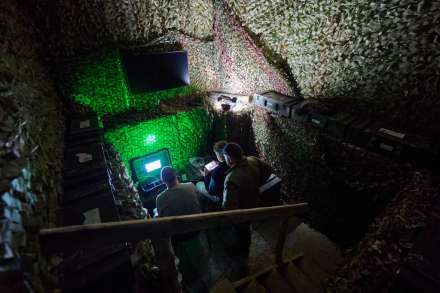
The world’s first fully robotic assault on an enemy position was, of course, captured on video by a drone hovering above.President Volodymyr Zelensky recently revealed that the pioneering mission by the Ukrainian army had taken place last year in Kharkiv Oblast. He added that in the last three months Ukraine has conducted 22,000 missions using robotic vehicles. Robots, he stressed, are replacing soldiers on the frontline with Russia. Video of the assault has been passed to The Spectator by the 3rd Assault Brigade, the unit behind the mission. It shows that a Russian fortified dugout was first attacked by a suicide drone that exploded inside and then a Targan – “cockroach” in Ukrainian – remote control vehicle parked outside and detonated its mine. https://twitter.

ukraine robotic assault

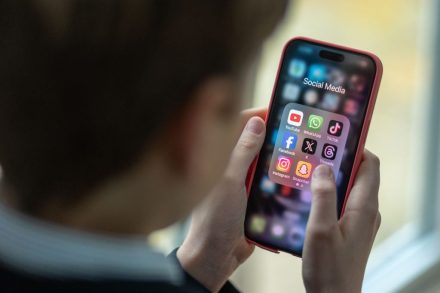
Social media has automated the nation’s psyche

It feels increasingly, in any conversation on or offline, as if you’re speaking to a robot. Sometimes you are, but more often, and more ominously, the person you’re speaking to is real – it’s just that their thoughts, words and reactions have become robotic. The Botification of the American Mind, you might call it, and for the past five years we’ve been trying to understand how this botification has happened. The most obvious root cause is that our social media is no longer populated by humans, meaning the generative AI revolution has exponentially increased the amount of fake accounts on everyone’s feeds.

social media

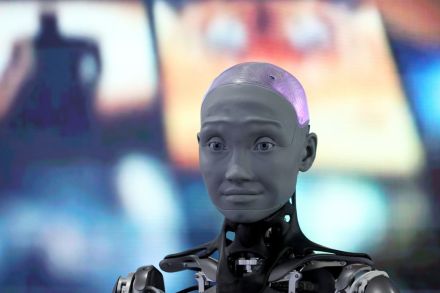
M3gan is a tale of millennial mothering

If horror films today are largely read as political satires or commentaries, then the “moral” of Gerard Johnstone’s M3gan, about a sentient robot doll unwisely invited into the family home, is clear enough. Playing on our fears of the AI technology increasingly being used as “labor-saving devices,” M3gan is a tale of bad mothering and the price to be paid by career-oriented millennial women if they try to “have it all.” This may make it catnip for trolls and conservative commentators who love to chide women for any parenting style that doesn’t involve frilly aprons and a plastered-on smile. But you need to squint a bit to see this latent message. If you do, you’re missing a more complex (and more horrifying) story.

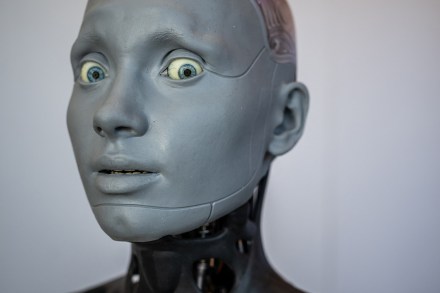
Big tech wants us to empathize with robots

It seems like we can’t help getting attached to robots. It also seems like the people making the robots are counting on that. In the 2015 video game Fallout 4, one of the factions with which the player can align him- or herself is “the Railroad,” an organization that helps seemingly sentient androids escape from the lab in which they’re created. A friend of mine mocked me mercilessly for aligning myself with the “SJWs” of the Railroad and insisted that the androids — who spoke eloquently of their emotions, friendships, and aspirations — actually had the same moral worth as a toaster. I laughed, but secretly still felt I’d made the right choice. Surely it was always better to err on the side of greater empathy.

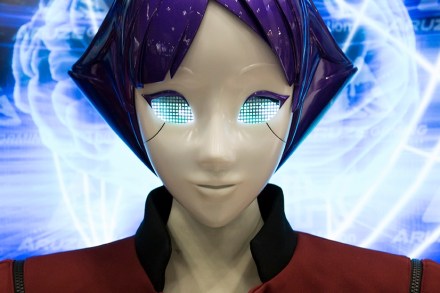
Could self-driving cars threaten our humanity?

There is a trope in science fiction movies in which some alien or machine intelligence determines that humans are a scourge, and that in order to protect the galaxy, humanity must be eradicated. There is no shortage of examples, but some personal favorites include The Day the Earth Stood Still, Alien and Planet of the Apes. And who could forget the T-800’s grim prognostication in Terminator 2 that 'it’s in your nature to destroy yourselves'? Back in the real world, we aren’t quite at the point of developing an artificially intelligent Skynet that will take control of our nukes and bring about our collective demise. But a Vox piece from last week leaves me concerned that we’re headed in the wrong direction.

cars