Road trip

Driven to extremes: The Rest of Our Lives, by Ben Markovits, reviewed

From our UK edition

In a break from his tetralogy about the Essinger family, and following on from The Sidekick (a kind of Humboldt’s Gift with basketball), Ben Markovits now takes us on a road trip across America. The Rest of Our Lives explores marital breakdown, betrayal, the empty nest and a myriad mid-life malaises, including life-threatening illness. It’s quietly enthralling and full of the small epiphanies that more maximalist writers wouldn’t deem worthy of notice. When Amy Lanyard has an affair with ‘a guy called Zach Zirsky whom she knew from synagogue’, her husband Tom, a legal professor, vows to leave the marriage after their daughter Miri turns 18.

The road trip from hell: Elegy, Southwest, by Madeleine Watts, reviewed

From our UK edition

Throughout her quietly compelling second novel, Elegy, Southwest, Madeleine Watts conjures a sense of trundling steadily towards disaster. The narrator, a young Australian woman called Eloise, is recounting a road trip that she and her husband Lewis took through the American Southwest in 2018 – while a deadly fire was sweeping through northern California. The trip was bookended by disasters you could describe as closer to home: before it, Lewis’s mother died; after it, Lewis disappeared. By combing through their time in and out of the ‘climate-controlled interior of the car’, Eloise tries to figure out what happened. The journey is part business, part pleasure. Eloise is researching her dissertation on the Colorado River.

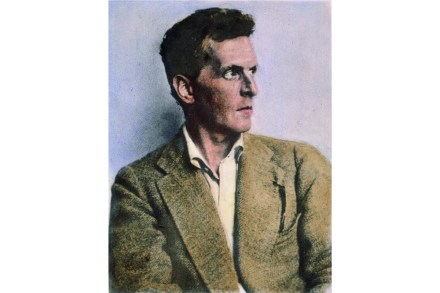
Road-tripping with Wittgenstein

North Carolina The ancients used the sun and moon to measure time, but modern man has a more exact instrument at his disposal: the odometer. It has ticked up a thousand-plus miles, a sure sign the 2024 holiday season has just ended. The children are all struggling in the backseat — against one another, their own bladders and the nylon straps the Car Seat Cartel has foisted upon them — and are thus unable to see the dash’s mileage ticker, as well as the incriminating orange “service reminder” messages your wife is pretending to ignore. When you read aloud the “Welcome to North Carolina” sign, your most intelligent child says, “Are we still in the United States?

Wittgenstein

Was the psychedelic art movement worth it?

If modern America were ever to have its own “the Great God Pan is Dead” moment, it would arrive in the form of Popeyes and KFC celebrating 4/20 as a marketing boon. After all, what better way is there to signal the end of counterculture than by chomping down on some discounted fried chicken? Devotees of the “4/20” marijuana festival, commemorated globally each year, have bemoaned a string of corporate sponsorship deals which are, they sniff, at odds with the event’s hallowed “hippie” origins. So when San Francisco decided earlier this year to cancel its annual 4/20 celebrations on Hippie Hill in Golden Gate Park, citing city-wide budget cuts and a lack of lucrative brand deals, the whole affair was a little on the nose. Come on, man!

psychedelic

Road trips out of Lisbon: a slice of tranquilidade

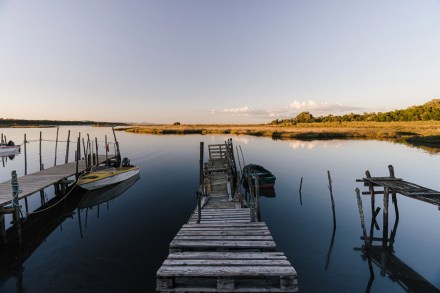
Forget Barcelona. Say sayonara to San Fran. And so long, London. Post-Covid, Lisbon has become a hub for the creative, hungry and cosmopolitan. A throng of new restaurants, wine bars and buzzy co-working spots has formed a playground for the young and ambitious.  They’re squeezing every last drop out of their free time, too, joining the tourists in thumping nightclubs before escaping to beautiful  beaches. But plenty of weekend visitors don’t know (or have time to discover) that the city is flanked by bucolic countryside, dotted with world-class hotels and agriturismos. A forty-minute drive can take you to pristine white sands, enchanting pine forests, retro beachfronts and sprawling national parks. Next time you’re in town, tack a road trip onto your city break.

road trips lisbon

Lorrie Moore’s latest novel is deeply troubling, but also consoling

From our UK edition

Sometimes a novel’s means are so strange, however compelling its final effect on the reader, that a straightforward account of it will be most helpful. I’ve read, or part-read, this novel three times now. On the first reading I gave up, shaking my head. On the second I got to the end, but thought it absurdly wilful, self-absorbed and idiosyncratic to the point of whimsy. The third reading – something, after all, must have drawn me back – exerted an appalling power, and I emerged shaken, troubled, but also consoled. Take your pick. This is a book that is going to divide people, and one that can look very different to the same reader in different lights. Finn visits the cemetery – and there is Lily.

Thirty-five years of crying to Planes, Trains and Automobiles

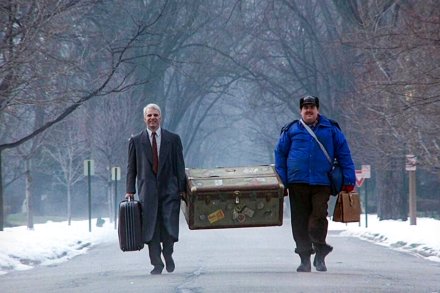
No piece of art has ever affected me quite like John Candy’s face in Planes, Trains and Automobiles. It has made me cry for thirty-five years, rivulets of tears. It has shown me that nothing evokes loneliness like a face. John Candy's face simultaneously reveals warmth and fatalism (it's the face of a man who always feared he'd die young — and did). His unibrow is childlike and genuine. His smile is never fake. But Candy’s shower curtain ring peddler Del Griffith is smiling through pain. He’s hiding behind the mask of a gregarious family man and "best in the world" salesman (with a bowtie and bristly mustache). His smile hides a secret: Del Griffith is a grieving widower, and his home is inside an old trunk he carries around like luggage.

Back on the road: Less is Lost, by Andrew Sean Greer, reviewed

From our UK edition

Get ready for more of Less: Andrew Sean Greer’s hapless novelist is back on the road. First things first: you need to have read Less, Greer’s Pulitzer-winning first outing for his creation, to appreciate this slighter but equally charming sequel. That’s no hardship. Less was hilarious and humane: a hymn to second acts. In it, Arthur Less – a tentative, faded Battenberg blond-and-pink man, around whom embarrassments and misunderstandings coalesce – scuttled across the world to avoid facing his 50th birthday and the wedding of his long-time lover Freddy to someone else, both imminent. In Less is Lost, Arthur has a stranger and scarier destination for a West Coast homosexual: America’s heartlands.

Looks lovely if nothing else: Craig and Bruno’s Great British Road Trips reviewed

From our UK edition

To its huge credit, ITV has managed to find perhaps the last two television celebrities who’ve never before been filmed travelling around Britain while exchanging light banter and using the word ‘iconic’ a lot. In Craig and Bruno’s Great British Road Trips, the Strictly judges are driving a Union flag-bedecked Mini through such telegenic staples of heart-warming TV dramas as the Lake District, the Yorkshire Dales and the Scottish Highlands. For the opening episode, the choice fell on the Cornish coast, which certainly helped the programme achieve its primary aim of looking lovely. But this, as it transpired, was just as well — because for a fair amount of the time, not much else happened.

Two for the road: We Are Not in the World, by Conor O’Callaghan, reviewed

From our UK edition

A father and his estranged 20-year-old daughter set off across France, sharing the driver’s cabin of a long-haul truck. This is a road trip like no other: Paddy, deracinated, footloose, divorced, taking on a temporary job for reasons that become clear later; and daughter Kitty, spiky, provocative, shaved head, grubby jeans and sweater, wrapped in an old mink coat she’s pinched from her grandmother. Occasionally she rewards her father with an ambiguous affectionate response as their edgy banter veers in and out of dangerous territory: the minefield of parenthood. The narrative is fractured; nothing told chronologically, the surface deliberately throw-away — skewed punctuation, sentences left hanging.

No smokes without buyer

In late March I left New York, fleeing the mayor more than the virus. Sunlight being the best disinfectant and I having parents to see, I grabbed a tube of disinfecting wipes and flew to Palm Beach, Florida. After seven weeks of sunny inanition, I prepared to leave and return home. Among my objectives was the fulfillment of a request by a New York friend to pick up a carton of cigarettes for him at Florida prices. Though not a smoker, I sympathize with the tax-burdened as a rule. Entering the Palm Beach Publix supermarket, surely the only Publix with valet parking, I made straight for the tobacco counter, having been advised by my nicotine-addict friend that the store was known to carry his off-piste brand, Carlton 100s.

i-95