Risk

Controlling AI is the great challenge of our age

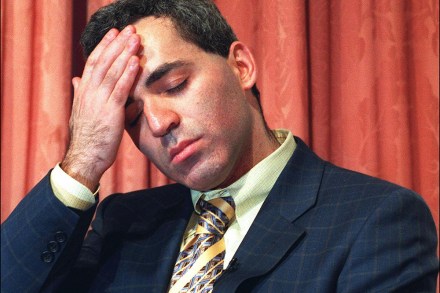
In 1997 the world chess champion Garry Kasparov was beaten by an IBM computer system called Deep Blue. It had defied all expectations, exploring some 300 million possible moves in one second. The most that skilled chess players can contemplate is about 110 moves at any given time. It was a seminal moment in the advance of artificial intelligence – even if not fully understood, writes Richard Susskind in How to Think About AI. People did not wholly grasp the impact of the exponential power of computers, nor that new ways would be found to develop systems that could achieve human expert-level performance. Fast forward to 2016 and to AlphaGo, a machine designed to play the complex game Go, which has more possible moves than atoms in the observable universe.

Time is running out to tackle the dangers posed by AI

Is this what it felt like in the months before August 1914? Or during the years leading up to September 1939? The discussion around artificial intelligence produces a deep foreboding that we are in the grip of forces largely beyond our control. Are we sleepwalking towards disaster? That is the feeling I have after reading Genesis, a collaboration by Eric Schmidt, the former CEO of Google, Craig Mundie, the former chief research and strategy officer at Microsoft, and Henry Kissinger, who died, aged 100, soon after completing this book. They have crafted a holistic analysis of the social, political, psychological and even spiritual impacts that a superior machine intelligence would have for humanity.  We are broadly familiar with AI’s current and future benefits.

Life among the world’s biggest risk-takers

The Italian actuary Bruno de Finetti, writing in 1931, was explicit: ‘Probability does not exist.’ Probability, it’s true, is simply the measure of an observer’s uncertainty; and in The Art of Uncertainty, the British statistician David Spiegelhalter explains how this extraordinary and much-derided science has evolved to the point where it is even able to say useful things about why matters have turned out the way they have, based purely on present evidence. Spiegelhalter was a member of the Statistical Expert Group of the 2018 UK Infected Blood Inquiry, and you know his book’s a winner the moment he tells you that between 650 and 3,320 people nationwide died from tainted transfusions.

What’s behind the risk-averse approach toward love and family?

From our US edition

Human risk assessment is not a dispassionate numbers-crunching game. Those who fear flying have to know we’re four times more likely to die in a car crash than in a fiery plunge from the skies, even if we’re boarding a Boeing. The fear of flying may be common, but only a select few will rule out the jet engine entirely. When it comes to emotional risk evaluation, there is one area where phobia prevails over reason: our increasingly sterile view of what constitutes a good bet when it comes to marriage and family life. Since the second half of the twentieth century, American society has been on a mission to eliminate risk. Seatbelt and helmet laws reduced deaths in automobile and bike accidents at the expense of comfort and self-respect.

risk

The research is in and lockdowns don’t work

From our US edition

A new Johns Hopkins systematic review cuts in two the narrative that government-imposed mandates meaningfully prevent coronavirus deaths. The review looked at 34 different studies analyzing business and school closings, shelter-in-place orders, and international travel bans. It included data from US and European Covid mitigation efforts, along with endeavors in India, South Africa and China. Almost two dozen of these studies were peer-reviewed, while the other 12 were working papers. The results of this meta-analysis are striking. Lockdowns reduced Covid mortality by an average of only .02 percent. Shelter-in-place orders were slightly better at a 2.9 percent average, but nothing worth crowing about.