Rishi sunak

Portrait of the week: Elgin Marbles madness, Israel/Hamas ceasefire and Oscar Pistorius freed

From our UK edition

Home Net migration reached a record 745,000 last year, the Office for National Statistics said, 139,000 higher than the 606,000 it had previously given. Robert Jenrick, the minister for immigration, was reported to be ‘pressuring’ No. 10 with ideas for cutting immigration, such as by making a minimum salary of £35,000 a requirement for a work visa. Rishi Sunak, the Prime Minister, had agreed with Suella Braverman, when she was home secretary, to raise the salary requirement to £40,000, according to a copy of their agreement seen by the Telegraph. Eight small boats carried 364 migrants to England on 26 November. Caolan Gormley, 26, from Co.
Portrait of the week: tax cuts, hostage releases and highly rated horses

From our UK edition

Home Rishi Sunak, the Prime Minister, said, ‘We can now move on to the next phase of our economic plan and turn our attention to cutting taxes,’ having seen a reduction in inflation. Jeremy Hunt, the Chancellor of the Exchequer, followed suit in the Autumn Statement, cutting personal taxes. The government was to make changes to long-term benefits. The minimum wage, known officially as the National Living Wage, currently £10.42 an hour for those over the age of 23, will rise to £11.44 an hour for those over 21 from next April. The government also drew attention to £8.3 billion allocated to mending potholes, money purportedly saved from the curtailment of the HS2 project. Households living close to new pylons would receive compensation.

The Rishification of the Tory party

From our UK edition

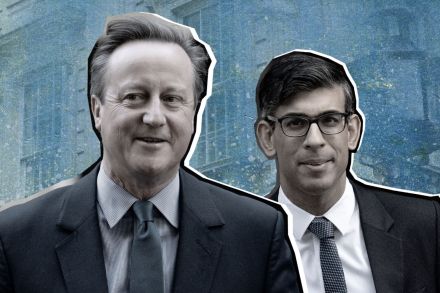
When David Cameron arrived at the Foreign Office on Monday, he told staff he might be a bit rusty when it comes to modern politics. He joked that the only WhatsApp group he is in ‘is to do with my children’s school play’. Cameron may have been out of frontline politics for a while, but the rules stay the same. As Tory leader, he championed his favourites and promoted his supporters to the cabinet table, even at the expense of ignoring older colleagues’ claims. This week, his successor has done the same. A trio of thirtysomething former special advisers elected in 2019 now comprise the Prime Minister’s Praetorian Guard. Laura Trott, 38, the former pensions minister, is the chief secretary to the Treasury.

How has the Conservative party’s ‘Dr No’ escaped everyone’s notice for so long?

From our UK edition

The reason conspiracy theories are so resilient, reproducing themselves from one generation to another, is that they are unfalsifiable. Evidence against them, however solid, has obviously been faked. Anyone who tries to demonstrate that Americans did land on the moon or that J.F. Kennedy was killed by Lee Harvey Oswald is obviously in the pay of people who stand to benefit. If you ask who those people are, since there seems to be no evidence of their existence, the answer is always the same: they are very good at concealing themselves. And so the theory finds credulous punters.

Portrait of the week: Met in a muddle, King’s Speech and a wine production slump 

From our UK edition

Home Rishi Sunak, the Prime Minister, said of pro-Palestinian demonstrations: ‘To plan protests on Armistice Day is provocative and disrespectful, and there is a clear and present risk that the Cenotaph and other war memorials could be desecrated.’ The Metropolitan Police urged organisers of a pro-Palestinian march on 11 November to postpone it, but they refused. The Prime Minister then said he would hold the Metropolitan Police Commissioner ‘accountable’ for his decision to greenlight the ‘disrespectful’ demonstration. Imran Hussain MP left the Labour front bench over Sir Keir Starmer’s opposition to a ceasefire in Gaza, and Afrasiab Anwar, the leader of Burnley council, and ten councillors left the Labour party.

Rishi and Suella’s fates hinge on the Rwanda ruling

From our UK edition

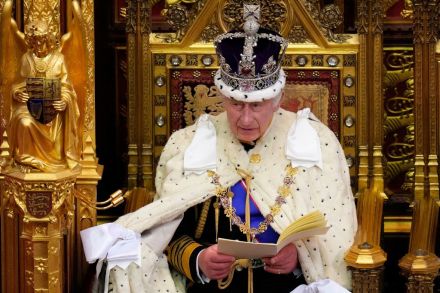
The first King’s Speech for more than 70 years was a festival of the expected: the royal reading of a No. 10 press release. Some dividing lines were drawn between the Tories and Labour and some loose ends tied up – but there was no real change in political direction. ‘It’s a continuance of the direction and path we are on,’ explained a senior government figure. ‘The most inspiring thing Rishi has done is refusing to endorse Braverman’s comments’ But if current polls are any indicator, to continue in the same direction means a landslide Labour victory and a Tory defeat of historic proportions at the next election. ‘It won’t spark rebellion but it certainly won’t lead to much excitement,’ was one MP’s quickfire assessment of the speech.

What did King Charles say?

From our UK edition

12 min listen

It was the King’s speech today. King Charles announced that the government would introduce new laws to, among other things, force criminals to attend their sentencing hearings, scrap most jail sentences of less than a year, and sell all new houses as freehold properties. Is it enough for the Tories to turn around their deficit in the polls? Katy Balls speaks to James Heale and Isabel Hardman.

The conversion therapy bill is a thoroughly bad idea

From our UK edition

I was disappointed to learn that Rishi Sunak has reconsidered his opposition to a bill banning conversion therapy. Not because I’m in favour of it, obviously. The baffling thing about Sunak’s change of heart is that conversion therapy, as commonly understood, has been banned in this country for years. As the government’s own briefing on the subject put it in 2021: ‘Our existing criminal law framework means that conversion therapy amounting to offences of physical or sexual violence is already illegal in this country.’ If a girl who believes she’s a boy is urged by her doctor to see a therapist, that doctor would be breaking the law So what is it Sunak wants to outlaw?

Peter Oborne, Kate Andrews and Jonathan Maitland

From our UK edition

18 min listen

On this week's Spectator Out Loud, Peter Oborne reads his letter from Jerusalem (00:55), Kate Andrews talks about why Rishi Sunak has made her take up smoking (07:20), and Jonathan Maitland explains his growing obsession with Martin Bashir (12:15). Presented by Cindy Yu. Produced by Cindy Yu and Natasha Feroze.

The Tory vote squeeze

From our UK edition

When the cabinet gathered on Tuesday morning, the meeting started as a sombre affair. Just days before, the Conservatives had suffered – in the words of polling expert Sir John Curtice – ‘one of worst nights any government has endured’. The Tories lost both the Tamworth and Mid Bedfordshire by-elections to Labour. The Environment Secretary, Thérèse Coffey, managed to lighten the mood when she intervened to say that it hadn’t gone unnoticed that it was Rishi Sunak’s 365th day as Prime Minister. Loud banging on the table ensued, led by Jeremy Hunt. A year into Sunak’s premiership, neither he nor his supporters are where they would have liked to be. Aides said in January that they wanted to get Labour’s lead down to ten points in a year. That looks ambitious.

Portrait of the Week: Tory by-election misery, ‘jihad’ chants and emergency aid

From our UK edition

Home Rishi Sunak, the Prime Minister, on his return from Israel (where he spoke with Benjamin Netanyahu, the Prime Minister) and to Saudi Arabia (where he spoke with Mohammed bin Salman, the crown prince), told the House of Commons: ‘Hamas is not only a threat to Israel, but to many others across the region. All the leaders I met agreed that this is a watershed moment. It’s time to set the region on a better path.’ Twelve Britons had died in the Hamas attack, and five were missing. Of the blast at Gaza’s al-Ahli hospital on 17 October, which killed numbers of people into the hundreds, he said it was likely to have been caused by a missile fired from within Gaza. He announced £20 million extra in emergency aid to Gaza.

Britain should back a ceasefire

From our UK edition

Six weeks ago, I invited Ahmed Alnaouq, a young diplomat who recently joined the Palestinian mission in London, to stay for a cricket weekend in Wiltshire. He resisted all entreaties to play the game but was in every other way a delightful guest. On Sunday, Ahmed learnt that his family in Gaza has been wiped out by an Israeli bomb. His father, siblings, and more than 15 nieces and nephews had all been killed. Twenty-three dead, no injuries. Another brother was killed by an Israeli bombing in 2014. His mother died three years ago because, he says, Israel denied her medical treatment. When I sent him a text message saying that he and his family were in my thoughts and prayers – it felt hopeless, but what else can one say? – he replied: ‘My family is gone Peter. All of them.

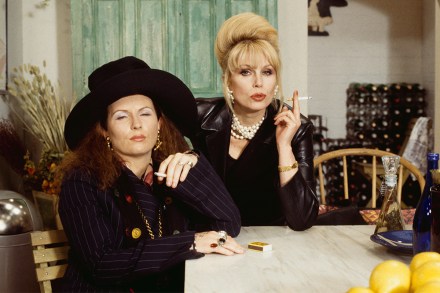
Patsy would have just ignored Rishi’s cigarette ban

From our UK edition

On Monday night, still shaken from the weekend’s news, I went to a small dinner in the basement of a charming restaurant in Chancery Lane, with fellow supporters of the charity Médecins Sans Frontières (Doctors Without Borders). The brave MSF doctors and nurses are rather like fire-watchers in their turrets, scanning the world for where they are needed next before diving into danger at a moment’s notice. No war zone is too perilous. They have been entrenched in Gaza for years and are used to functioning under the most difficult conditions. This week, they had to work out of tented operating theatres, erected between bombed-out ruins, because ambulances cannot be used because of the risk of aerial bombardment.

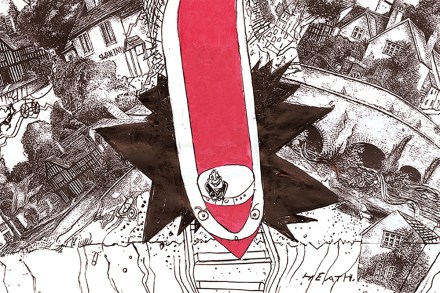
Train wreck: HS2 destroyed the countryside I love

From our UK edition

When I drive to see my parents in the once-peaceful farming country where I grew up, it is a strange, bittersweet experience. The car journey takes me through places I ought to recognise but I don’t any more, because the green fields of Warwickshire, the villages and the farms, are scarred by the tortuous works of HS2. The distinctive red earth is laid bare for mile upon mile as the bulldozers do their worst. Rows of cottages and entire villages lie deserted, testimony to the billions already spent. As I drive along the main Banbury to Coventry road, I see mountains of earth piled high as flyovers take shape. I stare at this curiously outdated project – old hat both in terms of the controversy and the purpose it was meant to have.

Can Sunak establish himself as a radical?

From our UK edition

The Conservatives gather in Manchester this weekend for what may well be their last hurrah as a governing party. Bookmakers are offering odds of 7:1 to anyone bold enough to bet on Rishi Sunak winning the next general election. The Prime Minister himself is in a gambling mood and has started to make some brave and overdue decisions: rethinking HS2 and overhauling net-zero policies. Such decisions bring short-term embarrassment, and were avoided by his predecessors, but they offer long-term dividends. The question is whether this is a wise strategy in the lead-up to an election. Typically, a prime minister makes their big promises in a pre-election year.

HS2 has been a fiasco. It’s time to ditch it for good

From our UK edition

In a fantasy world of wise government vision and decision-making, HS2 would have been announced in November 1964, shortly after the Tokyo Olympics. Visitors to those games saw the future in the form of the Tokaido Shinkansen – the first Japanese ‘bullet train’, which raced 320 miles from the capital to Osaka, carrying 1,300 passengers per train and eventually running 360 trains per day, with average delays measured in seconds. But in that era, UK ministers thought only of axeing railways and building motorways. A de novo British high-speed network could not have taken off in the 1970s, when the French were building the first ligne à Grande Vitesse from Paris to Lyon, simply because we were broke.

Why is Sunak cutting a tax only paid by the rich?

From our UK edition

Last week, Rishi Sunak struck a blow for ordinary people against the elitist project that is net zero, assuring them that a government led by him will not be loading them with tens of thousands of pounds in costs for fitting heat pumps, forcing them to buy an impractical electric car or stinging them in taxes for flying off on holiday. The opposition, at least in the shape of Ed Miliband, fell right into his trap. As polls have shown over and over again, public support for net zero tends to melt away very fast when it comes to asking them about issues which threaten to affect them personally.

Sunak’s new strategy: hard truths

From our UK edition

The last time Tory activists and MPs gathered for their annual party conference, it didn’t end well. Liz Truss had barely checked in to her hotel before she faced a full-on attack from Michael Gove, who started a rebellion against her proposed tax cuts live on air. Truss U-turned on her mini-Budget and cabinet discipline quickly collapsed. ‘It was the worst four days of my life,’ recalls a former Truss aide. Sunak sees the conference as a potential moment of catharsis that could lead to a Tory recovery Rishi Sunak hopes to improve on this admittedly rather low mark. He sees the conference in Manchester as a potential moment of catharsis that could lead a Tory recovery.

Rishi Sunak is right to reconsider his green pledges

From our UK edition

The old carmakers were slow to realise the potential of electric cars and didn’t innovate. So Elon Musk, an internet tycoon, bought Tesla and stole a march on an entire industry. The internal combustion cohort then rushed to catch up: Jaguar Land Rover, Volvo and Ford all committed to go electric-only by 2030. The problem is that electric cars are expensive, so most drivers still prefer cheaper petrol ones. Ministers came up with a plan to deny people the choice, to pass laws that would ban the sale of new petrol-based cars. Britain has led the world in decarbonising its economy. No other G7 country has done more This always was a conspiracy against the public, justified on very thin environmental arguments.

Portrait of the week: Met misconduct, Starmer in Paris and Spanish football in turmoil

From our UK edition

Home Rishi Sunak, the Prime Minister, proposed reaching net zero in 2050 ‘in a better, more proportionate way’ such as by delaying a ban on the sales of new petrol and diesel cars and delaying the phasing out of gas boilers. Ford the car makers told him it would undermine the three things it needed from the government: ‘ambition, commitment and consistency’. Inflation decreased from 6.8 per cent annually in July to 6.7 per cent in August despite a rise in oil prices. Michael Gove, the Secretary of State for Levelling Up, appointed commissioners to run Birmingham, which had run out of money. A man was killed by two dogs, said to be Bully XLs, in Staffordshire. Mr Sunak said he would ban the breed by the end of the year under the Dangerous Dogs Act 1991.