Reykjavik

Nordic dream or nightmare?: The Mark, by Frida Isberg, reviewed

Imagine a society, a high-minded psychologist tells his curmudgeonly father, ‘in which people are like cars. They have to go in for inspection once a year’ in order to assess their emotional fitness for the shared highway of life. As for the ‘psychopathic percentage’ whose ‘moral disorders’ lead them to fail this spiritual MoT, never fear: state-funded therapy will get them on the road again. And should they refuse? Surely, as we learn later in The Mark, everyone longs to stand ‘on the right side of history’. The Nordic dream of close-knit, high-trust, mutually supportive welfare societies has always had its internal critics: mavericks, naysayers and backsliders, who prize autonomy beyond, even against, community.

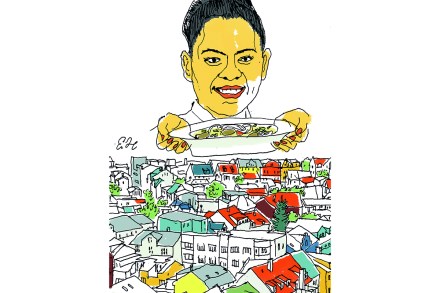
Thai-celand: how southeast Asian cuisine took over Reykjavik

From our US edition

Last October I flew to Reykjavik for a spa weekend among the volcanic lagoons. It sounded blissful, but the reality was strange and, in some ways, downright alarming. This was back when people still cared about Covid, and no one seemed to care more about Covid than the Icelanders (even though the data suggested that barely anyone there had the virus). You might imagine their reaction when someone collapsed on an incoming plane. That someone was me. I didn’t have Covid and had multiple PCR tests to prove it. What I had was a bout of vertigo so bad that I initially thought the plane was crashing. I managed to tell the Icelandic stewards, “I’m fine, really, it’s just vertigo.” One of them said to the other, “We’ll give her the injection, pull her pants down.

reykjavik