Restaurants

The perfect restaurant for the Labour party: Arcade reviewed

From our UK edition

I should know better than to visit restaurants assembled as if from disparate bricks, like thrift-shop Duplo: but the ever-credulous person sees the world anew each day. I thought Arcade, a glass restaurant on New Oxford Street, which somehow manages to be worse than old Oxford Street, might have some of the drama of the arcade of my dreams. I thought it might be eerie, even arcane. Names are important. This one lied. It is new, of course. This piece of the city, once Gin Lane, seems guiltier than most parts of London – it gives even Mitre Square a race in spectral squalor – and so is constantly building, tearing and rebuilding, in some appalling yet righteous act of civic self-hatred.
The Harrods disadvantage: Em Sherif reviewed

From our UK edition

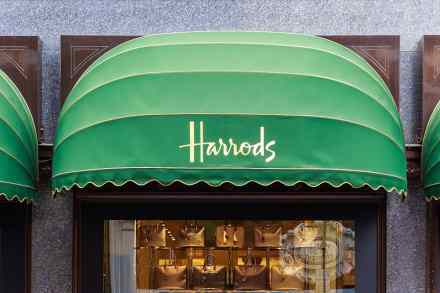
I am never bored with Harrods, only disgusted, and it is disgust of the most animated and exciting kind. It is Nabokov’s fish-tank of a department store, but with lampshades, not hebephilia. Its wares have surpassed its beginnings, which were haberdashery. Charles Harrod’s first shop was at 228 Borough High Street when George IV, who would love Harrods, was king. His second was at Stepney. Harrod came west for the Great Exhibition of 1851 and now we have this: the most crazed example of a crazed aesthetic, which is imperial Edwardian. Or Disney pinnacles the colour of blood. Harrods used to have a boutique in which almost-normal children could be transformed into Disney princesses. I await the cryonics department with ecstasy.

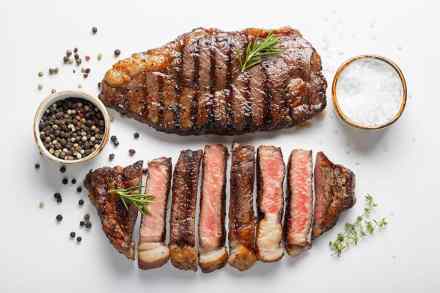
£120 steak that looks like a M&S meal deal: The Maine reviewed

From our UK edition

Last week Chris Corbin and Jeremy King lost control of the restaurant group they founded: Corbin & King, which made the Wolseley, the Delaunay and Brasserie Zédel under Piccadilly Circus where, if they were lucky, tourists would tumble as if into a fairy pool. Corbin and King understand that a superb restaurant looks after its staff, and its staff look after its customers. It’s called love, and it matters, but that is gone now. Central London is ever more flinty, unimaginative and grasping: a playground for people who do not deserve it. Russians stripped their state and spent the proceeds in London. I saw them do it. Each luckless duck and bottle was a piece of a potential Russian state to be digested. Now their only currency is blood.

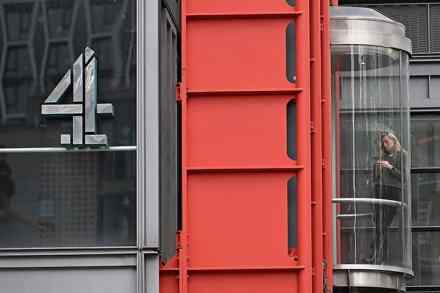
Why Channel 4 shouldn’t be privatised

From our UK edition

Enough of stagflation forecasts, each more frightening than the last. Enough – for now – of energy policy sermons, as the government at last proclaims a serious nuclear plan. Instead, let’s have a week of real business stories, starting with tales of the old and new City. First, a rum do at the London Metal Exchange. The Bank of England and Financial Conduct Authority are investigating the exchange’s handling, last month, of a ‘short squeeze’ on nickel, provoked by fear of disrupted supplies from Russia.

The real food of Venice

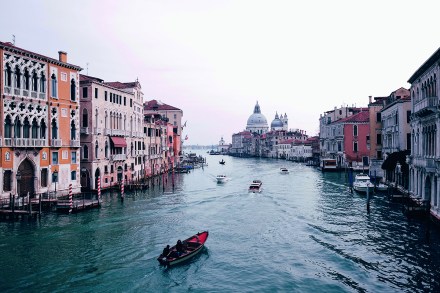
A few years ago, I moved to Newlyn, a fishing village in west Cornwall. I didn’t understand why I moved to Newlyn until I returned to Venice. I take almost all my holidays in Venice, and it is a cliché that Venice only slowly reveals her mysteries. You must fight your way past a mass of Renaissance portraiture and mirrored palaces but the mystery it showed me this time is this: like Newlyn, Venice is a fishing village. Venice got rich in the thirteenth century, monopolized the trade routes to the east for two centuries and covered itself in Istrian stone, which Newlyn didn’t. But it’s still a fishing village, founded by people running away from barbarians, into the mud flats of a lagoon to fish for crabs. It is easy to forget that — unless you look for Venetian cuisine.

venice

The best lamb in London: Blacklock reviewed

From our UK edition

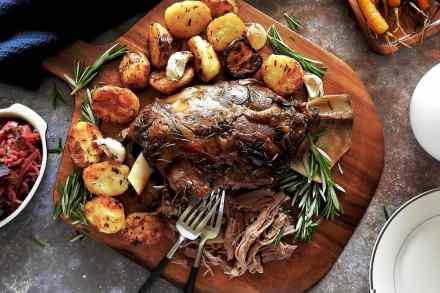
Blacklock is the fourth restaurant of that name – there are others in Soho, Shoreditch and the City of London. It sits in a former royal coach-makers in an alley near the Garrick Club under signage that says ‘Chop’. We descend to a cavern. The walls are exposed brick, the floors are dark wood, and the ceiling hangs over exposed pipework. There is a map of a more ancient and more interesting London on the wall, from the days in which chop houses were as common as raw sewage, or horses. It’s fiercely brown; committed to brown; washed with brown: chairs, tables, light fittings, food. There are tables of men looking expansive like Italian rugby fans. They love Blacklock for its brownness, its simplicity and its blood.

The sad demise of Amish family-style restaurants

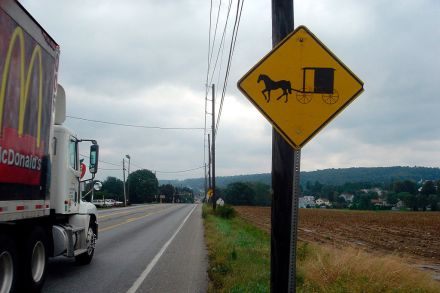
Every time I visit Pennsylvania Amish Country, it feels a little less like Amish Country. My parents were aghast when, in the mid-2000s, they visited for the first time since the 1980s (and for the first time with me) and found a massive outlet center along the main commercial drag. When my wife and I visited in 2017 — my first time since that childhood family trip — I was dismayed to see that the field in front of the Amish Farm and House had become a Target and its attendant parking lot. (I was only a little less dismayed when the landmark Congress Inn, with its out-of-place capitol-dome sign, met the wrecking ball.

Food ruined by an existential crisis: Fallow reviewed

From our UK edition

I was going to be jolly this week, for variety and denial, but I changed my mind. Instead, I wonder if, when Vladimir Putin – insert your own nickname, mine is unprintable – talks about the weakness of western civilisation (I paraphrase) and, therefore, our unwillingness to resist tyranny in the shape of a balding paranoiac unwisely given Botox by a beautician who lied to him because everyone lies to him, he means Fallow, which is a new restaurant in St James’s. I wonder if Putin has been to Fallow wearing a prosthetic head and, if so, did he do the soft launch or the hard one? Did he steal more hair? He has stolen so much money from Russia he could afford a room full of prosthetic heads each with their own hair. (You can buy hair on racks at wedding shows.

A victim of its own mythology: Langan’s Brasserie reviewed

From our UK edition

Langan’s, a brasserie off Piccadilly with curling orange neon signage calling its name, is under new management after it fell into administration in 2020. It is a famous brasserie — London’s version of La Coupole — once owned by Michael Caine, a famous actor, and Peter Langan, a famous drunk, who would crawl across the floor and bite customers’ ankles and who once put out a kitchen fire with champagne. It opened in 1976 on the site of Le Coq d’Or and was treated by the diary columns as a person in itself, as famous as Annabel’s, Peppermint Park and the Ritz Hotel. Lucian Freud and David Hockney and Princess Margaret came here.

Welcome to Waffle House

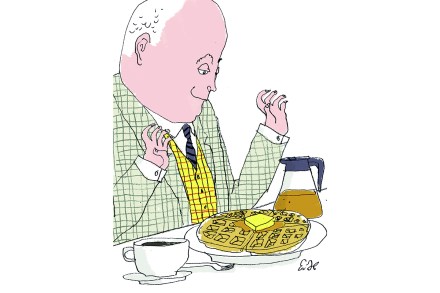
"Snack bar,” “coffee shop” and such phrases once signified small eateries where customers sat on stools at a counter or in simple booths. Their orders were taken and served by waitresses in white aprons, and prepared by a short-order cook in a white paper cap. Hotel lobbies, railroad-station waiting rooms and airports all had them: private enterprises in public spaces purveying a cup of coffee and a donut, bacon and eggs, ham and cheese on rye, a hot dog, a hamburger, maybe a milkshake or an ice cream sundae. Little of this (for most were mom-and-pops) traveled well into the age of industrialized, assembly-line, eat-on-the-go feeding signified by the phrase “fast food.

waffle

Why restaurant food at home beats eating out

From our UK edition

‘The opposite of a correct statement is a false statement. But the opposite of a profound truth may well be another profound truth.’ That’s Niels Bohr. Or, as Oscar Wilde put it: ‘In art there is no such thing as a universal truth. A truth in art is that whose contradictory is also true.’ Like physics and art, many other fields require that you embrace contradictions — because you can’t avoid them. Take innovation. Yes, a great deal of progress is combinatory: two or more technologies are combined to accomplish some hitherto impossible task. But, as the Soviet-era scientist Genrich Altshuller noticed, much innovation follows the opposite path, separating things which were previously combined.

London’s best restaurants for British food

From our UK edition

There was a moment, about 20 years ago, when Londoners began to realise, and then boast about, the transformation in our food scene. No longer deserving of mockery compared to other global centres, our restaurants were suddenly producing delicious food every bit (well, almost) as good as that associated with the likes of New York. The revolution began with fresh takes on exotic cuisines, especially South and East Asian, Spanish and Italian. But soon another, delightful development emerged: the reinvention of British food. Gastropubs began taking ploughmans and sausage rolls and roasts very seriously indeed, and posh restaurants began to show that homegrown food, when it comes from domestic seas and soil, can be sophisticated, innovative and richly satisfying.

The best schnitzel in London: Schnitzel Forever reviewed

From our UK edition

It is a truism that there is never enough schnitzel (‘slice’, German); or, rather, schnitzel does not get the attention it deserves. Restaurants do serve it, of course. Fischer’s does a fine Wiener schnitzel, as part of its riotous pre-war Vienna tribute act, and elderly people, I am told, queue for it while wearing slankets. Brasseries sell it often: the perhaps unconscious desire to re-enact the meals of the Weimar Republic is one of the stranger things of the age. The Coffee Cup in Hampstead serves it with a jaunty side order of spaghetti pomodoro. But the (chicken) schnitzel has never had the stardust of the less interesting but more widely beloved hamburger; perhaps it is because cows are bigger.

How to survive eating out

Tennis — as the New England poet Robert Frost remarked in defense of formal verse — is more fun with a net. Creativity does indeed flourish within constraints. Soviet censorship brought about samizdat. Prohibition brought about bathtub gin and any number of fabulous cocktails designed to mask its unsubtle notes of paint thinner. The greatest human spirits would view the new era of show-your-papers dining not as a hardship, but as an opportunity. In our brave new world, some don’t mind handing over papers in exchange for a mess of restaurant-prepped pottage. And yet there are ancien régime sticklers for propriety who think that the use of QR codes to gain access to food indoors is not quite comme il faut (if you’ll pardon their French).

dining

Gastro-nomics: a foodie’s guide to a changing world

From our UK edition

Twice recently I’ve been asked my opinion of ‘Doughnut Economics’. The first time, I was tempted to cover my ignorance with a Johnsonian impromptu riff on supply-chain issues in the deep-fried batter sector. But sensing seriousness I steered off and googled the phrase later, so I was ready the second time to discuss Kate Raworth’s 2018 book of that title, about why we should abandon pursuit of GDP growth in favour of a gentler model in which we take better care of nature and each other — illustrated by her ‘doughnut of social and planetary boundaries’.

Dancing on Terence Conran’s grave

From our UK edition

‘Who,’ asks Stephen Bayley, in one of the ‘S.B’ chapters of this irresistibly spiky co-written book, ‘could countenance working for a man like Terence, a man of such fluid principles, of such day-glo opportunism, of such sun-dried narcissism, guiltless hypo-crisy and Hallelujah Chorus egomania?’ Well, both S.B. and R.M. (the ad man Roger Mavity) did work for Terence Conran, in exalted positions. Both fell out with him, and both experienced at first hand all those qualities and more. In their separate chapters they take turns to express the essence of his genius and to get their own back for his disdainful treatment of them. One of his worst traits was his refusal to acknowledge the vital contributions of his seconds-in-command.

Dregs of fake Provence: Whitcomb’s reviewed

From our UK edition

Whitcomb’s is in The Londoner hotel on the south-west corner of Leicester Square. The Londoner calls itself ‘the world’s first super boutique hotel’, which may mean that it is the world’s biggest small hotel. Or its smallest big hotel. I don’t know. Whatever its existential status, the developers destroyed an art deco cinema — the dour and lovely Odeon West End — to make it, and it looks like a piece of bright blue infant Lego with lesions for windows. Heritage organisations objected to the cinema’s destruction. Westminster council replied: who cares? We need Lego with lesions, or anything that looks like Lego: look at the Hotel W round the corner. That looks like a giant Lego fridge!

Delivery woes

It’s really quite difficult to keep up with all of the new ways technological ‘advancements’ are ruining things. We’re beginning to live out the 2009 film The Box, in which characters are presented a device with a button that, when pushed, grants them a million dollars — the only catch being that someone they’ll never meet will immediately perish. The dire unseen consequences of smart- phone conveniences aren’t quite as drastic, but they’re there nonetheless, and we rarely consider the moral quandary they present. Enjoying the long lifespan of your lithium-ion battery? A Congolese child might’ve mined the cobalt it contains. You want the new Róisín Murphy LP delivered to your doorstep?

delivery

Has Covid killed criticism?

From our UK edition

The pandemic was bad for criticism with its universal dogma of ‘kindness’. Restaurant, theatre, film and book critics felt compelled to be kind, as if criticism itself was coughing at a death bed. But who does this kindness benefit? Last year I reviewed Michael Rosen’s book about his Covid-19-related coma: Many Different Kinds of Love. I liked it, but I suggested that publishing the notes people had written to him as he lay in the coma was a waste of both their time and ours. Rosen didn’t like this and moaned on Twitter: ‘I think they are the power and the beauty of the ordinary. And how extraordinary that this is ordinary.’ But surely the function of criticism is to try to separate the ordinary from the extraordinary?

Burrata inamorata

Wise men say only fools rush in. But in this particular instance, I really couldn’t help falling in love on the spot. Like a zillion others, the story starts on a night out. When my party, dripping with rain, arrived at the restaurant, our table wasn’t ready, and they ushered us to wait at the bar The bar was a happening kind of place. Instead of looking up at shelves of bottles and bartenders mixing drinks, it looked down onto the kitchen area, which was built around a giant wood fire over which five or six cooks labored frenetically. The flames blazed openly, fed from the picturesque log stack that lined the back wall of the dining area.

burrata