Restaurants

Scarface’s lair with nibbles: Louie reviewed

From our UK edition

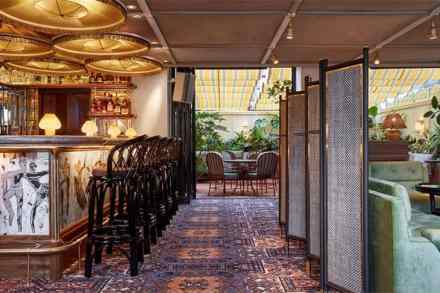
A French creole restaurant rises in the sullen ruins of London. It is called Louie, for French king or trumpeter, depending on your wish. It is next to the Ivy — now a private members’ club and franchise stretching to the London suburbs bearing small bowls of shepherd’s pie — and it is infinitely preferable. That is, I can get a table, and no pastiche medieval windows or tabloid photographers are involved. It’s a terrible thing being jostled into a gutter so someone can photograph the former cast of Crossroads. The Ivy is the Love Island of grand restaurants. It is for the spuriously famous, which is now everyone. The zeitgeist cries: we’re going to need a bigger Ivy. Or at least it used to. Louie is a small, golden rebuke.
In search of lost French restaurants

Readers of a certain vintage will recall when any listing of fancy restaurants in a big city had a heavy French accent. Look at the ‘Let’s Eat Out’ section at the back of an old issue of Gourmet magazine from the 1970s for the evidence, at least for New York but, if memory serves, it was true for London as well. (The Italians probably ran second, then the Chinese, then a big falloff to other countries but still mostly European ones.) The way it worked at Gourmet — you got a listing if you bought an ad — only understated things. Lots of good places never advertised at all or simply did not aspire to the tony status that association with the likes of Gourmet conferred. Names like Le Chamberlin, La Caravelle, Le Chantilly, Mon Paris, announced their sole culinary allegiance.

French

Is it time for a Dad’s Army of lorry drivers?

From our UK edition

Here’s a patriotic proposal: let’s form a Dad’s Army of lorry drivers, of which the Road Haulage Association reckons there’s currently a 100,000 shortage. Daily headlines tell us this is causing supply disruptions that have led to reduced factory output and half-empty supermarket shelves, slowing recovery and contributing to the blip in inflation. We need Walmington-on-Sea’s trusty platoon at the wheel to compensate for the million-plus exodus of foreign-born workers that has afflicted the economy from hospitality (see this week’s last item) to fruit farms, slaughterhouses and construction sites — compounded in haulage by delays to thousands of HGV tests for new applicants last year.

Coffee with Coleen

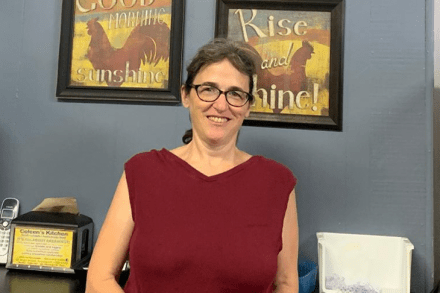
I’ve eaten a lot of breakfasts in my time — hell, it must be approaching 20,000 by now — and few if any have equaled those consumed at Coleen’s Kitchen on Main Street in the lived-in Erie Canal village of Brockport, New York. It takes a few minutes before you sense that there’s something not quite wrong about Coleen’s. Upon entering the restaurant you pour your own coffee at the beverage station. Maître d’ Coleen directs you to your seat. She hands you the extensive four-page menu, which warns that ‘you will be charged 59 cents if you ask what kind of bread I have’. Read it well and don’t waste Coleen’s time, you lazy bum! Waitress Coleen takes your order.

coleen

A Damascene moment in London: Imad’s Syrian Kitchen reviewed

From our UK edition

Imad’s Syrian Kitchen is an eyrie off Carnaby Street, a once-famous road which seems to exist nowadays to sell trainers to tourists who have fallen, as if by wormhole, out of the Liberty homeware department with its pathological dependence on florals. No matter. Nearby, in Kingly Court, which is like Covent Garden before it fell to Dior and Apple, more interesting things happen: the sort of things that London, so sunken, needs. Kingly Court is charming because it invokes an ancient coaching inn — London was once filled with them — and it is, due to the presence of independent eating houses, still palpably bright, pleasing and alive. The restaurant is likewise cheerful: wooden floors; pale walls; blue windowsills; blue tiles; a beamed ceiling; photographs of Damascus.

Cake expectations: afternoon tea has gone OTT

From our UK edition

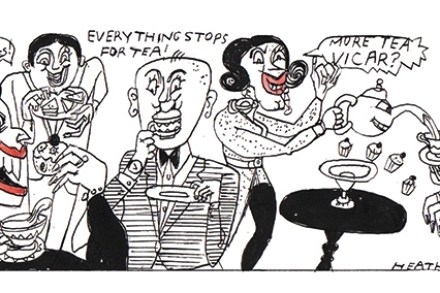
The other day, I came across a description of afternoon tea written by Alfred Douglas in 1920: ‘Two kinds of bread and butter, white and brown, cucumber and tomato sandwiches, cut razor thin, scones, rock buns and then all the cakes — plum, madeira, caraway seed — the meal had about it the lavishness of a Victorian dinner.’ There are a few things about this feast which I find striking. It includes two kinds of bread and butter. Sliced bread and butter never features on the modern table but a century ago, people used it to fill themselves up; it took the edge off your appetite. Note also the simplicity of the cucumber and tomato sandwiches. Both are excellent if they’re made from good stuff. The crucial thing was that they were cut thin.

How many people are self-isolating when they’re told to?

From our UK edition

Isolated cases Large numbers of people are still being ordered to self-isolate in spite of having been vaccinated — 137,560 people were identified as close contacts of positive Covid cases through the Test and Trace system between 10 and 16 June. How well have they been adhering to the rules? — 79% say they have fully conformed. — 80% claimed they had had no contact with non-household members. — Of the 21% who didn’t adhere to the rules, 90% said they had left home during the period in which they were supposed to be isolating and 21% said they had had visitors to their home. — 41% said that isolating had had a negative effect on their wellbeing and mental health. — 28% reported that they had lost income.

Instagram is appallingly mundane

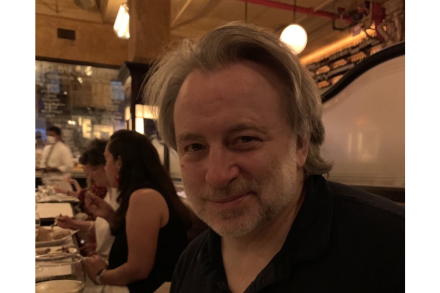
New York Four years ago, I had a stroke that left the right side of my body paralyzed and my speech so impaired that I sound like I'm talking under water. But the stroke also left me not giving a fuck what anyone thinks of me. I didn't know a thing about Instagram until 18 months ago when a friend explained how it worked. Looking at some typical posts for the first time, I was appalled how mundane the majority were. At least half were of dogs, kids or spouses, falsely attesting to the happiness of their lives. There were some brilliantly ironic posts, but not many. The political posts were the worst. I found the iron-like conviction of their opinions so frightening that I decided to half throw my fool's cap into the ring and oppose them. I loathe cancel culture.

keith mcnally

Bad food is back: The Roof Garden at Pantechnicon reviewed

From our UK edition

The Roof Garden is a pale, Nordic-style restaurant at the top of the glorious Pantechnicon in Belgravia — formerly a bazaar — opposite a Waitrose I didn’t know existed. (Waitrose seems too human for Belgravia. Food seems too human for Belgravia.) This thrilling building, which should be a library — it has Doric columns — is instead a collection of restaurants, shops and what I think are called ‘outlets’ (a Japanese café; something called, gnomically, ‘Kiosk’), all celebrating the ‘playful’ intersection — I mean meeting, but marketing jargon is addictive if you are an idiot — between Nordic and Japanese food. It is a wealth mall from hell, then, in the style of Terminal 5’s main street.

Hell hath no fury like a restaurateur scorned

How does the saying go? Is it ‘fool me once, shame on me. Fool me four times, I’ll shame you on social media’? It’s a lesson someone like Graydon Carter, the legendary former Vanity Fair editor who now runs an ambiguously successful digital magazine called Air Mail, should know by now. Yet Carter has managed to infuriate his fellow bon-viveur, Keith McNally, the restauranteur and Instagram enthusiast. Carter has, McNally claims, booked and not shown-up at one of his New York restaurants not once, not twice, but four times. To rub salt into an empty place setting, Carter didn’t call ahead in his latest no-show, at Morandi in the West Village, for a reservation for 12 people.

graydon carter

Why food in Britain is so much better than France

From our UK edition

Fifty years ago, the food in Britain was comically terrible. The Wimpy Bar was the place for a date, fish and chips was the limit of takeaway and if you were lucky you might get a packet of crisps at the pub. Everything French was better. French bread. French cheese. French wine. French restaurants, bistros, cafés. Today the positions are reversed. Britain is the land of foodie innovation, with every cuisine in the world represented, deconstructed, reinvented. Reopening after the lockdowns, even after a number of casualties, Britain will return to a cornucopia of diversity and plenty of quality.

Pretty food with a side order of pollution: 28-50 reviewed

From our UK edition

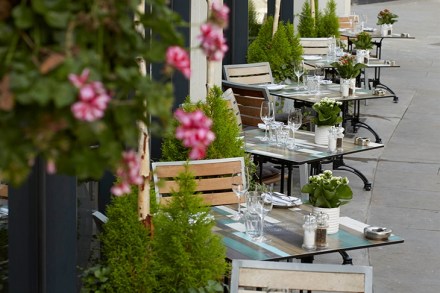
You cannot have cars and dining tables in the same dreamscape: it doesn’t work, unless you think carbon monoxide is a herb, or are wearing full Hazmat, like some teachers. London is in much denial about its air pollution; in the East End child asthmatics are choking. But we must embrace it for a few days more; others have lost more in pandemic than an attachment to the convention that if we dine outside it should be in a flower-filled garden. Perhaps there are enchanted restaurant gardens in London, but I have never found one. I conclude that, outside fiction or aristocracy, they do not exist. Instead, we have modish kerbside dining.

London’s best sky-high dining spots

From our UK edition

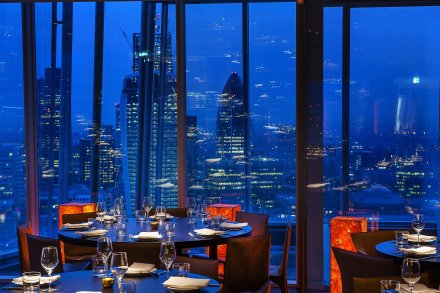
Pity the poor panoramic restaurant. They might boast the best views of the capital, but the lack of outdoor space on the 42nd floor means they haven’t been able to take advantage of the easing of restrictions for the hospitality industry — until now. But from 17 May, they’ll be sashaying out of lockdown like the sequin-clad Marilyn Monroe and Jane Russell in Gentlemen Prefer Blondes.  With gala dinners, champagne cocktails and complimentary magnums of Moet to tempt you back, here’s where to go. Searcy’s at The Gherkin London’s original sky-high dining room on levels 39 and 40 of The Gherkin (30 St Mary Axe, EC3) is welcoming guests back with a series of five-course gala dinners during their opening week.

Pleasing perversity: St Pancras Brasserie and Champagne Bar by Searcys reviewed

From our UK edition

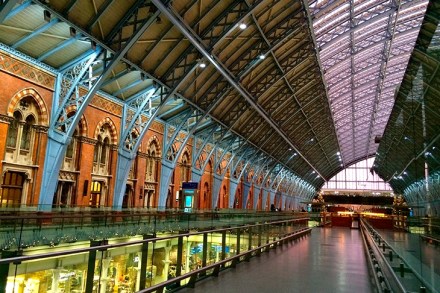
The St Pancras Brasserie and Champagne Bar by Searcys is as expansive as its name, but ghostly. It is an immense Art Deco restaurant spilling on to an empty platform at the station. When restaurants opened their patios and gardens, I fretted that they would be too busy to be enjoyed: a diner would cling to a square of Astroturf, fearing to sink. But not here: the people have been removed, and they have not returned. Inside, it is empty if not shuttered: a great, golden brasserie with dark wood, dark leather and pale globes of light. The door to the loo is so tall I imagine they stole the idea from Mr Greedy (and the giant who loved peas).

Back to the future: Bentley’s Oyster Bar & Grill reviewed

The west end of London is still pale and necrotic, but there are points of light. Hatchards the bookseller is open and its memorial to the Duke of Edinburgh is relatively, blissfully, restrained: a portrait in the window, with minimal text for a writer to trip up on his own sycophancy. People are buying whisky on Jermyn Street. The greasy spoon Piggy’s in Air Street survives and if before you merely loitered outside restaurants and ate your food from a bucket you can now sit down, though a strange sort of duck marshal lurks in St James’s Park, and I do not trust him. I do not think he is really watching the ducks. I celebrate the end of this lockdown at Bentley’s Oyster Bar & Grill in Swallow Street.

Where to eat after lockdown: tips from Britain’s top chefs

From our UK edition

After long months of social distancing, the scramble is on to book those all-important first meals out. You can almost taste it, can’t you. Someone else’s cooking, served on someone else’s plates. It’s a universal truth that the best tips on where to eat come from within the industry. Here, some of Britain’s best chefs share the spots they’re heading to as soon as the lockdown lifts. James Cochran After stints at the Ledbury, the Harwood arms, various pop ups, James Cochran opened 12:51 in Islington. After the restaurant industry was brought to a standstill last year he pivoted to making his signature fried chicken available under the name Around the Cluck.

After London lockdown, LA is like Disneyland

From our UK edition

When I arrived a month ago, one wouldn’t believe LA was suffering a major pandemic. The roads were still busy with fast cars, the freeways choked when we ventured on to them, all vehicles seeming to be dodgem cars, zooming across the lanes with ferocious abandon. There was a major accident recently in front of my building. I looked out of my window at a speeding sports car, which had been careening down the boulevard at 120 mph and had crashed into another expensive car (as well as a few others on the way). It had been cut in half and exploded into flames. Both drivers died. Sadly, there’s an epidemic of young rich boys playing speed games on the wide boulevards.

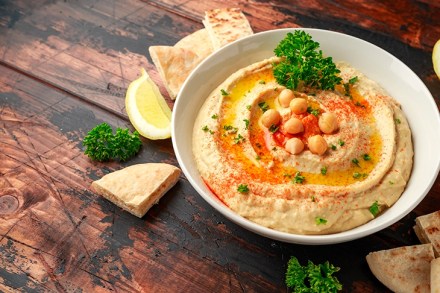
The finest humous in England: Arabica food boxes reviewed

From our UK edition

Restaurant-goers who cannot let go of restaurants — for professional or other reasons — are floating on a sea of takeaway boxes, which have none of the glamour. Which of us fell in love on a takeaway? I wish I did not have to write about them, nor you to read about them, but if this is the worst thing that happened to you this year — packaging — it is not so bad. I have already begun a small counter--revolution by shopping at the greengrocers and the cheesemongers, and I suggest you do the same. Even so, they are faintly mesmerising by volume: a box-themed version of the Rumpelstiltskin myth, which is familiar to all children, and adults with an eating disorder. Perhaps it is a metaphor: we float on glut and are lucky, if not happy.

The car industry is accelerating towards an electric future

From our UK edition

Back in November, when Downing Street’s pandemic responses looked daily more incompetent, the announcement of a ban on sales of new petrol and diesel cars by 2030, ten years earlier than originally planned, was largely greeted — along with the rest of the ‘Ten Point Plan for a Green Industrial Revolution’ — as another exercise in Johnsonian distraction and thin-air number-plucking. Auto makers responded defensively, citing the huge costs of re-engineering model ranges in short order and the shameful failure of ministers to encourage investment in plug-in networks for electric vehicles. Meanwhile, Tesla founder Elon Musk announced he would site a battery ‘gigafactory’ in Germany because Brexit made the UK ‘too risky’.

Piccadilly Circus, delivered: the Wolseley’s home dining reviewed

From our UK edition

The Corbin & King dining and home entertaining box includes dishes from the Delaunay, the Wolseley and Brasserie Zédel ‘delivered to your home and finished by you’. My husband doubts it, because it comes from London, of which some Brexiters are more suspicious than the whole of France, and because it is not ‘cooked from scratch’. He claims he never heard this phrase before he married me, but he had the sort of rural Wiltshire childhood where he would roam the fields chasing hot air balloons while his mother stood in the kitchen in an apron with a spoon waiting for him. ‘It’s like being a latchkey kid,’ he moans, as I stroke the box with tiny whimpers of joy. Then he says: ‘What’s a latchkey kid?