Research

How useful is AI for research?

Late last year, I published the first theoretical physics paper in which the main idea originated from artificial intelligence – from an AI. And my experience working with the most powerful AI models left me both impressed and wary. The most accurate analogy I can offer is that it’s like something familiar to anyone who has done research: a brilliant colleague who is also unreliable. This colleague can produce deep insights at surprising speed – and then, the next second, make an error that ranges from the trivial to the profound. That tension – capability versus reliability – has shaped how I now use these systems in mathematics and theoretical physics. It is also what will shape how they affect scientific research over the next few years.
The battle to stop US universities aiding Chinese repression

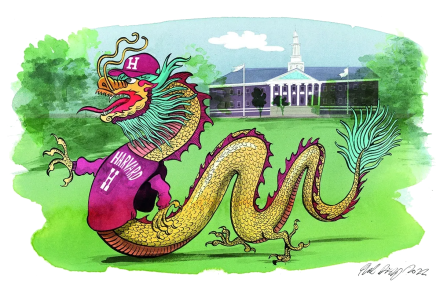
It goes by an innocuous name – “Integrated Joint Operations Platform” (IJOP) – but it’s one of the most sinister components of China’s surveillance state, managing what has been described as a genocide against the Uighurs. The IJOP combines multiple systems of repression – location, messages, contacts, social media and other data from phones, together with information from checkpoints, cameras and biometric records. It then flags “suspicious” individuals for detention and forced labor. Now leading US universities have been accused of extensive collaboration with Chinese laboratories which develop technology that may be deployed or adapted for use in this system.

Why woke doesn’t work

Many conservatives will have long suspected that “woke” language – the cocktail of victimhood narratives and group identity – alienates most Americans. It is simply too grating, and it is simply too divisive. And no matter what your politics, it is almost impossible to imagine a healthy society that is built on an aggressive competition over who is the most historically aggrieved.  Up until now this has been mostly an intuition. But a new study by the Network Contagion Research Institute (NCRI) finally puts evidence on the table: that this “woke” language actively provokes real anger, defensiveness and bile in respondents.

Science fiction: the crisis in research

From our UK edition

The president of Stanford University, the neuroscientist Marc Tessier-Lavigne, has announced his resignation following an investigation into allegations of fraud and fabrication in three of his lab’s scientific papers, including one cited as the most important result on Alzheimer’s disease in 20 years. The report exonerated him of committing the fraud but found he had failed to correct the errors once they were brought to his attention.  The pandemic provided a glimpse of how far scientists will go to bend conclusions to a preferred narrative The vast majority of scientists are honest, but recent years have seen many cases of scientific misconduct come to the surface, implying there is a systemic problem.

The Wuhan cover-up is more typical than you think

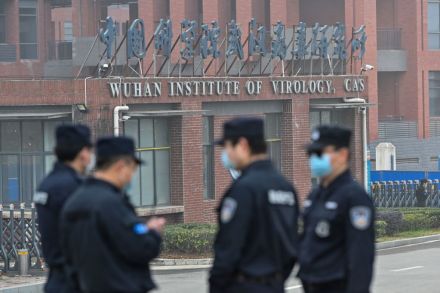
The biggest shock amid the COVID-19 pandemic has been the discovery that the virus may have been released during an illegal collaboration on so-called 'gain-of-function' research between the US nonprofit EcoHealth Alliance and the Wuhan Institute of Virology. Recently revealed National Institutes of Health (NIH) documents show that American taxpayers directly subsidized this joint effort, despite a federal government ban on any experiment that might give pathogens the ability to leap species. Even worse was that EcoHealth Alliance President Peter Daszak tried to shut down any debate on whether the coronavirus had been leaked from a lab by getting 27 prominent scientists to endorse a March 2020 letter to the medical journal the Lancet.

wuhan

How Boris’s research agency can thrive

From our UK edition

What is the recipe for outstanding innovation? According to Kwasi Kwarteng, the new Secretary of State for Business, Energy and Industrial Strategy, we should learn it from America. When he announced last week the launch of Britain’s new Advanced Research and Inventions Agency (ARIA), he reiterated that the £800m organisation would be based upon DARPA, America’s high-risk, high-reward defence research agency. This is no surprise. Since the 1950s, DARPA has racked up an extraordinary series of breakthroughs, including the internet, GPS, drones and stealth technology. Yet when it comes to recapturing what Kwarteng calls ‘the spirit of Britain’s long and proud history of inventing’, he should look at Britain’s history as much as America’s.

Is this Dominic Cummings’ biggest legacy?

From our UK edition

The government’s decision to set up a new research funding agency, to be known as the Advanced Research and Invention Agency (ARIA), marks an important break in UK science and innovation policy – potentially more important than any recent government initiative in this field. The aim, as the Business Secretary Kwasi Kwarteng explained last week, is to fund high-risk, high-reward research, ‘supporting ground-breaking discoveries that could transform people’s lives for the better.’ As part of this mission, the chief executive of ARIA will be free to choose which areas to research and which projects to fund without direction from ministers.

The solving of a biological mystery

From our UK edition

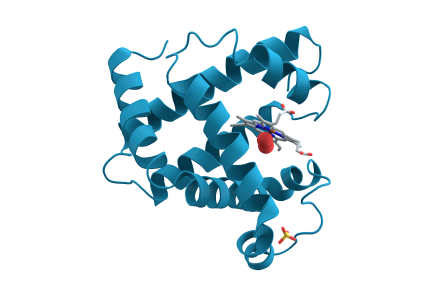
DNA is the blueprint that encodes the instructions to make proteins. Proteins are the building blocks and the machines that power life. And proteins make up the tissue that in turn comprise the organs and muscles that make up us. Considering how crucial proteins are to life itself, there is still so much we do not know about them. But Google’s AI firm Deepmind may just have helped us make a giant leap forward. When a protein is first made inside a living cell, it is merely a chain of connected amino acids — like beads on a string. Yet, it instantaneously folds into unique three-dimensional, beautiful shapes, which enable them to carry out their function.

An off-the-shelf insect repellent could help kill Covid-19

From our UK edition

Should we be spraying surfaces, and ourselves, with an off-the-shelf mosquito repellent to tackle the spread of Covid-19? The Ministry of Defence has revealed that it has been issuing soldiers with Mosi-guard natural, a spray derived from eucalyptus oil and manufactured by a small company called Citrefine, in Leeds, from the beginning of the Covid crisis. The spray has been tested by the Defence Science and Technology Laboratory and found to have a rapid effect on reducing levels of the virus when sprayed onto surfaces. It did not, however, succeed in eliminating the virus altogether. In one test, the product was sprayed onto latex synthetic skin an hour before being exposed to SARS-CoV-2, the virus which causes Covid-19.

Rejoice for the return of the church choir

From our UK edition

Not all coronavirus research sounds like fun, but wouldn’t you just loved to have been at the session where 25 choristers were asked to sing Happy Birthday at varying volumes to determine whether or not it would be safe for choirs to get back to business. The exercise was carried out by academics collaborating with Public Health England (while it lasted) and the Department for Culture. And you know what? It turns out that the quieter the singing, the lower the risk of transmitting droplets. The researchers found that singing did not produce much more aerosol than speaking at a similar volume, but singing or speaking loudly increased the production of droplets by a factor of between 20 and 30 compared with lower volumes.

Covid’s knock-on effect on child deaths

From our UK edition

The daily death toll has been a constant backdrop to the Covid-19 crisis. Would we ever have entered lockdown, would so many people have been driven to panic, were it not for the publication, every afternoon, of the number of deaths in the past 24 hours? It has helped set in the minds of the public the idea that this is a lethal disease, on a scale completely removed from other common diseases. How much differently would we see Covid-19, though, if we were also fed with a slightly different statistic: the number of indirect deaths, caused not by the disease itself but by other factors associated with lockdowns: closure of medical facilities, fear of going to a hospital and so on.

How do we know which lockdown measures should be lifted first?

From our UK edition

Today, the cabinet has to decide where to go next with the lockdown – although the decision will not be announced until Sunday. Boris Johnson has talked of a ‘menu of options’ for relaxing some of the measures, but we have been warned not to expect too much. The government has also distanced itself from speculation that rules on outdoor exercise will be loosened, as well as garden centres and a few other businesses allowed to reopen. How does anyone know which lockdown measures have been effective and which haven’t? A team of epidemiologists led by Paul Hunter have attempted to do that, and their pre-published paper may well feed into the government’s decision-making today.