Republicans

It’s still Obama’s White House

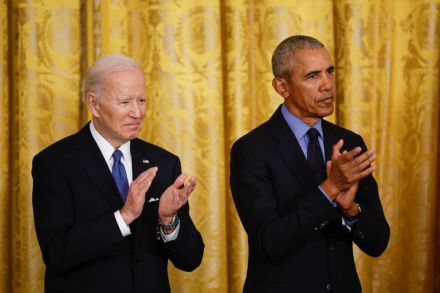
Barack Obama returned to the White House this week, and his presence was a straight up blast from the past. The 2010s might not be our most culturally defined decade, but surely the Age of Barry still has a few touchstones worth recalling. That was back when it was cool to say “there’s an app for that,” all the way back when the Speaker of the House was...actually it was still Nancy Pelosi. And it was back when everyone, and I do mean everyone, could not shut up about Obamacare. Sure enough, Obama was back in Washington to once again revel in the passage of his signature health law, even if it had just undergone yet another round of tweaks to make it work this time for real.

Return of the congressional earmark zombie

Much like a Hollywood movie monster franchise, earmarks are back in the federal government. Congress’s $1.5 trillion omnibus bill contains pages upon pages of so-called “member-directed spending” for hundreds of pet projects in congressional districts across the country. Senator Mike Braun put the final earmark count at $8 billion, taking up 367 pages of the 2,700-page bill that funds the government through the end of the fiscal year. Congress banned earmarks in 2011 thanks to a rather rare show of bipartisanship by House Republicans and then-President Barack Obama. Congressional bipartisanship then unanimously brought back earmarks last year.

What is conservatism for?

Rick Scott recently managed to elbow his way into a jam-packed news cycle with an eleven-point plan to “rescue America.” The Florida senator did not, however, get the headlines he wanted. Senator Scott’s proposals ranged from the trivial, such as a suggestion to name the border wall after Donald Trump, to the obvious: growing the economy was one especially helpful idea. But it was a tax plan that landed him in hot water with colleagues. “All Americans should pay some income tax to have skin in the game, even if a small amount,” suggested Mr. Scott. “Currently over half of Americans pay no income tax.

conservatism
conservatism fusionism

Fight for the right

Sohrab Ahmari Modern American conservatism is composed of three distinct traditions: libertarian economics, foreign-policy hawkism and social traditionalism. This “fusion” was born of a contingent historical moment, the Cold War, when the Soviet threat forced different social classes and their ideological spokesmen to band together in common cause. There was no eternal principle demanding that these groups tie their destinies together — a fact that became apparent with Donald Trump’s rise, which divided the three camps along various axes of alliance and enmity. Fusionism is dead. Well and truly dead.

Noninterventionists never win arguments

I’ve been thinking about where I was on the eve of the US invasion of Iraq in 2003, and my memories of the event are quite depressing. What have we learned? As a research fellow at the Cato Institute at that time, I was working with other analysts preparing research, authoring commentaries, publishing op-ed articles and giving interviews to the broadcast media, warning about the consequences of the coming American military conquest in the Middle East. It's not polite to toot one’s own horn, but we were right.

terror

Republican hawks squawk at each other

Cockburn has never been much of a hawk, unless you count his begrudging deficit hawkery over the massive tab he ran up at his local bar. But many elected Republicans are very hawkish on foreign policy, supporting "peace through strength," as Ronald Reagan put it, as well as occasionally war through strength. So how are the GOP's highest-flying hawks handling Russia's invasion of Ukraine? Cockburn was surprised to find them divided. Nearly every Republican lawmaker (and Democrat for that matter) agrees that we need to throttle Russia with economic sanctions. It's on the question of whether the United States should implement a no-fly zone over Ukraine that the cracks begin to show.

Can Matt Gaetz survive a real world scandal?

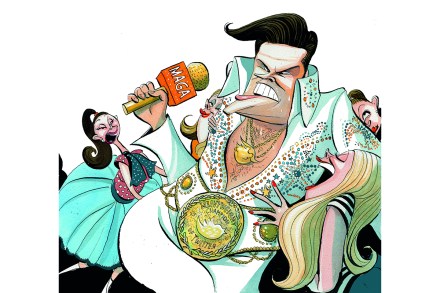
The music blares, sparks fly from the pyrotechnics show, and the star walks out, pumping his fist and soaking in the cheers of the adoring crowd. A WWE wrestling event? No, it’s Congressman Matt Gaetz at AMERICAFEST, a Turning Point USA conference in December in Phoenix, Arizona. Gaetz was not there to deliver a substantive policy speech, educate the crowd about the dangers of inflationary spending or warn about Russia’s geopolitical machinations in Ukraine. Instead, the thirty-nine-year-old MAGA firebrand delivered the goods his audience expected.

gate

Republicans’ fiscal responsibility theater

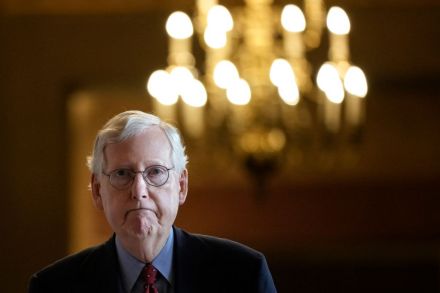
If you think Washington couldn't get any more dysfunctional, think again. On Monday night, Senate Republicans blocked a Democratic attempt to avoid a government shutdown. This raises the temperature in a Congress that’s already had, shall we say, a pretty high fever since being sworn in on January 3. Depending on who you ask, the Republicans’ latest action is either a brave attempt at stopping Biden’s massive spending package — Mitch McConnell’s stated perspective — or a foolish gamble bringing us one step closer to a debt default, as Democrats claim. In a sense, both sides are right. But Washington also needs to remember that refusing to raise the debt limit is akin to cutting up the credit card after maxing it out. It doesn’t solve the actual problem.

fiscal responsibility

Who wins the Afghanistan Dumbest Take Award?

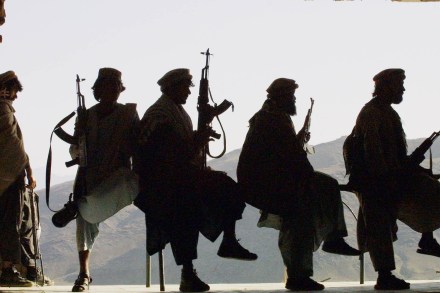
It’s a national disgrace, a catastrophe nearly two decades in the making. In a just society, everyone involved would be severely punished, but in the fallen state of modern America there will be no consequences, only more humiliation. Cockburn refers, of course, to Twitter, that monstrous invention where America’s politicians, journalists, ‘experts’, and ordinary people compete with one another to see who can be the most profoundly pathetic, unimpressive, and cringeworthy. Naturally, the ongoing debacle in Afghanistan allowed every player to put in their best performance.

Afghanistan

NYT dogged by snarling anti-Trumpers

'Can We Drop a Dog Walker for Her Political Opinions?' asks a letter-writer to this week’s edition of the New York Times’s ethicist column. The writer laments that they have hired a 'reliable, responsible, and kind' person to walk the family dog. The problem? Beneath the visage of humanity, the dog walker is actually a monstrous Trump voter. Rather than stop and ponder the implications of a Trump voter being, in fact, a rather decent human being, the writer gets right to the meat of the matter: Should they fire the dog walker immediately? Kwame Anthony Appiah, the NYT’s ethicist, was relatively measured in his response. 'A manager who penalizes a regular employee for her political views is exercising workplace tyranny,' Kwame writes.

nyt

My country, right or left

A funny thing happened to me this Fourth of July and, at the risk of having every jaded member of the blue-check Twitterati respond, ‘I’ll take things that didn’t happen for $200, Alex,’ I’m going to tell the story. My aunt and uncle invited me and my husband to join them in their annual excursion to the Fourth of July celebration at the Hollywood Bowl. This has become a ritual for us and as it was the first event at the Bowl since the pandemic, everyone was in a festive mood. For the occasion, I wore American flag leggings and a headband that spelled out U-S-A. On springs. As we settled into our box, we chatted with the women drinking wine and eating tapas next to us. Standard small talk. How excited we were to be back at the Bowl. What a gorgeous night it was.

patriotism

A party and a half

The future of the GOP is the same as the future of the Democratic party. That is because the parties are not two things, but (to compare low things with high) somewhat akin to that union described in the Catholic creed: ex patre filioque procedit: ‘it proceeds from the father and the son’, one substance, two faces (well, three, really, but we can leave that to one side). As I have had occasion to observe elsewhere, the current political disposition of the United States is not a two-party system. It is at most a one-and-a-half party system. There is a regime party, which basically calls the shots. And there is a junior, adjunct party that has different branding but sells mostly the same goods under different labels.

party

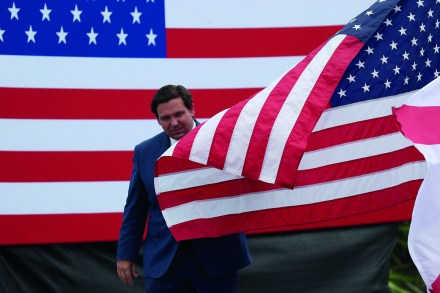
The DeSantis doctrine

The term ‘Florida man’ usually comes loaded with negative connotations, but not if you’re talking about Ron DeSantis. The first-term Republican governor’s approval ratings have reached 64 percent; a recent poll had him at 55 percent, still high for an unabashed conservative in a swing state. Enterprising apparel companies are already selling ‘DeSantis 2024’ gear — and a Trafalgar poll of likely contenders (excluding Trump) shows DeSantis leading the pack with 35 percent support among Republican voters. The Florida governor also bested Trump in a straw poll conducted during June's Western Conservative Summit in Denver. DeSantis’s handling of the COVID-19 pandemic has earned him adoration from the right.

ron desantis

Is the President Catholic?

Statistics released by Pew Research illustrate the extent to which the religious faith of President Joe Biden, a practicing Catholic, is a source of profound division between Democrats and Republicans. To quote Pew: 'Nearly nine in 10 Democrats (88 percent) says that Joe Biden is at least "somewhat" religious; just 36 percent of Republicans agree.' On the face of it, the Democrats are right. This is a man who attends Mass every Sunday, and whose faith has helped him through the unthinkable tragedy of losing his young first wife and one-year-old daughter when their car was hit by a tractor in 1972. Biden's surviving son, Beau, was injured but survived; he died from a brain tumor, aged 46, in 2015.

devout

Republican resurrection

When Donald Trump took his famous escalator ride, the Republican party was too attached to abstract principles at the expense of the material interests of its own voters. It wasn’t even doing a particularly good job of adhering to its preferred ideological abstractions. Whatever the Democratic party’s ideological failings, its leadership understands the importance of delivering tangible benefits to the electoral coalition that puts them in power (although their newfound suburban voters could be in for a rude awakening if the Democrats ever get too much power). Trump presented an opportunity to change this.

populism republican

After Pennsylvania, can the GOP win again?

The special election for Pennsylvania’s 18th Congressional District has ended in a photo finish. There are absentee ballots still to be counted, perhaps a recount to be demanded. But it looks as if the Democrat, Conor Lamb, has won in this district that just two years ago voted for Donald Trump over Hillary Clinton by a 20-point margin. Even if the Republican, Rick Saccone, pulls ahead as the final count comes in, Tuesday’s result portends extinction for the GOP majority in Congress. But that was a safe bet even before this debacle. The better question is not whether Republicans have a prayer of hanging on to the House of Representatives, but what kind of Republican Party might eventually emerge from the wreckage to win again.

Trumpism is taking the GOP back to its industrialist roots

The weeping and wailing that is greeting Trump’s imposition of tariffs on steel and aluminum products entering the US is evidence that no one in America knows anything about the history of the Grand Old Party. Paul Ryan and the libertarian right are acting as if the President is betraying some long and distinguished tradition. This is nonsense. The Republican party was founded as an alliance of Big Business and government, with its platform devoted to huge land grants to the railroads, heavy taxes on “sinful” products like alcohol and tobacco, and protective tariffs. The American steel industry has been leading the charge for tariffs since 1820: yes, some things never change.