Religion

Cult fiction – Amity and Sorrow by Peggy Riley

From our UK edition

There's an attraction, certainly, in joining a cult. Not a Sheryl Sandberg working women type cult but a good old fashioned we're all in it together wearing hemp skirts type cult. No need to chivvy the nanny, check the Blackberry or prepare for 8am meetings. Simply pack the children off to daycare (the yard) and hoe some vegetables. That's pretty much it for the day – apart from some worship and chatting to close female friends – until it’s time for hallucinogenic weeds and sex with a man who says he loves you. Amity & Sorrow, the debut novel for new imprint Tinder Press by Peggy Riley, explores the appeal of polygamous cults. It begins brutally, a crash that leaves the occupants of the car as bewildered and disorientated as the reader.

The Serpent’s Promise, by Steve Jones – review

From our UK edition

The weight of bacteria that each of us carries around is equal to that of our brain, a kilogram of the creatures, billions of them, ten times as many in the gut alone as the number of human cells in the body. There may be 10,000 distinct kinds, with a different community on the forehead from that on the sole. There are fewer kinds in the mouth or stomach than at the back of the knee, which has a more diverse population than any other part. This is surprising and interesting, and we would like to know more about this teeming personal nature reserve.

It’s time for the Church of England to drop the culture wars

From our UK edition

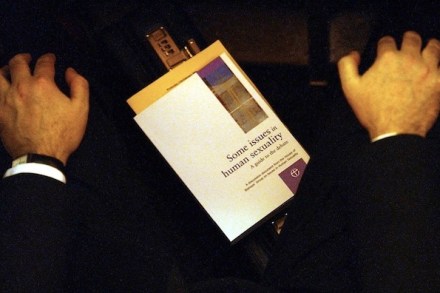
Almost three thousand years ago the Prophet Amos asked 'can two walk together except they be agreed?' How can the Church of England, pragmatic and volunteer-led but with complex legal and cultural structures, stay meshed with its culturally incompatible overseas churches? What is its future? Theo Hobson argues in this week's Spectator that the C of E needs to find a third way in order to survive, affirming gay partnerships whilst simultaneously rejecting equal marriage. Can this be done? If the deadlock Hobson describes arose from a frail incoherent compromise, Some Issues in Human Sexuality, how can more hand-wringing duplicity solve it? The world has moved radically on since 1991. Education, smartphones and social media are driving rapid ubiquitous change.

The Church of England needs a compromise on gay marriage. Here it is

From our UK edition

It is a wearyingly obvious observation, but the Church of England remains crippled by the gay crisis. It is locked in disastrous self-opposition, alienated from its largely liberal nature. Maybe the new Archbishop of Canterbury, Justin Welby, has a secret plan that will break the deadlock: there is no sign of it yet. The advent of gay marriage has made the situation look even more hopeless. It entrenches the church in its official conservatism, and it further radicalises the liberals. A few weeks ago the church issued a report clarifying its opposition to gay marriage, in which it ruled out the blessing of gay partnerships. This was not a hopeful move: it ought to be keeping these issues separate.

Move over, Dawkins. The atheist spring of the last decade is wilting.

From our UK edition

I couldn't get Richard Dawkins to reply to Theo Hobson's excellent article on 'the new new atheists'. Probably, he didn't see my message. Or maybe he thought it beneath him. Or maybe like God he just doesn't respond to all our entreaties. There's no doubt, though, that Theo's piece touched a nerve among the godless trolls of the web -- just look at the comments section. Theo must be on to something. The new atheist spring of the 2000s is wilting. Dawkins suddenly seems like a strange anachronism. In his place, a humbler and more honest atheism is emerging, led by brilliant minds like our very own Douglas Murray on one hand and Alain de Botton on the other.

Wisden finally merits the epithet ‘Cricket Bible’

From our UK edition

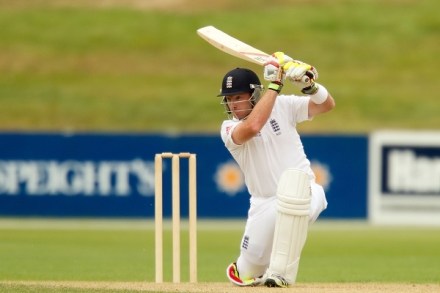
The man who christened Wisden ‘The Cricket Bible’ had little religion. Wisden is an unprepossessing sight: a 1,500 page tome surrounded by a flame-yellow dust jacket covered in mud brown lettering. The book’s content often matches its artless appearance; thousands of statistics and scorecards that read like the turgid genealogical passages of Genesis. Abraham begat Isaac; Jack Hobbs scored 61,760 runs. A record of the chosen people is important; but it does not inspire belief. The record tells you nothing of how Abraham raised Isaac; neither do Hobbs’ stats tell you how he scored his runs. Bald facts contain little mystery, and what do those know of God who know nothing of mystery? The 150th edition of Wisden defers to its forbears, at least in appearance.

Richard Dawkins has lost: meet the new new atheists

From our UK edition

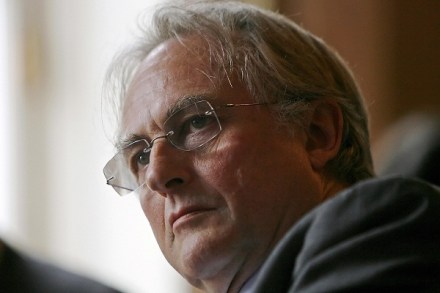
The atheist spring that began just over a decade ago is over, thank God. Richard Dawkins is now seen by many, even many non-believers, as a joke figure, shaking his fist at sky fairies. He’s the Mary Whitehouse of our day. So what was all that about, then? We can see it a bit more clearly now. It was an outpouring of frustration at the fact that religion is maddeningly complicated and stubbornly irritating, even in largely secular Britain. This frustration had been building for decades: the secular intellectual is likely to feel somewhat bothered by religion, even if it is culturally weak. Oh, she finds it charming and interesting to a large extent, and loves a cosy carol service, but religion really ought to know its place.

Live from Golgotha

From our UK edition

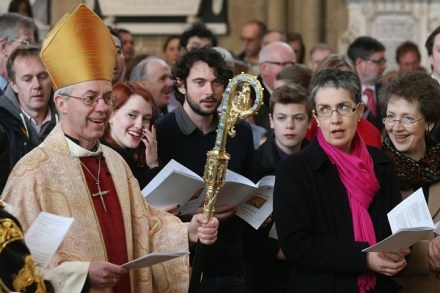
A rather charming and typically self-deprecating Easter sermon from Archbishop Justin at Canterbury Cathedral; I’m beginning to like him. His subject was the inevitability of disillusion with things like governments and councils and ‘regulatory bodies’ and indeed Archbishops of Canterbury who are all bound, in the end, to be fucking useless (although this was not how he put it). I was seated in one of the pleb pews and rather hoped he might have taken a leaf out of that Argentine left-footer’s book and wandered over and washed my feet. They’ve become unaccountably scaly of late and for some reason now resemble the claws of a Galapagos tortoise; a bit of ecumenical bathing might have done them some good. Never mind.

Happy Easter | 31 March 2013

From our UK edition

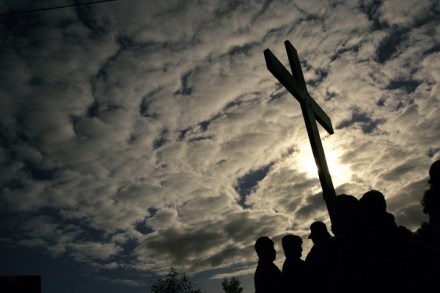
It is a glorious morning, suitable weather to mark this joyous day in the Christian calendar. The leading column in this week’s issue of the magazine considers the Easter story in humanity’s past, present and future, from perspective of non-believers as well as believers. Here’s a short excerpt: ‘Unlike Christmas, it’s a story that doesn’t lend itself to much commercial fuss: no kings or presents. Easter is a story of sacrifice, torture, abandonment and death — and, through it all, triumph over that death. Even in the 21st century; despite all the chocolate eggs, Easter gives us pause. And it’s Easter, not Christmas, that makes Christianity such a radical religion.

Brace yourself for the real experience of going to a rural parish service on Easter Sunday

From our UK edition

‘And we extend a special welcome to all our visitors here today.’ That’s the vicar speaking; and this Sunday is one of the two days in the year when you are likely to be one of those visitors. You’re spending Easter with in-laws or friends who live in the country. Easter wouldn’t feel like Easter without Eucharist at the local C of E church after the first mini-egg of the day, so here you are, in tweed and wool, breathing in the timeless smell of damp and candle-wax as you try to prop up the paperback hymn book called Praise! on the pew shelf but it is too big and keeps flopping forward.

Holy Week is a time for contemplation and renewal

From our UK edition

Good Friday is a day for contemplation. If you have time, do read Roger Scruton’s piece in the latest issue of the Spectator. It is, among other things, a deep consideration of the damage caused by our society’s veneration of the trivial and transient. Here is a short excerpt: Wherever we find the cult of celebrity, therefore, we find deep unhappiness. ‘Fun’ has become the highest good, but fun is always out of reach, available only in that other and unattainable world where the stars are dancing. Meanwhile envy and resentment colour the world below, and there is no relief save the pleasures of consumption.

Interview with a writer: John Banville

From our UK edition

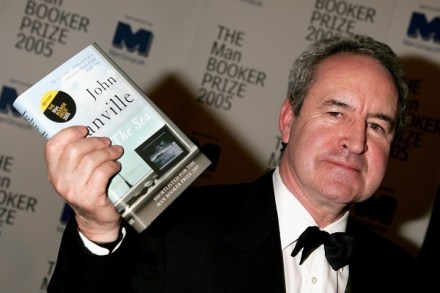
The salubrious surroundings of the Waldorf Hotel seem like a very apt setting to interview a master of style and sophistication. When I arrive in the lobby, John Banville is nowhere to be seen. Peeping into the bar, I notice a grey haired man with a moustache, wearing a tuxedo, softly playing a grand piano. Taking a seat, this strikes me as the kind of place that Alex Cleave would enjoy a drink. Alex is a semi-retired actor, and the central protagonist and narrator of Ancient Light; a novel that recalls a passionate love affair that took place over fifty years ago. The object of Alex’s desire was Mrs Gray, his best friend's mother, who was 35, when he was a naïve 15-year-old boy.

The life of a former ABC

From our UK edition

Steerpike is back in this week’s magazine. As ever, here is your preview: '"A Cambridge student reports this snippet from a Sainsbury’s checkout. ‘Is that a Lord of the Rings pendant?’ asked a white-haired shopper, pointing to an ornament dangling from the student’s neck. ‘Yes, it’s a replica of the One Ring,’ replied the student. ‘Ah’ said his inquisitor. ‘I thought so. I’m more of a Game of Thrones man myself.’ The white-haired shopper? Rowan Williams." Subscribers, you can read the rest of the column here. Non-subscribers, you can join us today for as little as £1 an issue.

Satan is back

From our UK edition

It used to be said by Catholic priests back in the 1950s that the Devil was delighted when human beings decided that he did not exist. In those days it seemed unlikely that he would disappear altogether from human consciousness because he was so well known — as Baal or Beelzebub in the Old Testament, the Prince of Lies in the New, as Lucifer in the King James Bible, as Satan in Milton’s Paradise Lost, and as Mephistopheles in the legend of Faust; but it has turned out that a subtle move from scripture into myth, folklore and finally literature has been an effective way of becoming unreal. Today we hear his name more frequently in lectures on English literature than in seminars on theology.

Diary – 7 March 2013

From our UK edition

My friend and colleague Roy Brown has just sent me the draft of a statement he will submit to the UN Human Rights Council this spring, on behalf of the International Humanist and Ethical Union. This is a group to which we both belong, which campaigns on freedom of thought and expression, women’s and children’s rights, education and much besides. Roy’s draft concerns discrimination against people who do not have a religious faith. It is extraordinary how many countries discriminate by law against nonbelievers, in violation of Article 18 of the Universal Declaration of Human Rights, which protects freedom of conscience.

Priests and pagans

From our UK edition

The Catholic tradition of priestly celibacy (Latin caelebs, ‘unmarried’), by which Cardinal O’Brien was bound, is not a dogma, but a discipline. In other words, it can be altered at the rotation of an encyclical. Like much else in the Catholic tradition, it has its roots in the pagan world. Asceticism derives from the Greek askêsis, ‘training, practice’. Pagans had long believed that humans could be transformed through mental and physical discipline. Pythagoras, for example, thought that the element of the divine in us could be brought out by fasting and contemplation.

Long life | 28 February 2013

From our UK edition

Eight years ago I was in Rome for The Spectator to write a piece about the election of a new pope after the death of John-Paul II. Within two days, and after only four ballots, some wispy white smoke emerged from the little chimney on the roof of the Sistine chapel. The College of Cardinals had made its decision and chosen the German Cardinal Joseph Ratzinger to be the 265th occupant of the throne of St Peter. He was already 78 years old and said to be longing for speedy retirement from his taxing job as Prefect of the Congregation for the Doctrine of the Faith, the oldest of the great Vatican departments (once popularly known as the Holy Office or the Inquisition).

The Spectator’s Notes | 28 February 2013

From our UK edition

On the BBC television news on Monday night, the first three items concerned alleged misbehaviour by the famous — Cardinal Keith O’Brien, Lord Rennard and Vicky Pryce, the ex-wife of the ex-Cabinet minister, Chris Huhne. I begin to wonder if an accidental revolution is in progress. There is no revolutionary political doctrine, just a wish to believe that anyone in any position of power or fame is corrupt and should be exposed. Sexual misbehaviour is probably the most fun way of doing this, but stuff about money or lying works too. In theory, we should welcome this. The accusations often turn out to be true. Power corrupts. But actually there is something vile about it. It is to do with the righteousness of those doing the exposing.

Sex, lies and the next Pope

From our UK edition

In a corner of the Sistine Chapel, below Michelangelo’s hell, is a door to the little chamber they call ‘the room of tears’. Some painter-decorators are in there, frantically doing the place up. That’s because, in a matter of days, a new Pope will be led into the room. According to tradition, at that moment, as he first contemplates the magnitude of his role, he will weep. A myth, you might think. But we can be sure that the next Supreme Pontiff — whoever he is — will have plenty to sob about. Since Benedict XVI’s resignation two weeks ago, each day seems to have brought yet more bad news. Scandal is swarming around the upcoming papal conclave like a Biblical plague.

AC Grayling vs God

From our UK edition

‘Atheism is to theism,’ Anthony Grayling declares, ‘as not collecting stamps is to stamp-collecting’. At this point, we are supposed to enjoy a little sneer, in which the religious are bracketed with bald, lonely men in thick glasses, picking over their collections of ancient stamps in attics, while unbelievers are funky people with busy social lives. But the comparison is flatly untrue. Non-collectors of stamps do not, for instance, write books devoted to mocking stamp-collectors, nor call for stamp-collecting’s status to be diminished, nor suggest — Richard Dawkins-like — that introducing the young to this hobby is comparable to child abuse.