Religion

Ex-Muslims are living the British dream – Britain should support them

From our UK edition

There was an excellent Radio 4 documentary on yesterday in which Sarfraz Manzoor interviewed a group of people you don’t hear much about – ex-Muslims. Like all good radio documentaries, it left me wanting to know more about the individuals involved, feeling more confused about the world, and with mixed feelings too. On the one hand I can understand that Dover Beach sadness of people falling away from religion, and why the parents of those interviewed would feel devastated by that loss. On the other hand, the ex-Muslims are right. They’re right to question the beliefs they were brought up with, and they’re right to see the inconsistencies and those aspects where Islam’s morality clashes with theirs, and to follow what they think to be right.

When it comes to diversity, most of us vote with our feet

From our UK edition

Liberals are almost as likely to flee diversity as conservatives, according to new research by Prof Eric Kaufmann for Demos. Some 61 per cent of white people who were ‘very comfortable’ with mixed marriages (the best indicator of views on race) moved to whiter areas during the period, compared to 64 per cent of those who were ‘fairly uncomfortable’. The Sunday Times called it ‘polite white flight’. The tendency of white liberals not to practise the diversity they preach dates back to the 1960s at least, and offends people who rightly point out that their reasons for moving are to do with space, schools, housing and a number of other things. Up to a point.

The CofE doomed? Only because it’s surrendered to phony soullessness

From our UK edition

The Church of England is doomed, Lord Carey has said, warning that Anglicanism is just ‘one generation away from extinction’. To be fair people have been saying this for a long time; in the mid-19th century the Church decided to make a survey of churchgoing, and were stunned to find out that only a quarter of people in England attended Anglican services and a similar number to non-Conformist services. Half the population wasn’t going at all. Now you’d be lucky to get that many at Christmas.

What will history make of Britain’s treatment of Chowdhury Mueen-Uddin?

From our UK edition

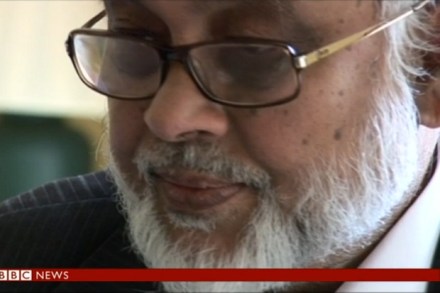
‘A historic catastrophe’ is how Martin Bright describes it. He is referring to the policy by which successive governments in the UK, Conservative, Labour and coalition, are accused of having promoted the worst people into the positions of Muslim community leaders. The specific case that sparks this reflection is the case of Chowdhury Mueen-Uddin. Since leaving Bangladesh and becoming a British citizen he has been at the very pinnacle of Britain’s interfaith and moderate Muslim industry. Here he is with Prince Charles at the Islamic Foundation in Leicester. Major politicians of all parties as well as numerous ‘faith leaders’ have rubbed shoulders with him.

The Catholic bishops of England need Damian McBride’s help

From our UK edition

Most Coffeehousers are probably profoundly and justifiably cynical about anything masquerading as a consultation exercise in politics, so it might spread a little cheer to see how the Catholic Church goes about it. There’s been a surprising fuss – BBC news coverage; leader in The Times – about Catholic bishops consulting the laity about matters relating to the family. But although it is indeed quite something for the laity to be asked about anything (their views, mind you, aren’t conclusive, so nothing new there) the manner in which the bishops are doing it is fabulously anachronistic, gloriously uncompromising.

‘When Tommy met Mo’ revealed how far we have to travel before Islamism is uprooted

From our UK edition

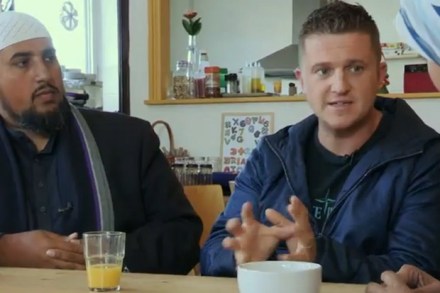
Last night the BBC screened a documentary called ‘When Tommy met Mo’. It was good television, challenging and thought-provoking in a way that public broadcasting ought to be, is often said to be, but too rarely is. I would urge you to watch it. The programme followed Tommy Robinson during the period in which he was stepping away from the organisation – the English Defence League (EDL) – which he founded. It showed Robinson travelling around the country with a Muslim ‘spokesman’ called Mohammed Ansar.

Veiled differences

From our UK edition

Last night I took part in an interesting debate for Channel 4 News. It was on the wearing of the niqab - or full face veil - in the UK. I think it was my first speaking appearance at the East London Mosque - and certainly the first time I have addressed an audience almost entirely consisting of women whose faces I could not see. Yasmin Alibhai-Brown was, like me, arguing against the wearing of the full-face veil and she made some excellent points. I stayed around afterwards talking to some of the niqabis, and polite and pleasant though most of them were I suppose it reinforced one of the things I tried to point out during the show. Most of these women had London accents and had adopted much of the 'rights' and grievance culture of our society.

Letters: Nurses reply to Mary Dejevsky, and Iggy Pop’s sherry habit

From our UK edition

Nursing standards Sir: I share Mary Dejevsky’s concern regarding the impact of tired, overworked nurses on the quality of patient care (‘Short shrift for long shifts’, 6 October). However, it is unwarranted to blame nurses for detrimental work cultures when the contributing factors are complex. Nurses generally do not have a choice about the length of shifts they work. Shift lengths must be determined by patient needs and safety, and 12-hour shifts can be an essential part of their job, but hours of unpaid overtime where they cannot deliver care effectively and safely leave nurses burnt out and demoralised.

The war on Christians

From our UK edition

Imagine if correspondents in late 1944 had reported the Battle of the Bulge, but without explaining that it was a turning point in the second world war. Or what if finance reporters had told the story of the AIG meltdown in 2008 without adding that it raised questions about derivatives and sub-prime mortgages that could augur a vast financial implosion? Most people would say that journalists had failed to provide the proper context to understand the news. Yet that’s routinely what media outlets do when it comes to outbreaks of anti-Christian persecution around the world, which is why the global war on Christians remains the greatest story never told of the early 21st century.

Samuel Huntington’s ‘Clash of Civilizations’ is still upsetting the complacent

From our UK edition

It is twenty years since Samuel Huntington’s essay ‘The Clash of Civilizations?’ was first published in Foreign Affairs. On Monday night I took part in a discussion on BBC Radio 3’s Nightwaves about the article (and the resulting book) which turned oddly nasty. I have always been a qualified admirer of Huntington’s most famous work (‘qualified’ because like most people who have read the book I admire its range and grasp while disagreeing with certain of its conclusions). But broadly admire it or not, it appears to be a difficult work to discuss. This is largely because it suffers the double-bind of being misunderstood by people who have not read it.

Josh Williamson is arrested for preaching the Christian gospel in public

From our UK edition

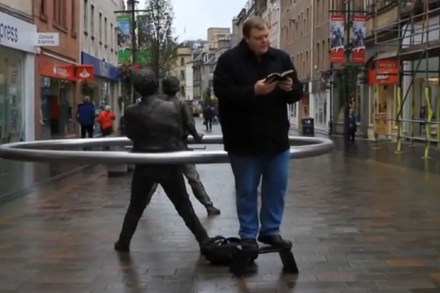
Freedom of speech is alive and well in Scotland, then. Pastor Josh Williamson took the Christian gospel to the streets of Perth last week, before he was arrested by the old bill for a ‘breach of the peace’. Asked why he was being arrested, Plod No 1 said because you’re too loud, pointing to the electrical device the clergyman was carrying. That’s an MP3 recorder, he replied, it’s not an amplifier. Then Plod No 2 claimed it was the content of his sermon, although he could not put his finger on what it was exactly. Hauled down the nick, refused the right of a lawyer, Williamson was eventually released with a verbal caution and the comment from another copper: ‘You seem like a reasonable man, why not just stop preaching?

Ignoring Islamic terrorism didn’t make it go away

From our UK edition

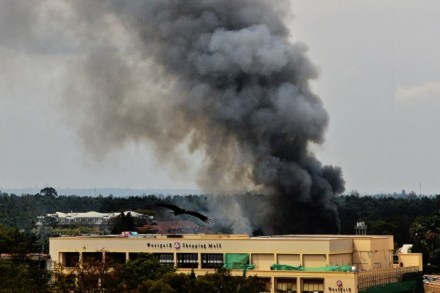
Not so long ago politicians were hailing the end of al-Qaeda and the global jihad movement. By the middle of 2011, key ideologues like Osama bin Laden and Anwar al-Awlaki were dead. Arab Street also appeared to have embraced peaceful protest, with popular uprisings unseating seemingly entrenched regimes in Tunisia and Egypt. A new dawn, we were told, was breaking. The weekend’s events have brought that hopeless optimism into sharp relief. The terrorist siege of the Westgate shopping mall in Kenya continues, with around 70 people dead so far. Elsewhere, at least 80 Christians were killed in a suicide attack outside a church in the Pakistani city of Peshawar yesterday.

No, Mr Cameron. The Kenyan massacre is all about Islamism

From our UK edition

Here we go again. A group of Islamist terrorists armed with guns and grenades head into a shopping mall in Kenya. They separate out the Muslims from the non-Muslims, let the former go free and massacre the latter. Cue the usual responses. The British Prime Minister, David Cameron, says: ‘These appalling terrorist attacks that take place where the perpetrators claim they do it in the name of a religion – they don’t.  They do it in the name of terror, violence and extremism and their warped view of the world. They don't represent Islam or Muslims in Britain or anywhere else in the world.’  I don’t think any sensible person would argue that the perpetrators represent all Muslims.

The silence of our friends – the extinction of Christianity in the Middle East

From our UK edition

The last month and a half has seen perhaps the worst anti-Christian violence in Egypt in seven centuries, with dozens of churches torched. Yet the western media has mainly focussed on army assaults on the Muslim Brotherhood, and no major political figure has said anything about the sectarian attacks. Last week at the National Liberal Club there was a discussion asking why the American and British press have ignored or under-reported this persecution, and (in some people's minds) given a distorted narrative of what is happening. Among the four speakers was the frighteningly impressive Betsy Hiel of the Pittsburgh Tribune-Review, who has spent years in Egypt and covered Iraq and Afghanistan.

We should encourage and promote ‘Cultural Anglicanism’ in schools

From our UK edition

In this week’s magazine Douglas Murray has struck up a friendship with Professor Richard Dawkins, despite things having started rather badly when Douglas previously suggested that the professor’s failure to criticise Islam was just him ‘showing his survival instinct’. Well, no one can accuse Dawkins of being shy on that front now, and the Professor recently received a sort of auto-de-fe for stating Islamophobic facts.

Must read: Jenny McCartney on Seamus Heaney and Ulster’s divide

From our UK edition

If you haven’t already done so, I urge you to read Jenny McCartney’s piece in this week’s issue of the magazine. Together with Christopher Fletcher’s personal appreciation of Seamus Heaney published here earlier this week, it is among the most original and thoughtful takes on the late Nobel Laureate’s life and work. It’s typical of Jenny’s ability to tease and test details, to coax them to a wider context. And, my, is she readable. The best place to start is at the beginning: ‘The one and only time I met Seamus Heaney, in 2007, he was making tea in the kitchen of his Dublin home when he asked — more modestly regretful than coy — ‘Did you have to do the poems at school?

Rosh Hashanah reading list

From our UK edition

Happy New Year! No, it isn’t three months’ early if you’re Jewish, and those of you who aren’t might like to cash in on the celebration. So, in honour of Rosh Hashanah – Jewish New Year – today, I thought I’d pick out a few of my favourite Jewish books. This proved to be such a hopelessly vast category, however, that I’ve narrowed it down to books about Jewish London – the place where 60% of British Jews, including myself, live. Whether or not you’re Jewish, might I encourage you to pick up one of these excellent books as a means both of discovery and of celebration. Happy New Year, and happy reading. 1).

Stephen Fry: the high-priest of juvenile atheism

From our UK edition

Well, well, well. Nick Cohen's excellent column in this week's mag  has caused a stir today. Sadly, though, Nick's astute argument became another excuse for a boring slanging match between atheists and believers. And of course Stephen Fry waded in: Mary had a little lamb It's fleece was white as snow All you religious dicks Just fuck off and go. No more discussion with dickheads. Sorry. — Stephen Fry (@stephenfry) August 22, 2013 Really? Fry's Twitter cronies lapped that up. They always do. He's so clever and civilised, our Stephen, bless his colourful cotton socks. Unlike those credulous maniacs who believe in God. In 2013! Celebrity atheists always claim the rational high ground: we are calm and normal, the God squad is angry and mad.

What might link Cleopatra, Augustus, Constantine, Barbarossa, Tamerlane and the Farnese?

From our UK edition

The stone called sardonyx looks a lot more fragile than it actually is. It’s luminous like glass, but hard like steel, which explains why so much of it has survived from ancient times. Fame being a relative word, one might describe Medusa’s Gaze: The Extraordinary Journey of the Tazza Farnese by Marina Belozerskaya as a biography of the most famous sardonyx object in the world, the Tazza Farnese, an ancient libation bowl made to hold offerings to the gods. At least one of the many people who inherited it aimed to change that function. Around the time Romanos II, son of Constantine VII, was ruler over Byzantium, someone drilled through its middle to transform it into a Christian chalice.

Discovering Poetry: Thomas Traherne’s life lessons

From our UK edition

From ‘Wonder’, by Thomas Traherne How like an angel came I down! How bright are all things here! When first among his works I did appear O how their glory me did crown? The world resembled his eternity In which my soul did walk; And every thing that I did see Did with me talk. The skies in their magnificence The lively, lovely air; Oh how divine, how soft, how sweet, how fair! The stars did entertain my sense And all the works of GOD so bright and pure, So rich and great did seem, As if they ever must endure In my esteem. A native health and innocence Within my bones did grow, And while my God did all his glories show, I felt a vigour in my sense That was all SPIRIT. I within did flow With seas of life, like wine; I nothing in the world did know, But ‘twas divine.