Religion

Josh Williamson is arrested for preaching the Christian gospel in public

Freedom of speech is alive and well in Scotland, then. Pastor Josh Williamson took the Christian gospel to the streets of Perth last week, before he was arrested by the old bill for a ‘breach of the peace’. Asked why he was being arrested, Plod No 1 said because you’re too loud, pointing to the electrical device the clergyman was carrying. That’s an MP3 recorder, he replied, it’s not an amplifier. Then Plod No 2 claimed it was the content of his sermon, although he could not put his finger on what it was exactly. Hauled down the nick, refused the right of a lawyer, Williamson was eventually released with

Ignoring Islamic terrorism didn’t make it go away

Not so long ago politicians were hailing the end of al-Qaeda and the global jihad movement. By the middle of 2011, key ideologues like Osama bin Laden and Anwar al-Awlaki were dead. Arab Street also appeared to have embraced peaceful protest, with popular uprisings unseating seemingly entrenched regimes in Tunisia and Egypt. A new dawn, we were told, was breaking. The weekend’s events have brought that hopeless optimism into sharp relief. The terrorist siege of the Westgate shopping mall in Kenya continues, with around 70 people dead so far. Elsewhere, at least 80 Christians were killed in a suicide attack outside a church in the Pakistani city of Peshawar yesterday.

No, Mr Cameron. The Kenyan massacre is all about Islamism

Here we go again. A group of Islamist terrorists armed with guns and grenades head into a shopping mall in Kenya. They separate out the Muslims from the non-Muslims, let the former go free and massacre the latter. Cue the usual responses. The British Prime Minister, David Cameron, says: ‘These appalling terrorist attacks that take place where the perpetrators claim they do it in the name of a religion – they don’t.  They do it in the name of terror, violence and extremism and their warped view of the world. They don’t represent Islam or Muslims in Britain or anywhere else in the world.’  I don’t think any sensible person would argue

The silence of our friends – the extinction of Christianity in the Middle East

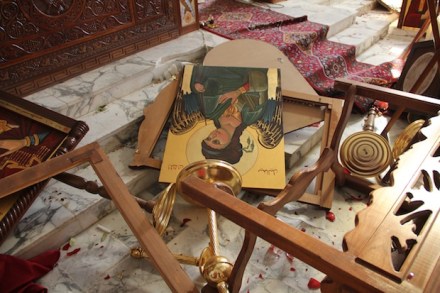
The last month and a half has seen perhaps the worst anti-Christian violence in Egypt in seven centuries, with dozens of churches torched. Yet the western media has mainly focussed on army assaults on the Muslim Brotherhood, and no major political figure has said anything about the sectarian attacks. Last week at the National Liberal Club there was a discussion asking why the American and British press have ignored or under-reported this persecution, and (in some people’s minds) given a distorted narrative of what is happening. Among the four speakers was the frighteningly impressive Betsy Hiel of the Pittsburgh Tribune-Review, who has spent years in Egypt and covered Iraq and Afghanistan.

We should encourage and promote ‘Cultural Anglicanism’ in schools

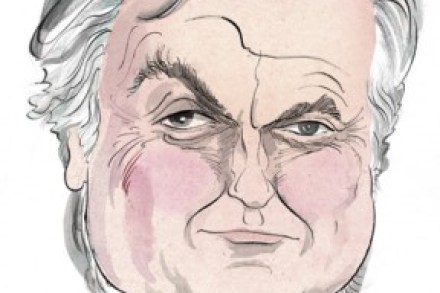
In this week’s magazine Douglas Murray has struck up a friendship with Professor Richard Dawkins, despite things having started rather badly when Douglas previously suggested that the professor’s failure to criticise Islam was just him ‘showing his survival instinct’. Well, no one can accuse Dawkins of being shy on that front now, and the Professor recently received a sort of auto-de-fe for stating Islamophobic facts. But he was never a big fan of multiculturalism, at least the cultural relativism side that sought to treat western science as no better than the wacky beliefs of hunter-gatherer tribes; this has put him in conflict with some fellow opponents of the Church, who

Must read: Jenny McCartney on Seamus Heaney and Ulster’s divide

If you haven’t already done so, I urge you to read Jenny McCartney’s piece in this week’s issue of the magazine. Together with Christopher Fletcher’s personal appreciation of Seamus Heaney published here earlier this week, it is among the most original and thoughtful takes on the late Nobel Laureate’s life and work. It’s typical of Jenny’s ability to tease and test details, to coax them to a wider context. And, my, is she readable. The best place to start is at the beginning: ‘The one and only time I met Seamus Heaney, in 2007, he was making tea in the kitchen of his Dublin home when he asked — more modestly regretful

Rosh Hashanah reading list

Happy New Year! No, it isn’t three months’ early if you’re Jewish, and those of you who aren’t might like to cash in on the celebration. So, in honour of Rosh Hashanah – Jewish New Year – today, I thought I’d pick out a few of my favourite Jewish books. This proved to be such a hopelessly vast category, however, that I’ve narrowed it down to books about Jewish London – the place where 60% of British Jews, including myself, live. Whether or not you’re Jewish, might I encourage you to pick up one of these excellent books as a means both of discovery and of celebration. Happy New Year,

Stephen Fry: the high-priest of juvenile atheism

Well, well, well. Nick Cohen’s excellent column in this week’s mag  has caused a stir today. Sadly, though, Nick’s astute argument became another excuse for a boring slanging match between atheists and believers. And of course Stephen Fry waded in: Mary had a little lamb It’s fleece was white as snow All you religious dicks Just fuck off and go. No more discussion with dickheads. Sorry. — Stephen Fry (@stephenfry) August 22, 2013 Really? Fry’s Twitter cronies lapped that up. They always do. He’s so clever and civilised, our Stephen, bless his colourful cotton socks. Unlike those credulous maniacs who believe in God. In 2013! Celebrity atheists always claim the

What might link Cleopatra, Augustus, Constantine, Barbarossa, Tamerlane and the Farnese?

The stone called sardonyx looks a lot more fragile than it actually is. It’s luminous like glass, but hard like steel, which explains why so much of it has survived from ancient times. Fame being a relative word, one might describe Medusa’s Gaze: The Extraordinary Journey of the Tazza Farnese by Marina Belozerskaya as a biography of the most famous sardonyx object in the world, the Tazza Farnese, an ancient libation bowl made to hold offerings to the gods. At least one of the many people who inherited it aimed to change that function. Around the time Romanos II, son of Constantine VII, was ruler over Byzantium, someone drilled through

Discovering Poetry: Thomas Traherne’s life lessons

From ‘Wonder’, by Thomas Traherne How like an angel came I down! How bright are all things here! When first among his works I did appear O how their glory me did crown? The world resembled his eternity In which my soul did walk; And every thing that I did see Did with me talk. The skies in their magnificence The lively, lovely air; Oh how divine, how soft, how sweet, how fair! The stars did entertain my sense And all the works of GOD so bright and pure, So rich and great did seem, As if they ever must endure In my esteem. A native health and innocence Within

Independence would not change single ideology Scotland

There is probably no other country in the democratic West where the state oversees economic activity and regulates private life as thoroughly as in Scotland. So it has come as little surprise to learn of the latest plans of the government led by Alex Salmond. By next year, he hopes that every child will have a guardian with the legal authority to ensure that they are raised in a manner prescribed by the state. Alarm has been expressed that a government with no obvious answers for Scotland’s problems of de-industrialisation is compensating for its impotence by micro-managing the family in such a glaring way.  At least the ruling Scottish National

Tunisia is not following Egypt’s path

In recent days Tunisia has seen major unrest after the assassination of opposition leader Mohamed Brahmi. Faced with growing unrest over a faltering economy and rising violence by extremists, Tunisia’s moderate Islamist led government is facing its biggest test. But this is not Egypt. Nascent democracies in the region are not acting in a uniform fashion. Each has political and socio-economic issues that make them unique. But what unites the new democracies in the region is an urgent need to accommodate the religious and secular communities in their new democratic systems. Many thought the Arab uprisings would marginalise religion’s impact in those countries. But this simply isn’t the case. The

Pope Francis: who am I to judge?

Pope Francis I’s statement about homosexual clergymen remains extraordinary; no matter how often one reads it. ‘If a person is gay and seeks God and has good will, who am I to judge him?’ He also said: ‘The Catechism of the Catholic Church explains this very well. It says they should not be marginalised because of this (orientation) but that they must be integrated into society…’ And there was more, perhaps a little less extraordinary in tone and content: ‘The problem is not having this orientation. We must be brothers. The problem is lobbying by this orientation, or lobbies of greedy people, political lobbies, Masonic lobbies, so many lobbies. This is the

Pope Francis gets evangelical on World Youth Day

Copacabana Beach dazzled last night as many, many thousands of worshippers (perhaps as many as 3 million according) celebrated mass and a vigil with Pope Francis on World Youth Day, the final day of his tour to South America, the first such trip of his pontificate. His Holiness certainly has the common touch. Watch here for him donning a sombrero while on the way to say mass. The faithful were treated to a blast of this Pope’s muscular message. He is trying to renew the Church after its recent travails, which many believe to have led to the reported revival of protestant churches around the world and particularly in South

It’s fine to be a ‘new’ atheist, so long as you don’t object to Islam

Rationality can be an overrated quality in politics. Communism was, after all, so rational that it imagined humans as lumps of clay to be moulded at will – with unsuitable ‘elements’ consigned to the Gulag. The attempt to apply rational political criteria to the actions of psychopathic movements has also historically led to erroneous political decisions at home: appeasement in the case of Nazi Germany and a frivolous desire to find materialist ‘root causes’ of Islamic extremism. As the great documenter of Stalinism Robert Conquest put it: Reliance on reason alone is itself irrational: It neglects the instinctual and deep-set elements of the real human being. Perhaps it isn’t surprising

Charles Moore’s notes: While Justin Welby was finding God, I was eating baked beans

Attending the funeral of Margaret Thatcher in April, the Health Secretary, Jeremy Hunt, was much impressed by the bit in the sermon by the Bishop of London about how Mrs Thatcher had replied personally to so many letters. He went back to his department, and asked it to give him each day one letter from a member of the public which recounted particularly shocking problems in the Health Service. He now uses these letters to dive into the problems that patients experience. It is a good idea, but how alarming that it is a novel one. The Department of Health receives more letters than any other part of government except

Alexander Pope, mock-epic, modernity and misogyny

from The Rape of the Lock And now, unveiled, the toilet stands displayed, Each silver vase in mystic order laid. First, robed in white, the nymph intent adores With head uncovered, the cosmetic powers. A heavenly image in the glass appears, To that she bends, to that her eyes she rears; The inferior priestess, at her altar’s side, Trembling, begins the sacred rites of pride. Unnumbered treasures ope at once, and here The various offerings of the world appear; From each she nicely culls with curious toil, And decks the goddess with the glittering spoil. This casket India’s glowing gems unlocks, And all Arabia breathes from yonder box. The tortoise

Ulster’s Orangemen show that Britain can do internecine vindictiveness too

This all looks terribly good fun, don’t you think? Spectacular towers which will make wonderful bonfires: it must have taken them ages. My only caveat is that they are all in Northern Ireland. Is there no enterprising alliance over here which might do something similar to celebrate the glorious military success of King William of Orange? One looks in despair at the Church of England, which would almost certainly cavil at such a celebration – but perhaps some of our more Presbyterian churches might set something up? It is important to remember at a time when there’s all this nastiness going on between the Sonny and Cher Muslims (“I got

So, can we expect Channel 4 to broadcast a C of E call to prayer?

It is very lucky for the BBC that Channel 4 exists. Whatever imbecilic, supposedly attention-grabbing trash the BBC commissions, there will always be its commercial rival around to commission something still more imbecilic, still more trashy. Such as — if you remember — ‘Wank Week’, a series exploring the manifest delights of masturbation. Having gained sufficient exposure with this proposal, the series was eventually — er — pulled. But you can imagine the witless commissioning editors sitting around telling each other what an edgy and brilliant idea it all was. And then there’s politics. However cringingly bien-pensant, politically correct and, paradoxically, politically partisan the BBC may be from time to time, it will always be

The great Lord Tebbit

Lovely to see Lord Tebbit at The Spectator summer party. I reminded him that he had once written a short letter to me, which I still cherish. Back when I was editor of the BBC Today programme I had written to lots of famous people to get their views about religious belief and faith, for some feature we were doing. I also asked if they thought there was a heaven or hell. Norman replied thus: ‘I do not know if there is a heaven or hell, but if there is, I sincerely hope you burn in it for eternity.’ I think that is the best letter I have ever received.