Religion

Curious shades of Browne

From our UK edition

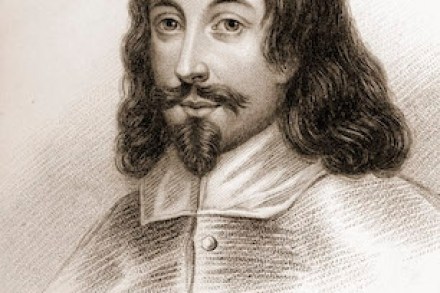
On the evening of 10 March 1804, Samuel Taylor Coleridge settled at a desk in an effort to articulate what he found so appealing about the 17th-century English polymath Sir Thomas Browne, the man he numbered among his ‘first favourites’ of English prose. He mentions Browne’s formal qualities, of course: he is ‘great and magnificent in his style and diction’; his Urne-Buriall ‘redolent of graves and sepulchres’ in every line. Yet most of his praise is reserved for Browne’s sensibility, for a man who is ‘fond of the curious, and a hunter of oddities and strangeness’; who ‘loved to contemplate and discuss his own thoughts and feelings, because he found by comparison with other men’s, that they too were curious’.

Crisis of faith

From our UK edition

It’s often said that Britain’s church congregations are shrinking, but that doesn’t come close to expressing the scale of the disaster now facing Christianity in this country. Every ten years the census spells out the situation in detail: between 2001 and 2011 the number of Christians born in Britain fell by 5.3 million — about 10,000 a week. If that rate of decline continues, the mission of St Augustine to the English, together with that of the Irish saints to the Scots, will come to an end in 2067. That is the year in which the Christians who have inherited the faith of their British ancestors will become statistically invisible. Parish churches everywhere will have been adapted for secular use, demolished or abandoned.

The Christian communities helping to heal Iraq’s wounds

From our UK edition

Iraq remains a dangerous and difficult place for everyone there but especially for its religious and ethnic minorities.  Assassinations, kidnappings for ransom, expulsions from villages and towns of whole communities and illegal occupation of properties remain common throughout the country. The Ecumenical delegation of bishops, which went to Iraq recently, as guests of the Chaldean Catholic Church, heard horrendous stories of people being frog-marched out of their houses, villages and towns, their property confiscated by ‘Islamic State’ or simply taken over by erstwhile neighbours.  Women and children are missing and many of the younger men were simply murdered.

Nicky Morgan has no right to tell Orthodox Jews how to behave

From our UK edition

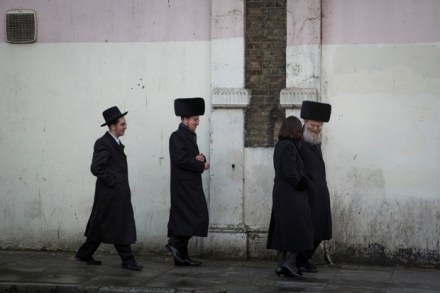
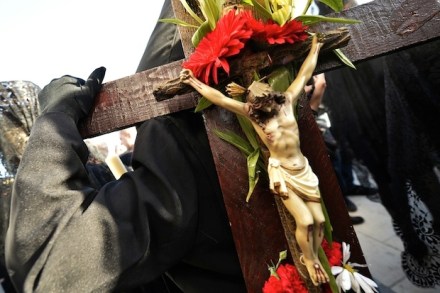
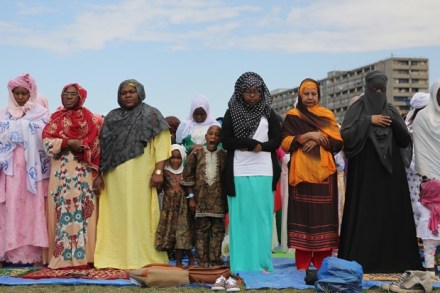
Imagine if Education Secretary Nicky Morgan went into a mosque and told the praying blokes to put their shoes back on. Or if she bowled into a Catholic school and said: ‘The look of anguish on Christ’s face in that crucifix hanging on your wall could upset children. Please take it down.’ We would be outraged (I hope). We’d wonder what business it is of politicians to tell people how they may express their religious convictions. So why isn’t there more discomfort over Morgan’s launch of an investigation into a Jewish sect’s decree that women may not drive children to its schools? The Belz sect, which is ultra-Orthodox, runs two schools in Stamford Hill.

Hampstead liberals can use their vote to fight radical Islam (and silence right-wing bores)

From our UK edition

A few months ago I was in a pub on a quiet night and overheard a young couple having an argument about politics. They were both, I’m guessing, young white London liberals and although I couldn’t hear everything they were saying, the gist was this: he was arguing that Islamic violence was a particular problem and she was telling him that all religions were equally violent and that no faith could be singled out. At the end of the night he gave in and conceded that she was right and it was prejudiced of him to say otherwise because no faiths are more violent than any others etc etc. I really wanted to interrupt them and shout at him ‘no, you idiot, you were right, don’t give in just for an easy life! This is how civilisation falls into mental decline.

Did Mrs Thatcher ‘do’ God? Denis thought so, and he should know, says Charles Moore

From our UK edition

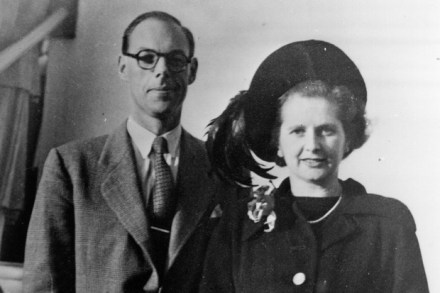
As I swink in the field of Thatcher studies, this book brings refreshment. It is a welcome and rare. Far too many writers attitudinise about Margaret Thatcher (for and against) rather than studying her. I doubt the author likes Thatcher much, but all the more credit to her that she makes a fair-minded effort to understand what she believed about God, and how she succeeded and failed in applying her beliefs. Not all who knew Mrs Thatcher agree that she was religious. In a way, they are right. She was not churchy or denominational, which is good. She was not sacramental (she once told me that her twins were baptised but ‘didn’t have the water’) or spiritual, which is not so good. But Denis thought she had a serious Christian faith, and I think he would know.

The Catholic crack-up

From our UK edition

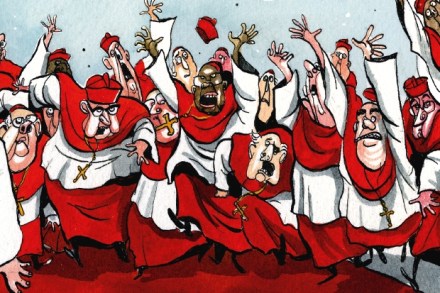
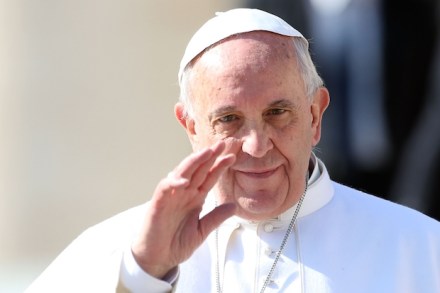
[audioplayer src="http://rss.acast.com/viewfrom22/edcouldstillwin/media.mp3" title="Freddy Gray and Damian Thompson discuss the Catholic crack-up" startat=1403] Listen [/audioplayer]A scurrilous rumour recently swept Rome: the Pope had summoned the Vatican’s finance czar over his expenses. When Cardinal George Pell admitted spending more than £3,000 on a designer kitchen unit, Francis quipped: ‘What, is it made of solid gold?’ That never happened, of course, but the tittle-tattle served a purpose. The story appeared in an Italian magazine just as Francis was deciding how much power to give Cardinal Pell over the curial accounts. Influential figures wanted to keep their money away from the cardinal’s prying eyes.

Original sin makes us better people. I wish Muslims believed in it

From our UK edition

These days, on the subject of Islam, non-Muslims have mostly divided into two camps — though there’s a little wandering about between the tents. Camp one says Islam is a religion of peace, and points for proof to the millions of non-violent Muslims around the world. Warlike Muslims are an anomaly, they say, and fight not because they are religious but because they are politicised. Bad guys like Isis aren’t Muslims so much as Islamists, which is different. Most politicians and public figures belong to this camp, including the Archbishop of Canterbury. Camp two is more furtive. Members look around before they speak.

Daring to be a Daniel

From our UK edition

As I swink in the field of Thatcher studies, this book brings refreshment. It is a welcome and rare. Far too many writers attitudinise about Margaret Thatcher (for and against) rather than studying her. I doubt the author likes Thatcher much, but all the more credit to her that she makes a fair-minded effort to understand what she believed about God, and how she succeeded and failed in applying her beliefs. Not all who knew Mrs Thatcher agree that she was religious. In a way, they are right. She was not churchy or denominational, which is good. She was not sacramental (she once told me that her twins were baptised but ‘didn’t have the water’) or spiritual, which is not so good. But Denis thought she had a serious Christian faith, and I think he would know.

Podcast: In defence of Christianity, and the Conservatives’ lack of passion

From our UK edition

Being a Christian in Britain today is to invite pity or condescension, writes Michael Gove in this week’s cover piece. Why is that, and what is the future of Christianity in Britain? Michael Gove joined Isabel Hardman and Ken Costa, the Chairman of Alpha International, on this week’s View from 22 podcast, to discuss the issue. Has there always been this much suspicion of Christians, or is this a more recent phenomenon? James Forsyth and Fraser Nelson also joined Isabel Hardman to talk about this week’s leading article. In it, The Spectator argues that the Tory campaign so far has lacked passion. The Conservatives ought by all accounts to be winning in the polls; but Cameron is seriously struggling. So what has gone wrong?

What happened to Julie Burchill on silent retreat

From our UK edition

When I told my friends that I was planning to attend a silent retreat, they all laughed. It’s true that I am something of a convivialist; my idea of heaven is a big table in a warm restaurant, the table shimmering with the laughter of friends and the glugging of wine, and me picking up the bill. On the other hand, I was a solitary only child and I look back on those days with great fondness. Before the long stagger up the primrose path of pleasure started, the only companion I needed was a book; I well remember my mother crying because I preferred to sit in my room reading rather than hang around on street corners getting drunk and/or pregnant like a normal teenager.

Allah, Zeus and the Church of England

From our UK edition

A ‘prominent liberal cleric’ in London has held an Islamic prayer service in his church, St John’s Waterloo. ‘We all share these traditions,’ he announced, ‘so let us celebrate our shared traditions, by giving thanks to the God that we love, Allah.’ How deliciously pagan of him. One way ancient Greeks tried to make sense of the bewildering array of gods they came across was to make links between them, both in name and function. For example, the ‘father of history’ Herodotus tells us that Scythians worshipped Zeus, Apollo and Aphrodite under the names Papaeus, Oetosyrus and Argimpasa. All very St John’s. But does this mean that ancient gods shared traditions? Certainly not.

Meet Saudi Arabia’s top cleric. Like Isis, he also thinks churches should be destroyed

From our UK edition

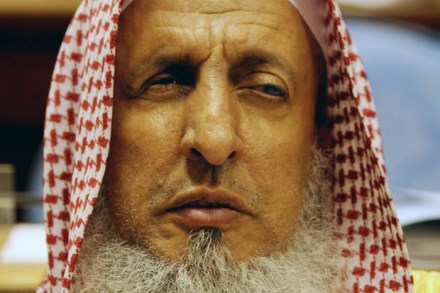
Today a quick game of 'spot the difference.' First, here are some photos, released yesterday, of Isis pulling down the crosses on ancient churches and desecrating Christian holy sites in Mosul, Iraq. They admit to doing this because they wish to destroy all records of pre-Islamic civilisation and because, they say, they are following Islamic law. And then secondly we have Saudi Arabia's Grand Mufti speaking at a conference in Kuwait on Tuesday. There Saudi Arabia's top cleric, Sheikh Abdul Aziz bin Abdullah, called for the destruction of all churches on the Arabian peninsula. He explained that this is necessitated by Islamic law. So perhaps the first part of the game should be 'spot the difference'. The second part might be: 'and which one is our ally?' Answers below.

Tell Mama and the battle for the future of British Islam

From our UK edition

Tell Mama is Britain’s most prominent opponent of anti-Muslim prejudice. It monitors everything from criminal assaults to everyday abuse. The far right loathes it, and the Conservative press sells the grotesque pretence that the group exaggerates prejudice to divert attention from the horror of Islamist violence. But attacks from the right only wound. Tell Mama’s ‘friends’ in the Muslim community have turned out to be far more dangerous and are threatening to destroy the organisation. ‘I am on a knife edge,’ one activist told me. ‘I may just leave. I’m so fed up.

Is a married clergy on Pope Francis’ agenda? I hope not

From our UK edition

Pope Francis, is, according to Cardinal Walter Kasper - a Swabian formerly responsible for ecumenism - neither a traditionalist nor a liberal - "both of which categories have become rather timeworn and hackneyed" - but rather a radical who wants to advance a revolution of forgiveness. Well, that's what Christians are kind of for, even if most of us fall rather short of the ideal. But though the liberal/trad categories may indeed be a bit hackneyed - possibly because they're completely and utterly lost on the secular majority -- it's not to say that the old agendas aren't still being fought over with gusto. And right at the top of the liberal shopping list is a married clergy.

Why did the House of Lords ever have a rifle range?

From our UK edition

Gun lords The House of Lords shooting range is to be turned into a cupboard, having previously survived an attempt by Labour MPs in 1997 to turn it into a crèche. — The range was constructed in 1916 for the Palace of Westminster Rifle Club, which managed to convince the Lord Great Chamberlain that rifle clubs were ‘a means of promoting a stronger sense of citizenship among members’. — The motive was not to train lords for front but to help them practise for the annual Lords vs Commons shooting match, held at Bisley since 1862. An early participant was the Maharajah of Vizianagram, who in 1875 provided £400 to make a trophy for the event.

Like Isis, Thomas More believed passionately in burning people alive

From our UK edition

Next week, in the final episode of the BBC’s Wolf Hall, we’ll see Anne Boleyn face death by beheading. But if you watched last night’s episode, you’ll know – accurately – that in her final months, she grew to fear something far worse, death by burning. It was a real option, offered to Henry VIII’s discretion after her conviction for adultery. And she wasn’t the only queen threatened with this fate; in 1546, traditionalist Stephen Gardiner (played in Wolf Hall with pantomime villainy by Mark Gatiss), attempted to persuade Henry to order the arrest of his ultra-Protestant sixth wife, Katherine Parr, on heresy charges that would have carried the same penalty. I saw two men begin to burn alive last week.

It takes a village (or six): the battle for rural churches

From our UK edition

Some of the longest job descriptions belong to rural Church of England clergy. ‘So what do you do?’ ‘I’m the Rector of Aldwincle, Clopton, Pilton, Stoke Doyle, Thorpe Achurch, Titchmarsh and Wadenhoe.’ Every one of these place names evokes an ancient Pevsner-worthy church, smelling of candlewax, damp hymn books and brass polish. Though many villages no longer have a shop or a pub, most do still have a parish church used for regular services — even if only on the first and third Sunday of the month. You push open the creaky door, and last Sunday’s hymns are still up on the hymn board.

Paganism is alive and well – but you won’t find it at a Goddess Temple

From our UK edition

The first pagan temple to be built in Iceland for a thousand years has just been granted planning permission, a wonderful bureaucratic detail that shows up just how much this revival is polite make-believe. Ragnar Hairybreeks or Harald Bluetooth would not seek planning permission before building a place of sacrifice. At Gamla Uppsala, the Viking temple site in Sweden, horses were hanged to please the gods in groups of nine from trees, along with cattle, sheep, and human beings. In Reykjavik today’s pagans still eat sacred horsemeat at their feasts, but they buy it in from caterers. Respectable modern paganism is not only made up, as its leading ideologues cheerfully admit, but made up within a very limited compass of the modern Anglo-American imagination.

Why calling for an ‘Islamic Reformation’ is lazy and historically illiterate

From our UK edition

It’s been said for years now: Islam needs its reformation. Some centuries ago, Christianity ditched its theocratic impulse and affirmed modern political values — let Islam do likewise! Let its Luther, who is presumably sulking in the corner of some madrassa, come forward! Islam hath need of him! This sounds briskly no-nonsense, in its willingness to say that Islam has a problem that needs fixing, and open-minded about religion, in its assumption that religions can change and be compatible with secularism. But it’s actually lazy and historically illiterate. It involves a misreading of how Christianity relates to modernity. It implies that, once upon a time, Christianity was in conflict with healthy political values, but it learned to change its ways.