Religion

America won’t forget Obama’s message of hope

From our UK edition

Those who sneer at Obama for promising more than he could deliver have little understanding of the nature of moral idealism. They accuse him of naivety but they are themselves naive. They fail to grasp that Obama expressed the basic moral idealism that unites the vast majority of people in the West. He expressed it more eloquently than anyone else had for decades. To say that he created unrealistic hopes is inept. Those ‘unrealistic hopes’ are intrinsic to the basic creed of the West – ‘liberty and justice for all’ sums it up. Such intense idealism is a crucial aspect of the politics of the West, however awkward this is. It’s risky for a politician to express such ideals with real verve, for a backlash is pretty likely.

François Fillon could become the face of France’s Catholic revival

From our UK edition

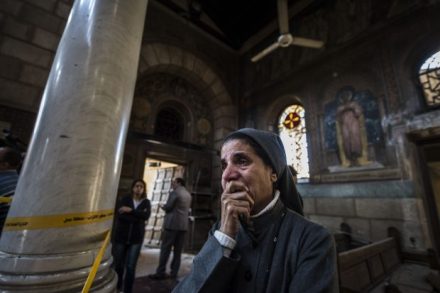
It strikes me that it's not much fun being a Catholic in France these days. Strolling back to my apartment in Paris on Christmas Eve, for example, I passed my local church. Inside a midnight Mass was in progress; outside a policeman stood guard. It was the same across France, an army of gun-toting men and women protecting the nation's cathedrals and churches. They'll be back at Easter, and on the Ascension and the Assumption. For how long? Who knows how long the country that is known as 'the eldest daughter of the church' because of its Christian heritage will need to protect its flock. There's been just one fatal attack on a church in France since the Islamists began their terror campaign, the brutal slaying of an 84-year-old priest in his Normandy church last July.

How mass immigration is turning London back into a religious city

From our UK edition

The bewildering influx of immigrants into London has had one effect that no one could have predicted 20 years ago: it's making our capital city religious again. We've noticed – but only up to a point. Islam is visible: the women in niqabs, the new mosques, the Halal butchers. But the transformation of Christianity in London is harder to spot. If you asked the average Londoner how many Sunday churchgoers in the city were black, I suspect he or she would be startled by the answer: about half of them. My guest on this week's Holy Smoke podcast is Ben Judah, whose knowledge of the demography of London was picked up by living in and among immigrant communities while researching his eye-opening book This is London.

Is an oath to ‘British values’ really such a bad idea?

From our UK edition

Most commentators have been over-hasty in ridiculing Sajid Javid’s proposal of an oath of allegiance to British values, to be sworn by those holding public office. It’s an opportunity to go right back to basics and ask a huge and naïve-sounding question. What is our public creed? What do we as a society hold in common? Some sneer that there is nothing particularly British about respect for the law, tolerance, human rights. True enough, but the alternative is to call them ‘Western values’ which is more contentious, more clash-of-civilisations-ey. Those who rubbish any attempt to articulate such values make the mistake of implying that such values are just natural, shared by all decent folk everywhere. They are not.

Murdered Christians are 2016’s least fashionable minority

From our UK edition

The murderers and persecutors of Christians have had a good year. With one exception – the killing of Fr Jacques Hamel in July as he celebrated Mass in a church in Normandy – the world has continued to look away as Islamists and other fanatics have slaughtered followers of Jesus Christ. I don't mean that we consciously look away – we simply don't know about most of these atrocities. There are no celebs out there 'raising awareness'; they're too busy weeping over Brexit and Trump. In one attack last June, 460 Christians died. Can you tell me where it happened? I couldn't have, until yesterday, when I did a Google search in preparation for today's Holy Smoke podcast.

In defence of Britain’s humanist values

From our UK edition

In yesterday's Guardian Giles Fraser dismisses Louise Casey’s report on social division. Its desire to ‘integrate’ communities is serving liberal capitalist ‘hegemony’. And he dismisses Sajid Javid’s call for all Britons to affirm ‘the shared values that make Britain great.’ This, says Fraser, ‘is actually another way of saying that all must be obliged to pay homage to the real god: the economy.’ Thank goodness there are communities that dissent from ‘the dominant model of middle-of-the-road liberal secular capitalism'. He concludes that Muslims should be thanked for maintaining ‘their religious convictions and way of life. They refuse all that nonsense about religion being a private matter.

O come, let us adore him

From our UK edition

On 27 July 1613 a man prostrated himself in the church of San Pedro Mártir in Toledo, having first made a solemn declaration: ‘I, Juan Bautista Maíno, make profession and promised obedience...’ Thus he became a Dominican friar. At the time, Maíno was halfway through painting ten canvases for the high altar of this very same church. Two of these, the most glorious and seasonally apposite, are currently on loan from the Prado and on show in Room 1 at the National Gallery (until 29 January). They open a window on to a little-known episode in Spanish art — and the spiritual life of an intriguing man.

Faith in the trenches

From our UK edition

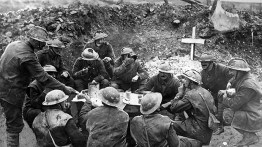
From a letter published under the heading ‘The religion of the ordinary soldier’, The Spectator, 23 December 1916: During a discharge of gas at the beginning of July along our front, one of the cylinders was displaced by the near bursting of an enemy shell. It turned the nozzle round, and the gas began to pour into our own trench. One of my lads, who was acting as orderly, heard from the communication trench that something was happening and ran into the front line… He ran forward unprotected, tugged at the cylinder, and pointed its nozzle outwards again before he fell unconscious. He died a few minutes afterwards. Those who saw it told me it was a quite spontaneous action. This boy would have told you that if his name was on a shell, it was no use running away.

Why I’m telling my son about the sky fairy

From our UK edition

After we were married, my husband and I went on honeymoon to Mexico. We drove across country east to west, then north to Mexico City, to the Basilica of Our Lady of Guadalupe where I prayed for a baby. My husband, the least judgmental of atheists, sat happy in the babble of ladies all talking loudly, conversationally, to God. In April this year, with a vomity newborn on my shoulder, I made a nightlight out of a picture of Our Lady of Guadalupe and some fairy lights. Now, eight months later, as we begin each evening’s slow, hopeful descent towards bed, I take the stout and opinionated baby to say goodnight to her. Goodnight Virgin Mary I whisper, and he leans forward, rips the battery pack out of the fairy lights and lets it fall, clattering on its wires.

Lessons from the front

From our UK edition

Christmas, for many people, begins at exactly 3 p.m. on Christmas Eve. It’s the moment when everything stops, frantic present-wrapping, mince-pie making and tree-decorating ceases and calm briefly takes hold. The reason? A single boy treble whose voice, clear and fragile as glass, pierces through the chaos with those familiar words: ‘Once in Royal David’s city/ Stood a lowly cattle shed...’. The service of Nine Lessons and Carols from King’s College, Cambridge, and its annual broadcast on BBC Radio 4 is as essential a part of contemporary Christmas folklore as stockings and Santa Claus, plum pudding and presents.

Theresa May’s religious faith should bring her more joy

From our UK edition

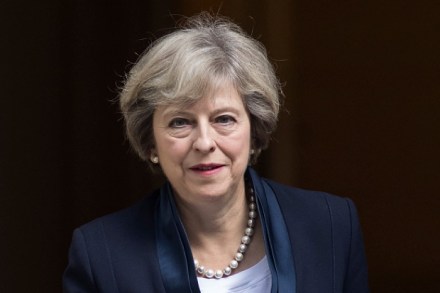
I like the fact that Theresa May is an Anglican, a good, solid, unashamed, unflashy Anglican, whose allegiance has not wavered since childhood. It reassures me. For the CofE is a place of pragmatic idealism, public service, profound humanism, good humour, self-criticism. Also, it’s just about the only place where class and racial divisions are routinely overcome. But when she actually says anything about her faith, she doesn’t come across very well. She sounds nervous of saying the wrong thing, which is fair enough, as horrid bloggers are waiting to pick and sneer at her words. And (pick, sneer) she sounds a bit pinched and negative about her experience as a vicar’s daughter.

In praise of Advent

From our UK edition

The first Sunday of Advent is 27 November this year. For those of us who prefer Advent services to Christmas ones, the earlier the better, frankly. I relish the frisson of gloom, foreboding and fear of judgment you get at Advent, alongside the hope. ‘The Holly and the Ivy’ is all very well, but it’s the minor chord at the end of ‘O Come, O Come, Emmanuel’ that I crave. So do thousands of others, it seems. The Advent service at Salisbury Cathedral, for example, is so oversubscribed these days that it’s repeated on three consecutive evenings, starting on the Friday before Advent Sunday. So, tears barely dry from the Remembrance Sunday requiem, you find yourself queuing in the cloisters for an hour and a half on Friday 25 November.

Why is this church offering diva pics and videos?

From our UK edition

In Northern Ireland recently, I sought out the Mass times of the local Church of the Immaculate Conception. Its website duly listed them, but I was surprised to find roughly half its web-page filled with a picture of a young woman’s all-but-naked torso and the invitation to click for more ‘Diva pics and videos’. I couldn’t tell whether this was a viral invasion or an Irish parish’s highly unimmaculate conception of how to make extra money for its good causes. When I met the priest, I was about to ask him, but he looked so young. I remembered that this is still the Year of Mercy, and stayed silent.

Nietzsche was right – liberal democracy is flawed

From our UK edition

It’s time to consider Nietzsche’s view of liberal democracy. It couldn’t work, it couldn’t bind a nation together, he said. Why not? Because of its excessive moral idealism. The belief in equality and social justice, which he rightly saw as deriving from Judaism and Christianity, would lead to fragmentation. For politics would be dominated by various disadvantaged groups demanding respect. Any sort of unifying ethos would be treated as oppressive, the ideology of the ruling class. If virtue lies in weakness, and victim status, healthy politics is doomed. It is emerging that he was largely right. Progressive politics, which affirms the liberal or humanist vision, seems to be collapsing.

China’s quiet Christians

From our UK edition

 Beijing A strong coffee always perks me up on a smoggy day, especially when I can drink it somewhere clandestine — like an ‘illegal’ church. Seek, and you shall find — but when it comes to Christianity in China, you’re likely to get a bit lost. Without being told where it was, I could have spent a lifetime walking past the anonymous, seemingly empty office block, never knowing that inside it was abuzz with religious activity. A discreet sign in the lobby is the only indication that a Sunday service is in progress. In other parts of the world, a church announces itself to the faithful with a cross on a steeple.

No one turned a hair

From our UK edition

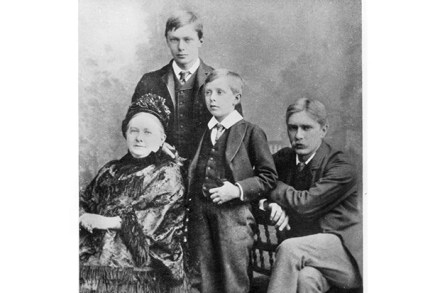
The Benson family was one of the most extraordinary of Victorian England, and they certainly made sure that we have enough evidence to dwell on them. Edward White Benson was a brilliantly clever clerical young man of 23 when he proposed to his 11-year-old cousin Minnie Sidgwick. He had been the effective head of his family since his father’s death nine years earlier; Minnie, too, was fatherless. Despite doubts from Minnie’s mother, they agreed to marry when Minnie was 18. She, too, was clever — Gladstone famously described her as ‘the cleverest woman in Europe’ — but had no real attachment to Benson or to any other man. Her romantic passions were always directed towards women.

Vicar, can you spare a dime?

From our UK edition

‘I am a Messianic Jew,’ says the jittery young man at the rectory door. He is pale and drawn, with a close-shaven scalp and several days of bristles on a sharp chin. The bloodshot eyes search for me swimmingly. ‘A Jew, a Messianic Jew,’ he emphasises. I should have a clever rejoinder, but I am assessing if he has a knife so I only manage, ‘Ah yes, and how can I help?’ ‘Is this you?’ is thrown back at me, as he jabs his finger at the screen of his phone and then holds it up to my face like a mirror. I admit my identity (an image from our website), and this makes him confident of success. ‘You must pay my bus fare to-Latvia.’ Such encounters are the commonplace of the daily life of the urban vicar.

Je suis Louis Smith: why we must be free to mock Islam

From our UK edition

If you thought the public shaming and punishment of people for ridiculing religion was a thing of the past — a dark past when you’d be put in the stocks, or worse, for failing to bend your knee to certain gods and beliefs — then think again. Just look at the treatment of Olympian gymnast Louis Smith. Since a video of him taking the mick out of Islam was leaked in October, he’s been pilloried in the press, pressured to recant his heretical humour, dragged on to TV to repent before the Loose Women (the new guardians of public morality, apparently), and now he’s been suspended from his job for two months. All for having a laugh about a religion.

Christianity is at the heart of the secular left’s response to refugees

From our UK edition

Say what you want about Owen Jones - and I might well agree with you - but he is admirably big-picture. He dares to link current affairs to the largest moral questions. In a piece about refugees on Friday he supplied a sketch of his form of humanist idealism. Empathy, he explains, is a natural human faculty. We naturally desire the good of all our fellow humans - unless some nasty form of politics interferes with this and teaches us to view some group as less than fully human. This is what colonialism did, and what Nazism did, and what Balkan nationalism did, and what Islamic fanaticism is still doing. And it is what the right-wing press is doing, when it promotes a heartless attitude towards refugees.

It’s not Alan Turing who needs an apology

From our UK edition

My invitation to the Pink News dinner (where David Cameron won an award) on Wednesday night promised ‘an inspirational evening’ which would be a ‘celebration of the contritions of politicians, businesses, and community groups’ after ‘another historic year for LGBT equality’. I assumed, at first, that ‘contritions’ was a misprint for ‘contributions’, but maybe not. Contrition for any deed committed or word spoken against gay people in the past is now compulsory for all who wish to take part in public life, rather as Catholics must be absolved before taking communion. I agree that the criminalisation of consenting, adult, private, homosexual acts was cruel madness. But I am suspicious of all this breast-beating.