Religion

Martin Luther King’s vision is being betrayed by progressives

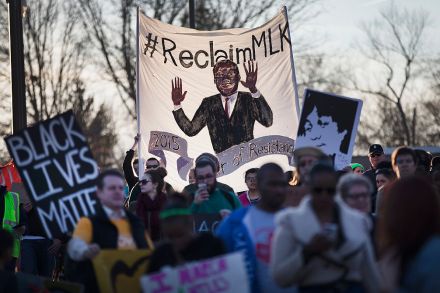
Martin Luther King is easily misrepresented in our era of heightened identity politics, and of scepticism towards grand unifying ideals. For him, the campaign for black civil rights was firmly rooted in a very grand moral and political vision. Today’s progressives have largely lost sight of this wider vision; indeed the thought of it embarrasses them. It seems naïve, unrealistic. Its grandeur is more likely to be mocked than honoured. To black activist writers such as Ta-Nehisi Coates (whom I recently discussed here) it seems a mask for complacent racism. The remarkable thing about King is that he expressed the core ideals of America, and the West, with new intensity and fullness.

Books Podcast: Waiting for the Last Bus

From our UK edition

In this week’s Books Podcast, I’m talking to Richard Holloway about his new book Waiting For The Last Bus. Richard is famous for having, as some would think rather inconveniently, “lost his faith” while serving as Bishop of Edinburgh. He talks to me about how it’s all a bit more complicated than that, and about how being half in and half out of Christianity has given him a special perspective on old age, death and dying. Does he look to an afterlife? Not since a particularly momentous walk in the Pentlands. And how is it that he maintains Philip Larkin — who wrote of religion as a “vast moth-eaten musical brocade” — had “the soul of a priest”? Listen in and find out.

Why can’t we speak plainly about migrant crime?

From our UK edition

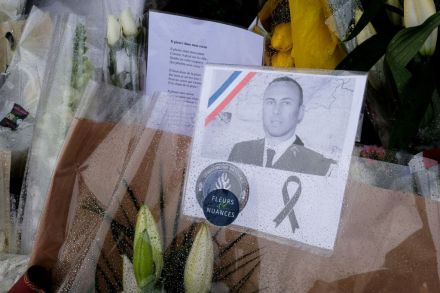
On Wednesday, two striking events happened in France. The first was that the President of the Republic led the nation’s mourning for Lieutenant-Colonel Beltrame, the policeman who swopped himself for a hostage at the siege at a supermarket in Trèbes last week. Elsewhere in Paris on the same day there was a silent march past the flat of Mireille Knoll. As a girl, in 1942, Mme Knoll narrowly escaped being rounded up by the French police and put on a train to Auschwitz. Last weekend, at the age of 85, the remains of her wheelchair-bound body were found in her Paris flat. Her body had been stabbed and burned. Mme Knoll, who suffered from Parkinson’s disease had apparently previously told police about a neighbour who had threatened to ‘burn her’.

A tale of two Sarahs

From our UK edition

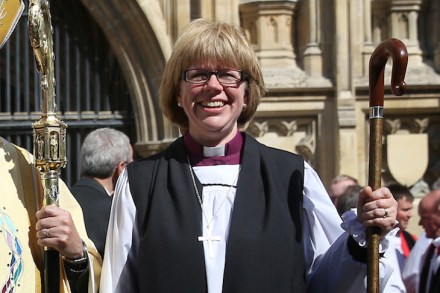
If you’re looking for a snapshot of the state of global Christianity today, a good place to start would be by looking at two violently contrasting Sarahs: Bishop Sarah, and Cardinal Sarah. One is Anglican, the other Catholic; one white, the other black; one bland, the other terrifying. Both are tipped to be leaders of their respective churches: Bishop Sarah as a future archbishop of Canterbury; Cardinal Sarah as a possible pope. I wonder which of them Jesus would prefer to be stuck on a desert island with. Sarah Mullally, the Bishop of London--elect, comes across as about the most upbeat, smiley person you could hope to meet.

Britain’s flawed definition of extremism is storing up trouble

From our UK edition

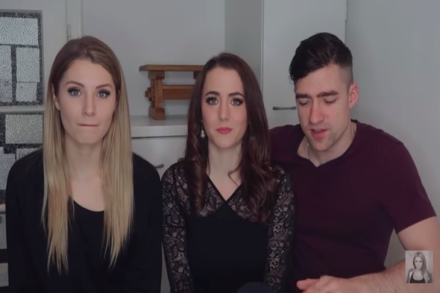
Is Allah gay? The eventuality – as Jeeves might say – would seem to be a remote one. If such a being as Allah did exist and was gay then no harm could come from stating the fact. If such a being as Allah exists and is not gay then Allah would presumably be big enough to shrug off such insinuations. And if – and I only mention the possibility – such a being as Allah does not exist at all, then it really is neither here nor there whether he, she, they, ze or zir is alleged to be gay, bi, trans or anything else. Certainly none of this should be cause for being banned from the country. Yet that is what happened last week when a Canadian journalist-activist called Lauren Southern got turned away at the UK border and refused permission to enter the country.

What our Christian culture can learn from Stonehenge

From our UK edition

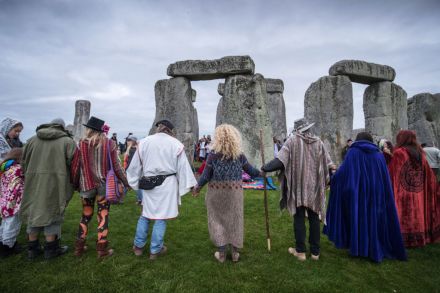
So Stonehenge was built for the communal fun of it. Maybe. Some archaeologists now wonder whether the main point of the monumental erection was the mass participation involved in getting it up. There were years of feasting and frolicking at the site’s construction, as well as lots of head scratching and mansplaining about whether wax-treated rope could produce maximum torque with minimal tension, or something. It was a cross between Glastonbury and Homebase. Or maybe this theory says more about us than about our oldest public art work. We have a vague awareness that this is what we lack as a culture: a sense of communal religious purpose.

Justin Welby’s stance on sharia law is a welcome relief

From our UK edition

Justin Welby is right to take a stand against his predecessor, Rowan Williams' most controversial announcement: that Britain should introduce sharia law. Ten years ago last month, Williams suggested parts of Islamic sharia law should be incorporated into British law. He argued that some kind of “constructive accommodation” was not only possible but desirable to better integrate British Muslims. The idea provoked almost universal condemnation, and now Williams’s successor has thankfully knocked down Williams' poorly thought through stance. This isn't to say, of course, that Muslims, mosques and halal food are not all welcome in Britain—diversity makes us richer. But law is another matter.

Billy Graham’s legacy of Christian unity

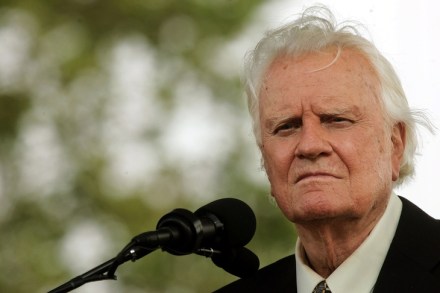
As I write this, my Twitter timeline is filling up with tributes to Billy Graham, who has died at the age of 99. Donald Trump describes him as ‘the GREAT Billy Graham’. Well said, Mr President; for once, those Trumpian capital letters are perfectly judged.  What’s interesting is that so many of those tweets come from Catholics. Graham started out as your standard-issue Protestant revivalist, not just a Bible-basher but also a Catholic-basher. But when Pope John Paul II died in 2005, he described him as ‘unquestionably the most influential voice for morality and peace in the world during the last 100 years’. Today, Catholics and Evangelicals recognise that far more unites them than divides them.

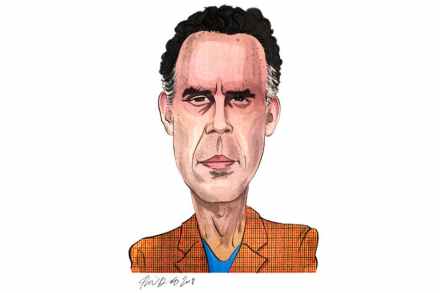
Will Jordan Peterson convert to Catholicism?

From our UK edition

I have mixed feelings about Jordan Peterson, whose 12 Rules for Life I have just ploughed through. There is much socially conservative psychobabble, and life-coachy earnestness, and it’s far too long. But I am in some sympathy with his project. I am interested in its semi-religiosity. His core message is that people should aim high, ‘take the heroic path’, serve a vision of goodness and truth, though this entails sacrifice, and acceptance of the suffering intrinsic to life. No Christian should sniff at such rhetoric, and I do not. But we should sniff around its edges, to ask what exactly he’s up to.

My conversion to Catholicism has warmed me to the CofE

From our UK edition

One of the pleasures of being a Catholic convert from Anglicanism is that I feel much warmer towards the Church of England than when I was in it. Last week, I went to a truly endearing Anglican ceremony in Westminster Abbey. After evensong, there was a short service to unveil a plaque in memory of the Chadwick brothers, Owen and Henry. Both were clergymen, both were Regius professors (Owen at Cambridge, Henry at Cambridge and Oxford). Both were tipped to be Archbishops, but preferred the life of the mind. They are the first brothers to be thus linked in an Abbey monument since John and Charles Wesley. Professor Eamon Duffy — who is, as his name hints, Catholic — gave a brilliant tribute to the two.

Justin Welby is in a corner over the case of George Bell

From our UK edition

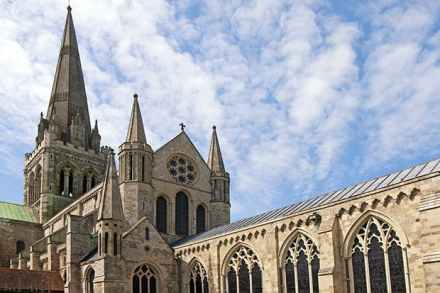
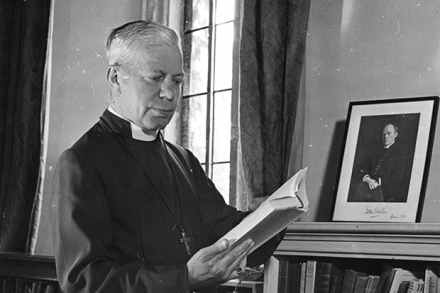
It is quite unnecessary and truly sad that the Archbishop of Canterbury has painted himself into a corner over the case of George Bell, the heroic, long-dead Bishop of Chichester. Last week, several historians who have studied Bell wrote to him to say that the Carlile report (which the Archbishop had himself commissioned) had clearly shown that the church’s procedures in finding that Bell had abused a girl in the late 1940s were shockingly deficient. Archbishop Welby replied to them this week, emotionally, but without answering their point. He compared the case of Bell with that of Peter Ball, the former Bishop of Gloucester, who had many powerful defenders who thought they knew him well, but was rightly convicted of abusing young men and sent to prison.

The Church of England’s Bishop Bell battle

From our UK edition

The Archbishop of Canterbury has once again been dragged into a battle between traditionalists and modernisers. This time though it’s not about gay marriage or women bishops, but the tattered reputation of one of the Church of England’s most-celebrated figures, Bishop George Bell. Justin Welby was sorely mistaken if he hoped commissioning an independent report into the claim that Bell was a child abuser would draw a line under this messy two-year row. Instead, the report found that the church has made mistakes in the way it handled the accusations. This infuriated Bell's supporters, who always maintained his innocence. Now, some are calling for Welby to walk, or at least apologise. But he refuses to do either.

Two Muslim cultures are emerging in Britain | 22 January 2018

From our UK edition

Suppose you were a white supremacist who wanted to keep Muslim children down. Or suppose you were a Machiavellian middle-class parent, who wanted to handicap the competition your child would face when the race for university places began. In either case, you would be delighted by what is happening at St Stephen’s primary school in Newham. Despite having an intake of poor children from Pakistani and African families, the head Neena Lall and chair of the governors Arif Qawi transformed it into one of the best state primaries in England. Now it is falling apart. Qawi resigned last week. Lall faces angry parents, mosque leaders, and activists whipped up by the clerical agitators in MEND, tonight. By all accounts she is in despair.

Is church the last bastion of boredom?

From our UK edition

I was listening to Thought for The Day on Radio 4 the other morning. Well, I say listening, as most parents will know, that is something you can do only in an empty house. What I mean is: the radio was on, a religious man was speaking and I caught probably every fourth or fifth word in between shouting at my kids to hurry up. Anyway, the gist of what the man was saying was that it is good to be bored as it frees up the brain, and going to church may well be one of the last places on earth where that is entirely and routinely possible. I realised this was true. Full disclosure: I semi-regularly trot off to church. A Methodist church.

Faith schools are more diverse than their critics make out

From our UK edition

Ever willing to exploit my children, I asked them yesterday just how many actual English children there were in their class at school – one’s at primary, the other, secondary. What, English-English, they said reasonably? You mean, both parents, plus born here? Yes, I said, which meant they couldn’t count themselves – they were born in Dublin. They thought about it for a bit. The elder said, counting on his fingers, that five out of 27 were English-English, with another three more half and half. My daughter counted 10 out of 27, if you include pupils from Guernsey and Northern Ireland, which I unwillingly conceded might count as British from some perspectives; a child whose granny is from Sierra Leone counts as English. The rest were a ragbag.

Is social media doing the Devil’s work?

From our UK edition

Twitter brings out a mean streak in some people that can take the breath away. And I should know. I was re-reading my old tweets the other day and thinking: good God, if this was my actual conversation at a dinner party I’d have to get my coat - remember the bloke in The Fast Show? - right after the soup. In the new Holy Smoke podcast, I’m joined by Harry Mount, Lara Prendergast and Freddy Gray to discuss the warping of our personalities by social media. Also, the complete failure of religious leaders to address the moral dilemmas it throws at us every day: bishops, being hopeless at Twitter and Facebook themselves, ignore them, preferring to lecture us on the finer points of government welfare and immigration policies. It’s a no-holds-barred conversation.

Tim Farron can’t have it both ways on sin

From our UK edition

Tim Farron is a conservative evangelical. Such Christians think they are braver than wishy-washy liberals when it comes to sin – they are not afraid to put it at the heart of their message. But in fact they’re in a muddle on sin. Farron embodies it. During the election he was repeatedly asked by journalists whether he thought gay sex was a sin. He tried to avoid the question by saying that such questions were beyond the bounds of normal political discussion; he implied that secular journalists framed the question in the wrong way, not understanding that we are all sinners. But they kept pestering him. So in the end, under pressure from his colleagues, he said that he did not believe it was a sin.

Revealed: NUS omit Judaism from religion survey

From our UK edition

Oh dear. Over the past few years, the National Union of Students has found itself in the headlines over the union's relationship with Jewish students. When Malia Bouattia was elected NUS president in 2016, three vice presidents of the NUS accused their president of 'anti-Semitic rhetoric' – with Bouattia referring to Birmingham University as a 'Zionist outpost'. An internal report later ruled that she should not be punished despite making comments found to be anti-Semitic. What's more, a report just last year found that many Jewish students 'do not feel their institution understands their needs'.

Are we morally better people than our ancestors?

From our UK edition

The doctrine of progress implies that things get better. This is clearly true in terms of scientific knowledge, though not necessarily of how that scientific knowledge is applied. It has proved broadly true, in our lifetimes, about economic and political freedom, though not so decisively that we can all sit back and relax. Is it also true of virtue? We often praise ourselves for having cast aside prejudice, taboo, imperialism, sexism and so on, but can we truthfully say that we are, on average, morally better people than our ancestors? We might simply be blind to different things. It is not difficult to make a list of virtues that are in decline (honour, patience, respect for the old) or not seen as virtues at all (virginity, obedience).

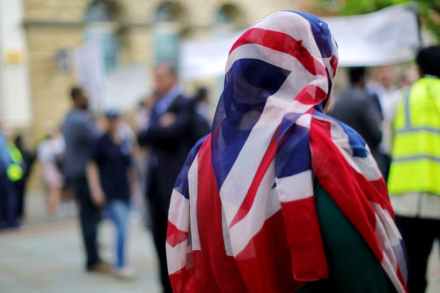
As a Muslim, I strongly support the right to ban the veil

From our UK edition

We’re closing 2017 by republishing our twelve most-read articles of the year. Here’s No. 5: Qanta Ahmed on the strange, unwitting collaboration between liberals and extremists: I was raised as an observant Muslim in a British family. Women, I was taught, determine their own conduct — including their ‘veiling’. We’d cover our hair only if we freely chose to do so. That’s why I’m baffled by the notion that all good Muslim women should cover their hair or face. My entire family are puzzled by it too, as are millions like us. Not until recent years has the idea taken root that Muslim women are obliged by their faith to wear a veil.