Religion

Divided we stand: Anglicans need to agree to disagree

From our UK edition

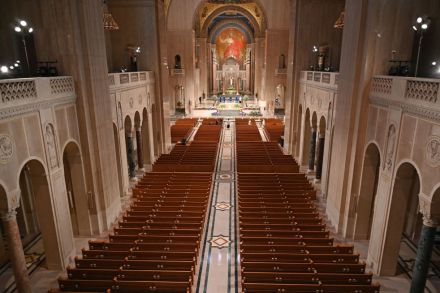
Two years ago the Church of England decided to delay any public discussion of its deepest division, over homosexuality, until 2022. So this might be the year in which an already troubled institution has a dramatic public meltdown. Or it might be the year in which the Church of England sorts itself out a bit. Yes, really. Stranger miracles have happened. There are grounds for hope, and not just on the gay issue. The Church has a core strength that it could draw on, and a core identity that could stand it in good stead, though one it is weirdly shy to assert. First let’s admit that things haven’t been going so well, even while the gay issue has been kicked into the long grass.

What’s driving America’s sex recession?

Young people are having less sex, and not just because they’re getting married later. According to the General Social Survey, the percentage of never-married Americans between the ages of 18 and 35 who did not have sex in the past year rose from around 16 percent in 2000 to over 22 percent in 2021. Why is this happening? There are plenty of theories. In a 2018 piece for The Atlantic, editor Kate Julian came up with five: 1) porn and masturbation, 2) the elevation of other priorities over forming committed relationships, 3) the toxic dynamics hard-coded into dating apps, 4) advances in feminism that empower women to say no to sex they don’t want to have, and 5) an increase in anxiety disorders.

exhortation

The exhortative tradition in America

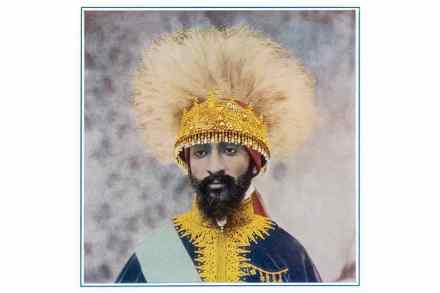
G.K. Chesterton observed after his return to England from a lecture tour in the United States that America is a nation with the soul of a church. That is hardly surprising, the northernmost of the original thirteen colonies having been established by a fervently religious sect. All religions are exhortative by nature, none more so than the sectarian ones which have a solid history of being noisier in this respect than the established churches, partly, I suppose, because one encourages the burning of witches in louder tones than one solicits a bigger collection plate for the relief of the victims of territorial rebellion in Ethiopia. It is true that the first generation of Puritans in Massachusetts were a more dignified lot than many of their successors.

The churches must stay open

From our UK edition

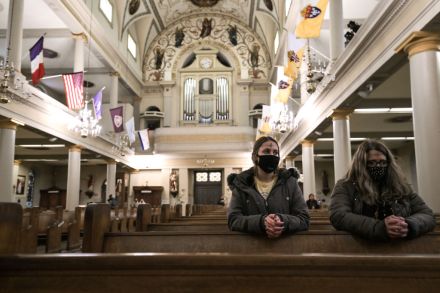
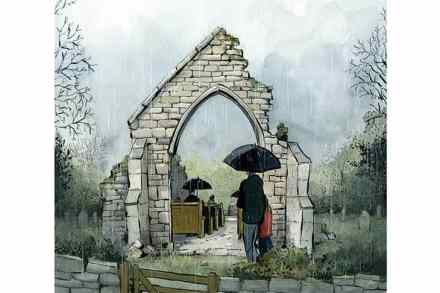
Hooray for Cardinal Vincent Nichols, who used the one day of the year when his pronouncements are amplified by the season to 'sincerely appeal that [the government] do not again consider closing churches and places of worship.' He said in a BBC interview he believed it had been demonstrated that the airiness of churches meant they are 'not places where we spread the virus'. Mind you, Catholic churches weren’t as bad as the Church of England This is, of course, entirely sensible. It was nuts for churches to close at the start of lockdown, at least as spaces for prayer if not for communal worship. Pretty well any church is 'Covid-safe', in that there’s lots of room for people to spread themselves out.

Our new era of Jewish-Muslim relations

From our UK edition

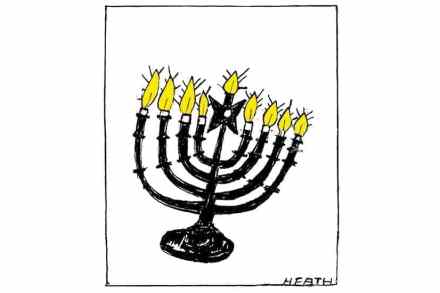
Reactions to the recent passing of F.W. de Klerk transported me back to my childhood in South Africa. The horror of apartheid was a frequent topic of conversation in our family. My uncle’s law firm, Witkin, Sidelsky and Eidelman, pioneered the employment of black people and gave Nelson Mandela his first job as a clerk, in defiance of the accepted practice at the time. My mother was the principal of the only training college for black pre-school teachers and my father, a rabbi, made pastoral visits to Robben Island. We were all-too-aware of the urgent need to dismantle the structural racism that plagued the country. When de Klerk and Mandela worked together to do exactly that, the joy was tempered by the knowledge that it had taken far too long.

How to cure what ails the NHS

From our UK edition

Wrong cure Sir: In referring to the UK as the highest-spending European nation in healthcare proportionate to GDP (‘Hospital pass’, 4 December), Kate Andrews paints an exaggerated picture which is based upon additional expenditure in the NHS during the Covid pandemic, partly accounted for by £38 billion spent on test and trace. The figures are further inflated by the UK suffering a relatively greater fall in GDP. In reality, the NHS has been woefully under-resourced compared to its European counterparts over the past decade, leaving it with approximately 50,000 fewer doctors compared to OECD averages, the second-lowest numbers of hospital beds per capita, and the lowest numbers of MRI scanners.

A brief history of the death of God

From our UK edition

A few weeks after Friedrich Nietzsche bragged to an admirer that he had completed a ruthless attack on our Lord, he collapsed, had convulsions, shouted like a madman and never recovered his faculties again. It was early 1889. He was 44 years old, his books had just begun to be noticed, and he lived for a decade longer, empty-eyed, silent and entirely unaware of the fame that was about to engulf him. Was his tragic end divine punishment for his sacrilege? My devout Catholic wife begs to differ. Our Lord is not vengeful, she insists. That’s the only thing wrong with him, I reply.

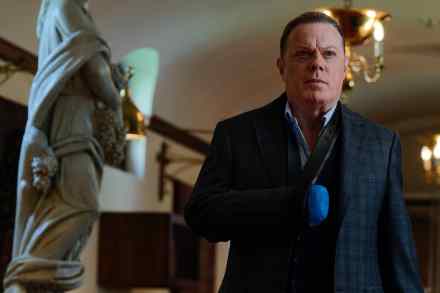
Eddie Izzard is so bad I’m hoping he gets dismembered: Sky’s The Lost Symbol reviewed

From our UK edition

If it weren’t for this job I sometimes wonder whether I’d even bother watching TV at all. This mood strikes me particularly in those weeks when I find myself casting round for anything new and vaguely interesting to watch and I end up in front of something as epically dire as Sky’s new Dan Brown adaptation The Lost Symbol. Brown’s hero Robert Langdon, whom we first met on screen in the The Da Vinci Code, is like Indiana Jones with a charisma bypass. Remember that wonderful scene in the first Indie movie where hunky Harrison Ford is giving a lecture to some besotted female archeology students, and one girl closes her eyes to reveal that she has written ‘Love’ on one eyelid and ‘You’ on another?

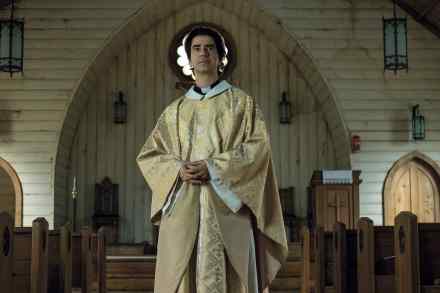
Profound and original and unashamedly religious: Midnight Mass reviewed

From our UK edition

I was turned on to Midnight Mass by Ricky Gervais who raved about it in one of his social media chats: ‘I absolutely loved it, and it got better and better. It’s like all the themes like love and death, regret, second chances, but it’s about good and evil in a biblical sense.’ Yes. Midnight Mass is very unusual in that (so far, at least; I’m only two and a bit episodes in) it seems to take Christianity at its own estimation. God is real, miracles do happen, even (or especially) the most miserable sinners can find redemption through repentance. Watching it is quite unsettling because you keep expecting the rug to be pulled from under your feet and, say, the hero priest Father Paul Hill (Hamish Linklater) suddenly to be revealed as a secret agent of Satan.

The enduring power of Japan’s doomsday cults

From our UK edition

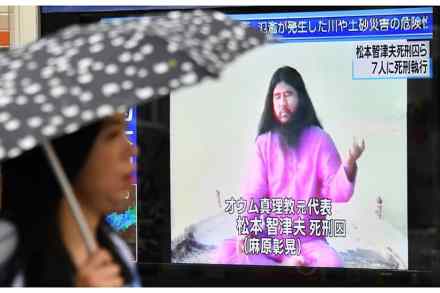
 Tokyo It is now 26 years since the doomsday cult known as Aum Shinrikyu (‘supreme truth’) carried out the worst domestic terrorist attack in Japanese history. Led by their leader Shoko Asahara, Aum released sarin gas on to the Tokyo subway, killing 13 and injuring 6,000. It remains the only time a weapon of mass destruction has been deployed by a private organisation. The details were sickening: one woman had to have her eyes surgically removed because the nerve gas fused her contact lenses on to them. Despite Asahara’s execution in 2018, the death cult has (somehow) survived, changing its name to Aleph and spawning two splinter groups. Aleph is small but appears to be in rude health, with 1,650 members, considerable cash reserves and several properties.

God is everywhere, sometimes in strange guises, in Jonathan Franzen’s Crossroads

From our UK edition

Twenty years ago The Corrections alerted a troubled world to the talents of Jonathan Franzen. Though cruel and funny and aggressively clever, the novel did more than display its author’s spiky brilliance. A stubborn moral core, in the person of the ailing patriarch of the Lambert family, and a tangled web of fierce emotion binding him and his wife and three children, gave it powerful resonance. Franzen’s new novel, Crossroads, presents us with another patriarch and another set of dysfunctional family dynamics. What has changed in the past two decades? Now less inclined to show off, Franzen is more assiduous in his excavation of character. We get less dazzle and a deeper dive.

The faith of Tyson Fury

From our UK edition

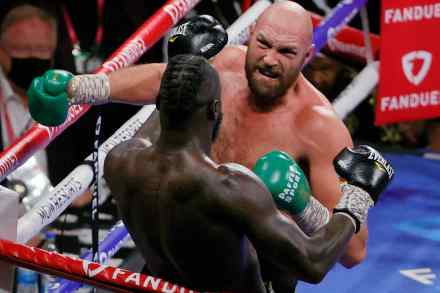
As soon as he had beaten Deontay Wilder last weekend, Tyson Fury gave thanks “to my Lord and savior Jesus Christ”. He said that he was going to pray for his fallen opponent. He has said that when he was recovering from depression and mental illness he “couldn’t do it on [his] own” and got down on his knees to ask God for help: I went down as a four hundred pound fat guy but when I got up off the floor after praying for like twenty minutes...I felt like the weight of the world was lifted off me shoulders. Most media reports glossed over these (admittedly eccentric) expressions of Christian piety, but the clips of Fury praising Jesus for his victory went viral for good reason.

The Church Closers’ Charter must be torn up

From our UK edition

Over the past few months, the Archbishops of York and Canterbury have repeatedly assured us that they love parishes and parish churches. ‘I am passionate that the parish is essential,’ the Archbishop of Canterbury told the Church Times recently. The Archbishop of York went so far as to describe the parish as ‘the beating heart of community life in England’. So why are they supporting a change to church law to make it easier to close parish churches? The paper which proposes the change is at stage one of a three-stage approval process. It has the unsexy name GS 2222, so I call it the ‘Church Closers’ Charter’.

The rise of the secular godparent

From our UK edition

I always knew that I didn’t want children, but also always knew that I wanted godchildren. Lots of them. One of the less-discussed aspects of the decline of the church in our secular age is the fact that this precious relationship, more than a millennium old, is increasingly scarce. Previously godparents were there to ensure a child’s spiritual development, as well as to have in reserve some handy grown-ups should something awful befall the parents. All this is still important, but the role has shifted. Its primary benefit now is to provide a wonderful extrafamilial link that spans the generations, creating an instant and enduring bond between a child and the wider world.

The fight for the future of the Church of England

From our UK edition

When the Church of England talks of trying new things, I prick up my ears. Back in 2004 it announced the need for ‘fresh expressions’ — new ventures alongside the normal parish system. Maybe some vibrant arty experimentation would ensue, I felt. But the main result was lots of nimble little evangelical pop-up churches, mostly lay-led. The idea of innovation seems to energise the evangelicals, although their version of innovation doesn’t always energise me. On Easter Day this year I dragged my kids to church, but there was no room at the socially distanced inn. The evangelicals round the corner let us in, so I had a glimpse of a style of Anglicanism that I normally avoid.

What’s the harm in opening the church doors?

From our UK edition

The end of summer 2021, the end of the great British staycation. I sat on the grass outside the post office on Holy Island, Northumberland and watched as the tourists milled about. After a visit to the Priory, and the Pilgrims Fudge Kitchen, a fair few of them would wander up to the Catholic church, St Aidan’s. Even if you’re not the sort to ever go to church, you might pop in for a quick look on Holy Island, aka Lindisfarne. This is where the gospels were translated, and where St Aidan, in 635, founded the monastery from which he converted the pagan north. Aidan came here from Iona, at the request of nice King Oswald, and went about on foot evangelising. Not horseback, says Bede, he didn’t want to set himself above the locals. On Holy Island the tourists are polite.

My literary heroes have led me astray

From our UK edition

Gstaad   Good manners aside, what I miss nowadays is a new, intelligent, finely acted movie. Never have I seen so much garbage as there is on TV: sci-fi trash, superhero rubbish, dystopian crap and junk about ugly, solipsistic youths revolting against overbearing parents. The director Jimmy Toback blames the subject matter for the lousy content, driven as it is by the need for diversity. I think lack of talent is the culprit. The non-stop use of the F-word is a given in Hollywood productions. Combined with constant violence, it makes for a lousy and unwatchable film.

A podcast that listens to what anti-vaxxers think rather than lecturing them

From our UK edition

Work is our new religion. There are people whose primary job is writing listicles of celebrity gossip, illustrated with gifs from the Fast & Furious franchise, who refer to being a writer as a ‘calling’. If I think about this for too long my brain simply shuts down to protect itself. What we used to do for God we now do for our work. In a secular culture, it seems totally normal — admirable, even — to sacrifice the possibility of having a family, to give up all leisure time, to starve yourself or live on insane, totally made-up diets like intermittent fasting or paleo for the sake of your job as an Instagram beauty influencer or whatever. But to wear a habit and be celibate and fast out of a religious devotion? That must be a cult!

Is Boris Johnson allowed to pick the next Archbishop of Canterbury?

From our UK edition

A few weeks ago, Prime Minister Boris Johnson was shirty with me when I asked him whether he was now a practising Roman Catholic, having recently been married to Carrie Symonds at Westminster Cathedral. His answer was ‘I don't discuss these deep issues. Certainly not with you.’   The question may be ‘deep’, as he says, but it is also – as a senior minister has reminded me – an intensely practical one and relevant to his duties as Prime Minister. Because under the British constitution:  1. The Prime Minister’s appointments secretary has an advisory role in the appointment of all bishops  2.

Pope Francis is losing his culture war

From our UK edition

Since I wrote about the Pope’s declaration of war on the Old Rite, something unexpected and beautiful has happened. Many bishops have held the line. Far from all: some have gleefully welcomed the opportunity to extinguish the pretty rite, and intellectual justification has come, predictably, from the Jesuits, who haven’t been sound since The Exorcist. But so many other bishops have judiciously, almost seditiously, chosen to interpret the Pope’s instruction to the letter while ignoring its spirit, and given immediate dispensation to the priests who already say it to continue. Others, I'm told, have written or telephoned Old Rite-saying priests to offer personal comfort and reassurance. This is how you quietly turn the tide in a culture war. Ignore the bullies.