Religion

Letters: The uncomfortable truth about Gen Z churchgoers

Clerical errors Sir: Glad though I am that The Spectator bucks the trend in its conviction that the C of E is alive and well (Easter Special, 4 April), I cannot help but be frustrated by the sense that too many of these articles speak of, for and to a secure metropolitan elite. Of course Gen Z flocks to the church of Four Weddings and a Funeral. But what is there for those of us who do not live in such places of power and plenty? My sister and I, aged 19 and 23, are two Gen Z folk intellectually serious about faith. When we return home to Mid Devon

How to save our churches 

Easter is being celebrated by millions of families across our country. It’s one of those moments when we should come together, pause and remember what really matters. As a mother with a very busy job, I value this time with my children more and more each year. It is a time for faith, family and fun. Britain is a Christian country. Our values, our customs and many of our greatest institutions were shaped by Christianity. That is why, for so many people, going to church at Easter still matters. I teach my children that it is not just a ritual. It is part of who we are. That is why

How would you sell Christianity today? with Rory Sutherland

30 min listen

Advertising guru – and the Spectator’s Wiki Man – Rory Sutherland joins Damian Thompson to try and tackle the question ‘how would you sell Christianity – today?’ If religions have previously thrived by providing a form of social network and an ‘elevated trust mechanism’, perhaps there ways in which they can adapt for modern society – especially as many people appear to be turning away from conspicuous consumption and searching for meaning. In this Easter special they ponder: are religious people less likely to be alcoholics? Does driving make you a better person? And are Churches today akin to the carrier pigeon of yesteryear? Produced by Patrick Gibbons.

How would you sell Christianity today? with Rory Sutherland

The truth about the quiet revival – with grounds for optimism 

25 min listen

The past year has seen a deluge of reports and investigations about young people finding faith and flocking back to Christianity – including here on Holy Smoke. All roads lead back to a Bible Society study which claimed that – backed up by polling from YouGov – a ‘quiet revival’ was underway. Yet, one year on, YouGov has pulled the survey due to data errors and the Bible Society was forced to apologise. While the credibility of the survey is undermined, this doesn’t necessarily chime with anecdotal evidence from some quarters. So what is the truth behind the ‘quiet revival’? Justin Brierley, broadcaster and founder of Think Faith, joins Damian Thompson to provide

The truth about the quiet revival – with grounds for optimism 

Is politics becoming more religious? With Tom Holland & Jonathan Sumption

39 min listen

Is British politics becoming more religious? Madeline Grant certainly thinks so, arguing – in the Spectator’s cover article – that the next election could be the most religious for decades. Issues like immigration and Islam, assisted dying – and even the establishment of the Church of England are likely to play a role. The current Labour government’s ‘most telling divide’, Madeline writes, is between MPs – like Shabana Mahmood and Wes Streeting – who understand religion – and ‘those who don’t’. For the Edition’s Easter special, host Lara Prendergast is joined by vicar – and Madeline’s husband – The Rev’d Fergus Butler-Gallie, former Supreme Court justice Jonathan Sumption and the historian and

Religion has been resurrected in British politics

British history is littered with elections and Elections. The first type, common or garden elections, are fought with prosaic issues at their core. Readers might remember the 2001 general election, which saw such pressing topics as the fate of Kidderminster hospital pushed to the fore. The 1865 general election was also considered uneventful by contemporaries. Even contests nominally involving major changes can be just ‘elections’. The tedium of 2024, featuring cynical electoral bribery, with the result a foregone conclusion and the stated policy platforms of the two main parties largely similar, is a prime example. What, then, are the other type: the Elections? These are existential ones in which visions

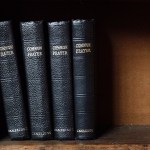
Gen Z are turning to the Book of Common Prayer

‘No one pretends that modern services will fill the churches. But adult converts ought to be able to step naturally into being worshippers. How absurd that a convert should be warned to undergo cultural orientation before he comes to church.’ These words of the arch-reformer Colin Buchanan in 1979 sum up the views of that post-1960s generation, who believed that all the prayer and thought which Anglicans had inherited was alien to the new generation. It was thought so alien, in fact, that a full cultural orientation would be needed to persuade people to come to church. Modernity was the answer to most questions, and most especially: ‘How do we

How Pope Leo XIV is quietly reshaping the Vatican

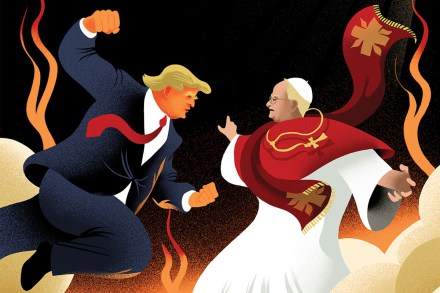
On the afternoon of Easter Sunday last year, Pope Francis was driven through St Peter’s Square in an open-topped Popemobile. A few weeks earlier he had nearly died from pneumonia, so pilgrims were thrilled to watch him blessing babies. They told journalists that it was a miracle to see the 88-year-old Argentinian in such good shape. At 9.45 the next morning the Vatican announced that Francis had just died from a stroke. And so began the preparations for a conclave that elected the second pope from the Americas. Cardinal Robert Prevost – ‘Bob’ to his friends – was a Chicago-born dual citizen of the United States and Peru. Until 2023

Does British politics have a problem with the ‘omnicause’?

51 min listen

It is undoubtable that – under the leadership of Zack Polanski – the Green Party have soared to new heights. Having won their first parliamentary by-election in February, polls consistently show them as a force to be reckoned with on the left of British politics. Much of their success has come at the detriment of Labour, with disgruntled further-left progressive voices opting to vote Green. This, though, is a brand of eco-populism that comes at the expense of the Green Party’s roots, or so argues Angus Colwell in the Spectator‘s cover article this week. Have the Greens ceded the issue of the environment? For this week’s Edition, host William Moore

Does British politics have a problem with the 'omnicause'?

Prince William resets faith – as Sarah Mullally enthroned

37 min listen

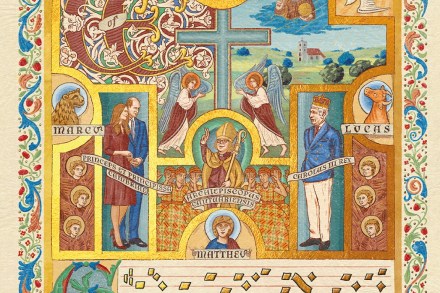
Dame Sarah Mullally has been enthroned as the Archbishop of Canterbury, the first female head of the Church of England. Prince William attended as the representative of the Monarch and – as heir to the throne – the person who will one day become Supreme Governor of the Church. His attendance came a few days after an interview appeared in The Times where Prince William seemed to be pressing ‘reset’ on his relationship with faith. Friend of Holy Smoke, The Daily Mail’s Robert Hardman – author of the forthcoming biography Elizabeth II. In Private. In Public. The Inside Story – and Anglican priest The Rev’d Fergus Butler-Gallie, join Damian Thompson

Prince William resets faith – as Sarah Mullally enthroned

Thoughtful fantasy: Travel Light, by Naomi Mitchison, reviewed

Naomi Mitchison is now renowned for being the author of ‘lost classics’ – famous for being forgotten. She lived to be 101 and wrote nearly as many books. She supported anti-Nazi movements in 1930s Vienna, ran a sexual health centre for women, became an octogenarian campaigner for nuclear disarmament and an ‘adviser and mother of the Bakgatla tribe in Botswana’. Despite two biographies and attempts to revive her masterpiece, The Corn King and the Spring Queen, she remains undervalued – perhaps because of her refusal to settle into one genre and her determination to venture into the territory of historical epic spiced with mythic ritual and dark magic. Travel Light

Who is Sarah Mullally?

Who is Sarah Mullally?

45 min listen

One week from the enthronement of Sarah Mullally as the new Archbishop of Canterbury, her biographer Andrew Atherstone – Professor of Modern Anglicanism at Oxford University – joins Damian Thompson for this episode of Holy Smoke. This marks the second profession she has risen to, having first been the most senior nurse in England & Wales. Archbishop Mullally has led an ‘ordinary, suburban’ life and is by all accounts well-liked by her congregations but what do we know of her views on some of the most controversial topics in her in-tray: abortion, gay blessings and safeguarding – to name but a few. Is it fair to say she is the

Is there any truth in the Christian revival?

25 min listen

There has been a lot of speculation about a ‘quiet revival’ of Christianity happening amongst the younger generations – including on this podcast. Much of this traces back to a survey conducted by the Bible Society last year. Respected demographer Conrad Hackett of the Pew Research Center joins Damian Thompson to explain the truth behind the statistics, and why we have to be wary of the methodology used by different polls. Some interesting facts: Christians remain the largest religious group in the world, following by Muslims and then the religiously non-affiliated; while Europe was home to the largest number of Christians as recently as 2010, sub-saharan Africa now has the

Is there any truth in the Christian revival?

Why Leonard Cohen felt empowered to pronounce benedictions

If it is true that a serious artist is one with the capacity to go on reinventing who they are in their work, Leonard Cohen unquestionably counts as serious. Not that anyone is likely to think of him as frivolous, exactly. While the famously acid description of his songs as ‘music to slit your wrists to’ is hardly fair, the whole persona, the register of his writing and performing, resists any mood of simple celebration. The ‘cold and… broken Hallelujah’ of his most celebrated and over-exposed song, the ‘broken hill’ from which praise is uttered (in ‘If It Be Your Will’), reminds us unsparingly of where he believed his music

Moltbook: has AI created its own religion?

20 min listen

What did you most recently use Artificial Intelligence for? For most people, the answer would be as a glorified search function, using services like Chat GPT to ask questions, draft text and even produce images – like the Chat GPT generated thumbnail image for this episode. The capability of AI far exceeds this most though. Sean Thomas joins Damian Thompson for this episode of Holy Smoke to talk about ‘Moltbook’, a social network built exclusively for AI agents – and which has now created its own AI ‘religion’. What does this mean for humankind? Is AI just replicating a belief impulse, to the extent that one exists within humans? And

Moltbook: has AI created its own religion?

What Catholics get wrong about assisted dying

The Catholic Church has always been remarkably relaxed about sin. It becomes distinctly jumpy, however, when it encounters any challenge to the Church’s designation of what is sinful. Human beings (it suspects) are and always will be sinners. The Church has no problem in dealing with sinners: they should confess. Absolution may be available, dispensed by a priesthood who have privileged access to the Almighty, and can intercede. It isn’t really the commission of a sin that worries the Church. It’s the rejection of a doctrine ‘We will tell you what’s unclean in the eyes of God. We also offer a laundry service to which we hold the monopoly.’ To

Why did Pope Leo choose a ‘safe pair of hands’ for Westminster?

32 min listen

The next Catholic Archbishop of Westminster, Richard Moth, will be installed in his cathedral on February 14. Bishop Moth, formerly of Arundel and Brighton, is seen as a ‘safe pair of hands’. But why didn’t the job go to a more charismatic figure, such as Archbishop John Wilson of Southwark? What does this low-key appointment tell us about Pope Leo’s vision for the Church? Fr Alexander Lucie-Smith, a moral theologian and priest of Arundel and Brighton – and friend of Holy Smoke, joins Damian Thompson for a frank and wide-ranging discussion about the problems facing the Catholic Church in England and Wales. Produced by Patrick Gibbons.

What can we expect from the new Archbishop of Westminster?

The historic value of English churches – with Daniel Wilson

22 min listen

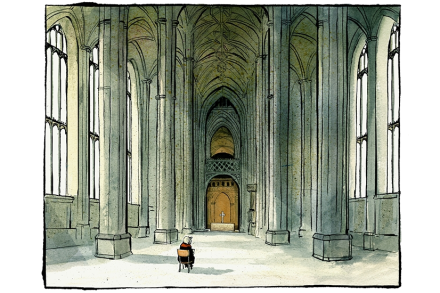
When was the last time you visited your local parish church? Historian and social media influencer Daniel Wilson joins Damian Thompson to encourage more people to visit their local churches – not just as a centre of worship but as a historical treasure trove. Daniel takes us through some of his favourite examples of medieval architecture, as he emphasises the importance of being a ‘tourist in your own neighbourhood’. For more from Daniel, you can find him on Instagram and TikTok: @greatbritisharchitecture Produced by Patrick Gibbons.

My house is devouring me (and my relationship)

The panic of another season bore down on me as the builder boyfriend painted the breakfast room with the green paint I’d chosen. But he couldn’t paint fast enough for my liking and we started to have the most terrible rows. Despite us being fully booked last summer, I had come to the view that the whole thing wasn’t viable and we were bound to go under. I started looking up estate agents who market big old piles in Ireland to stupid people in America. This house is like a monster devouring my money faster than I can feed it. I fed the beast by filling the oil tank to

Iran: why theocracies survive – with Peter Frankopan

25 min listen

In the 21st century, the theocratic nature of the Iranian regime – ruled by senior Shia clerics – appears to be a rarity. The constitutional role of religion is perhaps matched only by the Vatican City and Afghanistan, though these vary in terms of autocracy – as evidenced by the brutal suppression of protests across Iran in the past few weeks. The regime, installed following the 1979 revolution and led first by Ayatollah Khomeini and now Ayatollah Khameini, has proven remarkably resilient; how has it survived so long? Peter Frankopan – professor of global history at Oxford University – joins Damian Thompson to discuss the tensions associated with state control