How does time work?
From our US edition
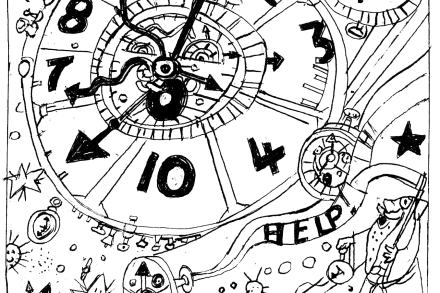
Most of us say we instinctively understand what time is, but struggle to describe it. We clearly live our lives in the flow of time, with the past gone and our perception of the present moving toward an undetermined future. It’s been described as the fire in which we burn. But what actually is it? This occupies the minds of cosmologists and philosophers, and recent research, far from clarifying the concept, makes it even stranger. Time, it seems, may not be fundamental but a by-product of the base structure of the cosmos. For Isaac Newton, time was set in motion by God and was the universal backdrop in which all events occur. It was unchanging and ever-present; it regulated and set the pace for the clockwork universe, living out the laws of science.