Refugees

The Australian way

From our UK edition

 Sydney Most ordinary Australians are shocked that our immensely civilised country is reviled in polite society here and abroad, when the world has so many blatant human rights abusers. The latest accusation comes from a New York Times article complaining that our policies on asylum-seekers are harsh, insensitive, callous and even brutal, and urges European nations not to copy them. Yet the policies on border protection of Tony Abbott and John Howard before him should be a lesson to Britain. At the heart of the matter is a firm but fair post-war policy that mass migration is conditional on government control over ‘who comes to this country and the circumstances in which they come’, as Mr Howard famously put it.

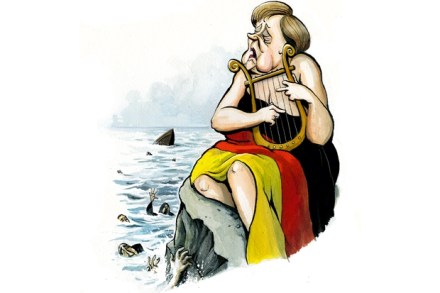
Merkel’s folly

From our UK edition

[audioplayer src="http://rss.acast.com/viewfrom22/merkelstragicmistake/media.mp3" title="James Forsyth and Holly Baxter debate Merkel's offer to Syrian refugees" startat=38] Listen [/audioplayer]Of all the irresponsible decisions taken in recent years by European politicians, few will cause as much human misery as Angela Merkel’s plan to welcome Syrian refugees to Germany. Hailed as enlightened moral leadership, it is in fact the result of panic and muddled thinking. Her pronouncements will lure thousands more into the hands of unscrupulous people-traffickers. Her insistence that the rest of the continent should share the burden will add political instability to the mix. Merkel has made a dire situation worse.

We can’t just base our refugee policy on what makes us feel better

From our UK edition

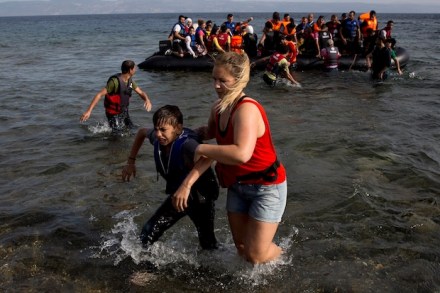
People across Britain wept when we saw the picture of little Aylan Kurdi's body on a Turkish beach. We later heard of his brother and mother dying  - and his family's story of fleeing from Islamic State, and of their year in Turkey before boarding a smugglers' deflating dingy. Many scream out in empathy that something must be done, that we must assimilate more refugees to help the desperate and stop the dying. I completely agree with the need for real action to help them - but l also think the Prime Minister completely right when he says that receiving ever more people is not the answer.

The plight of Syria’s refugees deserves more than your good intentions and virtue signalling

From our UK edition

I suppose it should not be a surprise that the virtue signalling over the appalling plight of Syrian refugees displaced by that country's monstrous civil war has now reached fresh heights of absurdity. Nor that some of the press coverage of this dreadful crisis is edging towards a post-Diana level of mawkishness. One front page this morning shouts at David Cameron, demanding the Prime Minister SHOW YOUR HUMANITY. I mean, really. Then, on ITV's Murnaghan programme this morning, Nicola Sturgeon and Yvette Cooper were asked if they would house Syrian refugees in their own homes. Obviously they had to say yes and we may now expect the same question to be asked of every politician in Britain.

Migrant

From our UK edition

Al Jazeera, the Qatari broadcaster, is going to use refugee instead of migrant in its English output. ‘The umbrella term migrant is no longer fit for purpose when it comes to describing the horror unfolding in the Mediterranean,’ one of its editors explained. ‘It has evolved from its dictionary definitions into a tool that dehumanises and distances, a blunt pejorative.’ Doubts about terminology are not new. ‘Please don’t speak of those arriving in Australia from Britain as immigrants,’ wrote the Sydney Daily Mail in 1922. ‘Call them rather migrants, because to go from Britain to Australia is only to pass from one part of Great Britain to another.’ Perhaps.

Christianity is silent on my great moral dilemma

From our UK edition

[audioplayer src="http://rss.acast.com/viewfrom22/jeremycorbynsbritain/media.mp3" title="Matthew Parris and Theo Hobson debate the role Christianity in the migrant crisis" startat=1383] Listen [/audioplayer]Proximity shouldn’t make a difference — should it? We were on a beach on the European side of the Mediterranean, it was a beautiful late August day, and I felt so happy. The sea was fresh, the sky was clear and a stiff breeze was whipping white horses out past the headland. ‘Rough weather for migrants,’ I thought, then checked myself. What an awful thing to think.

Yvette Cooper attacks ‘cowardly’ government and says Britain should take 10,000 refugees

From our UK edition

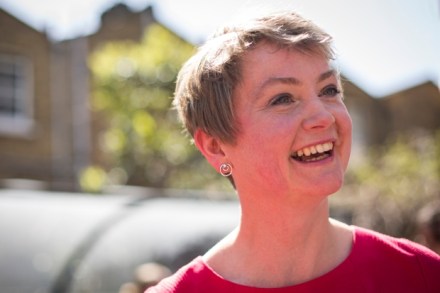
Yvette Cooper has just given a rather fine, bold speech on the refugee crisis. Some reading will disagree with her plea for Britain to take 10,000 refugees, rather than 200. But that’s part of the point: the Labour leadership contender has decided to take a stand on something, even if it annoys some. To be fair, it is probably an issue that Labour members will applaud her taking a stand on, rather than something that makes the party feel uncomfortable with, but it is much less like the ‘on-the-one-hand-this-and-the-other-that’ style of campaigning that Cooper has been criticised for at times during this contest.

Portrait of the week | 20 August 2015

From our UK edition

Home Andrew Burnham described calls from Yvette Cooper, a rival candidate for the Labour leadership, for him to withdraw from the contest as ‘quite strange’. The problem was how to prevent Jeremy Corbyn, a left-winger, from being elected by the alternative vote system by 610,000 party members and registered supporters. Gordon Brown, the former disastrous Labour prime minister, contributed by making a 50-minute speech in a small room at the Royal Festival Hall, during which he paced up and down continuously for an estimated 1 mile 1 furlong 5 chains and did not mention Mr Corbyn’s name. Kezia Dugdale, a Member of the Scottish Parliament, was elected leader of the Scottish Labour party; the party has only one seat in the Parliament of the United Kingdom.

Who’s running Libya?

From our UK edition

When I covered Libya’s revolution in 2011, I had a driver named Mashallah. Mashallah was a decent and stoical man with an interesting propensity for malapropisms. He was regarded with fondness by us journalists — so when I decided to return to Libya recently, I sent him an email: did he want to work for me again? Unfortunately, replied Mashallah, he was in Paris. This seemed strange. How would he have got a French visa? I emailed again suggesting another week and received another profound apology. That week he was going on to Ankara and Istanbul. A quick look online solved the mystery.

Yet another tragedy in the Mediterranean. Here’s an actual rescue plan

From our UK edition

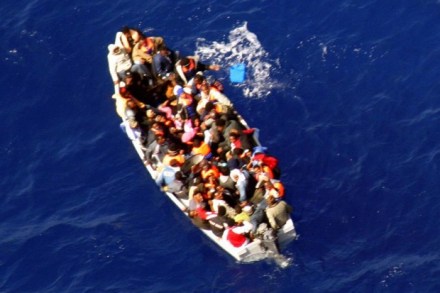
Another week, another appalling boat disaster in the Mediterranean, another round of the same tired row on migration. Yesterday a boat carrying 600 people sank off the coast of Libya; 400 people were rescued, the rest are feared dead, trapped in the belly of the boat. This morning the same round of cliches are being trotted out. The pro-immigration lobby says our restrictive policies are cruel. The anti-immigration brigade say we must not encourage masses of people to come. But the migrant crisis is too great for such shallow responses. In this week's Spectator, Paul Collier says that this 'lazy thinking' gets us nowhere. He has an alternative, and it involves more than just a few Royal Navy ships fishing people out of the water.

A real rescue plan

From our UK edition

[audioplayer src="http://rss.acast.com/viewfrom22/howtofixtherefugeecrisis/media.mp3" title="Paul Collier and Douglas Murray discuss how to fix the migrant crisis" startat=32] Listen [/audioplayer]For all its difficulties, Europe is prosperous and safe: one of the best places on Earth. Many other societies have yet to achieve this happy state: some are murderous and poor. Two of the most troubled zones in the world are near Europe: the Middle East, and the Sahelian belt which spans northern Africa. Unsurprisingly, many of the people who live in these societies would rather live in Europe. Impeded by immigration controls, a small minority of this group are taking matters into their own hands, trying to enter Europe illegally by boat across the Mediterranean.

Is David Aaronovitch taking the piss out of himself?

From our UK edition

This job is getting harder and harder, because it is no longer possible to parody or satirise the blithe stupidity of the liberal London middle class. It now exists in a place beyond the reach of such mocking. Take a peep at David Aaronovitch’s piece today on the problems in Calais. Just have a look, and tell me you don’t think he’s actually taking the piss out of himself. David believes we should let all the asylum seekers in. He thinks that they would make excellent ‘electrical engineers’. Yup, that’s why they’re there, Dave. Itching to get their hands on a junction box, the lot of them. Not a single penny in benefits will be expended, not a single crime committed.

Home and away | 9 July 2015

From our UK edition

Refugee crisis in the Mediterranean! Fear not. Anders Lustgarten and his trusty rescue ship are here to save mankind. Lampedusa consists of two monologues, one Italian, one English, which tackle the problem at home and abroad. We meet Stephano, a cartoon fisherman with a Zorba beard and a chunky woollen sweater who lives on Italy’s southernmost salient about 70 miles off the African coast. He follows an improbable path from xenophobia to enlightened altruism. At first he mistrusts the runaways whose corpses choke his native shore. He asks survivors why they don’t ‘speak the language’. ‘We do,’ they reply, in English. ‘This is Europe’s language.

Ali Baba and the 300 hostages

From our UK edition

In the heat of the midday sun, the fields and woodlands between Greece and the Republic of Macedonia look idyllic: birds sing, the grass is smudged with wild poppies, all seems quiet. But this picture of pastoral peace is, I’m afraid, an illusion. This is Greece’s Wild West, a lawless and desperate place known as ‘The Jungle’, where people are beaten up every day. ‘It’s dangerous out there,’ says the fat Greek policeman standing with me, just north of the village of Idomeni. Then he waddles back to his car. The predators in this jungle are Afghan people-smugglers, their prey the poor migrants who have struggled here from all over Africa, Asia and the Middle East.

The invasion of Italy

From our UK edition

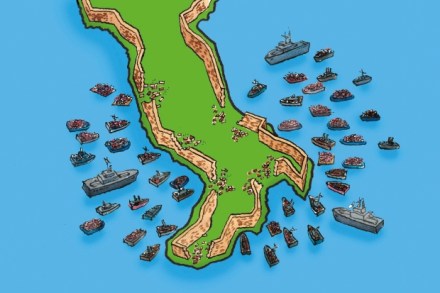
Let us suppose that along the coast of Normandy up to one million non-EU migrants are waiting to be packed like sardines in small unseaworthy vessels and to cross the English Channel. Let us suppose that first the Royal Navy, then the navies of a dozen other EU countries, start to search for all such vessels in the Channel right up to the French coast, out into the North Sea and the Atlantic even, and then ferry all the passengers on board to Dover, Folkestone, Hastings, Eastbourne and Brighton in a surreal modern-day never-ending version of the Dunkirk evacuation of 1940. Would the British government agree to take them all? What of the British people? And if they did agree, what would the British government and people do with all the migrants? How would they cope?

The people from the sea

From our UK edition

 Lampedusa The young hang about in packs or speed around town, two to a scooter. Old women group together on benches around the town square in front of the church. The men continually greet each other as though they haven’t met for years. The likelihood is small. With fewer than 6,000 inhabitants, and as close to Libya as it is to Italy, Lampedusa is the sort of place from which any ambitious young Italian would spend their life trying to escape. Yet every day hundreds and sometimes thousands of people are risking their lives to get here. ‘Please tell people we have nice beaches,’ one islander pleads.

Ed Miliband should be careful when discussing foreign policy errors

From our UK edition

If someone accuses you of doing something that you haven’t done, there’s a really easy way of convincing them that you are not in fact guilty. The first thing you can do is deny the accusation. Very clearly, emphatically and categorically. Let me give you an example taken completely at random: 'Are you accusing David Cameron of being personally to blame for the refugee crisis in Libya and hence the deaths of hundreds of desperate people in the Mediterranean?' Now, can anyone think of a good way of answering that question which would be unequivocal and make it clear beyond any doubt whatsoever that this is not in fact what you are doing? One suggestion might be to say something roughly along the lines of this: 'No, I am not.' See, it’s really easy.

The EU’s asylum policy is to blame for the tragedy unfolding in the Mediterranean

From our UK edition

As the leading article in The Spectator this week pointed out, thousands of people are fleeing war and anarchy in Africa and setting sail across the Mediterranean bound for Europe. The latest tragedy comes today, after a boat carrying between 500 and 700 migrants from Libya capsized. So far, only 28 people have been rescued. Coaxed by traffickers who demand huge sums, refugees have been piling into rickety boats which often disintegrate en route. Aid groups, human rights activists, the pope and the EU itself all say the EU-funded rescue operation Triton is inadequate. Well, they're right in a way, but they're also missing the point. The real culprit isn't Triton but the EU's tragic asylum and immigration policy.

A deadly silence

From our UK edition

One Friday, 28 people were rescued by the Italian coastguard when the boat on which they were fleeing Libya capsized in the Mediterranean. Arriving homeless and without prospects in a strange land, these were — relatively speaking — the lucky ones. As many as 700 are thought to have drowned. Add them to the tally. On Monday, another boat capsized with 400 souls feared lost. Last year more than 3,000 died in the Mediterranean trying to get to the West. It has become a phenomenon of our times. We do not hear much about life in the supposedly liberated Libya, but the fact that even immigrants into Libya would rather risk death than stay there gives a fair idea.

The bleak calculation made by the passengers on the Ezadeen

From our UK edition

Well, thank God they made it. The Ezadeen, formerly a livestock carrier and now adapted for its human cargo of 360 people, has arrived today at Corigliano Calabro near Lecce. The Italian coastguard, which brought the vessel into port, has been conspicuously humane in its treatment of the refugees. The newborns are to have the best of care; the other migrants - abandoned, it would seem, by the crew at some point in the voyage from Turkey - have been given a courteous reception, rather than treated as criminals. Yet these 360 Syrians follow the 796 individuals, many also from Syria and from Eritrea, abandoned by the crew of their ship earlier this week.