Reform

The thinking behind Nigel Farage’s shadow cabinet

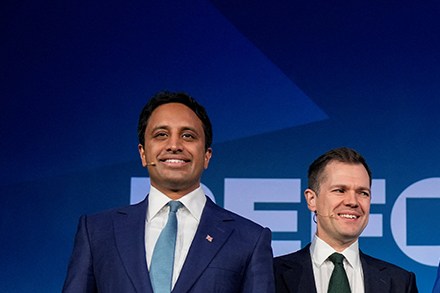
There is an old joke about Nigel Farage, put about by former colleagues. ‘Why is Nigel like a beech tree?… Because nothing grows under him.’ The comparison to this acid-leafed tree which stifles all beneath it is one the Reform UK leader has never accepted. ‘I don’t fall out with people,’ he once said. ‘They fall out with me.’ Like Tintin, Farage has enjoyed many different adventures in different guises: ‘Nigel in America’, ‘Nigel in the Jungle’, ‘Nigel in the City’. This week, we got another: ‘Nigel and the Gang of Four’, the leader who seeks power only to yield it to others. Four names were unveiled as part of

‘It’ll be a photo finish’: inside the Gorton and Denton by-election

British by-elections are often prolonged affairs, dragging on for months. Yet in the Manchester seat of Gorton and Denton – once home to Myra Hindley and the Gallagher brothers – campaigners are on a frantic dash to canvas the 82,000 voters before polling day on 26 February. ‘It is a proper three-horse race,’ says one. ‘And it’s coming down to a photo finish.’ Gorton has been red since the days of Ramsay MacDonald – but now a WhatsApp scandal threatens to end Labour’s hegemony. Andrew Gwynne, the departing MP, has quit over a series of lewd messages. Manchester mayor Andy Burnham, blocked from standing to replace him, has instead become

Does British politics reward traitors or faithfuls?

22 min listen

With the Conservatives on watch for further defectors, academic Richard Johnson and Conservative peer Danny Finkelstein join James Heale to discuss whether British politics rewards traitors or faithfuls. Richard points out that often personal success is dependent on whether the party goes on to be a major or minor player in British politics; Winston Churchill and Shaun Woodward fared better, while Shirley Williams and Mark Reckless had less success. Danny – whose political career began with the SDP in the 1980s – also takes us through his personal experience and the challenges of defecting, from ideology and demography to the perception of betrayal. How fundamental is the shift taking place

The allure of Reform

Kemi Badenoch’s travails with Nigel Farage’s Reform UK party have taken me back to the politics of the 1980s and the Social Democratic party’s challenge to Labour at the time. Like Reform now, the SDP sought to replace one of the main incumbent parties of British politics, but the SDP’s case went beyond finishing off Labour. Like Farage now, they argued that the whole two-party system was ailing, that neither was capable of providing a political home for millions of voters who felt unrepresented by them, and that each was, in their own way, so stuck in their furrows that only a new party could give Britain the leadership it

Iran’s useful idiots, Gordon Brown’s second term & the Right’s race obsession

43 min listen

As the world watches events in Iran, and wonders whether the US will intervene, the Spectator’s cover this week examines ‘British complicity in Tehran’s terror’. When thinking about what could happen next in the crisis, there is a false dichotomy presented between regime survival and revolution; the reality is more complicated, though there is no doubt that this is the biggest threat to the theocratic regime in decades.  For this week’s Edition, host Lara Prendergast is joined by political editor Tim Shipman, columnist Rachel Johnson and features editor – and Edition co-host – William Moore. They commend the bravery of Iran’s protestors but criticise the ‘inept, naive and wrong’ response of the Foreign Office.

Inside Jenrick & Reform’s shotgun marriage

15 min listen

Robert Jenrick has sensationally defected to Reform. After a day that started with his sacking from the Conservatives – over plotting to reject – continued with the will-he-won’t-he drama of whether Farage would accept him as a new Reform member this afternoon; it ends with a press conference welcoming him to Farage’s gang. So what happens now? Kemi Badenoch was praised for her show of strength in swiftly expelling Jenrick, but she is undoubtedly weakened after this news and her frontbencher looks considerably lighter. Is this an inflection point for the Conservative party? And what role will Bobby J play in Reform – could he be their new shadow chancellor?

Inside Jenrick & Reform's shotgun marriage

Is Jenrick joining Reform?

8 min listen

Kemi Badenoch has sacked Robert Jenrick from the shadow cabinet, removed the Tory whip and suspended his party membership. In a video on X she claims, ‘I was presented with clear, irrefutable evidence that he was plotting in secret to defect in a way designed to be as damaging as possible’. The Tories compiled a bundle of evidence that included a dinner between Jenrick and Nigel Farage last month, and the fact that he had discussed switching to Reform with at least two allies. It is understood that he left a copy of his defection speech lying around, which included passages criticising Conservative colleagues. Is this – as we all

What's the future of the Scottish Tories?

19 min listen

The leader of the Scottish Conservatives, Russell Findlay MSP, sits down with James Heale to look ahead to May’s pivotal Holyrood elections. He pushes back against the threat from Reform, arguing that Nigel Farage is trying to be ‘all things to all people’, and he is scathing about the lack of loyalty shown by those who have defected from the party – not just to Reform, but to the Liberal Democrats too. But with the collapse of the support Labour received in the 2024 general election – which Findlay calls their ‘loveless landslide’ – why aren’t the Tories benefitting more? Plus, how did being the victim of a vicious acid

Why Nadhim Zahawi (and Reform) are making a mistake

50 min listen

This week on Quite right!, Michael and Maddie examine Nadhim Zahawi’s dramatic defection to Reform UK and ask whether it strengthens the party’s insurgent credentials or exposes a deeper strategic mistake. Is Reform becoming a genuine outsider movement, or simply a refuge for disaffected Tories? And what does the pattern of Boris-era defections reveal about credibility, competence and the challenge of turning populist energy into a governing force? Then, Iran: mass protests against the regime have erupted onto the streets of Tehran and beyond. Are these demonstrations the prelude to real regime change – or another brutal crackdown waiting to happen? And what role should the West, and the United

Zahawi defects: are Reform becoming Tories 2.0?

15 min listen

How many Tories is too many? That’s the question Westminster is asking after the unveiling of Reform’s latest defector. Nadhim Zahawi, Boris Johnson’s brief-lived Chancellor of the Exchequer, is Nigel Farage’s latest recruit. He told journalists that the UK had reached a ‘dark and dangerous’ moment, and that the country needed ‘a glorious revolution’. But are Reform just turning into the Tories 2.0? And what will Zahawi’s role be – is he the elusive shadow chancellor Farage has been searching for? Oscar Edmondson speaks to Tim Shipman and James Heale. Produced by Oscar Edmondson.

Mums for Reform?

14 min listen

Britain’s mums are backing Nigel Farage. One in five Mumsnet users intend to vote for Reform at the next general election, the first time a party other than Labour has topped its poll. Having been more negative towards Farage and the right in the past, why are its politically engaged users changing their minds? Are they swayed by issues like single-sex spaces, or does it reflect a wider collapse of confidence in the establishment? James Heale speaks to Tim Shipman and Sonia Sodha. Produced by Megan McElroy. 

How Reform plans to govern

18 min listen

2025 was the easy part for Reform. If they win the election, however, how do they actually govern? In The Spectator this week, Tim Shipman writes about the party’s plans to tackle Whitehall bloat, bypass the Lords and restore the authority of the Prime Minister over the various institutions of state. The man tasked with working this out is Danny Kruger, who is working up plans to push change through using Orders in Council – a device in the Privy Council – as well as statutory instruments and ministerial guidance to avoid the need for primary legislation. But the party is only in the foothills, and one source warns that

Dominic Cummings on lawfare, lockdowns and the broken British state – part one

In this special two-part interview, Michael Gove and Madeline Grant are joined by Dominic Cummings. After starting his political career at the Department for Education, Dominic is best known as the campaign director of Vote Leave, the chief adviser in Downing Street during Boris Johnson’s premiership, and one of the most influential strategists of modern times. Whether you consider him a visionary reformer or (as David Cameron once said) a ‘career psychopath’, his ideas – on government, technology, the Blob, education and the future of the right – continue to provoke debate. In part one, Dominic diagnoses Britain’s institutional decline and takes us inside Whitehall’s ‘heart of darkness’. He explains

From Porn Britannia to Political Chaos: The Spectator’s Year in Review

31 min listen

The Spectator’s senior editorial team – Michael Gove, Freddy Gray, Lara Prendergast and William Moore – sit down to reflect on 2025. From Trump’s inauguration to the calamitous year for Labour, a new Pope and a new Archbishop of Canterbury, and the ongoing wars in Gaza and Ukraine, the year has not been short of things to write about. The team take us through their favourite political and cultural topics highlighted in the magazine this year, from the Assisted Dying debate, the ongoing feud over Your Party and Reform’s plan for power, to Scuzz Nation, Broke Britain – and Porn Britannia. Produced by Patrick Gibbons.  

Has Reform peaked? – racism allegations & Farage's toughest week yet

45 min listen

After a summer in which Nigel Farage seemed to bend the news cycle to his will, Michael and Maddie ask whether the party’s momentum is slipping. Do the allegations dredged up from Farage’s schooldays mark a decisive turning point – or, perversely, strengthen his outsider appeal? And with questions over Reform’s election spending, defections from the Conservatives, and the small matter of finding 500 people to staff a government, is the insurgent right entering its moment of vulnerability? Then: two stories that lay bare a crisis in women’s healthcare. Baroness Amos’s damning interim review of maternity services and the astonishing employment tribunal ruling in the Sandy Peggie case raise the

The meaning of Lord Offord's defection

Malcolm Offord has today quit Kemi Badenoch’s Conservatives to join Reform UK. The peer was unveiled at a press conference today in Falkirk, as Nigel Farage’s party ramp up their campaigning ahead of the Holyrood elections next year. Offord, a former minister, becomes the second sitting frontbencher to quit the Conservatives in recent months, following Danny Kruger’s departure in September. It means that Reform UK now boast their first peer in the House of Lords. Offord will stand down from the Upper House if he is elected to the Scottish Parliament in May. It is worth remembering that Offord enthusiastically backed Kemi Badenoch for leader Offord cited his Unionism as

The rudeness of Reform

Critics see Rachel Reeves as betraying her election manifesto tax promises; but she may well be trying ‘The Lady’s Not for Turning’ gambit. Her speech from Downing Street delivered before the markets opened on Tuesday, resembled – in content, if not in style – Margaret Thatcher’s 1980 party conference speech. In both cases, the incoming government had failed to get public spending and borrowing under control. (Indeed, government borrowing costs then were 6 per cent of GDP, compared with a mere 5.1 per cent today.) Also in both cases, the government sought simultaneously to go against earlier promises not to raise taxes, yet to do so in the name of

Caerphilly by-election: 'a tale of two faces'

16 min listen

On the face of it, the Caerphilly by-election result is a disaster, a drubbing and a humiliation for Keir Starmer’s Labour party. A once secure bastion of the Welsh Labour heartlands fell without a squeak from the governing party. Their vote collapsed to a miserable 11 per cent, while Plaid Cymru won with 47 per cent and Reform surged to second place with 36 per cent. The result suggests Labour is on course to surrender a boatload of seats at the 2029 general election, both to Reform and to whatever protest party is best suited to beat the government around the head – be it Plaid, the Greens, the Corbynites,

Can Reform run a council?

11 min listen

There have been lots of movements in foreign affairs over the weekend, including a potential collapse of the Gaza peace deal, a Trump–Putin bilateral and new revelations about the China spy case. But closer to home, all eyes are on Kent Council, Reform’s flagship administrative project run by Linden Kemkaran (formerly of this parish). Over the weekend, a Zoom call was leaked to the Guardian, in which council leader Kemkaran used some choice language – many are calling it a Jackie Weaver moment, if you can cast your mind back to 2021. Labour have put out a press release and the Lib Dems are apparently going to capitalise on it

Starmer has bought himself time. Can he use it wisely?

The Labour conference in Liverpool was a curiously upbeat affair. Much of the good spirit came from schadenfreude at the misadventures of Andy Burnham. The Mayor of Greater Manchester scuttled out of Liverpool just before Keir Starmer’s speech, having united the party in mutual contempt at his posturing in recent days. ‘A fucking clown’ was the verdict of an ex-cabinet minister. ‘He did an Eric Heffer,’ remarked one Labour official – a reference to the cantankerous Liverpool MP who stormed out of Neil Kinnock’s conference speech 40 years ago. ‘It was the worst coup attempt since South Korea,’ says a former aide. Burnham, however, is merely a symptom, not a