Recession

Recession? What recession?

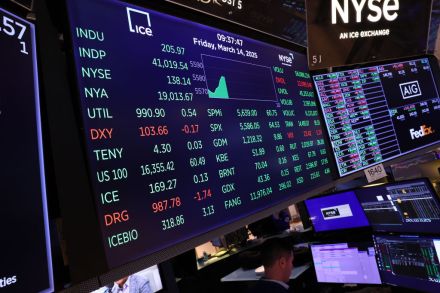
The stock market, traditionally a leading indicator, entered correction territory last week. But does that indicate that a recession is coming? Well, it’s an old saying on Wall Street that the market has predicted ten of the last three recessions. Markets hate uncertainty, and no one knows how President Trump’s efforts to use American tariffs to force our trading partners to lower theirs will turn out. But foreign trade is increasingly important to all countries, so it’s likely that, after some political Sturm und Drang, deals will be struck and international trade will continue the strongly upward path it has been on since the end of World War Two. By definition, a recession is two consecutive quarters of contraction.

shares

Can the MAGA coalition survive a recession?

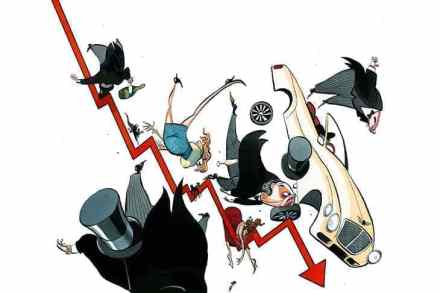
The color red splashed across every news channel yesterday, as Donald Trump’s seemingly blasé attitude towards a possible recession wiped $4 trillion off the United States’s stock market. All day and all night, the airwaves were dominated by talk and speculation over the future of the US economy, as the President pushes forward (and pulls back) certain parts of his tariff agenda.  It’s the sheer uncertainty that has investors spooked, leading to one of the worst days on Wall Street in years. The details of this “period of transition” for the economy that the President alluded to are so vague, and so unclear, that you can make of the comments almost whatever you want.

recession

The course of the American empire

In the 1830s, the English-born American artist Thomas Cole painted an ambitious sequence of five large rectangular canvases delineating “The Course of Empire.” He began with “The Savage State,” which depicts the rude life of humans before the advent of letters, domestication and permanent architecture. “The Arcadian or Pastoral State” is marked by harmony and some early accoutrements of civilization. “The Consummation of Empire,” at fifty-one inches by seventy-six inches, is a third larger than its fellows. Here we see a sun-drenched landscape transformed by a panoply of classical architecture counterpointed by bustling commerce and a triumphal, if overripe, stateliness. Next comes “Destruction.

empire

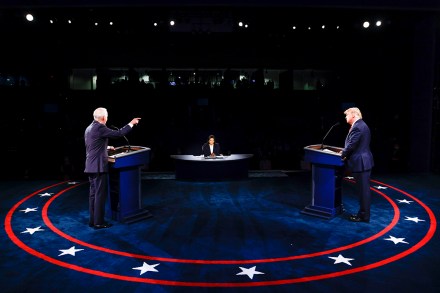
Trump or Biden? A dreadful choice

“What a revoltin’ development this is.” That catch phrase from the 1950s sitcom The Life of Riley succinctly describes America’s political morass today. It sums up Washington’s diddling over the debt ceiling, the administration’s inability to close the southern border and, most of all, the dismal quality of the two presidential frontrunners. The phrase, “what a revoltin’ development,” was Chester A. Riley’s description of his woeful situation at the end of each episode — sitting on his front steps, bemoaning his fate over the consequences of some bad decision or ill-conceived scheme. Then, we sympathized as viewers. Now, we identify as American citizens, looking at the country’s leadership. Let’s begin with the sitting president.

debate bruises biden trump

Powell pays for past mistakes

Powell pays for past mistakes In the summer of 2020, Fed chair Jerome Powell could not have been clearer. “We’re not thinking about raising rates,” said Powell, before doubling down: “We’re not even thinking about thinking about raising rates.”   Things, as we now know, turned out a little differently. The months marched on, and with the Biden administration determined to spend, spend, spend, inflation went from “high class problem” to “transitory” to the biggest problem facing the US economy. Powell and his Fed colleagues went from not thinking about thinking about raising rates to, well, raising rates. From virtually zero around this time last year to 4.75 percent as of January.

jerome powell
Joe Biden

Coronavirus keeps the spotlight on Trump and away from Joe Biden

Well, well, well. There was former White House press secretary Sean Spicer at today’s press conference in a new incarnation as Newsmax reporter. Looking much better tailored than when he was press secretary — Trump was apparently livid about his schlumpy appearance back then and a GoFundMe campaign was launched to buy him fresh habiliments — Spicer was looking quite the dandy, or about as dandyish as he can get: checked jacket, pocket square, shirt and tie all of which appeared to be various hues of purple. For the most part, Spicer’s posture towards Trump remained unchanged, which is to say that he was as cringing as ever. 'Mr President, two questions if you’ll indulge me,' he said. Trump indulged.

Why the Biden stock market is even worse than you think

If you’re the sort who rarely checks your 401K and other investment accounts, you may be blissfully unaware of what a dismal year (plus) its been for the stock market. Many prominent media personalities, particularly ones on CNBC, promised us that Biden would be a boon to the stock market because Trump was too erratic. But while the market started hot in 2021, it's mostly been ice cold ever since, with a few fake rallies thrown in to tease us. How bad has the Biden era been for stocks? Consider some numbers I crunched prior to the market opening on December 12.

Is Britain really ‘on the brink?’

There’s a macabre joke in Britain these days that my friends and family also play. We compete to see who has had to wait the longest for medical treatment. It starts relatively innocuously. People talk of the ordinary things: like having to wait days to get an appointment with a doctor. They call up in the morning at 8 a.m., only to be told that all of the slots are gone. Best of luck tomorrow. Then someone will say that they’re waiting for minor surgery. Perhaps a small corrective procedure. It was put off first for the pandemic, and now is lost amid a sea of backlogged work. They wonder if someone has lost their details in the slush. Normally I win, although not always. My old general practitioner retired before the pandemic, and his practice was transferred over to another doctor.

China delayed its 2008 financial crisis until 2022

The year 2008 was consequential by many measures. The collapse of the US investment bank Lehman Brothers sparked a worldwide financial crisis. Yet China appeared to emerge out of it relatively unscratched after Beijing introduced a massive stimulus package in the world, about three times the size of the United States government's rescue program. Thanks to this expansionary fiscal policy and the easy credit that came with it, the Chinese economy quickly returned to its robust growth by growing 8.7 percent in 2009 and 10.4 percent in 2010. After 2008, the Chinese Communist Party leaders concluded that China "escaped" the financial crisis because of its outstanding leadership and the superiority of the Chinese political system over deeply flawed western democracies.

paul krugman

The top five things Paul Krugman has gotten wrong

Every two years or so, the Spectator World issues a takedown of New York Times columnist and “expert” economist Paul Krugman, who has a notable history of being wrong about absolutely everything. Well, it seems it's that time of year again. The Australians are getting in on the Krugman-dunking game so why shouldn't we? Here’s Cockburn's authoritative ranking of Paul Krugman's Greatest Hits. Krugman denies the recession Fresh from his New York Times opinion piece titled “I Was Wrong About Inflation,” Paul Krugman decided it was time to be wrong about the recession. On Brian Stelter's CNN show Reliable Sources, Krugman said, “I think that what's happening now is that there's been a kind of a negativity bias in coverage.

Are we in a recession? Does it matter?

Since the latest growth numbers have come out, much ink has been spilled over the question of whether the economy is in a recession. Perhaps unsurprisingly, the Biden administration tried to get out ahead of Thursday’s release with a press statement noting that back-to-back quarters of negative growth doesn't necessarily mean a recession. Also predictably, Republicans strongly rebuked the idea, saying, “You can’t change reality by arguing over definitions.” Both sides of the debate will continue to play out, and both sides will continue to miss the point. Ultimately, it doesn’t matter very much whether growth goes up or down by 0.2 percent. What matters is the general trajectory of the economy. And on that front, the Biden track record is mixed at best.

democrats abortion

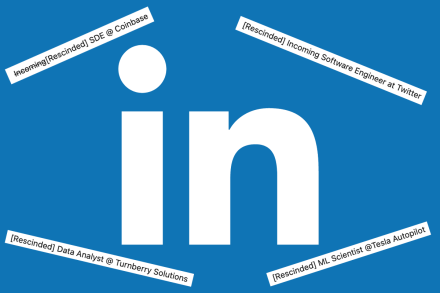
‘Rescinded’: LinkedIn users are listing their retracted job offers

Cockburn was on one of his regular jaunts through LinkedIn this week, on the lookout for more gainful employment than the Speccie currently offers him. During his perusal, one word kept catching his eye on the profiles of other users: “Rescinded.” Prospective employees are deciding to denote when a company had made them a job offer — and then changed their mind after a change in corporate hiring plans. The cryptocurrency wallet company Coinbase appears to be one of the biggest offenders. Ashutosh, a software engineer, posted the following: After considering several factors, I had chosen to join Coinbase over pursuing a PhD.

rescinded linkedin

The fight for a $15 minimum wage is won

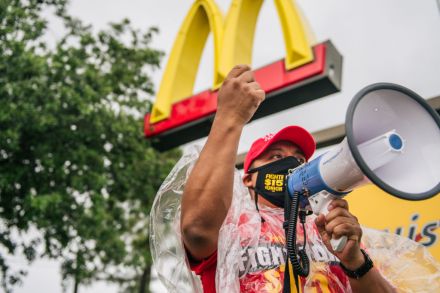
The fight for a $15 minimum wage started in 2012 with a bang. Hundreds of Walmart, port, and fast food workers walked off their jobs in protest of low wages. An organization called Fight for $15 formed in 2014 following two national strikes by laborers. Seattle became the first city to require a $15 minimum wage that same year. The White House issued an executive order that required new federal contracts to include a $10.10 minimum wage because legislation had stalled in Congress. The stalled federal push led to more state and local action. California and New York put together slow-rising $15 minimum wage laws in 2016 and 2017. Eight other states, mostly in New England, followed with plans to reach a $15 minimum wage by 2026 at the latest.

Here comes the next recession

There is no shortage of reasons to feel gloomy about the American economy right now. First, there’s inflation. In 2021, the Biden administration claimed that the cost of a summer barbecue had declined by 16 cents from the year before. It probably now wishes it hadn’t made that claim. This summer, the cost of that barbecue is up not 16 cents but 17 percent. Hot dogs are up 37 percent over a year ago. This is the highest inflation in forty years, with the consumer price index up 8.6 percent from a year ago. Some necessities, such as gasoline and food, have risen even more sharply, with gas having gone from $2.18 a gallon when Biden was inaugurated to $5.

Cardi B says we’re in a recession, Janet Yellen responds

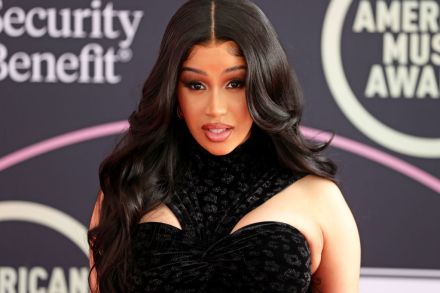
Cardi B, the well-known rapper and mixologist, has finally acknowledged the financial reality facing many Americans today. Last week, she tweeted, “When y’all think they going to announce that we going into a recession?” Cockburn notes that such astute words perfectly capture how the Biden administration has raised costs for everyone, from the working class to those who can afford to live in this economy, also known as millionaires. Thankfully, the administration responded to her concerns. Janet Yellen, the secretary of the treasury, replied, “Don’t look to me to announce it. I’m not going to announce it. I don’t think we’re going to have a recession. I expect growth to slow down. We have a very strong economy.

Biden’s energy policy is sending us toward recession

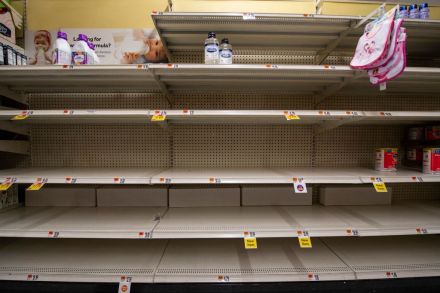
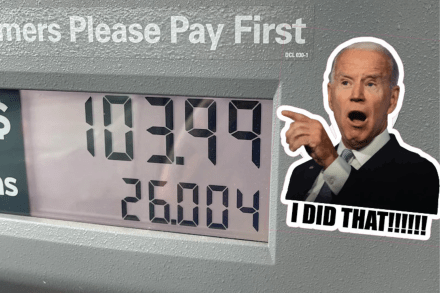
With the travel-heavy Memorial Day weekend upon us, the fast-rising cost of gasoline is getting a lot of attention. Last week, gasoline rose above $4 a gallon in all fifty states. That’s the first time that has happened. Some are predicting gas could reach $6 a gallon this summer. If that comes to pass, the average American family could see a major impact on their budgets. (It might be noted as well, that the price of home heating oil has nearly doubled this year. If that continues, the economic impact next winter, especially in the northeast, where a high percentage of homes are heated by oil, will be considerable.) The threat of a recession is rising thanks to fuel shortages. Why has the price of gasoline risen so far so fast?

gas

The moral cost of inflation

Inflation is about far more than rising prices. In this excerpt adapted from Inflation: What It Is, Why It’s Bad — and How to Fix It, the book’s authors explain how the debasement of money ultimately corrupts society. The scenario is fairly standard: central banks devalue money; prices shoot up. Governments look for ways to tamp down inflation by keeping people from spending. They also respond with price controls, capital controls, higher taxes. Governments grow larger and often impose more constraints. People lose their freedom, and worse.

inflation

What does the Fed’s interest rate hike mean?

The Federal Reserve raised interest rates by 0.25 percent last week, the first increase since December 2018. Back then, Donald Trump had been very vocal in his criticisms of the Fed and its chair Jerome Powell, demanding no more rate increases. There was no resistance from the White House this time with press secretary Jen Psaki saying that the Biden administration respected the Fed’s independence. Powell called the rate increase necessary due to inflation coupled with rising prices. “As we emphasize in our policy statement, with appropriate firming in the stance of monetary policy, we expect inflation to return to 2 percent while the labor market remains strong,” said Powell, before warning that it will take longer than expected for inflation to sink.

interest inflation

Enough with the 1970s comparisons

The media are abuzz these days about a purported “return to the 1970s.” Generally speaking, such chatter is not intended kindly, for many today would likely agree with the sardonic assessment of the Seventies made by the editors of New West magazine as that decade wound down: “It was the worst of times, it was the worst of times.” And not just because of the popularity of bell-bottom pants, platform shoes, and disco music. In the Seventies, we had problems far more troubling — more troubling even than the pop group ABBA. For starters, we saw a quadrupling of real oil prices between 1973 and 1979. We suffered high rates of both inflation and unemployment, which hitherto varied inversely, leading to the creation of the portmanteau “stagflation.

1970s

We’re all Chinese now

I didn’t know this was what they meant by ‘cancel culture’. Sports events, theatre shows, plane flights, weddings, funerals: everyone is in a mad rush to cancel everything. Governments are ordering citizens to remain indoors, with Spanish police even deploying drones to catch miscreants. I don’t know whether it is the best way of tackling coronavirus — the UK government, which has gone to greater lengths than others to explain the scientific modeling behind its decision-making, has come to the conclusion that banning things and forcing the entire population into lockdown will have minimal effect and may even be counter-productive, at least at this stage. But it is going to cause a global recession, if not depression.

chinese