Realism

The dynamic genius of Milton Avery

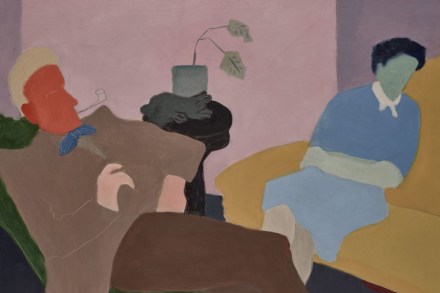
It’s hard not to feel slightly odd when standing in front of a Milton Avery painting. Take his 1943 work Hors d’Oeuvres as an example. The painting — currently on show at London’s Royal Academy’s exhibition, Milton Avery: American Colorist — is large, at nearly a meter across, and the background is what appears to be a coastal landscape, with a greenish sea and the curve of a bay appearing in the upper right-hand corner. In the foreground of the painting is a cream table and on it, a blue platter of food: the “hors d’oeuvres” of the work’s title. So far, it might be hard to understand what is so disconcerting about this painting.

Russia becomes a lost cause

After an embarrassing two-month start to its war in Ukraine marked by pictures of abandoned armored personnel carriers, destroyed tanks and stalled armored columns outside Ukraine’s major cities, the Russian army is re-tooling and re-arming itself for a more manageable fight in the east. I use the word “manageable” not because the battle in the Donbas will be easy for Russian forces, but because the objective of expanding Russian control over the entirety of Donetsk and Luhansk is more realistic than overthrowing the Ukrainian government and occupying the entire country. Capturing, let alone holding, Kyiv, Kharkiv and Chernihiv would have entailed a massive number of personnel and a long-term commitment Russia doesn't have the resources to sustain.

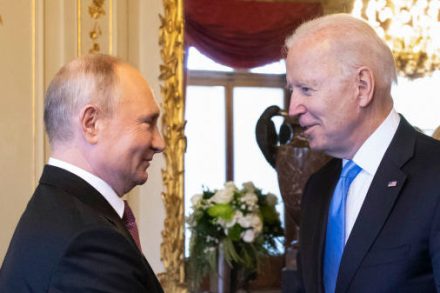
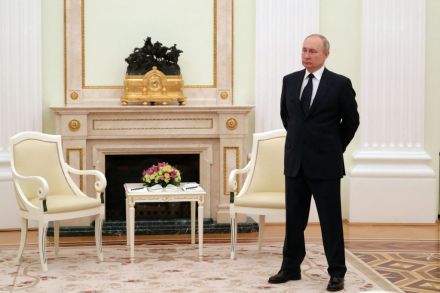
U.S. President Joe Biden and Russian President Vladimir Putin (Getty Images)

Dirty realists

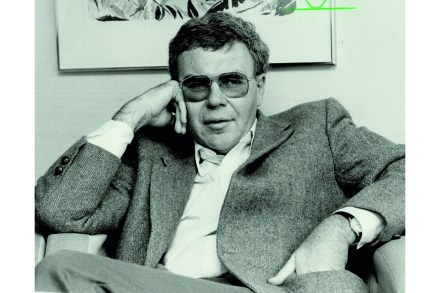
I recently finished yet another predictable novel about Brooklyn neurotics and needed a gritty palate cleanser. Raymond Carver’s Where I’m Calling From: Selected Stories seemed ideal. Carver, a master of the short-story form, has long been one of my go-to writers, but, in recent years, he has increasingly lost literary relevance. Twenty years ago, Carver’s terse, minimalistic style was all the rage. Like Hemingway and Bukowski, Carver birthed a sea of mediocre imitators onto the American literary scene. In most US short-story collections published in the Eighties or Nineties, Carver’s stylistic and thematic influence is evident from the first page.

realists

Did the realists underestimate Putin?

Liberal internationalists, neoconservatives and NeverTrumpers are having the time of their lives these days, ridiculing anyone on the political right who has ever said a good thing about Vladimir Putin. Those “Putin groupies” as a Wall Street Journal columnist described them, include former Italian prime minister Silvio Berlusconi, far-right French presidential candidate Marine Le Pen, Hungarian prime minister Viktor Orbán and, of course, Trump himself. Trump described Putin as a “genius” and said he was a better president than Barack Obama — and he isn’t the only American president to compliment the Russian leader. President George W. Bush said about Putin, “I looked the man in the eye. I found him to be very straightforward and trustworthy.

putin