Reading

Stalin the intellectual: the dictator cast in a new light

From our UK edition

The link between mass-murdering dictators and the gentle occupation of reading and writing books is a curious one, but it definitely exists. Mao was a much- praised practitioner of traditional Chinese poetry; Hitler was widely if haphazardly read, dictated Mein Kampf and was a fan of Karl May’s Wild West stories; and Stalin, as Geoffrey Roberts shows, took books at least as seriously as the purging of foes, real and imagined.

Can I really be turning 80?

From our UK edition

A princess of Hanover wrote in her diary: ‘My 30th birthday. There must be some mistake.’ Substitute 30th for 80th and you have how I feel this week. But age is all relative, being dependent on your genes, immune system and how it was primed in childhood; on your location, your income and luck. I had long-lived grandparents on both sides; had measles, rubella, mumps, chicken pox, whooping cough and scarlet fever before five; and in spite of semi-permanent tonsillitis was 20 before any antibiotic entered my body. I spent the years until 16 on the north-east coast of Yorkshire, through bitter snowbound winters, my lungs loaded with fresh sea air. Attitude and expectations are important too.

Reading during a pandemic

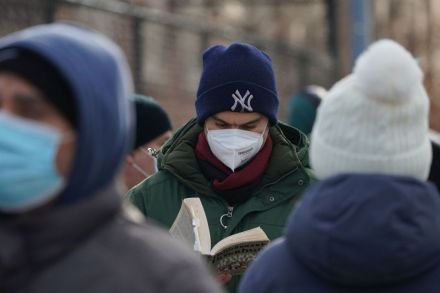
The experience of having Covid is, by now, well-documented. You spend seven to ten days in your room or house feeling ill and sorry for yourself. The world outside becomes a distant dream, and one of the few pleasures of spending twenty-four hours a day in bed is the time to read. This winter, the Omicron bell tolled for me — as it seemed to do for half of the global population. I was very lucky with the virus: after two days of unbelievable complaining and texting everyone I knew to tell them I was either like Beth in Little Women or a fevered Marianne in Sense and Sensibility, I recovered from my gothic heroine-like swoon and set about ploughing through novels. At the outset, there were endless articles and tweets about what one should read during a pandemic.

How TikTok can turn a book into a bestseller

From our UK edition

I have an American friend who loves reading, but is clueless about technology. The last time I visited him he was still using Internet Explorer, which even Microsoft has given up on. My friend was puzzled when he walked into his local bookshop and was met by a table of books with the sign ‘#BookTok made me read it’. Soon afterwards I received a bewildered WhatsApp message: ‘What is BookTok?!’ Until recently, I didn’t know. Before the pandemic, I was a working stand-up comic. I’ve never been on television and you probably haven’t heard of me, but I was happy. I worked six nights a week, made enough to pay the bills and was recognised occasionally by someone in Tesco. And then came lockdown.

How I learned to love audio books

From our UK edition

According to a charity called Fight For Sight, 38 per cent of people who’ve been using screens more during lockdown believe their eyesight has deteriorated. I am definitely in that category. This time last year, I didn’t need reading glasses; now I do. When I’m working at my desk this doesn’t much matter, but it has made reading in bed more difficult because I was in the habit of doing this on an iPad under the covers so as not to wake Caroline. Keeping my glasses in place while lying on my side, with one hand clutching my iPad and the other pulling the duvet tight over my head to eliminate any light pollution, is surprisingly difficult. The upshot is I’ve switched over to talking books.

Most-read 2020: What isn’t being said about the Reading attack victims?

From our UK edition

We're closing 2020 by republishing our ten most-read articles of the year. Here's No. 9: Douglas Murray on June's Reading attack Imagine if on Saturday evening a white neo-Nazi had stabbed three men to death. Imagine, furthermore, if in the wake of the killings it had turned out that all three of the victims were gay. Or ‘members of the LGBT community’, to use the lexicon of the time. And then imagine if two days later nobody in the UK or anywhere else was very interested in any of this. So what if the victims were all gay? Why bother sifting around for motives. What are you trying to say? Bigot. Well something that might well be analogous to that happened in Reading on Saturday evening and over the days since.

The Spectator’s Books of the Year 2020

Our turkeys were stuffed and now we are too. Reclining helplessly in the recovery position, our thoughts turn to feasts future. What better way to show your friends and family that you love them, and also that you have impeccable taste, than sending them a book? In The Spectator’s stocking-stuffing December issue our staff, writers and friends make their seasonal suggestions for Books of the Year: stack upon stack of the most riotous reads, bibliographical beauties and pandemical page-turners. P.J. O’Rourke The Decline and Fall of the Roman Empire, Volume I, by Gibbon, because in this year of scourge and collapsing polity it seemed apposite. And only Volume I, due to reader fatigue after 582 pages and the shift in Volume II to the history of Byzantium.

books of the year 2020

Why I stopped reading novels

From our UK edition

New York I received a letter from a long-time Spectator reader, James Hackett, enquiring about books I am reading. It is not often that I get letters that delight me, as this one did. It is a far cry from the readers’ letters you see in newspapers and magazines in the United States. Lots of them seem sanctimonious, holier than thou; others, I suspect, are written by the glossy magazines themselves promoting their own celebrity culture worship. James Hackett is an American gent whom I’ve never met, and I hope I don’t disappoint with my choices. The last time I read novels was literally some 50 years ago.

From half a shelf to a library: my life in books

From our UK edition

‘Yes, I will have a coffee,’ said the van driver. He’d driven down to the south of France from Devon. I motioned him to take a pew at the kitchen table and asked him about himself. Ron was ex-army. Aged 17, he was faced with a stark choice: the building site or the army. Because he’d seen his builder father working in a trench all day with water up to his waist, he chose the army. He joined the Royal Engineers and trained as a driver. In the early 1970s he drove two SAS men around Belfast in an unmarked saloon car. That was the job. All day every day. Everywhere Gerry Adams went Ron followed him. Gerry Adams knew he had a tail and would give a friendly or an unfriendly wave, depending on how he was feeling. Yes, he enjoyed the army.

Why men don’t read books anymore

When John F. Kennedy was dating Jacqueline Bouvier, he gave her two books. One was Pilgrim’s Way (1940) a memoir by the British spy and author John Buchan. The other was The Young Melbourne (1939) by Lord David Cecil, which describes the raffish exploits and political intrigues of a Whig aristocrat, and later prime minister, in the early 19th century. Quite what Jackie thought of this is unrecorded. Later President Kennedy told Life magazine what his favorite books were. Both of the titles above were in this proto-listicle, along with works about Byron, John C. Calhoun, Talleyrand and Gibbon’s The Decline and Fall of The Roman Empire.

read books

In defence of modern children’s books

From our UK edition

A few years ago, I was surprised to open a newspaper and read that the head teacher of a London public school had decided to ban my books from his library. He described the adventures of Alex Rider, which have sold around 20  million- copies worldwide, in terms so derogatory that I have no mind to repeat them. Suffice it to say that the article quite put me off my cornflakes. But the strange thing was that — once I had got past the sheer offensiveness of his language and a mindset that believed that banning books could ever have good connotations — I was actually quite sympathetic to his wider point of view. Everyone agrees that children benefit from reading, but we seldom discuss what exactly we would like them to read.

Lydia Davis, like an inspirational teacher, tempts her readers into more reading

From our UK edition

A good indicator of just how interesting and alluring Lydia Davis’s Essays proved might be my recent credit card statement. It was hard to read very far without being introduced to an unfamiliar author, and the terms of the introduction were frequently so seductive that I found myself breaking off to order several secondhand books. The fee for writing this review had long been swallowed up when I realised that if I read everything that Davis made sound irresistible I would probably never reach the end of this splendid collection — and end up like Achilles chasing the tortoise in Zeno’s paradox.

Low life | 25 October 2018

From our UK edition

My reactionary first world war reading jag continues. The literature is vast, but so is my capacity and fascination. I began reading systematically, then went in search of thrills. Typing ‘my top ten first world war books’ into a search engine has also been a wonderfully fruitful source of leads. Space, and probably your boredom threshold, won’t allow me to list mine. I want to stick my neck out, however, and give a cheer for two books by liaison officers: one a Anglophile Frenchman liaising with the British, the other a Francophile Englishman liaising with the French. As one might imagine, both books are tragicomic. Emile Herzog was the son of a textile tycoon. In the first world war he served as an interpreter, then as a liaison officer.

Miss Marple to the rescue

From our UK edition

Girl with Dove is a memoir by Sally Bayley, a writer who teaches at Oxford University, of growing up in a squalid, dilapidated house in a Sussex seaside town. It contains her mother Ange, her aunt Di, her grandmother, an unspecified number of siblings and a variety of temporary inhabitants who joined the Zion-seeking cult that evolved around Ange and Di. There are also a few longer-lasting denizens, such as Uncle David (first encountered unconscious on the sitting room floor), the sinister Woman Upstairs, and Poor Sue, who later seems to come to some kind of Poor End.

It’s World Book Day again. God help us

From our UK edition

For parents of primary school children, the first Thursday in March has got to be the worst day of the year. Even an attendance Nazi like me, who won’t countenance any excuse for keeping a child home from school, would accept that on this occasion a ‘tummy ache’ is a perfectly legitimate reason. Why do I say this? Because the first Thursday of March is World Book Day. Now, for those of you without children, or whose children went to school before this annual ritual was invented by Unesco in 1995, I should explain that the reason it’s such a colossal bore is because parents are expected to mark the occasion by sending their offspring to school dressed as their favourite fictional character.

The tyranny of the bedtime story

From our UK edition

All surveys carried out by retail businesses with a view to generating press coverage should be treated with extreme caution, but I cannot resist writing about one that has just been published by Furniture123.co.uk. The press release is headed ‘The Decline of the Bedtime Story’ and the key finding is that 64 per cent of parents do not regularly read a bedtime story to their children. Just 10 per cent say they do, while 6 per cent say they have never done it. Oh how I envy that 6 per cent! I am a member of the wretched 10 per cent who read to their children at night. Why wretched? Let me count the ways. First of all, children have absolutely no taste. None.

Philip K Dick: Five of his best books

From our UK edition

Most science fiction writers got the future wrong. That’s OK. We don’t read sci-fi for predictions and, often, books set in the future tell us far more about the times they written in. But two 20th Century authors stand out as both relevant and prescient to anyone living in 2017. The great JG Ballard is one, and Philip K Dick, the other. While the majority of 20th Century science fiction writers predicted full automation, huge advances in propulsion technology or the colonisation of other planets, Ballard and Dick were visionaries of inner space, telling us what life would feel like for 21st Century (and later) humans.

Low life | 14 September 2017

From our UK edition

The army patrols at Nice airport go around three abreast, steely-eyed, fingers on the trigger. They walk slowly and scrutinise the passengers carefully, assessing each individual for minute clues to their psychology. They take the incredibly boring job incredibly seriously, or appear to do so, which must be great comfort to those with honourable intentions but a nervous disposition. Contrast, then, these highly disciplined men with the armed pair I saw recently patrolling the floor of the departures lounge at Bristol airport. One had a comic, fall-guy, laughter-prone face, as characterful and funny to look at as George Formby’s. His boon companion looked like a great fellow to sink a few pints of cooking lager with, then go to a football match.

The pleasures of reading aloud | 24 August 2017

From our UK edition

‘I have nothing to doe but work and read my Eyes out,’ complained Anne Vernon in 1734, writing from her country residence in Oxfordshire to a friend in London. She and her circle of correspondents (who included Mary Delany, the artist and bluestocking) swapped rhyming jokes, ‘a Dictionary of hard words’, and notes on what they were currently reading. Their letters are suggestive of the boredom suffered by women of a certain class, constrained by social respectability and suffering the restlessness of busy but unfulfilled minds. But that’s not their interest for Abigail Williams in this fascinating study of habits of reading in the Georgian period.

The pleasures of reading aloud

From our UK edition

pkkkfffffffrrrffff-ffff! pkkkfffffffrrrffff-fff! Hobble leg, hobble leg, Hobble leg owhmmm! Into the bottle of fluff, rubbed the stuff under! pkkkfffffffrrrffff-ffff! pkkkfffffffrrrffff-fff! This is the voice of Tennyson reading ‘The Charge of the Light Brigade’, as recorded by Thomas Edison in 1890 and phonetically or farcically transcribed in a novel by Nicholson Baker over a century later. Drowned in static, ‘valley of death’ sounds like ‘bottle of fluff’, ‘rode the six hundred’ becomes ‘rubbed the stuff under’ and ‘Hobble leg owhmmm’ is — of course — ‘Half a league onward’.