Radio

Up close and personal | 2 May 2019

‘Can you fly down this evening?’ she was asked by her boss in the Delhi office of the BBC. ‘Yes, of course. I have to,’ replied Ayeshea Perera, a Sri Lankan journalist. She was talking from Colombo to David Amanor of the World Service’s The Fifth Floor, which looks at current news stories from the perspective of those intimately involved with them and is always worth catching for its alternative, less formal approach and Amanor’s gentle probing to find the real story. Perera described the chaos on arriving at the airport in the Sri Lankan capital on the evening of Easter Day and the weirdness of going to see the Church of St Anthony next morning to find that from the outside it looked just as she had always known it.

The sense of an ending | 25 April 2019

It was never given the choicest slot in the schedule, airing first thing on Sunday morning with a repeat at the end of the day. But in its 24 years Something Understood, guided and often presented by the esteemed foreign correspondent Mark Tully, has gathered an impressive audience. Its blend of poetry, prose and music from a huge variety of thinkers, theologians, scientists, poets and composers, carefully (but not artificially) edited around a theme, is for many listeners the best of Radio 4, challenging yet always accessible, highly selective but broad in content. I didn’t always manage to hear it but was glad to know it was there. Yet on Easter Day Tully presented the last ‘live’ programme, his final script, and in its ending perhaps gave the clue to its success.

Hard lines

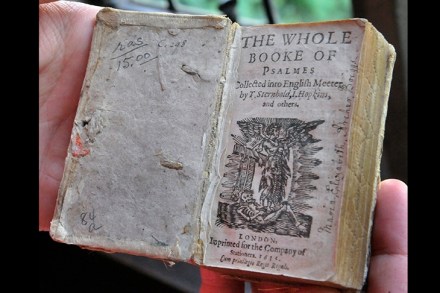
As if in defiance of the BBC’s current obsession with programming designed to entice in that elusive young and modish audience, Radio 4 has set us an Easter challenge. Each afternoon over the weekend Jeremy Irons is reading a chunk from The Psalms for half an hour, without illustration (except a bit of music), explication or deviation. It’s a discomfiting listen, at times harsh, unrelenting. The supple but rigorous language of the King James Version of the Bible is both daunting and uplifting. ‘Keep me as the apple of the eye’ is one of my favourite images, and ‘hide me under the shadow of thy wings’ has helped me through many a long night.

People power | 11 April 2019

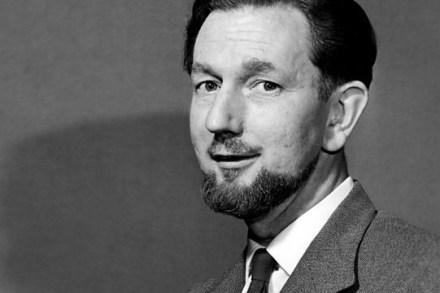
He is said to ‘have changed the sound of speech radio’, not just by giving voice to those who until then (the 1960s) had not been given air time, the richness of their county accents too far removed from Broadcasting House’s Received Pronunciation. He won awards for his pioneering use of the new midget tape recorders, taking his microphone out of the studio and down the mines, to the fishing harbours, into the boxing rings and talking to teenagers. He was also a genius at editing, able to cut away an errant ‘s’ or insert a single note into the soundscape with the rudimentary tools then available, a sharp razor blade and a steady hand.

Seeing things

At its best audio can be a much more visual medium than the screen. Making Art with Frances Morris (produced by Kate Bland), which I caught by chance on Radio 4 last week, gave us insights into the work of the French conceptual artist Sophie Calle that were so vivid it was almost as if we had been to an exhibition of her work. Calle, now 65, is known for her unconventional approach to what art can be. In 1980 she was invited to show one of her first works, The Sleepers, a collection of photographs, in New York. ‘I asked people to give me a few hours of their sleep. To come and sleep in my bed. To let themselves be looked at and photographed,’ is her explanation of the project.

Foreign exchange | 28 March 2019

As the ravens circle around Broadcasting House in London’s West End, presaging difficult times ahead for BBC Radio, with less money to play with at a time of increased competition from its commercial rivals, a very different kind of listening experience was on offer last week in an upstairs room above a café in Canterbury. The UK International Radio Drama Festival is in its fifth year, gathering dramas from across Europe and beyond for a week of intense and unusual audio, transmitted in 18 different languages. Thirty or so of us sat around as the plays were broadcast through a number of old-fashioned radio sets, listening to monologues, musicals, character studies, experimental sound art in Czech, German, Farsi, Spanish, Slovene, Serbian, Romanian, Russian and more.

Black magic | 21 March 2019

‘You’re thinking these girls all wrong,’ Miss Mai tells Enid in Winsome Pinnock’s play Leave Taking, adapted from the recent Bush Theatre revival for Radio 3 (and produced by Pauline Harris). ‘They don’t know where they come from.’ Miss Mai continues: ‘These girls got Caribbean souls,’ but they’re living in south London. Viv and Del have been taken to see Miss Mai, known locally as an obeah woman, by their mother Enid for a palm reading, a prediction, or perhaps a casting out of demons. Del has got into bad company, has lost her job at the burger bar for being cheeky, and fears she must be pregnant. Viv was the studious one, her mother’s great hope, but is now beginning to wonder what Shakespeare has to say to her.

Only connect | 14 March 2019

It’s not surprising given the way that electronic communication has taken over so much of our daily business, minimising human contact wherever possible, that podcasting (or what might be called aural blogging) has taken off in such a big way, anything from Griefcast to Love + Radio via The Breakup Monologues and To the Woman. We crave the sound of a human voice talking to us and no one else, and even better when it comes in disembodied form, stripped of all physical expression. This intense aural connection has been radio’s chief selling point since the 1920s, technology enhancing human interaction, the need to tell and listen to stories.

Points of view | 28 February 2019

Is it me or are we now faced (or perhaps I should say fazed?) much more often by stories in the news that test our moral and ethical principles to the limit, forcing us to question ourselves and what we think to such an extent that it becomes impossible to be sure of what is right? I can never understand the high-minded righteousness and full-blown convictions of the panellists on Radio 4’s Moral Maze, who each week are given a topical issue and who then spend 45 minutes tossing it about, testing the pros and cons and questioning a group of often baffled witnesses who are invited on to the programme to provide evidence for differing points of view.

Friendly fire | 21 February 2019

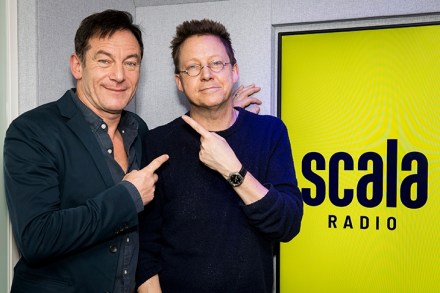
With the upsurge of listeners to Classic FM (now boasted to be 5.6 million listeners each week) and the imminent launch of a new commercial station, Scala Radio, dedicated to classical music and fronted by the former Radio 2 DJ Simon Mayo (who has said about his new home: ‘Some of it will be familiar, some new and exciting but all timeless, beautiful and all absolutely relevant to today’), Radio 3 badly needs to regain our attention. Last weekend’s focus on Berlioz, ‘The Ultimate Romantic’, could have been such an opportunity, but either because of funding cuts or a confusion about its purpose (to find new audiences, to teach or just to entertain) there was little buzz about the weekend.

A river runs through it

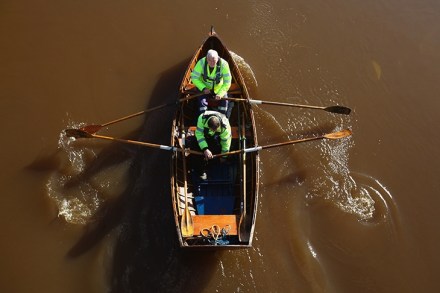
It sounds like something out of Dickens or a novel by Thackeray, a classic case of high-minded Victorian philanthropy, but the Glasgow Humane Society was actually set up much earlier, in 1790 (just after the revolutionary fervour in France demanded liberty, fraternity, equality), to protect human life in the city and especially on the river Clyde. It still exists and Glasgow claims to be the only city in the world to have a full-time officer dedicated to rescuing people from drowning. Back when it began the river and its banks were hectic with shipbuilding, trade and manufacturing. Now the city is almost ashamed of its river; no big ships, hardly any industry, little trade, and no longer a source of wealth and jobs. It has ‘turned its back on the Clyde’.

Age concern | 14 February 2019

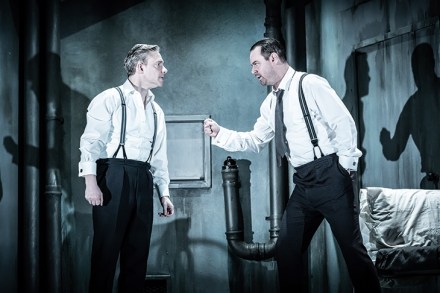
The Dumb Waiter is a one-act play from 1957 that retains an extraordinary hold over the minds of theatre-goers. It’s set in the basement of a Birmingham restaurant where two Cockney hitmen are preparing to execute an unknown victim. A dumb waiter, or shelf on pulleys, descends from above containing requests for two-course meals. Liver and onions are on the menu. Demands for cups of tea and sago pudding are sent down. The nervous thugs start to panic as they struggle to fulfil the instructions arriving from on high. It’s an absurd situation underpinned by an authentic sense of menace and violence. These are not just clownish villains but real criminals trained to kill. The play is usually done for laughs but it can be performed as a macabre thriller.

Tables turned

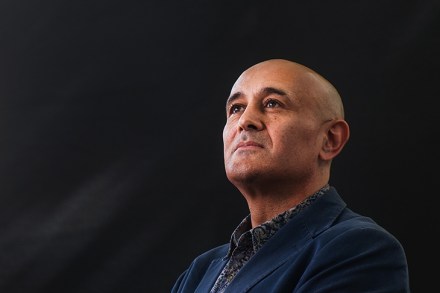
It was odd listening to Jim Al-Khalili being interviewed on Radio 4 on Tuesday morning rather than the other way round. In his series The Life Scientific, Al-Khalili has developed his own brand of interviewing, encouraging his guests to talk about their work in science by leading them from personal biography —how they came to study science, what they were like at school, who influenced them — to the intricacies of their research and why we should know about it. He makes this sound so easy and natural, setting his interviewees at ease, and his listeners, too, with stories from school and university before delving into the complex ideas behind their work.

When things fall apart | 31 January 2019

It’s becoming clear that the travails afflicting all the major players in The Archers, Radio 4’s flagship drama, are intended by the soap’s writers (and new editor Jeremy Howe) to reflect what’s going on in the country at large, Ambridge as a microcosm of our imploding nation. As Home Farm is sold to absentee landlords with no interest in farming the land, reducing Brian and Jennifer to a terraced cottage on the green, and Ambridge’s stately home Lower Loxley Hall veers into chaos with the son and heir in jail and the business on the brink of disaster, even Brookfield, the Archers’ homestead, is standing on the edge of a financial precipice.

The end of the beginning | 17 January 2019

One masterpiece, one dud, and one interesting rediscovery. That’s Pinter Five. Victoria Station is a hilarious sketch which might have been turned into TV gold by the Pythons or the Two Ronnies. A radio controller needs a cabbie to collect a fare from Victoria Station, but the only driver available is a charming lunatic whose car is idling near a ‘dark park’. The cabbie already has a passenger on board, who may be a murder victim, and although he claims not to know Victoria Station he insists that he’s the best man for the job. This dotty piece of verbal slapstick feels a bit dated because cab firms no longer rely on radios.

Let’s hear it for the girls

Whether by accident or design, Zoë Ball took over the coveted early-morning slot on Radio 2 this week just as Radio 4 launched another of its Riot Girls series, celebrating ‘extraordinary’ women writers, those who have overturned convention, risen up against the status quo, proved themselves to be just as capable as their male oppressors (if not more so). Ball launched herself on to the airwaves on Monday morning at a pace it was hard to keep up with when it was still dark outside and the house had not yet warmed up. Her first track, that key statement of how she intends to reshape the breakfast show, give it a woman’s own makeover, was of course from Aretha Franklin. It just had to be. And the track — ‘Respect’.

Out of this world | 13 December 2018

Take yourself back to (or try to imagine) Christmas 1968; a year full of disturbances, dashed hopes and extreme violence at home and abroad. On 21 December, a huge explosion occurred; not, for once, a herald of catastrophe but at Cape Kennedy, where the engines of the Saturn V rocket, ‘the most powerful machine ever made’, were ignited, launching the Apollo 8 mission. Three astronauts in a tiny metal box were thrown up into space. Three days later, on Christmas Eve, they would broadcast back to the world images that would change for ever the way we see our planet.

Death becomes her | 6 December 2018

‘Without death,’ says Salena Godden, ‘life would be a never-ending conveyor belt of sensation.’ For her death is what gives meaning to life and to be able to imagine your own death should make you try harder to be a better person. Mrs Death Misses Death on Radio 4 (produced by Cecile Wright) is not a programme for the faint-hearted. Godden, a poet, novelist and musician, faces with robust clarity what many of us would prefer to distract ourselves from thinking about. She argues that Death is much more likely to be a woman; not the usual caricature of a hooded male figure carrying a sickle.

Last suppers

You don’t need headphones to appreciate, and catch on to, the unique selling point of radio: its immediacy, its directness, that sense that someone is talking to you, and you alone. In fact, if anything, headphones take away from radio’s ability to reach out to the isolated and the lonely, to create that connection between you, the listener, and that someone else, the person behind the mic. With headphones the voice gets inside your head, but it’s not like having a conversation. That USP also explains why listening in the car works so well, creating a companionship while driving alone along a road empty of human contact, surrounded by fast-moving machines. You need that voice to reassure and remind, keep you focused and aware.

Leading ladies

I wonder what Michelle Obama, the former First Lady who remade that role in her own image, would make of Hannah’s attempts on The Archers to embody the 2018 version of an empowered, liberated woman? Does Obama secretly listen in to Ambridge each night? Has she been impressed by the soap’s attempt, via Hannah, to address the #MeToo movement? Does that explain why she blessed Radio 4 (rather than an online audio provider) with the great coup of reading herself from her new autobiography, Becoming? But first (for those unfamiliar with Hannah’s antics) let’s go back to Ambridge. She arrived on the scene as the new pig woman; Jazzer’s antithesis (Jazzer being a stereotypical Glaswegian, addicted to booze and having a good time).