Putin

What price must the West pay for Crimea?

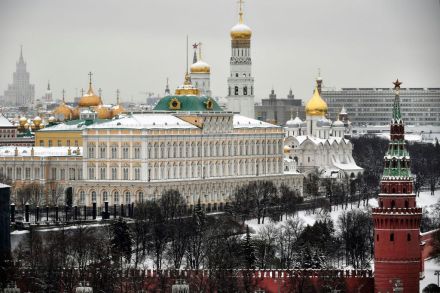
For centuries before Vladimir Putin arrived on the scene, Russian foreign policy has been shaped by the country’s need for warm-water ports. To be a great power in Europe and the Near East, Russia must have access to the Mediterranean. Commercial as well as military considerations dictate this. In the eighteenth century Russia conquered the khanate of Crimea and acquired a splendid location for a new Black Sea port — what is now the city of Sevastopol. The Crimean peninsula had been a gateway from Asia to the Mediterranean since the days of the ancient Greeks, who built some of their northernmost colonies there. Russia made Sevastopol the permanent home of its Black Sea Fleet.

crimea

What does Russia really want?

From our UK edition

The question of ‘why’ Russia invaded Ukraine has been forgotten amid war’s fog. Greed and malice partially explains it. History, geopolitics and culture reveals more. A country which has more land than anyone else on Earth is not grabbing territory for territory’s sake. Logically, Russia should be giving away land to anyone who might manage it better. But that’s not how Putin thinks. He is pursuing a dogged policy of annexations – first in Georgia, then in the Crimea, and now of four further Ukrainian districts.

Tsar Vladimir brings in martial law

From our UK edition

Martial law can arrive with a bang: tanks on the streets, Swan Lake on the TV. It can also creep up on a country in the guise of a presidential edict with the title ‘The Decree On Measures taken in the Constituent Entities of the Russian Federation in Connection with the Decree of the President of the Russian Federation of October 19, 2022 No. 756’. Either way, Vladimir Putin has just moved Russia one step closer to totalitarianism. What is interesting is just how long and half-hearted a process this has been. When Putin invaded Ukraine in February, the sharpest-beaked hawks in his entourage were urging total war, and with it an imposition of tight state control over much of the economy.

Russia’s brutal strategy of war is failing

Ukraine’s devastating attack on the Crimean Bridge and Russia’s sickening response — deliberately targeting civilians — perfectly encapsulate how these adversaries are fighting this war. Ukraine has a coherent strategy, effective operational design, and close coordination among its forces. Russia is failing because it has none of this. The centerpiece of Ukraine's strategy is eviscerating Russian combat power without getting into a raw slugfest that would sacrifice its own troops. That means knocking out Russian combat power without a head-on battle, wherever possible. How does Ukraine do that?

What a greasy spoon in West London tells us about the threat of nuclear war

From our UK edition

All-day diners feasting on the full English, the cheese omelette or the celebrated sausage sandwich (£3.80) at George’s Café, at 36 Blythe Road, Hammersmith, probably don’t realise they are dining at an address which is pivotal in global cultural history. So pivotal, in fact, that it might just tell us whether human civilisation is about to be extinguished in a nuclear holocaust. A claim like that needs fleshing out. Here it is.

Putin at 70: How The Spectator has covered his life

From our UK edition

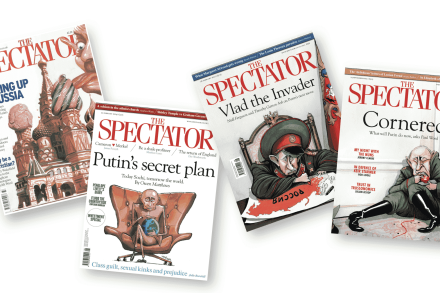
Vladimir Putin turns 70 today. Since he became Prime Minister of Russia in 1999, some of The Spectator's greatest contributors have asked the perennial questions: who is Putin, and what does he want? We've compiled the following pieces from our fully-digitised archive.  ‘Joking with a nine-year-old boy at a televised awards ceremony by the Russian Geographical Society, President Vladimir Putin said: ‘The Russian borders don’t end anywhere.’’ Portrait of the Week, 1 December 2016 Appointment as Prime Minister  ‘Not surprisingly, given his background, Putin has a lugubrious and somewhat sinister manner.

How should the West respond to Putin’s threats?

From our UK edition

Vladimir Putin clearly wants us to worry that he is crazy enough to use a tactical nuclear weapon in Ukraine. This fear was intensified this week when images surfaced that some – possibly in error – believed showed a train operated by the secretive nuclear security forces moving towards Ukraine. Despite this, many believe the likelihood of a nuclear attack remains extremely low. Yet it is a plausible enough threat for the West to be considering how it should respond if Putin were to unleash one. Russia has an estimated 1,900 non-strategic nuclear weapons (NSNWs), from artillery shells to warheads for missiles; their yields range from a mere 0.5 to 100 kilotons, more than twice the power of the bomb that devastated Nagasaki.

War has come home to Russia

From our UK edition

Moscow A week of somewhat mixed messages from the Kremlin. One day Vladimir Putin opened Europe’s largest Ferris wheel and presided over citywide celebrations of Moscow’s 875th anniversary, full of calm and good cheer and mentioning the war only in passing. A few days later he appeared on national TV telling the world that he was ‘not bluffing’ about using nuclear weapons and announcing a partial mobilisation. Putin has never fought a contested election in his life, so he’s never been a great one for the common touch. But in his latest address he looked as pale and dead-eyed as Nosferatu. Russians know better than most that the more strenuously something is officially denied, the more likely it is to happen.

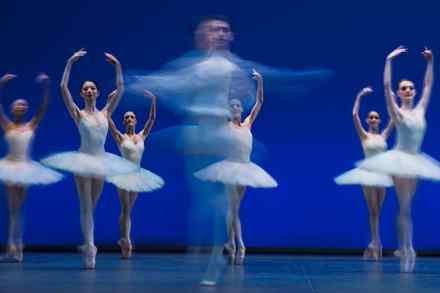
Letters: Britain needs the English National Ballet

From our UK edition

Putin’s options Sir: I agree with Paul Wood that Vladimir Putin is on the back foot (‘Cornered’, 24 September). His actions, from partial mobilisation to nuclear threats to the rapid referenda in occupied Ukraine, indicate a psychopathic gambler who hopes that one last spin will turn Lady Fortune his way. However, there is a big gap between ‘losing’ and ‘lost’, and that is where the focus on the nuclear threat by the West is unhelpful and dangerous. As well as the partial mobilisation, Putin ordered in August a 10 per cent increase in the size of the military to more than a million combat troops.

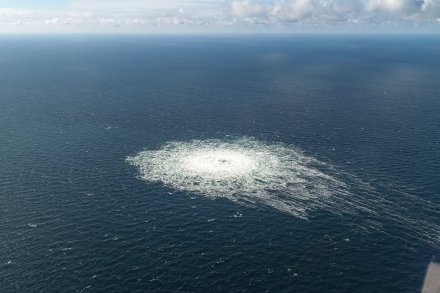
Did Russia sabotage its own pipelines?

From our UK edition

It almost seems worthy of the opening scene in a Bond film. Vital Russian gas pipelines running beneath the Baltic Sea close to Denmark and Sweden are the victims of sabotage. The two countries have warned of leaks from both Nord Stream 1 and 2 after seismologists suggested there had been underwater explosions. No one wants to claim credit for the deed – yet. Who is the Blofeld behind this dastardly scheme? Former Polish foreign minister Radek Sikorski, no fan of Russia, sardonically declared on Twitter, ‘Thank you, USA’. That set the conspiracy theorists off. As has a video resurfacing of Joe Biden in February promising America would put an end to Nord Stream 2.  Who is the Blofeld behind this dastardly scheme?

What’s behind Putin’s no-show?

From our UK edition

Has Vladimir Putin carried out a cynical stunt, or ducked out of a seismic decision? That’s the debate among Kremlinologists tonight, as the Russian President failed to show up for a planned 8 p.m. address to the Russian people. Faced with catastrophic losses of territory in north-east Ukraine, a weaker Putin has been considering his options. One that has been suggested is fully mobilising the population to fight, and introducing martial law, which the State Duma (parliament) proposed today. Men aged between 18 and 65 would be banned from leaving the country. Today also saw the announcement of referendums on Russian annexation for the Luhansk and Donetsk regions of Ukraine, as my colleague Lisa Haseldine reported.

More mad than Vlad: Russia’s ultra-nationalist threat

From our UK edition

‘Russia without Putin!’ was the cry of Muscovites who turned out to protest against Vladimir Putin’s return to the presidency for a third term in December 2011. Crowds 100,000 strong chanted their opposition on Moscow’s Academician Sakharov Prospect – as symbolically named a venue as you could wish for – as riot police stood calmly by. There was anger in the crowd. But there was hope, too, not least because the massive protest was officially sanctioned. One after another, prominent opposition politicians such as Ilya Yashin, Boris Nemtsov and Alexei Navalny denounced Putin from a stage provided by the city authorities. Today the memory of those protests seems to belong to a different age of Russia. Yashin and Navalny are in jail.

Gorbachev was no saint. But he was a kind of hero

From our UK edition

Mikhail Gorbachev is dead at the age of 91, and in a way I feel orphaned. I became fascinated by what was still then the Soviet Union in its late years of sclerosis, when one moribund geriatric at the top of the system succeeded another (the dark joke at the time went as follows: a KGB guard stopped someone at one of the state funerals and asked him if he had a pass – ‘oh,’ came the reply, ‘I’ve got a season ticket’). But my early years as a Russia-watcher were during his time as General Secretary, and if my seniors had become used to the idea that the USSR was a stagnant, unchanging police state, for us, the thought that there could be change, even change for the good, was baked into our assumptions.

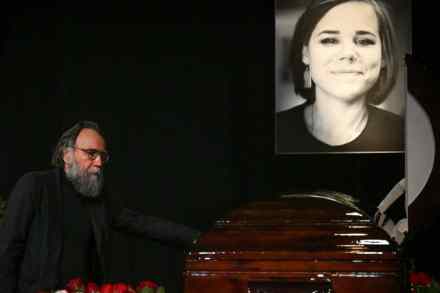
Daria Dugina has become a martyr for Putin

From our UK edition

There was something menacing yet vaguely absurd about the Tuesday memorial service held to commemorate the life and fascist times of the prominent ultra-nationalist Daria Dugina, the daughter of the Kremlin propagandist Aleksandr. The 29 year old Daria Dugina, who died in a car explosion on August 20, was put on display in an open coffin, with guards wearing black and red armbands by her side. The sombre attendees filed past.

The stalemate in Ukraine won’t last forever

From our UK edition

Addressing the vexed question of who is winning the war in Ukraine, six months on, is a task to challenge military strategists, geopolitical analysts – and semanticists, because so much depends on what ‘winning’ means. On one level, after all, one could suggest everyone is losing. That said, we cannot escape the fact that both Moscow and the West had essentially written Ukraine off at the start of the war. The conventional wisdom was that it would take perhaps a fortnight for Vladimir Putin’s much-vaunted war machine, the product of two decades of heightened military spending, to defeat its Ukrainian counterpart.  Instead, the Ukrainians proved determined and disciplined in the defence, and imaginative and impassioned in the attack.

Sanctions are working – whatever Putin says

From our UK edition

Don’t believe Vladimir Putin’s hype. The Russian economy is not OK. With western sanctions jeopardising up to 40 per cent of the country’s GDP, Putin’s assurances of an economic pivot to the East are a sham. And his weaponising of gas supplies to Europe is the financial equivalent of strapping on a suicide vest. That, roughly, is the message of a major new study published last week by the Yale School of Management about the impact of sanctions on Russia. Yale, working with a team of international economists, has looked past a wall of Russian obfuscation and used real-world data from retailers, energy traders and investors to reveal a picture very different from the rosy image presented by Putin at the St Petersburg Economic Forum in June.

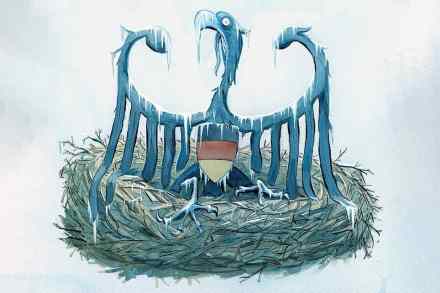
Putin has Europe where he wants it

From our UK edition

Have we reached the endgame of Vladimir Putin’s energy war against the West, the point at which he turns off the gas for good? This afternoon, Gazprom announced that from Wednesday morning it will cut the quantity of gas flowing through the Nord Stream 1 pipeline to Germany to 33 cubic metres per day. This will halve the current flow of 67 million cubic metres and is just 20 per cent of the 167 million cubic metres which flowed through the pipeline before the Ukraine invasion. Ostensibly, the cut is for reasons of ‘maintenance’. That is unlikely to wash. Nord Stream 1 relies on a compressor station powered by six turbines, but Russia was supplied with two spare turbines to prevent any need for reduction in flows during maintenance periods.

Ukraine and Russia sign grain deal – what next?

From our UK edition

This afternoon Kyiv and Moscow signed a UN-backed agreement to free up at least 20 million tons of grain from blocked ports. Ukraine said it would not sign a deal with Russia directly, only with Turkey and the UN. As Wolfgang Münchau noted this morning, it marks the first successful mediation between the two sides since the start of the war. This deal will complicate Vladimir Putin’s efforts to strangle the Ukrainian economy. But the Russian leader needs to show countries that are neutral – or more inclined towards Russia (in Africa and Asia) – that he saved them from hunger and rising food prices. Otherwise, Algeria could increase gas supplies to Europe and Egypt could supply Ukraine with hundreds of units of Soviet weapons and military equipment.

How Germany’s energy crisis could bite Britain

From our UK edition

For now, Berlin can breathe a sigh of relief: after a ten-day shutdown for maintenance, the Nord Stream 1 pipeline is back online. Russia is once again heating German homes, fuelling German industry, and using German money to finance its war in Ukraine. But this happy exchange may not continue; the pipeline is still operating at just 40 per cent of its usual capacity, and Vladimir Putin is warning this could fall to 20 per cent next week.

The next PM must be ready for Putin

From our UK edition

Westminster is understandably obsessed with the question of who makes the final two of the Tory leadership race, but today has also brought a reminder of the crises that the new Prime Minister will have to deal with from day one.  The European Commission is calling on all EU member states to cut gas use by 15 per cent to prepare for supply cuts from Russia through Nord Stream 1, which reopens tomorrow. With the pipeline only flowing at limited levels, and the heatwave leading to higher energy use than usual, Germany will not be able to lay in stores for the winter. This means that Vladimir Putin will constantly try and use energy as a weapon in the coming months, threatening to cut off supplies completely if the West does this or that in support of Ukraine.