Putin

Syrian nightmare

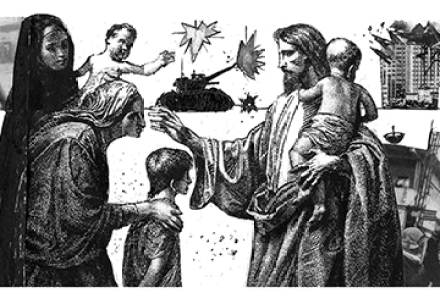
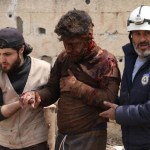
'We are used to death,’ said Ismail. He had been to the funerals of four friends in a single week, all killed by aerial bombs. ‘We’re used to bloodshed. We’re adapted to the situation and this style of life now. It’s normal. If you lose someone, then the next day you say, OK, life must go on.’ Ismail spoke to me from eastern-Aleppo, where as many as 250,000 people are under siege by the Syrian regime and ‘living on rice’, as he described it. He is in his late twenties and is one of the White Helmets, the civil defence volunteers who dig people out of the rubble after an attack. He could not endure the despair on the faces of the injured who knew they would not survive, he said.

Listen: Liam Fox savages Nick Clegg at Tory conference

On Sunday afternoon both Boris Johnson and David Davis gave speeches on Brexit in the main hall at Conservative conference. Happily, their fellow Brexiteer Liam Fox was not too left out and had a chance to share his thoughts at the Conservative Voice's 'Brexit, Europe and the world' reception that evening. Clearly stung after Nick Clegg suggested he didn't have a job at a recent Press Gallery lunch, Fox went on the offensive -- branding the Lib Dem leader a 'serial loser' for doubting his power: 'I hear Nick Clegg said I didn't have a job because what we were acting on was delusional. Well I'd just ask you -- before you have too much wine -- please have a reality check. Nick Clegg feels sorry for me... because I don't have a job...

Deadly silence

There was a time when the humanitarian crisis in Aleppo would have featured strongly in political debate in Britain. Just two weeks after a negotiated ceasefire appeared to have provided some respite, a war of attrition in Syria’s second largest city is escalating into a vast human tragedy. Last Saturday, a bomb dropped by Syrian government forces knocked out a pumping station which had been supplying water to two million people, 250,000 of whom are besieged in the rebel-held east of the city. On the same day, at least 45 people, many of them children, were killed by barrel bombs dropped indiscriminately on civilians — a now common occurrence. Food supplies had already been running low, supply lines to rebel areas having been severed in early September.

The Spectator podcast: The age of May

The Conservative party conference starts this Sunday in Birmingham. It will be the first time that Theresa May has addressed the membership at large as leader, but in the background there are rumblings of division. Are the Cameroons preparing a rebellion on grammar schools? Are any cabinet positions currently vulnerable? And how long can the honeymoon last for Theresa May? Isabel Hardman is joined in Liverpool by Fraser Nelson and Matthew Parris, and from London by James Forsyth, who says on the podcast: "I think the intriguing thing about Theresa May is this is a politician who's been on the Tory front bench for 17 years, but everyone – from cabinet ministers to civil servants – is still trying to work out what she is going to do as Prime Minister.

Russia’s puritan revolution

Last weekend a group of young activists turned out on a Moscow street to protest against western decadence. They were a hard-faced bunch, standing defiantly in military poses and wearing uniforms bearing the logo ‘Officers of Russia: Executive Youth Wing’ as they blocked access to an exhibition by American photographer Jock Sturges that featured images of nude adolescents. ‘We are here to protect people from paedo-philic influences,’ one Officer of Russia told journalists — while another protester sprayed the offending photographs with urine.

New Ukip leader says Putin is one of her heroes

Diane James, Ukip’s new leader, did her first major TV interview as Ukip leader this morning. And very revealing it was too. When Andrew Neil asked her who her political heroes were other than Vladimir Putin, she did not deny that the Russian leader was one of her heroes. She said that neither Clinton nor Trump were a hero of hers. When Andrew then pushed her on who were her heroes were, she named Margaret Thatcher and Winston Churchill. Andrew then summed up by saying, your heroes are Putin, Churchill and Thatcher. James said that yes, they were. Here's the clip.  So, the leader of the UK’s third political party does not deny that Putin, who has authoritarian tendencies and is no respecter of international laws, is one of her heroes.

Mystery on Mount Athos

I have just returned from one of the world’s most secretive states. I had to apply for a visa a month beforehand and send in a copy of my passport. There is no way into this place by road; you have to arrive on an authorised boat and a policeman checks your visa against your passport before you board. Private boats must keep well offshore and may not land. The visa is valid for only three nights; you have to book each night in advance and may not spend more than one night in the same place. Only ten visas are granted a day. Women have always been forbidden here — this rule remains strictly in force. A secretive body of Elders governs here and all citizens are bound to total obedience.

Vlad the corrupter and the crisis on the left

Julian Assange still has not found the courage to face the women who accuse him of sexual abuse. Rather than try to clear his name, he has sat in the basement of the Ecuadorian embassy in Knightsbridge for four years – a confinement long enough to drive most of us out of our minds. If Assange has lost his wits, however, there is a method to his madness, as there was long before he received what paltry hospitality the Ecuadorian diplomatic corps could offer him. Nothing he leaks has ever hurt Russia. He will denounce and expose human rights abusers, as we all should. But he will never allow his followers to learn of the suppression of democracy and human rights by Putin’s forces within and without Russia’s borders. Human rights in Assange’s mind are shape shifters.

Will Putin target Latvia next?

The Baltic states do not feel like a front line. I did not see a police officer in more than a week in Latvia, let alone a soldier. Somewhere out there were three NATO battalions, deployed to deter Putin from crossing the border. But if it wasn't for the seediness that lingers like a bad smell - the occasional Brezhnev brutalist building and the memorials to the murdered Jews - I could think myself in a European country that had never experienced the twin curses of Nazism and communism. The art nouveau architecture is as fine as any you will see in Paris or Barcelona, and covers many more streets. There are Italian restaurants everywhere. People looked a little bewildered when I said I wanted to try Latvian dishes. What were they? Lentils? Sausages?

Is Putin and Erdogan’s bromance back on?

At a luncheon to mark a thawing of relations between Turkey and Russia this week, the diners were given a particular treat. I'm not talking about Beluga caviar, though it may have been on the menu, but rather the special crockery bearing the image of each country's presidents set out at each placing. The idea of having Putin and Erdogan beaming at me from ceremonial plates doesn't appeal hugely, but it seems to have set some of my Turkish colleagues off in raptures. For them the 'bromance' is back on. I'm not so sure. The plates were commissioned to mark a meeting between the two men in June 2015.

Is Putin eyeing up the Baltic states?

For the frontline in a Cold War which has been rapidly heating up in recent years, Narva certainly does not look it. The small Estonian town on the border with Russia has a mainly ethnic Russian population, settled after the Soviet Union annexed Estonia at the end of the Second World War. However the closest (and potentially most lethal) thing to a Russian machine gun nest I could find is the 24 hour burger van next to the border post, complete with a suitably surly staff. But is Narva’s ethnic Russian population a potential fifth column as tensions across the border with Nato increase? 'The old babushkas in Narva are getting tired of being asked about it,' Hannes Hanso, Estonia’s Defence Minister says in his offices in Estonia’s capital, Tallinn.

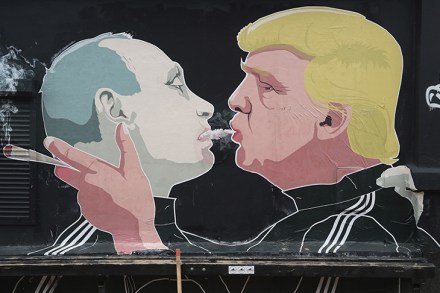
Trump ♥ Putin

Spy novels and James Bond movies; post-war Vienna and East Berlin; Manchurian candidates and Third Men. The pop culture of the Cold War era created a set of stereotypes about hostile foreign intelligence services, especially Russian intelligence services, and they still exist. We still imagine undercover agents, dead drops, messages left under park benches, microphones inside fountain pens. It’s time to forget all of that, because the signature Russian intelligence operation of the future, and indeed of the present, is not going to unfold in secret, but rather in public. It’s not going to involve stolen documents, but rather disinformation operations designed to influence democratic elections.

If Trump wins, Europeans will have to grow up

As many people have pointed out, if someone had awoken from a coma after 30 years and learned that one US political party was in thrall to Wall St and the other to Russia, they would be confused by 2016. But then right is the new left and liberalism, being the prestige faith, is bound to attract prestige people, while Russia is back to its pre-Bolshevik role as the great force for reaction. Some Democrats even believe that Donald Trump is in the pay of the Kremlin, although, then again, more than half of Democrats believe 9/11 was an inside job. This may all be a smear, but Trump has given off alarming signals, including promises to withdraw American forced abroad; Putin would surely welcome his victory. This is saddening.

Nostalgia and nihilism

‘Gilded doorknobs,’ spits a Party diehard as she contemplates the blessings of the Soviet Union’s collapse. ‘Is this freedom?’ Dozens of witnesses from the ‘lost generation’ in Russia who had ‘a communist upbringing and a capitalist life’ share Elena S’s disgust and bewilderment as they contribute to this epic fresco of an empire’s bitter aftermath. Some adjust smartly to the post-Soviet disorder, although a 35-year-old advertising manager reflects that ‘I never dreamed of being fucked in stairwells or saunas in exchange for expensive dinners.’ The few winners and many losers agree: ‘You can’t buy democracy with oil and gas… You need free people, and we didn’t have them.

Today in audio: Fallon says Putin would ‘Vote leave’

Vladimir Putin's name has popped up again in the Brexit debate. This time, however, it wasn't the Prime Minister suggesting that the Russian president would favour Britain leaving the EU, but the Defence Secretary. Michael Fallon said Putin would 'Vote Leave' and he also told a Commons select committee that 'there is absolutely no doubt in my mind that a British exit from the European Union would be applauded in Moscow'. He added that it would be a 'payday for Putin': Michael Fallon went on to say that being in the EU ensured that Russia had 'paid the price' for its intervention in Ukraine. Meanwhile, the Prime Minister gave a speech in which he said Brexit could ramp up the cost of a family holiday. But where was he planning on heading off to on his own summer trip?

What Brexit won’t fix

The Leave campaign was right to pour scorn on David Cameron’s warning this week that Brexit could threaten Europe’s military stability and lead to war. Boris Johnson mocks the Prime Minister about his prophecy on page 14. If Cameron really believed that Britain leaving the EU could lead to war in Europe, why on earth did he risk having a referendum at all? Why was he suggesting until a few weeks before his negotiations with EU leaders that he would consider voting for Brexit if he didn’t get his way? It’s easy to tease the increasingly shrill alarmism of the Remain campaign. But it is harder to say how exactly leaving the EU would make things better.

The power of song

You might not think that the Eurovision Song Contest (screened live from Stockholm tonight) could have any connection with how we might choose to vote in the coming referendum. Surely it’s just a string of naff pop songs stuck together with fake glitter and a lot of false jollity? The songs are uniformly terrible, the show so overproduced it’s impossible not to mock its grandiosity, the idea that it conjures up the meaning of Europe laughably misplaced. But in a programme for the World Service that caught my attention because it sounded so counterintuitive, Nicola Clase, head of mission at the Swedish embassy in London, tried to persuade us otherwise.

Putin’s Palmyra concert shows he is winning the propaganda war

The city of Palmyra, recently liberated from Isis, has seen a return to civilisation and culture with a performance by a Russian orchestra. The concert, conducted by a 'close associate' of Vladimir Putin, was of course a propaganda exercise - but what a propaganda exercise! It fills me with genuine sadness that no western power would ever think to pull such a stunt, and this reflects a deeper problem with our foreign policy; that is, what are we promoting?

Number 10 might be more confident than ever of EU referendum victory, but they’re still trying to load the debate dice

Downing Street is more confident than it has ever been that the EU referendum will be won. It is not just Barack Obama’s full-throated warning against Brexit that is responsible for this, but—as I say in my Sun column this morning—the sense that they have got the argument back onto their home turf of the economy. Indeed, it was striking how much Obama talked yesterday about the economic benefits to Britain of EU membership and the single market. The fact that this was his main message, rather than Western unity against Putin and Islamic State, shows which argument Number 10 thinks is working.

The Jezza effect

Corbyn the Musical feels like it comes from the heart. Did the writers live through the 1970s when the hard-left was full of hope and confidence? Socialists then genuinely believed they could see off capitalism (which seemed in its death throes anyway) and replace it with a happier and more equal world. The show takes that objective seriously and attacks it with style, wit and affection. Young Jezza is portrayed as a sweet-natured bumbler entranced by an ideology he barely understands. He expresses his political dreams in terms of manhole covers and allotment vegetables. With his racy girlfriend, Diane Abbott, he sets off on a motorbike tour of East Germany, which they both regard as a communist paradise.