Productivity

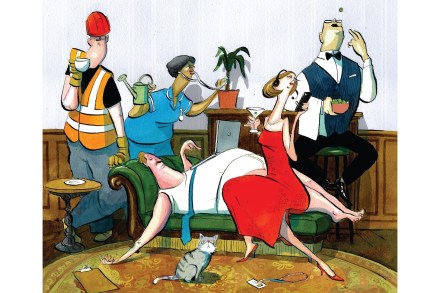
Will robots simply bore us to extinction?

A few years ago, when ChatGPT and Claude were beginning to take off, some tech leaders seemed to develop a curious interest in oceanography. Consider, for instance, Microsoft CEO Satya Nadella’s suggestion in 2023 that AI ought to be compared to a “tidal wave”; or Mustafa Suleyman’s book on AI, The Coming Wave (2024), in which the DeepMind cofounder talks urgently about an “impending deluge” (while repeatedly warning us that the “wave is coming,” and, even more alarmingly, “the coming wave really is coming.”) It didn’t take long for the analogy to spread. The IMF’s Kristalina Georgieva would liken the technology to a “tsunami hitting the labor market.


Robots

Weight-loss drugs killed my appetite for life

Sam Altman, the co-founder of OpenAI, which launched ChatGPT, is not overweight. Gay tech billionaires rarely are. Even so, as he explained in a recent interview, he was keen to try a GLP-1, one of those drugs that have revolutionized weight loss in the past five years. You can understand why he was curious. Ozempic and Mounjaro might appear to have nothing in common with artificial intelligence, but both phenomena have helped to create the sensation that we’re entering an era of accelerating and uncontrollable change. Alas, he screwed it up. He had someone inject him with a megadose, puked all night and then lay in bed for days "staring at a white ceiling thinking nothing," not only feeling no urge to eat but also no "desire for anything.

weight

Migration, the customs union & a £40bn black hole?

14 min listen

There are reports that the OBR will downgrade Britain’s productivity growth forecasts, increasing the size of the black hole facing the Chancellor at the end of the month. This continues the spate of bad news for the Chancellor on the economy – but can we trust the figures? James Heale and Michael Simmons join Patrick Gibbons to talk about what this means ahead of the budget, whether anger over the money wasted on asylum hotels can be linked to the cost-of-living crisis and what Rachel Reeves is doing in Saudi Arabia this week. Plus: is a debate over the customs union really what Britain wants right now? Produced by Patrick Gibbons.

Why Britain stopped working

50 min listen

Welcome to a slightly new format for the Edition podcast! Each week we will be talking about the magazine – as per usual – but trying to give a little more insight into the process behind putting The Spectator bed each week. On the podcast this week: the cost of Britain’s mass worklessness. According to The Spectator’s calculations, had workforce participation stayed at the same rate as in 2019, the economy would be 1.7 per cent larger now and an end-of-year recession could have been avoided. As things stand, joblessness is coexisting with job vacancies in a way that should be economically impossible, writes Kate Andrews in the cover story.