Press

Downing Street defends Maria Miller’s special adviser

From our UK edition

Downing Street has defended Maria Miller's special adviser over the way she warned the Telegraph about the Culture Secretary's connection to Leveson as it prepared a story on her expenses. The Prime Minister's official spokesman has just told the lobby: 'My understanding is that the special advice was raising legitimate concerns about the way in which the investigation had been handled. It was perfectly reasonable for her to do that. 'The Secretary of State raised these concerns directly with the editor. It is reasonable for someone in the government to raise these kinds of concerns about the way a newspaper is conducting an investigation.' Asked whether the Prime Minister still had confidence in Miller, the spokesman said: 'Yes.
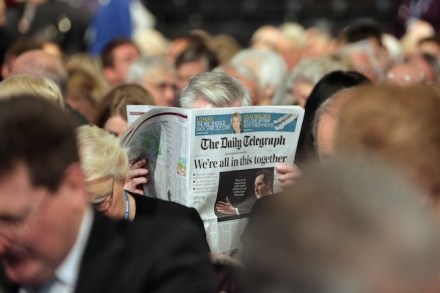
Maria Miller’s adviser reminds us why politicians can’t be trusted with press regulation

From our UK edition

An email from an Asian friend last night pointed me to a piece in the Telegraph  saying: 'This is the kind of thing they do in Singapore! I’m amazed it’s happening in Britain.' She was referring to Maria Miller, the Culture Secretary, whose adviser told the Daily Telegraph to be careful about exposing her expenses because the minister now has power over press regulation. The story is here: a classic example of the 'chilling effect'. As soon as you give these politicians a hint of power over the press, they will abuse it. As Maria Miller’s case has shown, they will abuse it even before they get power. They will abuse it even while they decide whether to give themselves power of statutory regulation.

Maria Miller’s Leveson threat

From our UK edition

Journalists don't normally reveal their conversations with special advisers to ministers, no matter how grumpy they are about a forthcoming story. So it is significant that the Telegraph has chosen to disclose a warning from Maria Miller's adviser Joanna Hindley about the minister's connection to press regulation when reporters were preparing a story on her expenses claims. This is the key passage: When a reporter approached Mrs Miller’s office last Thursday, her special adviser, Joanna Hindley, pointed out that the Editor of The Telegraph was involved in meetings with the Prime Minister and the Culture Secretary over implementing the recommendations made by Lord Justice Leveson.

Labour could force vote on draft Leveson bill

From our UK edition

Labour will discuss its draft Leveson Bill with the Conservatives and Liberal Democrats at the next tranche of cross-party talks on Thursday. The Bill (which you can read here) is short and sweet, replacing Ofcom as the regulatory backstop recommended by Leveson with a panel headed by the Lord Chief Justice, and a press regulator called the Press Standards Trust. The party hopes to use the Bill as the basis of discussion for Thursday's talks, and has sent it to Culture Secretary Maria Miller, as well as Tory MPs who are spearheading calls within their party for statutory underpinning of press regulation including George Eustice, and Lord Wallace, who has been attending the cross-party talks on behalf of the Liberal Democrats.

Number 10 coy on Royal Charter proposal for press regulation

From our UK edition

Newspaper editors are under pressure to come up with a new system of press regulation that works, and the Prime Minister is under pressure to show that he is taking the need for a new system seriously, rather than just bowing down to media bosses. So is a Royal Charter the solution that would ensure the new press watchdog would remain independent of and tough on the newspapers? Reports have surfaced in the press that Oliver Letwin is mulling over the idea as a way of avoiding statutory underpinning while giving assurances about the new regime. The Economist reports: 'Oliver Letwin, the minister in charge of squaring this awkward circle, has suggested that another upstanding body could verify the new set-up, without resorting to statute.

Pressure on the editors as Labour threatens own Leveson bill

From our UK edition

One of the foundations on which David Cameron based his decision to reject statutory underpinning of press regulation was that editors would set up a new system based on Lord Justice Leveson's recommendations which would prove far tougher than the Press Complaints Commission. The failure of the industry to reach consensus on a new body - and this is a real risk given the refusal of some publications to join the PCC - would pull the rug from under the Prime Minister's feet as he fights critics pushing for statute. Cameron is also facing claims that he is bowing to bullies in the press, and it is for these two reasons that the Prime Minister will be applying great pressure on editors as they meet Culture Secretary Maria Miller this week.

Labour source tells Coffee House: govt could deliberately overcomplicate Leveson bill

From our UK edition

Labour sources are not happy with the Prime Minister's decision to draft legislation for statutory underpinning of press regulation. I've just spoken to one party source, who told me the worry is not that the legislation is being put together quickly, but that the government will draw up a bill that deliberately complicates the issue and undermines Lord Justice Leveson's call for regulation backed by statute. The source says: 'The issue with the draft bill is not the speed: we want speed. The issue is that there is a possibility that what they are going to do is overcomplicate and deliberately overload this draft in a bid to stop them doing the right thing. They have betrayed the victims, they should be looking at how to go forward on this.

Government to draft legislation on Leveson recommendations

From our UK edition

The first of many cross-party discussions on the response to the Leveson Inquiry lasted 30 minutes last night. The 'frank' meeting resulted in David Cameron agreeing to draft bill to see if the proposals in Lord Justice Leveson's report were workable. The idea is that the legislation will prove that the statutory underpinning of the new independent press regulator is unworkable, while Number 10 sources are briefing that the Prime Minister has 'not shifted one inch' on his position on the report. But agreeing to draft legislation, if only to prove those deep misgivings that Cameron retains, is a canny way of approaching the divide in Parliament over the response to the report.

Press freedom has just acquired its most important defender: David Cameron

From our UK edition

For precisely 99 minutes yesterday, it looked like press freedom in Britain was doomed. At 1.30pm Lord Leveson announced his plans for statutory regulation of the press – with his bizarre instruction that we were not to call it statutory regulation. Worse, respectable commentators seemed to buy it. A very clever compromise, it was being argued. Self regulation really was being given another chance, albeit with a device which puts a legislative gun to the head of the press. If they obeyed his demands, he would not apply the force of the state. But at 3.09pm, the Prime Minister rejected all this outright. The existence of such a device, he said, would mean politicians setting the parameters under which the press operates which it hasn’t done since 1695.

Leveson Report – your guide to the regulatory recommendations

From our UK edition

Here is a six-point guide to the regulatory system proposed by Lord Justice Leveson: 1) The creation of a genuinely independent regulator Leveson agrees with the view, expressed by Baroness O’Neill and others, that ‘independent regulation’ does not mean ‘self-regulation’. The existing system of self-regulation should be wound up. In its place should emerge a regulator that is both independent of the government, parliament and the industry. It should be ‘established and organised by the industry’ in order to provide ‘effective regulation of its members’. Leveson does not rule out the emergence of multiple regulatory bodies, and indeed allows for it, but he does not advocate such an outcome. 2) How will it actually be independent?

Leveson report: David Cameron left in a minority over press regulation

From our UK edition

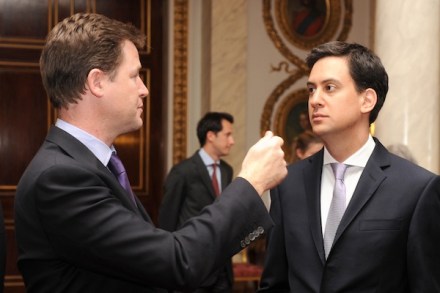
Following this afternoon’s statements I am certain that David Cameron is in a minority in the House of Commons in not wanting to create a statutory back-stop for a press regulator. But, so far, no one can explain how even an alliance of Labour, the Liberal Democrats and the Eustice Tories can force the Prime Minister to provide parliamentary time for a bill that he doesn’t want. Cameron got the tone and content of his statement right. I’m reassured that Cameron appreciates that while he set up an inquiry, he didn’t outsource his judgment to Lord Justice Leveson. He is also surely correct that a press law, however brief, would have worrying consequences. Just before the statement, a visibly agitated Miliband walked over to Cameron to talk to him.

Leveson report: Nick Clegg backs statutory underpinning

From our UK edition

As trailed on Coffee House over the past few days, Nick Clegg used his own separate Commons statement to declare his support for the statutory underpinning of the new independent press regulator. He said that nothing in the debate that he had heard so far suggested to him that there was a better system of regulation than the one before MPs today. 'The long grass is the last place that this problem should end up in,' he said, adding: 'I am convinced that he has made a case for legislation.' The Deputy Prime Minister said he acknowledged that 'we now need to show how that can be done in a workable way'. But he argued that it was a 'straw man' to suggest that law is always a threat to the freedom of the press.

Breaking: David Cameron says ‘I am not convinced statute is necessary’ for press regulation

From our UK edition

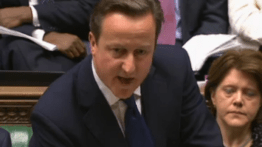
David Cameron has just told MPs that while he accepts Lord Leveson's recommendations for a new independent press regulator, he rejects statutory underpinning of the new regulatory system. The Prime Minister said: 'I accept these principles... The onus should now be on the press.' He said he was in favour of giving the press a period of time to implement the recommendations. But to roars of disapproval from MPs on the other side of the Chamber, he said: 'I am not convinced... that statute is necessary.' He also told MPs that he accepted Leveson's recommendations on the relationship between the police and the press. The Prime Minister also took care to praise Health Secretary Jeremy Hunt, who was cleared of wrongdoing by the Inquiry.

Leveson praises the media, then slaps it with ‘not statutory’ regulation underpinned by statute

From our UK edition

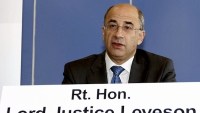
Lord Justice Leveson has just finished giving his statement to the Inquiry press conference, and told journalists that he would be 'making no further comment' about the report's contents. 'The ball is back in the politicians' court,' he said. We have 40 minutes until we find out how the politicians plan to play that ball. The judge took great pains to praise the media, saying: 'I remain firmly of the belief that the British press, I repeat, all of it, serves the country very well for the vast majority of the time. There are truly countless examples of great journalism, great investigations and great campaigns.' He was so fulsome in his praise that it sounded almost valedictory, and as the judge continued, it seemed that it was: 'But none of that means that the press is beyond challenge.

Nick Clegg to give separate Leveson statement

From our UK edition

Nick Clegg will make his own statement on Leveson in the Commons today after the Prime Minister has spoken. Party sources were saying yesterday that this would only happen if the two men disagreed on the government's response to the report. The Lib Dems want to back the rapid creation of a statutory backstop for newspaper regulation, while David Cameron does not want to back any press law, at least for now. This is probably the biggest clue we'll get as to the content of the Leveson report before the embargo lifts at 1.30pm. But it doesn't necessarily mean a big split over the outcome: the coalition cabinet committee will meet at noon to discuss the full response, and there may well be greater unity over this than initially appears.

The big flashpoints over Leveson

From our UK edition

Nick Clegg and David Cameron will return, with their officials, to their speed reading exercise of the hefty Leveson report this morning. The Deputy Prime Minister wasn't giving much away unsurprisingly, when he spoke to journalists a short while ago as he left his home. He said: 'In this whole process, everybody wants two things: firstly a strong, independent, raucous press who can hold people in positions of power to account. And secondly to protect ordinary people, the vulnerable, the innocent when the press overstep the mark. That's the balance we're trying to strike, and I'm sure we will.' There is still the possibility that Clegg may give a second statement in the House of Commons later today if he and the Prime Minister fail to agree on the government's response to Leveson.

Lib Dems seek alternative Leveson statement slot

From our UK edition

As teams in secure rooms in Downing Street pore over the half dozen copies of the Leveson report, which arrived this morning, the Liberal Democrats are already starting to work out what they'll need to do if David Cameron and Nick Clegg find they cannot agree on the government's response. The Lib Dems have approached the Speaker to find out whether there is a possibility that Nick Clegg could give his own separate statement following Cameron's own response in the Commons tomorrow afternoon. Sources say they hope that this is an unlikely scenario, but add that 'he would like to be able to make his position clear in Parliament' if he does take a different stance.

Why The Spectator will take no part in state licensing of the press

From our UK edition

Lord Justice Leveson reports at 1.30pm tomorrow and David Cameron has blocked out 90 minutes in parliament to respond. The big question is this: will he introduce state licensing of the media? A group of 42 Tory MPs wants him to, and No.10 apparently thinks they will rebel if he doesn’t. But this would mean revoking Britain’s 317-year history of press freedom, and give Parliament power to set the parameters under which the press operates. If the state seeks to compel publications to join the government scheme, then they face a choice: sign up, or defy the new law. In tomorrow’s Spectator, we make our choice. We say in our leading article that we would happily sign up to any new form of self-regulation which the industry proposes, no matter how onerous.

Why The Spectator won’t be part of a state licensed media

From our UK edition

Anyone picking up a newspaper in recent days will have noticed that the press has been writing a lot about itself. Lord Justice Leveson’s inquiry into press practices and ethics has created anxiety at a time when newspapers were already haemorrhaging sales and influence. David Cameron’s government’s response to the report is nervously awaited, and a group of 42 Tory MPs is urging him to seize a ‘once-in-a-generation’ chance to regulate the press. They threaten to rebel if he doesn’t. The Prime Minister will be vilified whatever he decides to do. As the oldest continuously published weekly in the English language, The Spectator has seen this all before. The technology changes, but the principles do not.