Premier league

No one likes Arsenal, we don’t care

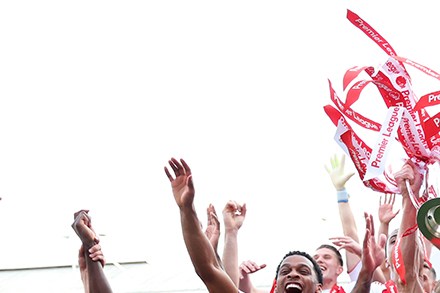
Arsenal’s triumph in finally winning the Premier League again after 22 long, often eyeball-wrenchingly tortuous years has gone down like a Keir Starmer motivational ‘I’m not leaving!’ speech, which is ironic given the Prime Minister is an avid Gooner like me. It’s hard to understand why a club that boasts a fanbase including us, Jeremy Corbyn, Rwanda’s President Paul Kagame, the late Osama bin Laden and Prince Harry (whose matchday allegiance has followed a similar path to his royal duties, in that he never turns up) attracts such opprobrium that we were recently named the ‘most-hated supporters’ in the league. But as with Millwall in their hooligan heyday, if no one likes us, we don’t care.
The Premier League’s sleeping pill problem

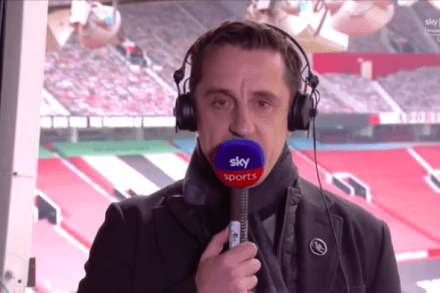
The footballer Dele Alli was applauded recently after he spoke of his sleeping pill abuse. ‘It’s a problem not only I have. It’s going around more than people realise in football,’ he said during a filmed interview with Manchester United’s former captain Gary Neville. It’s not the first time we’ve heard this. Footballers are ‘taking too many sleeping tablets and painkillers’ and addiction is becoming a ‘big issue’, former pro Ryan Cresswell warned last year. (He said his own addiction left him ‘gripping on for dear life’.) He claimed the problem is affecting stars at the very top level: ‘For me, it started with one after every game… to one a day to two a day and then I knew I was addicted.

Why football needs a regulator

Plans by the government to introduce a regulator to the football industry – endorsed by all Westminster parties just a year ago – have, to use jargon oddly appropriate in this case, been ‘kicked into the long grass’. Truss is instinctively against regulating almost anything. When I asked her about the ‘fan-led’ Crouch Report on the campaign trail a few weeks back, she replied, not very cryptically, that she would apply a ‘very high bar’ to any new types of regulation. So, the news that the legislation has been paused is no great surprise to me.

Football focus | 27 September 2018

‘Football holds a mirror to ourselves,’ Michael Calvin asserts in State of Play. Modern football is angrier, more brutal, more unequal and simply more relentless than ever before. The sense of a football club being rooted to its locality has been shattered. Globalisation, and hyper-commercialisation, means that local owners have been replaced by ‘speculators and savants’ from abroad. Locally reared players, victims of football’s global free market in talent, have become rare.

Bleak, unashamedly macho and grown-up: BBC2’s The North Water reviewed

‘The world is hell, and men are both the tormented souls and the devils within it.’ This was the cheery epigraph from Schopenhauer with which The North Water introduced itself — aptly, as it transpired. Certainly, BBC2’s starry new Victorian drama is not for those who prefer their television characters to be loveable. The first person we met was Irishman Henry Drax (Colin Farrell), who gruntingly concluded his business with a Hull prostitute before heading for the docks in a way familiar to viewers of Victorian TV dramas: shamble up the cobbles, straight on past the women in shawls, turn left at the urchins.

How I fell out of love with football

The new Premier League season has begun and I don’t know what to think. I tried to watch all of England’s Euro 2020 matches, but I never made it to the end of any of them. When the final against Italy kicked off, I retired to a quiet room feeling angst and confusion. Why was I so out of step with everyone else? Gareth Southgate’s players seem like lovely boys. And while they probably represent the better aspects of our evolving culture, it seems likely we may soon discover that they remain fallible. But if the response of the public to England’s triumphs and tragedy was one thing, the reaction of the media was quite another. It drew out the very worst reverse snobbery in me.

Football’s Super League critics are being hypocritical

Is it possible meaningfully to oppose the decision by Europe’s biggest football clubs to form an unaccountable, anti-democratic Super League if you voted to Remain? The obvious answer is that it’s not. Not that that will stop anyone. The proposed Super League is an almost exact sporting distillation of the issues that defined the European Union referendum: the continent’s financial power house football clubs are threatening to carve up immensely lucrative markets while simultaneously shutting down external competition irreversibly.

Why did you do it, Roy?

Poor old Roy Hodgson, why did he take on Crystal Palace? He was having lunch at a Côte in a salubrious suburb of south-west London the other day, indistinguishable in his blazer and slacks from all the other old boys there enjoying a leisurely retirement and looking forward to a postprandial nap. Roy is a charming man, and one of a vanishing number of football managers to have hinted at a non-footballing cultural hinterland, entirely suited to a life of leisure. Yet now he is willingly going once more unto the god-awful breach that is Premier League management.

Why English footballers are so useless

It is late in the evening. You’re in a bar. You’ve had quite a bit to drink but you are conversing with the fragrant young lady you found hanging around in there. You find her quite attractive and are possibly keen for things to proceed. What should you say to her, to speed things along? Wayne Rooney’s contribution is unbeat-able: ‘Are those tits real?’ That’s certainly the gambit I would go with if I ever find myself in a similar situation with, say, Princess Michael of Kent or Shami Chakrabarti. Wayne said it to ‘party girl’ Laura Simpson shortly before he got charged with drink-driving. Now he’s in trouble with the police and his wife, Coleen. I don’t think Coleen is too bothered about the driving charge.

What has the Premier League ever done for us? | 19 August 2017

Football’s back, I’m afraid, and, in the imperishable words of David Mitchell, every kick in every game matters to someone, somewhere. Still, it’s the Premier League’s 25th anniversary, so a good time to take stock. There’s no doubt that with Sky’s help the PL has sexed up the English game and moved it once and for all from being the preserve of the working man. When I started going to matches half a century or so ago, the stadiums were awful, the food terrible, and the football not that great. A game could be intimidating; not for the fainthearted, or women, or people who weren’t white. Now that has changed out of all recognition, almost entirely for the better.

What has the Premier League ever done for us?

Football’s back, I’m afraid, and, in the imperishable words of David Mitchell, every kick in every game matters to someone, somewhere. Still, it’s the Premier League’s 25th anniversary, so a good time to take stock. There’s no doubt that with Sky’s help the PL has sexed up the English game and moved it once and for all from being the preserve of the working man. When I started going to matches half a century or so ago, the stadiums were awful, the food terrible, and the football not that great. A game could be intimidating; not for the fainthearted, or women, or people who weren’t white. Now that has changed out of all recognition, almost entirely for the better.

Football wants the ‘somewheres’ to get lost

Some years ago, when Millwall played West Ham United, the Millwall fans sang the following song (to the tune of ‘When The Saints Go Marching In’, if you want to hum along): ‘Oh east London, is like Bengal. Oh east London is like Bengal. It’s like the back streets of Delhi. Oh east -London is like Bengal.’ They haven’t sung it for two or three years, but only because Millwall haven’t played West Ham. I mean, I don’t think that Millwall’s supporters have gradually thought better of it and decided that the ditty was perhaps racist and demeaning, or are worried about the relative geography of Delhi and Bengal. If we (Millwall are my team) played West Ham tomorrow, I think we’d still sing it.

The Six Nations is the most exciting sport on the planet

Perfection in sport: unattainable, but sometimes you can come close. Moments, people, actions you never tire of watching: Roger Federer’s backhand; Virat Kohli’s cover drive; Mo Farah’s acceleration off the final bend or little Lionel Messi dribbling through a crowded penalty area as if his opponents were shadows; Fred Couples’s sensuous golf swing. Last weekend another moment: the long pass from England’s Owen Farrell to Elliot Daly for that decisive try in the final minutes at the Principality Stadium. This 25ft rocket, superbly timed and delayed long enough for Farrell to be in touching distance of the defensive battery, was so quick and flat it left the defence flummoxed.

Big trouble upstream

At a wedding a few years back a very gloomy looking guest, a well-known Geordie actor as it happens, arrived at the church door. ‘What’s up?’ asked the small boy patrolling the entrance. ‘Newcastle are playing this afternoon and I can’t find out what’s happening.’ ‘Give me your phone,’ said the lad, who clicked a few clicks before handing it back. The match was now live on the screen, via some pub in Oslo or whatever. God knows what he could access now — a transmission from Mars, presumably. A revolution is taking place which could have apocalyptic effects on football. In an insightful Telegraph piece, Jim White analyses how illegal streaming could scupper football’s TV bubble.

Transfer deadline day is a countdown to zero and that’s what makes it great

For football fans, today is a special day: it's Transfer Deadline Day – a branded, almost to Hallmark levels, moniker. It's a day of bathos and unfulfilment. Your club will miss out on a top target, sign some underwhelming alternative, and clog up social media with pictures of them holding a shirt in a car park. Transfer Deadline Day is the great dance of performative capitalism for the working classes. We call it a ‘window’ because it is supposed to be a ‘window of opportunity’ for clubs and fans, but there is also a voyeuristic element. We spend the summer hidden in the bushes, watching the attractive Athletico Madrid winger or Bayer Leverkusen centre-half preening in front of the mirror.

The return of football marks the return of normality

With parliament in recess, silly season is in full swing. In fact, silly season would be an apt name for the transitional period between the dying days of the previous Premier League season, and the Bacchanalia that greets the opening weekend of the next one. Football’s silly season is a time when Slovenian journalists can sentence Jose Mourinho to three years in jail, when Wales can become (arguably) the third best team in Europe, and when Manchester United can decide that a player – any player – is worth €100 million. That last, silliest of silly season traditions, is the essential contradiction that greets the start of a new season. The return of football has a quotidian significance, like the re-rising of the sun every morning.

A blueprint for English cricket

No place for the faint of heart, Headingley, and certainly not for some sketchy Sri Lankan batsmen at the back end of a cold damp week in May with the two best seam bowlers in the world swinging away. Nobody liked it much on either side, which makes Jonny Bairstow’s big 140 all the more spectacular. Test matches in May are silly. This isn’t the hottest place in the world at any time. I mean, did you catch the opening of our very own IPL, or the Natwest T20 Blast as you might know it? While I watched Essex take on Surrey in the warmth of my sitting room, Sky’s Nasser Hussain and Rob Key were pitchside, fully togged up for Everest base camp. You practically got frostbite watching them. More than six Tests in an English summer is a bit much too.

The Spectator podcast: Erdogan’s Europe

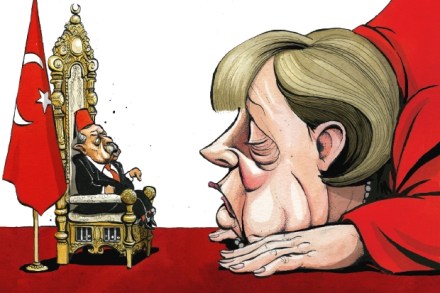
To subscribe to The Spectator’s weekly podcast, for free, visit the iTunes store or click here for our RSS feed. Alternatively, you can follow us on SoundCloud. Has Erdogan brought Europe to heel? In his Spectator cover piece, Douglas Murray argues that the Turkish President has used a mixture of intimidation, threats and blackmail to do just that and throw open the doors of Europe to Turkey. Douglas says Erdogan is a ‘wretched Islamist bully’ who has shown just how the EU works. But in pushing Europe around, is Erdogan now more powerful than Merkel, Juncker and Cameron? And how does the Turkish PM's resignation this week changed the country's relationship with the EU? Isabel Hardman speaks to Rem Korteweg, from the Centre for European Reform.

Leicester City’s title win is the worst thing to have happened to football

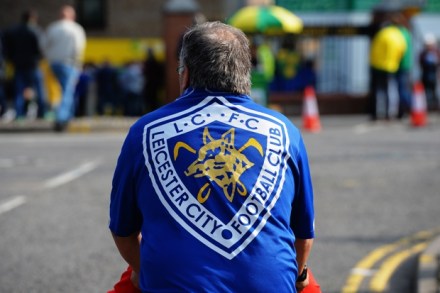
[audioplayer src="http://feeds.soundcloud.com/stream/262486539-the-spectator-podcast-erdogans-europe.mp3" title="Roger Alton and Nick Hilton discuss Leicester's title win" startat=1063] Listen [/audioplayer] Jean-Philippe Toussaint, in his recent book Football, observes that the sport is ‘measured and appreciated’ in the imagination. Toussaint, an intellectually fanatical supporter of the Belgian national team, is used to failure. Indeed, he is an acolyte of the view that football support is built on failure. After all, aren’t the grown men and women on the terraces of English stadia simply not good enough for a place on the pitch?

The world will rejoice with Leicester City

It’s one of the oldest stories of them all, deeply embedded in our nature and our culture. In some ways it’s the story that defines our humanity and we have told it a thousand times in a thousand different ways. It’s in the Bible with Joseph and his coat of many colours, it’s King Arthur pulling the sword from the stone, it’s the ugly duckling,Cinderella, Great Expectations, Moll Flanders and Jane Eyre. It’s Clark Kent becoming Superman, it’s Harry Potter leaving the cupboard under the stairs to become the greatest wizard of them all. It’s Rags to Riches. And it’s the tale of Leicester City. Sport retells all our most ancient and archetype-crammed stories and does so again and again, providing us with a living mythology.