Population

Our local nudists are running wild

Dante’s Beach, Ravenna It was midnight, more or less, and my middle daughter, Magdalena, 18, said with all the untroubled bravado of youth: ‘Let’s go and find il rospo!’ She was at the wheel of the Land Rover Defender and we were involved in a nocturnal driving lesson. Rospo is Italian for toad. And if you say ‘Dio Rospo’ (‘Toad God’), that’s blasphemy, so as a good Catholic she doesn’t, whereas, as a bad one, I do because it is funny, as God would surely agree. We drove on slowly, passing half a dozen or so parked cars with solitary men inside them ‘Il rospo’ is our family nickname for the fat man with the eyes of a dead person who emerges after dark in the village thanks to the theft of part of our beautiful beach by highly trained nudists.
My heated argument about Italy’s birthrate

Dante’s Beach, Ravenna We were having dinner in the Osteria del Tempo Perso (The Hostelry of Lost Time). It is in the old city which in the 5th century was the last capital of the western Roman empire as, besieged by various types of barbarian, the final fall drew ever nearer. I was drinking again. The rules are simple: I can drink when abroad, defined as anywhere outside the province of Ravenna, which I rarely leave; or else when anyone foreign – i.e. non-Italian – comes to visit, which is even rarer. My younger brother Simon, the KC, had come for a long weekend with his second wife Cyrena, two of his four children from his first marriage, Sam (33) and Rufus (28), and his stepdaughter, Jemima (22).

Why is crude oil measured in barrels?

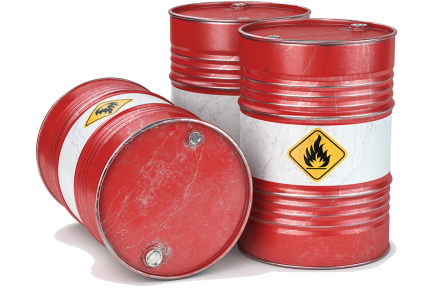
Crude estimates Why is crude oil measured in barrels?  — From medieval times onwards, all sorts of commodities were measured in barrels for convenience, from wine to eels to whale oil. However, standardisation only arrived in fits and starts. Since Richard III’s time, a barrel of wine was defined as 42 ‘wine gallons’, but this wasn’t the same as 42 gallons of water. When the US oil industry started in the mid 19th century, traders adopted the same measure as was used for selling wine. However, in 1824, Britain had standardised a gallon as 20 per cent larger than a wine gallon, the latter of which was renamed a ‘US gallon’. Hence a barrel of oil is only 35 imperial gallons.

The ‘boring twenties’, population decline & happy new year

35 min listen

A far cry from the ‘roaring twenties' of the early 20th Century, the 2020s can be characterised as the ‘boring twenties’, argue Gus Carter and Rupert Hawksley in our new year edition of the Spectator. Record numbers of young people are out of work but even those with jobs face such a dire cost-of-living situation that they have no money left over to spend on fun. Traditional cultural outings – like going to the theatre – are increasingly confined to older, richer generations. This is long-standing issue, but compounded by Labour’s economic policies. A slightly downbeat start to the new year here at the Spectator, but at least the episode provides a free dose of fun.

Should we fear falling birth rates more than overpopulation?

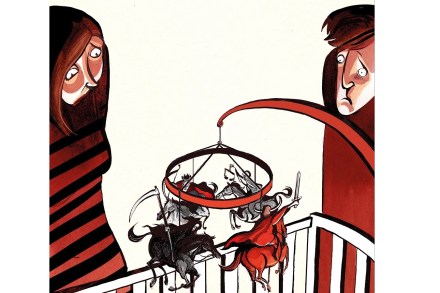
In 1980, two American academics made a bet. Julian Simon, professor of economics at the University of Illinois, predicted that the prices of chromium, copper, nickel, tin and tungsten would fall over the coming decade. Paul Ehrlich, professor of population studies at Stanford University, predicted that prices would rise. What Simon and Ehrlich were really betting on was the future of humanity – specifically, how many souls could the good ship Earth carry without running aground? By 1980, the global population had seen a period of enormous growth: doubling between 1800 and 1930 to reach two billion people, and then doubling again to reach four billion by 1975. Every sign suggested that this rate of growth would only accelerate, and Ehrlich was among those who saw catastrophe looming.

The real reason birth rates are falling

Last week the United Nations Population Fund (UNFPA) released its State of World Population report. According to the Guardian: ‘Millions of people are prevented from having the number of children they want by a toxic mix of economic barriers and sexism, a new UN report has warned.’ Dr Natalia Kanem, executive director of UNFPA, said: ‘The answer lies in responding to what people say they need: paid family leave, affordable fertility care and supportive partners.’ Nonsense, of course. Does Africa (4.1 births per woman) have better family leave and fertility care and more supportive partners than Sweden (1.4)? The reason for UNFPA’s counter-intuitive findings is simple. They have not ‘found’ (the word almost every report uses) the reasons people don’t have babies.

Eco warriors are driving themselves to extinction

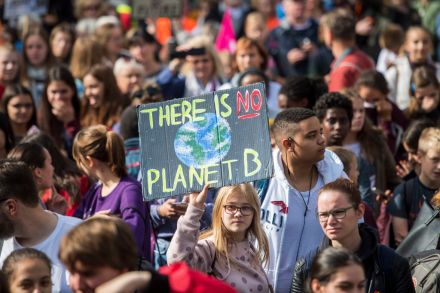
It wasn’t that long ago when the fashionable gathering place for young couples was a meeting of the National Childbirth Trust. I remember, in the early months of 1995, sitting in our instructor’s front room as she passed around a plastic model of a female pelvis while she asked us: ‘So how do you think the baby gets out?’ Fast-forward three decades and there is a new way for middle-class would-be mothers to spend their evenings: attending sessions of a project entitled ‘Motherhood in a Climate Crisis’ put on by the University of Bristol’s Brigstow Institute. There is no better way to describe it than to quote the academics’ blurb.

Why don’t we know how many people are in Britain?

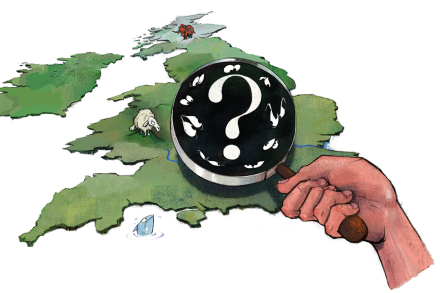
How many people live in Britain? You would think there would be a straightforward answer, but it eludes some of the nation’s brightest statistical minds. The problem of undercounting has worsened in recent years, largely because of high post-Brexit migration This week the Office for National Statistics (ONS) projected that our population will grow by some 4.9 million people over the next seven years, bringing Britain’s official population to over 70 million. The bulk of that population growth will come from immigration – nearly ten million people. But can these projections be trusted? Never mind how many people will live in Britain in seven years, we do not know how many people are living here now.

My glimpse into a childless world

If you are looking for a pointer for the future of the world, the free-diving fisherwomen on the matriarchal, shamanistic South Korean island of Jeju are not an obvious example of where we’re heading. Because the haenyeo are famously unique. And famously hardy. But what is happening to them should concern us all. In simple wetsuits they spend hours in the cold, clear waters, seeking out sea slugs, oysters, conches and abalone. They are fiercely independent – they spearheaded resistance to the Japanese in the 1930s and 1940s. But here’s the thing, as Nari (age 70) tells me in the haenyeo’s coastal mud-room: ‘We are probably the last. We have been diving since the men went to war in the 18th century, but maybe no one will do this in 20 years’ time.

Liberals are not just stupid – they’re dangerous

We held a small party to celebrate the news that the UK had seen its largest rise in population in 50 years: a jump of 1 per cent in only 12 months to a respectable total of 68.3 million people. Just crisps and soft drinks, you understand. Nothing wildly extravagant. All patriots feel proud of the speed with which our numbers have been rising of late, because naturally we wish for the UK to be the biggest and best in the world – and we are on our way. The rights of the likes of Ardit outweigh the rights of the rest of us not to be burgled At the current rate of increase, the populations of Turkey, Iran and Thailand could be surpassed within a dozen or so years, although we have a way to go before we catch up with the real big boys, like Bangladesh.

The global fertility crisis is worse than you think

For anyone tempted to try to predict humanity’s future, Paul Ehrlich’s 1968 book The Population Bomb is a cautionary tale. Feeding on the then popular Malthusian belief that the world was doomed by high birth rates, Ehrlich predicted: ‘In the 1970s hundreds of millions of people will starve to death.’ He came up with drastic solutions, including adding chemicals to drinking water to sterilise the population. Ehrlich, like many others, got it wrong. What he needed to worry about was declining birth rates and population collapse. Nearly 60 years on, many predict the world will soon reproduce at less than the replacement rate. But by my calculations, we’re already there. Largely unnoticed, last year was a landmark one in history.

Do 20mph speed limits really save lives?

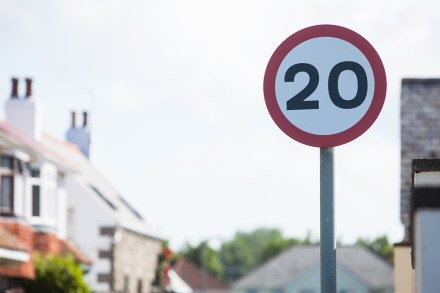
Within limits Do 20mph speed limits save lives?– A 2018 report by Atkins/AECOM/UCL found that 51% of motorists conformed to the new limit (47% in residential areas and 65% in city centres). – When a 20mph zone replaced a 30mph one the median speed fell by 0.7mph in residential areas and 0.9mph in city centres. It was found that there was insufficient evidence to judge whether the 20mph limit reduced casualties: while accident rates had tended to fall within the zones, the same was true of comparator zones which had remained at 30mph. – Only one area of 20mph zones (in Brighton) had seen a significant fall in casualties compared with comparable 30mph zones, with overall casualties falling by 19% and pedestrian casualties by 29%.

The Pope is right: it is selfish to choose pets over children

Well, we’ve been terrifically amused and amusing at the expense of Pope Francis, who this week declared at a Vatican audience that: ‘Many couples do not have children because they don’t want them, or have just one because they don’t want any more, but have two dogs, two cats… oh yes, dogs and cats take the place of children.’ It was, he said, proof of a ‘certain selfishness… it makes us laugh but it’s true. Renouncing parenthood diminishes us. It takes away our humanity.’ This was inevitably cue for British commentators to weigh up the merits of cats and dogs versus children, and for some to pronounce in favour of the cats.