Pop

The best new album I’ve heard this year: Being Dead’s When Horses Would Run reviewed

From our UK edition

Grade: A– The point of a sudden, abrupt change in the time signature and instrumentation of a song is to surprise the listener and undermine his or her expectations. If, however, you do it in every song, then the point is lost, and the listener finds himself actually waiting for the weirdnessto begin. So it is with Being Dead – and it’s about the only thing I have to carp about, because overall When Horses Would Run is a lovely album, full of often complex but always catchy melodies and imbued with an agreeably surreal sense of humour. The band is comprised of Falcon Bitch, Gumball and Ricky Moto and they come from Austin, Texas. Their shtick is punky surf guitar on top of which those clever tunes are sung as if by a cathedral choir in falsetto.

The Strokes are always terrible – why do I keep going back to see them?

From our UK edition

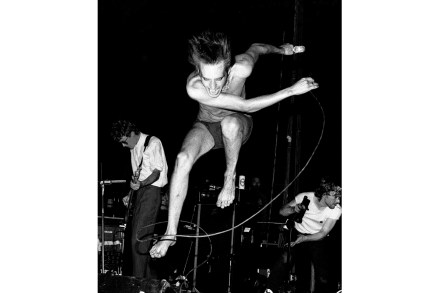
Quite when the concept of coolness became a thing is uncertain, even to etymologists. As early as 1884, an academic paper noted the expression ‘Dat’s cool!’ among African-Americans. But it’s about 100 years since ‘cool’ entered the lexicon as an unambiguous description of something to aspire to (via jazz, inevitably), and it’s still a crucial concept in the world of pop: it’s being cool that meant the Strokes could attract 50,000 or so people to east London, even though most of those present were at primary school when the band released their two first two albums, which are the two on which their reputation rests, and songs from which comprised nearly half their set.

‘People thought I was insane’: Graham Nash on the birth of Crosby, Stills and Nash

From our UK edition

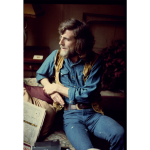
Graham Nash always seemed like the reasonable, peace-making one among his famously fractious compadres, David Crosby, Stephen Stills and Neil Young. But he didn’t get to where he is today by being plagued with doubt or false modesty. Even talking remotely over a Zoom connection, he still radiates a kind of unshakeable certainty. ‘I just trust that the universe loves me enough to support what I’m doing,’ he declares. ‘I don’t seek my life, my life happens to me and I’m perfectly content to let it. Look what I’ve done in my life… Pretty nice!’ ‘Joni was the only witness to that sound and it was created in less than a minute’ At 81, Nash is, incredibly, a pre-baby boomer, but mentally he seems about three decades younger.

It was midnight in a field in Wales and I was lying face down in six inches of mud: Green Man Festival reviewed

From our UK edition

I love Green Man. The smallish festival is the second most beautiful site I’ve ever visited (after G Fest, which is situated on a beach in a fjord in the Faroe Islands). Nestled in a valley between the mountains of the Brecon Beacons, it has great bills, it’s impeccably organised and I feel nourished by it. But, in the interests of being honest about festivals for those who have never been, I should also confess that this year it supplied the single most miserable experience of my music-watching life. It was midnight, in a field in Wales, and I was lying face down in six inches of mud Friday was the kind of day Noah might have felt a little discombobulated by. It began raining before dawn and it never let up. Come nightfall, the wind picked up too.

Uneasy listening: Kathryn Joseph, at Summerhall, reviewed

From our UK edition

I have always been fascinated by artists who bounce between tonal extremes when performing, particularly the ones who serve their songs sad and their stagecraft salty. Adele, for example, fills the space between each plushily upholstered soul-baring ballad by transforming into a saucy end-of-pier variety act, coo-cooing at the crowd and cursing like a squaddie. John Lennon gurned and clowned his way through the Beatles’ concerts, subverting the naked suicidal plea of ‘Help!’ in the process. John Martyn would belch and joust in mock-Cockney at the conclusion of a particularly sensitive piece. Jackie Leven punctuated songs of immense pain and sadness with eye-watering stories of defecating in alleyways and getting blootered with the Dalai Lama’s bodyguard.

Is it all an elaborate practical joke? Mac DeMarco, at Hackney Empire, reviewed

From our UK edition

It’s not just who our pop heroes are that marks the passing of the generations; it’s how those heroes present themselves. Kevin Rowland, who turns 70 next week, appeared on stage for his London album launch in a jaunty sailor’s hat and striped top, looking as though he’d just come from a fashion shoot. Mac DeMarco, aged 33, ambled on in baseball cap, shlubby T-shirt and jeans. Rowland was upstanding, commanding and just a little forbidding. DeMarco sat on a stool and told a long story claiming that he and his keyboard player had been Oregon miners: a story which extended to include coprophagia, hair fetishism and maple syrup. Rowland is total commitment; DeMarco is total detachment. Both were adored above and beyond the usual level of dedication.

A giddy delight: Regina Spektor, at the Royal Festival Hall reviewed

From our UK edition

We’ll get on to the brilliance of Regina Spektor in a moment. But first a question: why are pop music fans treated so abysmally? The afternoon of Spektor’s second sold-out show at the Royal Festival Hall, the venue tweeted that she would be on stage at 7.30 p.m. She actually took to the stage a few minutes past 8 o’clock. Spektor was absolutely magnificent once she did come on. She filled the room with charisma, charm and wit If that were a one-off, so be it. But anyone who goes to a lot of shows is familiar with how malleable the concept of stage-time is in pop music. Lana Del Rey had her Glastonbury set cut short because she was so late coming on – apparently she was having her hair done. It’s maddening. Why can they not meet their call times?

An album of not terribly happy ballads: Blur’s The Ballad of Darren reviewed

From our UK edition

Bands that have hung around, or gone away and come back again, occupy an increasingly sizeable percentage of pop’s bandwidth. When it comes to making new music, many are happy not to rock the boat, scraping by on the goodwill accumulated from past endeavours. Others strive to present a moving target, enjoying a more evolved, even argumentative, relationship with the sounds of their glory days. Two new albums tackle this dilemma, with varying degrees of success. Together for the first time since 2015, Blur do a fine job of straddling past and present.

Intoxicating: Bruce Springsteen, at BST Hyde Park, reviewed

From our UK edition

Seven years ago, I asked Bruce Springsteen what he meant when he talked of the covenant between himself and his audience. It was a long, thoughtful and thorough answer, and when I transcribed it, I realised he would have won Just a Minute, so clear was his reply. Part of what he said was this: ‘I have built up the skills to be able to provide, under the right conditions, a certain transcendent evening, hopefully an evening you’ll remember when you go home. Not that you’ll just remember it was a good concert, but you’ll remember the possibilities the evening laid out in front of you, as far as where you could take your life, or how you’re thinking about your friends, or your wife, or your girlfriend, or your best pal, or your job, your work, what you want to do with your life.

Why aren’t Spoon filling stadiums?

From our UK edition

Here’s a mystery for you. Why were Spoon, one of the most dynamic, sharpest rock bands in the world, playing a single night in a north London town hall (capacity 890) while Arctic Monkeys were playing three nights at Arsenal’s ground (capacity 59,000) as part of a UK tour that encompassed eight other stadiums in the UK, plus one arena, one park and Glastonbury? It’s not that Arctic Monkeys aren’t good – no one gets that kind of critical unanimity without being good. It’s just that Spoon are better, and better than almost everyone else. Onstage in London, aided by a genius sound engineer, Spoon were perfection So why aren’t Spoon filling stadiums? First, they rarely come to the UK.

Time to take your meds, Kanye

From our UK edition

No one does agonising quite like Mobeen Azhar. In several BBC documentaries now, he’s set his face to pensive, gone off on an earnest quest to investigate a touchy subject and reached his conclusions only after the most extravagant of brow-furrowing. There is, however, a perhaps unexpected twist: the resulting programmes are rather good, creating the impression – or even reflecting the reality – of a man determined to get to the often dark heart of the matter. For a while, it did look as if the programme’s main appeal might be as a comedy of liberal discomfiture In the past, Azhar has applied his methods to such issues as the long-standing effect of the Satanic Verses controversy and why British Muslims joined Isis.

Brilliantly unhinged: Grace Jones, at Hampton Court Palace, reviewed

From our UK edition

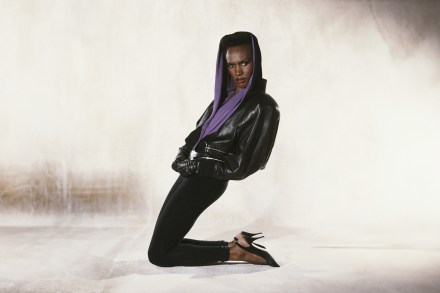
Some artists need flash bombs to make an impression on stage. Some need giant screens. Some need to run around like hyperactive toddlers. All Grace Jones needed was a hula hoop – not the delicious potato snack, but the plastic ring. For the ten minutes or so of ‘Slave to the Rhythm’ that ended her set on a balmy evening in the courtyard of Hampton Court Palace, she languidly rotated the ring around her hips, all while she strode across the stage, then climbed a set of stairs. Not a single revolution was missed. I realise that you don’t come to these pages for reviews of hula hooping, but by God, it was astonishing. I like to think it was what Henry VIII would have wanted. It was a fitting end to a brilliantly unhinged show.

Let’s hear it for the lesser-spotted nepo daddy

From our UK edition

Rob Grant releases his debut album, Lost at Sea, this week. A 69-year-old millionaire and former ad man, furniture exec and domain developer, Grant has made a record of ambient, ocean-themed piano doodles glorying in titles such as ‘In the Dying Light of Day: Requiem for Mother Earth’, ‘A Delicate Mist Surrounds Me’ and ‘The Mermaids’ Lullaby’. Not incidentally, he is also the father of one of the world’s biggest (and best) alt-pop stars, Lana Del Rey. The title track features his daughter’s unmistakeable contralto, while her name is emblazoned on the front cover. Father’s Day is just around the corner, and Ms Del Rey has delivered a pearl of a present for Pappy: his very own album.

One of the most tuneless, vapid, dismaying things I’ve ever seen: Mötley Crüe, at Bramall Lane, reviewed

From our UK edition

I’m not sure I’ve ever seen anything worse than Mötley Crüe in Sheffield. Nothing more tuneless, empty, vapid and dismaying. The Los Angeles glam-metal band became superstars in the 1980s, largely by wearing lots of make-up and doing terrible things, but I’ve never understood why. Even those who weren’t repulsed by the band members’ behaviour and personalities surely couldn’t have detected any actual tunes in there. At Bramall Lane, with a viciously loud PA, the few melodies that were there were largely undetectable. And the band – now in their sixties – still gloried in their obnoxious infantilism.

Dazzling – if you ignore the music: Beyoncé, at Murrayfield Stadium, reviewed

From our UK edition

Scheduling open-air concerts in mid-May in northern Europe is a triumph of hope over experience. I last spent time with Beyoncé – I’m sure she remembers it fondly and well – in 2016, in a football stadium in Sunderland on a damp, drizzly, early-summer English evening of the type that even strutting soul divas struggle to enliven. I don’t think it was merely the weather which left me underwhelmed by her brutalist attack, the sheer choreographed drill of the show, the lack of engagement, of spontaneity, of joy. By then, Beyoncé was no longer seeking to be regarded as a mere pop star. She had recently taken on the unearthly qualities of an alien presence, entirely unrelatable, tilting for something far more culturally significant than a spot in the charts.

In praise of goths – the most enduring of pop subcultures

From our UK edition

More than 40 years on, every town still has them, wandering the streets with pale skin, more make-up than you can find in Superdrug, swathed in acres of black fabric. Goths, rather unexpectedly, have turned out to be the great survivors among pop subcultures. Others have risen and faded, but the goths – laughed at, ignored, dismissed – have endured, seeing their style and their musical tastes slowly incorporated by everyone else (there’s even a goth version of hip-hop, known as ‘horrorcore’). Goth was a fitting name for the music: overbearing and foreboding; delivering ecstasy through the building and releasing of tension rather than through major chords and primary colours; drawing on punk, Bowie, the Doors and the Stooges.

The new Pogues: The Mary Wallopers, at O2 Forum Kentish Town, reviewed

From our UK edition

I was listening the other week to a solo album by an ageing rock guitarist, once terrifically famous. It was really very good, but I couldn’t bring myself to care about it because it clearly didn’t matter: this man’s career is static and it is likely to remain so. The album will make no impact on the wider world and, despite liking it, I felt no need to listen again. Had it been the debut by a band of 21-year-olds, on the other hand, I would have been all over it. Rock and pop musicians are most interesting in the transitions; that is, on the way up or on the way down. The journey up always – but always – accounts for the most interesting bit of any musician’s memoir, because they’re remembering when life was exciting.

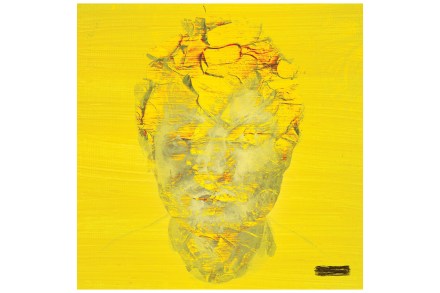
Heartfelt but bland: Ed Sheeran’s – (Subtract) reviewed

From our UK edition

Whether by accident or design, the mathematical theme of Ed Sheeran’s previous album titles (+, ×, ÷ and = respectively) resolves rather neatly with – (Subtract). I interviewed Sheeran around the time of × and found him likeable enough but a bit out of reach. Multiplication did indeed seem to be foremost on his mind. Perched on the edge of a bed in a room above RAK studios in central London, he came across as a man obsessed with sales figures and chart placings, a coolly pragmatic mix of talent and ambition. (You don’t think Sheeran is talented? I watched him entertain 60,000 people in a football stadium for two hours with just a guitar, loop pedals and a lot of chutzpah. He’s got talent, all right.

Lana Del Rey’s new record: samey, stale, sterile

The title song of Lana Del Rey’s ninth studio album, Did You Know That There’s a Tunnel Under Ocean Blvd, opens in a style now typical of the thirty-seven-year-old singer-songwriter. Amid the swelling string accompaniment and slow beat, the artist sings “fuck me to death, love me until I love myself.” So far, so in keeping with the musician who made her name with the dark, sensuous songs of 2012’s Born to Die (“my old man is a bad man, but I can’t deny the way he holds my hand”) and 2019’s Norman Fucking Rockwell! (“Goddamn man-child, you fucked me so good I almost said ‘I love you’”).

del rey