Pop

A genuine oddity

From our UK edition

The most compelling pop singers in music right now — at least in the branch where pop singers still play guitars — were on stage last week. The 1975, fronted by Matty Healy, finished the tour in support of their second album, a US and UK number one, with a headline show at the Latitude festival, the chosen spot for recreational drug-taking by kids who have just finished their GCSEs. Ezra Furman played his most prestigious London show yet, appearing at the Barbican as part of the 20th anniversary celebrations of his label, Bella Union. Healy and Furman are very different — the one a genuine popstar, the other off in the margins — but also defined by their similarities.

Peter Perrett: How The West Was Won

From our UK edition

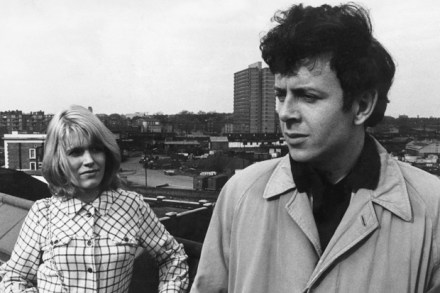
Much though I loved it at the time, not a great deal of lasting worth came out of that fervid punk upheaval between 1976 and 1978. In terms of bands you would voluntarily listen to again, there was just The Clash and The Only Ones, in my book. The latter enjoyed no commercial success, despite leaving behind two of the best British albums of the decade and a single — ‘Another Girl, Another Planet’ — which has been called the finest three minutes of rock music ever, ever. Problem was they were too musicianly and literate for a time which exulted in bellowing, grunting, spitting and staccato stabs of noise. The band’s lead singer and songwriter, Peter Perrett, has just released his debut solo album.

The rise of toytown pop

From our UK edition

Pop’s counterfactuals tend to be built on questioning mortality: what if Jimi Hendrix had lived? Or Buddy Holly? Rarely does geopolitics enter into the speculation. Nevertheless, there’s a case for arguing that the landscape of British pop would have been markedly different had Harold Wilson acceded to the wishes of President Lyndon Johnson and sent British forces to Vietnam. That’s worth contemplating now, ahead of the latest reissue — deluxe and expanded and remastered, as these things always are — of Sgt. Pepper’s Lonely Hearts Club Band, released last week for the 50th anniversary of the original album.

Fallen idols

From our UK edition

David Hepworth is such a clever writer — not just clever in the things he writes, but in the way he has conducted his career. A decade older than me, he too started out at the New Musical Express; but he went on to take Smash Hits to glory as editor, to launch Just Seventeen, Empire, Mojo and Heat, and remains the only person to have won both the PPA’s writer of the year and editor of the year awards. His previous book, Never a Dull Moment: 1971, The Year that Rock Exploded, was a great critical and commercial success.

Mick Jagger’s lost memoir

From our UK edition

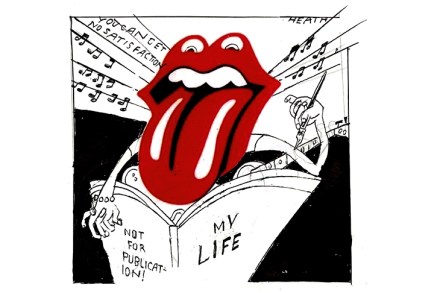
Ask any publisher of popular non--fiction anywhere in the world which book they would most like to sign, and it is an odds-on bet that they would eventually, mostly, come up with the same title. Obviously the Queen does not plan to reveal all any time soon. Tom Cruise would certainly be interesting if he desired to talk about the crazy, outer-space cult which rules his women and his life. But for sheer history, global presence, intelligence and insight, there really is only one chap — the guy Ben Schott recently described in this magazine as ‘the most seen person on the planet’. Yes, the old prince of darkness himself, Sir Michael Philip Jagger. Of course he’d never do it. He has said again and again, in countless interviews, that he never will.

The xx: I See You

From our UK edition

The xx is a trio of Londoners whose eponymous first album, released in 2009, has defined the way pop music sounds today. I remember knowing, when it came out, that I was listening to something both distinctive and familiar, which is usually an indicator of success. The schtick was to plunder various music canons which they were way too young to have heard first hand — Nineties house and rave, lachrymose mainstream Eighties synth-pop, angst-ridden shoegazing — strip it down and mix it all up with very clever beats, provided by the genuine talent of Jamie Smith. ‘Radically pleasant’ is what I thought at the time, a little sniffily, and also somewhat precious.

Barometer | 12 January 2017

From our UK edition

Black background A Morris dancing troupe with blacked-up faces had to abandon its performance in a Birmingham shopping centre after being heckled and accused of racism. — There are several explanations for the tradition of Border Morris groups blackening their faces, but it was certainly established by 1509, when a Shrovetide banquet for ambassadors featured torch-bearers with blackened faces. — Some believe it to have derived from Spain and Portugal, where dancers blacked up as Moors. Others believe that it derives from the practice of poachers blackening up to conceal themselves in darkness. — Blacking up is punished more mildly now than in the 18th century: a 1723 anti-poaching law made it a capital offence to be caught in a forest with a blackened face.

Why I was ashamed to love Status Quo

From our UK edition

I bought a record in a second-hand shop in the summer of 1981. A double album. I made sure nobody was looking when I handed over my money, and kept the purchase hidden in its brown paper bag all the way home. Back in my room, I locked the door to make sure my house-mates couldn’t surprise me — and plugged in my headphones. What followed was more than an hour of dirty bliss, a guilty pleasure before the term had been invented. What I was listening to was a compilation album of Status Quo’s singles and most popular album tracks. I can’t remember what it was called — ‘Again and Again and Again and Again and Again’ would have been fitting, but too arch for the Quo.

Audience with the King

From our UK edition

Elvis Aron Presley departed this world on 16 August, 1977. Even if you delight in conspiracy theories and believe the film Elvis Found Alive was a documentary, he is currently unavailable for personal appearances. So his presence at the O2 Arena and five other UK cities in November was confined to giant screens. Actually present on the stage beneath was the Royal Philharmonic Concert Orchestra under conductor Robin Smith plus a rhythm section and three backing singers. It’s not the first time something like this has been done — former members of Presley’s band took a similar show around the world and it worked surprisingly well.

Business as usual | 18 August 2016

From our UK edition

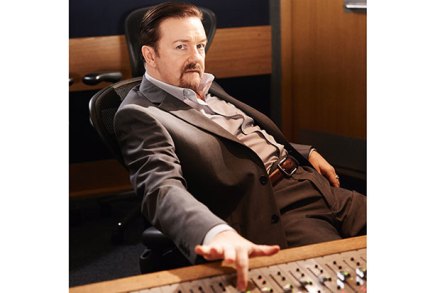
I should probably nail my colours to the mast and state that The Office is possibly my favourite TV sitcom of all time (bar My Family, which surely goes without saying), but some comedies that have ended should simply stay ended, as no one has ever said, but should have. (Or maybe John Cleese has said it?) There are a few decent jokes here. Some of the bad songs are really good bad songs. But it’s a repetitive rehash rather than a worthwhile continuation of the character, and the comedy and pathos is in exactly the same place as it always was. That is, in the gap between the winner David Brent (Ricky Gervais) thinks he is, and the loser we know him to be. Fifteen years ago, that was revolutionary, and genius, and funny, and affecting, but now? Not so much. Quite tiresome, in fact.

1966 and all that

From our UK edition

In the song ‘All the Young Dudes’, David Bowie gamely tried to reassure the youth of the Seventies that, despite what their Sixties elders were always telling them, they hadn’t been born too late after all. On the contrary: it was the ‘brother back at home with his Beatles and his Stones’ who was missing out. Sadly, for those of us growing up at the time, even Bowie at his most thrilling wasn’t quite as persuasive as we’d have liked. OK, so it was definitely annoying to be surrounded by people banging on about how great the Sixties were. But once we’d heard the music, there was an uncomfortable sense that they might also be right.

When pop gave way to rock

From our UK edition

According to David Hepworth, the year he turned 21 was also the year when ‘a huge proportion of the most memorable albums ever made were released’. Having been a rock journalist for four decades, he does of course know the theory that everybody thinks music was at its best when they were young. But, as he puts it with untypical — if presumably ironic — machismo, the ‘important difference in the case of me and 1971’ is that ‘I’m right’. The strange thing is that he might well be.

Starman

From our UK edition

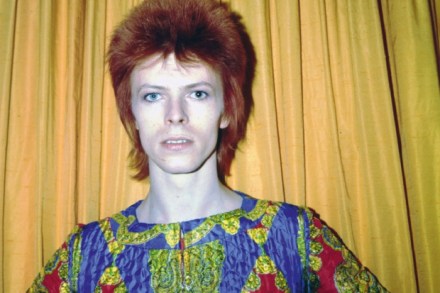
The DJ and sage Mark Radcliffe once said that he didn’t think he could ever like anyone who didn’t love David Bowie’s song ‘Heroes’, and while that might be going a bit far, I can see what he means. As it happens, ‘Heroes’ is still my favourite Bowie song, and Low and Heroes are still my favourite albums, slightly more than 38 years after they were first released. No one told us when we were teenagers that our barely formed music tastes would stay with us for the rest of our lives, but if we didn’t even suspect it then, we know it for certain now. If you do have to die, though, you might as well do it as Bowie has just done, without anyone outside your intimate circle having an inkling and thus with dignity and integrity intact.

Where’s the joy gone?

From our UK edition

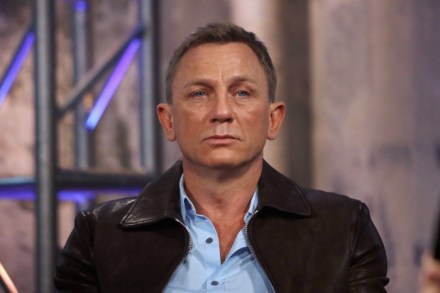
Have you seen Spectre, the latest Bond film? If not, the opening sequence is terrific. Lots of action and excitement. The whole film is full of stunts and thrills. But after watching it, I realised there was something missing: joy, or joie de vivre. Daniel Craig plays Bond like an android who has spent too much time muscle-building instead of having a good time. Contrast Spectre with From Russia With Love, one of the early Bond films. The first scene in which we see Sean Connery as Bond, he is humorous and amorous as he snogs a beautiful woman in a punt moored at the side of a river. He lifts out a bottle of champagne which he has left cooling in the water, tied with a piece of string. He tests it to see if it is cool enough.

Why I’m stepping down after 28 years as The Spectator pop critic

From our UK edition

This is my 345th and last monthly column about pop music for The Spectator. I believe I might be the third-longest continuously serving columnist here, after Taki and Peter Phillips. Others have been writing for the magazine for longer, but have occasionally been given time off for good behaviour. You may be astounded to learn that I have not been fired. I, certainly, am astounded. I have been waiting for the tap on the shoulder, or maybe the firm but regretful email, since my first column in May 1987. Eventually I came to realise that the less the editor of the time was interested in my subject, the safer I was.

Going for a song | 10 September 2015

From our UK edition

This column does like a bargain. Indeed, it not only esteems and relishes a bargain, it has also worked long and hard to prove Milton Friedman wrong. Sometimes there really is such a thing as a free lunch. And for those of us still wedded to the notion of owning music on some kind of solid, tangible medium (vinyl, CD, dusty box of cassettes at back of cupboard), these are great, cheapskate-friendly years in which to be alive. Almost every song ever recorded can be bought for a song. And still we mothwallets can claim the moral high ground, because we’re not actually stealing it, unlike everyone under 40. As Fagin once sang, ‘In this life, one thing counts. In the bank, large amounts.

Music to write books by

From our UK edition

I have been writing a book this summer, in the usual mad tearing hurry. (Much as I admire those who take four or five years to write one, I have to ask, how do you eat? This isn’t by any means a sensible way of making a living.) Intense workload, though, means music, and lots of it. Many writers simply cannot work with tunes blaring out of nearby speakers; I cannot work without them. Music masks my tinnitus and distracts the part of my brain that would otherwise be trying to distract me from my work. You know, the Facebook part. The videos-of-cats part. The Marks & Spencers chocolate-covered shortbread part.

The London ear

From our UK edition

The opening bars of Ralph Vaughan Williams’s A London Symphony (1914) are scooped out from the gloopy bedrock of the city. Vaughan Williams was dredging through the same mud, silt, slime and ooze as those scene-setting paragraphs of Our Mutual Friend (1865), where Charles Dickens shows that the real glue binding his book together will be the River Thames. Dickens’s famed ‘boat of dirty and disreputable appearance’ berths Our Mutual Friend in the earth and experience of London. Similarly, Vaughan Williams’s cellos and double basses, which launch his symphony, plod out from the sludge of the river. But, by the time his bucolic Scherzo waddles into view, you could be forgiven for assuming that RVW has taken a genteel amble around the countryside.

The beat goes on

From our UK edition

It’s rare that I see a piece about music that makes me want to cheer from the rafters and shake the perpetrator by the hand, but one such appeared in these pages last week on the subject of Ringo Starr, 75 this week. James Woodall, who may or may not be a Beatles tragic of the first water, argued that Ringo was a genius and that the Beatles were lucky to have him. True Beatles fans know this to be true and are enraged when anyone suggests otherwise. For years an urban myth had it that John Lennon, when asked if Ringo was the best drummer around, said that he wasn’t even the best drummer in the Beatles. But as Woodall reported, Lennon never said this. Jasper Carrott did, in 1983.

Starr quality

From our UK edition

‘He was the most influential Beatle,’ Yoko Ono recently claimed. When Paul and John first spotted him out in Hamburg, in his suit and beard, sitting ‘drinking bourbon and seven’, they were amazed. ‘This was, like, a grown-up musician,’ thought Paul. One night Ringo sat in for their drummer Pete Best. ‘I remember the moment,’ said Paul, ‘standing there and looking at John and then looking at George, and the look on our faces was like ...what is this? And that was the moment, that was the beginning, really, of the Beatles.’ I think Ringo Starr was a genius. The world seems to be coming around to the idea. Two months ago, he was finally accepted into the Rock and Roll Hall of Fame — the last Beatle to be inducted.