Pop

Everything he’s done

From our UK edition

On 29 June 1991, a record called ‘(Everything I Do) I Do It For You’ by Bryan Adams entered the UK charts, at No. 8. At that point, I was blissfully in love with my girlfriend, had just got a first at university and had won a scholarship to a postgraduate journalism course. By the time it departed from the charts, on 14 December — after a run that included a still-record 16 weeks at No. 1 — I had been dumped by my girlfriend, had dropped out of the journalism course, and my dad, who had been poorly when the record entered the charts, was a month away from dying. During the course of one single’s chart run, all the certainties in my life had been overturned.

It’s a girl thing

From our UK edition

The teenage girls are often right. They were right about Sinatra and they were right about Elvis. They were right about the Beatles and the Stones. They were right, too, about the 1975, whose emergence in 2013 playing tuneful and accessible pop-rock with unusually self-questioning lyrics was driven by a large and voluble following among those teenage girls. Naturally, that led a swathe of male critics to write them off. One dismissed them on the baffling grounds that their songs were ‘ridiculously catchy’, as if that were a bad thing; the NME proclaimed them the worst band in the world Six years on, the critics have caught up.

Renaissance man | 13 December 2018

From our UK edition

The first thing Gary Kemp bought when Spandau Ballet started making money was a chair. He’s very proud of that chair. He talks about his chair in tones midway between one of Monty Python’s four Yorkshiremen and Nicholas Serota. ‘I wasn’t making any money until “True” was successful, in 1983,’ he says. ‘The first thing I really bought was a William Morris chair. What the fuck is a 22-year-old boy living in a council house with his mum and dad doing going out and buying a William Morris chair?’ It was the first chair anyone in the Kemp family had ever owned outright, he says. ‘Everything in our house was on HP, apart from the cat. It’s very different to the old Alan Clark thing. We were handed down no furniture.

The 1975: A Brief Inquiry Into Online Relationships

From our UK edition

Grade: C A derided year in pop music, 1975 — and yet a great one. The mainstream was horrible, but we had Neil Young’s Tonight’s The Night, Patti Smith’s Horses, Guy Clarke’s Old No. 1 and Television just beginning to break through. It is in the lacunae, before the next big wave, that we hear the most inventive music, which is why ’75 — with Queen and disco hogging the charts and the blind alleys of prog and metal as your only alternative — was so good. But I suppose you want to hear about the band, The 1975 — one of Britain’s biggest. Oh, Britain. The 1975 are a bunch of middle-class Mancs led by a gobby SJW junkie — hell, what’s not to like.

Mumford & Sons: Delta

From our UK edition

Grade: D+ I promise you this isn’t simply class loathing. Yer toffs have contributed to British rock and pop and it hasn’t all been unspeakably vile. There were moments when Kevin Ayers held our interest, for example, and even Radiohead. And then there’s that man of the people, Joe Strummer. So let’s excuse Mumford & Sons their weighty class baggage and just concentrate on the music, which is irredeemably awful and makes Coldplay sound like the MC5. Someone has given them beats, cute little digital beats, to set beneath the faux folk which once irritated and now just bores one into a stupor. There is also that thing beloved by people who cannot write songs — atmospherics: ominous cymbals, metronomic piano, an overwash of organ and sonorous synths.

Once in a lifetime

From our UK edition

Let’s get the ‘was-it-good?’ stuff out of the way first. Yes, it was good. It was better than good. It was incredible, fabulous, dazzling. It was whatever adjective you want to throw at it. I can’t recall seeing a more engrossing pop production, ever. You don’t just get great songs — come on, you’re not going to quibble about ‘Once in a Lifetime’, or ‘Burning Down the House’, or ‘Slippery People’, or ‘Road to Nowhere’, are you? — played by brilliant musicians. You get them presented in a way no one has thought to present a rock show before. That way was to remove all fixed points from the stage.

Drag Queen

From our UK edition

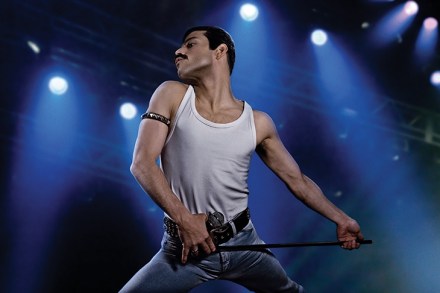
There is a moment in Bohemian Rhapsody when the screen swims with print. The reviews for Queen’s epic new single are in, and they unanimously denounce the song as a vacuous and bloated irrelevance. This feels like a brazen hostage to fortune for a biopic whose botched gestation saw writers, stars and directors roll on and off the project for a decade. But then Queen were always bomb-proof. The script we finally have before us is by Anthony McCarten, who specialises in rewriting the lives of difficult Brits. See also Darkest Hour and The Theory of Everything, whose lead actors both won Oscars. Lightning will probably not strike thrice for Rami Malek.

Christine and the Queens: Chris

From our UK edition

Grade: B– Ooh goody — a parade to rain on! You wouldn’t believe the hyperbole expended by the rock critics on this middle-class French lass, real name Héloïse Letissier. Or maybe, being used to such mass gullibility, you would. ‘Bogglingly intelligent’ and ‘a thrillingly uncompromising artist, playing with ideas of gender, identity and individuality to pop-bright melodies’, for example. Her first album in English, Chaleur humaine, was similarly bestrewn with pop-hack ejaculate, to the extent that it resembled a plasterer’s radio. Why? Oh, check out the back story. Very gender fluid. Leftie. French. Channelling early 1980s electro pop and dance. And here she is with her hair cropped and calling herself Chris.

Almond ayes

From our UK edition

When Soft Cell first appeared on Top of the Pops in summer 1981, miming along to their version of Gloria Jones’s ‘Tainted Love’, it felt like a moment of palpable newness. Well, it certainly did if you were prepubescent and really had no idea what sex actually was. Romantic love — in either its glory or disappointment — was the everyday subject of the pop song, but here was this funny little fella in black, with studded accessories, singing of a love that was ‘tainted’. I had no idea what he got up to when the lights went out. I knew that homosexuality existed — in the same way that California condors existed, and Olympic athletes existed.

Gaga over Gaga

From our UK edition

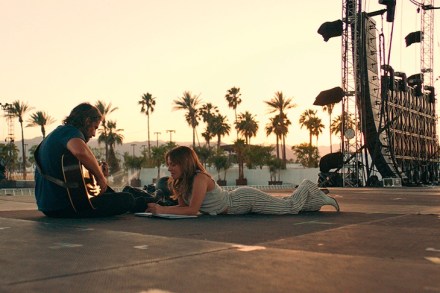
This version of A Star Is Born, starring Bradley Cooper and Lady Gaga, is the fourth iteration (Janet Gaynor and Frederic March, 1937; Judy Garland and James Mason, 1954; Barbra Streisand and Kris Kristofferson, 1976). So it’s a remake of a remake of a remake and overly familiar, you would think. Oh God, not another fella who can’t take it when her career eclipses his, boo hoo. Would a reboot with the genders flipped but the age gap preserved ever get made? Not a hope, is the short answer. But, but, but… I did cry, and Lady Gaga is truly sensational, fabulous, a revelation. I had no idea. Cooper directs, and also co-wrote, but it is her film, and one must hope that he can suck that up. Bradley, don’t go and do anything stupid, you hear?

Not easily Suede

From our UK edition

‘I always think they’re not lusting after me,’ Brett Anderson says of the middle-aged fans who still turn up to see his band Suede and leave the shows a little flushed and excited. ‘They’re lusting after something that doesn’t really exist. They’re remembering their wild youth. It’s faintly comical to me when I think about myself in the 1990s and the sexuality of it. That got a bit out of control, I suppose. And it’s odd, because I’m quite a reserved person in lots of ways, so I don’t really know what was going on there.’ Oh, Brett, you do yourself a disservice. Look at yourself! Not an ounce of flab, dressed like a clothes-horse, face all sharp lines and clean planes. You’re a well-preserved man.

The legend of Lawrence

From our UK edition

‘I could still be a pop star,’ says Lawrence, sitting on a footstool in his council flat, high up in a tower block above London EC1. ‘I know I’m not going to be a person who has a million hits on the internet. Do they call them hits? Views, or streams, whatever they are. I’m not going to be that person, but I still think I could have a hit record. For me a song like “Relative Poverty” is a song for this generation, and I don’t know why it shouldn’t be an anthem for today.’ Lawrence is now 57, and he has been trying (and failing) to become a pop star since 1979.

Thank God for the return of the generation gap in pop

In June, a 20-year-old man called Jahseh Onfroy was murdered after leaving a motorcycle dealership in Deerfield Beach, Florida. Onfroy was a rapper, who recorded under the name XXXTentacion, and he had become extraordinarily successful — his two albums had reached No. 2 and No. 1 in the US, despite moderate sales, because of the amount of online plays they had received. The day after he died, my social-media timelines were full of music writers discussing his death, and the tenor — from those with kids, at least — was clear. Post after post noted that XXXTentacion was a nasty piece of work, and few should mourn him, yet the writer’s 13- or 14- or 15-year-old was devastated by his death. XXXTentacion was, it is true, a nasty piece of work.

Teen spirit | 9 August 2018

In June, a 20-year-old man called Jahseh Onfroy was murdered after leaving a motorcycle dealership in Deerfield Beach, Florida. Onfroy was a rapper, who recorded under the name XXXTentacion, and he had become extraordinarily successful — his two albums had reached No. 2 and No. 1 in the US, despite moderate sales, because of the amount of online plays they had received. The day after he died, my social-media timelines were full of music writers discussing his death, and the tenor — from those with kids, at least — was clear. Post after post noted that XXXTentacion was a nasty piece of work, and few should mourn him, yet the writer’s 13- or 14- or 15-year-old was devastated by his death. XXXTentacion was, it is true, a nasty piece of work.

Paul Simon says farewell with a daring and inventive show

Early in 1987, a middle-aged woman approached me on the record counter of the Slough branch of Boots. ‘What do you have by Ladysmith Black Mambazo?’ she demanded. Nothing. Boots in Slough wasn’t big on South African isicathamiya choral music. ‘Well,’ she suggested, ‘you really ought to get their records in. They’re going to be huge.’ She was wrong, but I knew why she was so sure. Ladysmith Black Mambazo had been among the standout guests on Paul Simon’s Graceland, released a few months before. Graceland made Simon, by my reckoning, the first pop star who had emerged from the rock’n’roll era to make a major cultural impact across three decades. By the 1980s, the Stones had become just a touring machine.

Simon says… farewell

Early in 1987, a middle-aged woman approached me on the record counter of the Slough branch of Boots. ‘What do you have by Ladysmith Black Mambazo?’ she demanded. Nothing. Boots in Slough wasn’t big on South African isicathamiya choral music. ‘Well,’ she suggested, ‘you really ought to get their records in. They’re going to be huge.’ She was wrong, but I knew why she was so sure. Ladysmith Black Mambazo had been among the standout guests on Paul Simon’s Graceland, released a few months before. Graceland made Simon, by my reckoning, the first pop star who had emerged from the rock’n’roll era to make a major cultural impact across three decades. By the 1980s, the Stones had become just a touring machine. McCartney was adrift.

Mad about the girl

From our UK edition

Imagine living Taylor Swift’s life. She has been staggeringly, life-dominatingly famous since she was 17. Not for a single moment in her entire adulthood (she’s now 28) has she been able to do any of the everyday things the rest of us take for granted. No wonder, then, that so much of what surrounds her seems so peculiar. No wonder her last two albums (2014’s fabulous 1989, last year’s rather less fabulous Reputation) have been dominated by songs about how other people perceive her life: every thing she does, as she is well aware, goes through a filter. She sings not about her love life — her relationships with the actors Tom Hiddleston and Joe Alwyn, the DJ Calvin Harris —but about how her love life is reported.

‘I think The Kinks could have found a better frontman’: Ray Davies interviewed

‘I like your shirt today,’ Sir Ray Davies says to the waiter who brings his glass of water to the table outside a café in Highgate. ‘How’s your girlfriend?’ It turns out the girlfriend is no longer the girlfriend. ‘You broke up? You know, that happens. It’ll be OK. You’ll meet somebody else.’ He pauses and then says something that runs through my head for days after our interview. ‘She’ll meet somebody else.’ It’s true, of course; she will. And it’s a human thing to say: both parties to the relationship will move on. But it’s also delivered with a hint of claws. Who wants to be told, fresh from a break-up, that their ex will soon be hooking up with another partner?

‘I’ve got dementia in reverse’

‘I like your shirt today,’ Sir Ray Davies says to the waiter who brings his glass of water to the table outside a café in Highgate. ‘How’s your girlfriend?’ It turns out the girlfriend is no longer the girlfriend. ‘You broke up? You know, that happens. It’ll be OK. You’ll meet somebody else.’ He pauses and then says something that runs through my head for days after our interview. ‘She’ll meet somebody else.’ It’s true, of course; she will. And it’s a human thing to say: both parties to the relationship will move on. But it’s also delivered with a hint of claws. Who wants to be told, fresh from a break-up, that their ex will soon be hooking up with another partner?

Father John Misty: God’s Favourite Customer

From our UK edition

Grade: A+ While the young bands plunder the 1980s for every last gobbet of tinny synth and hi-hat, the singer-songwriters remain happily anchored in that much more agreeable decade which came directly before. The 1970s was the era of the introspective, self-pitying, prolix, hairy and winsome singer-songwriter — both the good ones (Young, Martyn, Buckley) and the, ahem, less gifted (Taylor, Forbert, Stevens). Father John Misty, aka Joshua Tillman and once the drummer in the most boring and epicene band I have ever seen (Fleet Foxes), is all of those adjectives I mention above. On this album the production values are purloined from mid-1975, right down to the occasional spasm of glam guitar, the tasteful piano, the strummed acoustic, the strings.