Pop music

Persistent gossip about Brian Epstein’s death risks defining his life

We know the facts about Brian Epstein’s death. The Beatles’ manager died in bed at his Belgravia home on 27 August 1967, six years after he struck gold in a Liverpool cellar, a month before his contract to manage the Beatles was due to end and four weeks after homosexual acts between men were partly decriminalised. At the time of his death, the 32-year-old Epstein was addicted, adrift and depressed – not least as a result of a long effort to hide his sexuality and the low-level anti-Semitism he encountered everywhere. One moment he was manically active, the next he was in despair, according to those around him. He had overdosed in the past and had been treated at a psychiatric hospital. On the day he died, his blood contained alcohol, antidepressants and barbiturates.

The nightmare of filming A Hard Day’s Night

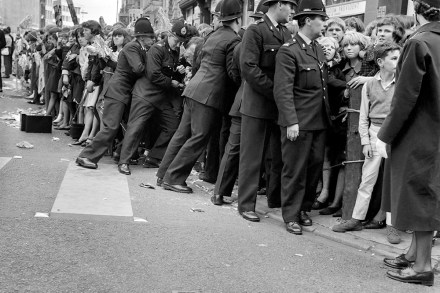
It would be easy to dismiss A Hard Day’s Night, the Beatles film made in 1964, as a throwaway period piece. The plot hurls the Fab Four into a meta narrative, playing themselves while a director – a seething Victor Spinetti – panics as the boys are delayed on their way to a televised variety performance by mishaps, distractions and stampeding fans. The film was thrown together to fit the group’s breakneck schedule – scripted over a few weeks in January by Alun Owen, shot by Richard Lester by May and out in cinemas in July. In her absorbing, concise book, Samira Ahmed sees the film not as a cursory promo but as a watershed in British culture – ‘a kind of cinematic big bang’.

The misery of working with Chuck Berry

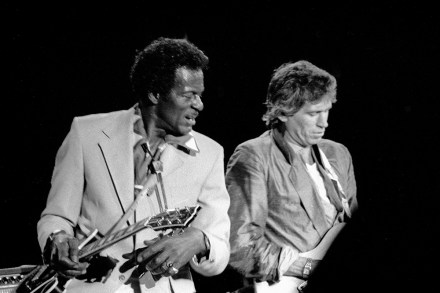
In Ian Leslie’s John & Paul, the creative relationship between the titular Beatles is treated as a platonic love story. Matt Thorne widens the paradigm with seven more pairings, variously rivalrous, amorous, respectful, disrespectful and occasionally frankly tenuous. The 11 American and three British musicians here have careers that collectively cover seven decades of popular music. There are three dynamics at play. First, there are the Thucydides tensions, where a waning power tangles with a rising one. Frank Sinatra invites Elvis Presley to join him on a television show; Keith Richards throws a filmed concert with Chuck Berry. (Richards, for once, is the younger partner.) The older player is not always generous.

The Super Bowl halftime show gets lost in translation

Bad Bunny strolled into a tropically transformed Levi’s Stadium for his first ever Super Bowl halftime show and kept his promise: He sang all of his songs as written, en Español. If a healthy swathe of English-speaking Americans stared blankly at their screens wondering, “what am I watching?” Bad Bunny was undeterred. The same man who boycotted the contiguous United States just eight months ago due to the perceived prospect of ICE raids at his concerts looked confident and ironically, smug, commanding America’s musical zeitgeist moment on the mainland. He began his show strolling through a quickly assembled Latin Margaritaville. Visually, the camera zoomed way too close to Bad Bunny’s face. We get it: The guy has a near-immaculate face card.

The madness of Prince Rogers Nelson

From our UK edition

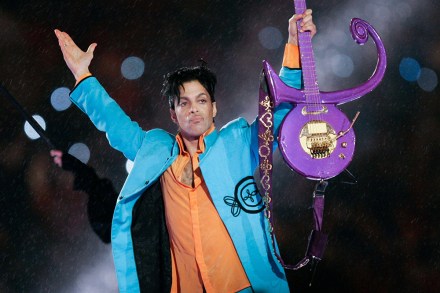
In June 1993, the Artist Who’d Just Decided He Didn’t Want to be Called Prince Any More handed his passport to his long-suffering tour manager Skip Johnson and told him to get the name on it changed to the squiggly symbol with which he’d decided to rebrand himself. It is ironic that he felt ‘oppressed’ by a name bestowed on him by others while insisting on renaming most of his colleagues and lovers. The passport incident is one of the more comical demands listed in the exhausting catalogue of employee grievances that make up John McKie’s sprawling biography of Minnesota’s own Prince Rogers Nelson, the virtuosic visionary who died, aged 57, of an accidental Fentanyl overdose in 2016.

Florence and the Machine is back

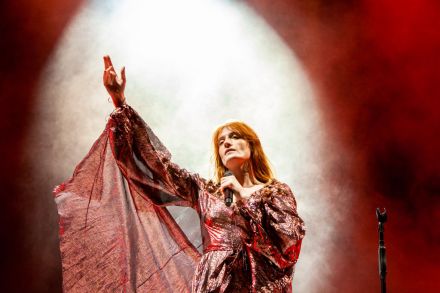
It may be coincidence or clever record company marketing, but the two current reigning queens of the British pop music scene, Lily Allen and Florence Welch, have released their two latest records within a week of one another. Allen, who has admittedly been more involved in acting and selling pictures of her feet on OnlyFans of late, brought out the excoriating and autobiographical West End Girl, which is said to explore the compromises and difficulties of her short-lived marriage to Stranger Things actor David Harbour. And, not to be outdone, Welch and her band Florence and the Machine have come back with her first album since 2022’s excellent Dance Fever; it promises another smorgasbord of operatic vocals, soaring choruses and BIG tunes. Does it work?

Was Cat Stevens the inspiration for Carly Simon’s ‘You’re So Vain’?

From our UK edition

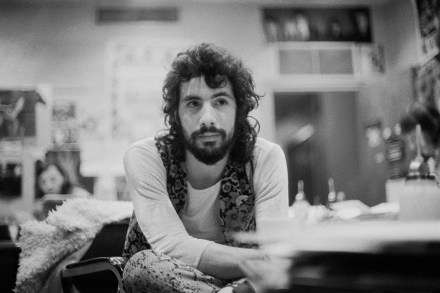
Essentially this is a book of two halves –before and after Cat’s conversion to Islam in 1977 – and the first half is immeasurably the more engaging. He was born Steven Georgiou in 1948, the youngest of three children, to a Greek-Cypriot father and a Swedish mother, with a much older brother and sister. His parents ran a café, Moulin Rouge, on Shaftesbury Avenue, in the heart of London’s West End, and the family lived above it. He went to a Catholic primary school near Drury Lane and then, having failed the 11 plus exam, to a secondary modern in the City. But he left school at 16 with only one O-level, in art. It was enough to get him into Hammersmith Art School, but he was already more interested in writing songs.

We need Sabrina Carpenter

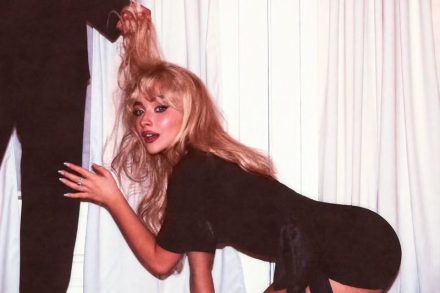
Sabrina Carpenter, who will for the first time this week be hosting NBC’s Saturday Night Live, continues to be a cause of controversy. Over the summer, the five-foot, honey-voiced singer revealed the cover for her newly released album, Man’s Best Friend. It shows her wearing a black minidress on her hands and knees, while a faceless man holds a handful of her hair. The image immediately stirred outrage online. Those who usually find themselves on the side of unfettered female sexual liberation called the cover regressive, degrading, and submissive toward the male gaze. Some fans defended the image, arguing that Carpenter was clearly satirizing incompetent and controlling men as well as her portrayal by the media as a “sex obsessed” pop star.

Sabrina Carpenter mainstreams cutesy violence towards women

With a deliberateness that did not escape critics and onlookers, the Carpenter-fed algorithm had suddenly decided to choke us on her sweet and frothy song "Espresso" in such a relentless fashion that we soon ended up drinking it down, begging for more. “Move it up, down, left, right, oh, switch it up like Nintendo,” I and plenty of other people too old for her dire Gen Z, Taylor Swiftian fare, found ourselves singing it anyway, day and night, on its release last year. “Say you can't sleep, baby, I know. That's that me espresso.” Sleep was certainly not improved by the earworm of the song.In fact, I thought at first that Carpenter was a bot because the songs are such calculated, algorithmic pop, from top to bottom.

Sabrina Carpenter

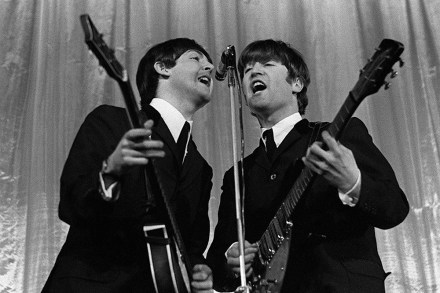
Across the universe – John and Paul are in each other’s songs forever

From our UK edition

The world’s love affair with the Beatles began, arguably, with the release in October 1962 of the group’s first single ‘Love Me Do’, full-blown Beatlemania following hard on its Cuban heels. Will we still need them, will we still feed them, when they’re 64? The answer appears to be a resounding and remunerative yes. Beatlemania is for life, not just for Christmas. Beatles books increasingly obtain to the condition of poetry, in that more people want to write them than read them. Yet still they keep appearing in bookshops. And every time a new volume about the group is published – like all those of sound mind, I have loved their music, films and minutiae since childhood – I ask myself: what is different about this one? Will it be in the style or the substance?

Why can’t pop stars just stick to their hits?

From our UK edition

Any old fossil like me keen on harrumphing that popular music isn’t what it used to be will have taken a certain snarky pleasure on reading that, last year, no British act figured in the world’s top ten singles or albums for the first time since 2003. To be fair, 2003 wasn’t the best year for chart music ever; Dido had the top-selling album – going 6x platinum – with Justin Timberlake, Christina Aguilera, Daniel Bedingfield and Norah Jones completing the top five. The bestselling single of 2003 was the Black Eyed Peas’ ‘Where is the Love?’, followed by ‘Spirit in the Sky’ by Gareth Gates and the Kumars, R. Kelly’s ‘Ignition’ (Remix)’, ‘Mad World’ by Gary Jules and ‘Leave Right Now’ by Will Young.

Were Boney M the weirdest pop act of all time?

From our UK edition

For a spell in the late 1970s there were two pop groups which dominated the UK singles charts – both, coincidentally, vocal quartets from continental northern Europe. But while one, Abba, have since become a billion-pound industry with an apparently permanent hologram-shaped presence on the London concert scene, their then rivals for pop supremacy, Boney M, have almost completely disappeared from public consciousness. And this is a shame because Boney M remain uniquely noteworthy in one field in particular: weirdness.  There are other contenders: Little Richard, the Sweet, Village People, the KLF.

The greatest British pop singer who never made a hit single

From our UK edition

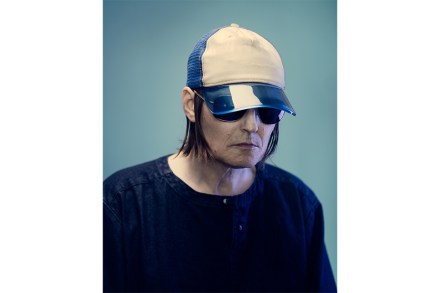
This is a magnificent book, regardless of whether the reader knows who it is about. I state this bluntly at the outset because I am keenly aware that many more people are ignorant of Lawrence’s career and achievements in the field of popular music than will be familiar with them; and that I will need to use up a significant number of words attempting to explain a figure who has repeatedly proven inexplicable to the public at large. So here goes... Has the indefatigably eccentric Lawrence led a charmed life or a cursed one? Lawrence Hayward may be the greatest British pop star never to have enjoyed a hit single.

Back to 1984 with Robert Dean Lurie

Robert Dean Lurie, who had written very good books on worthy rock music subjects (REM, David Bowie and the Church), sure picked the right year — 2020 — to slip into a time machine. Instead of finding Morlocks and Eloi, as H.G. Wells’s time traveler did, this married father of two in Tempe, Arizona, encountered Walter Mondale and Night Ranger — and he lived to tell his entertainingly perceptive tale. Lurie explains, “In 2019, I had a premonition that 2020 was going to suck. So I decided to spend the year re-experiencing my favorite year from my [Minneapolis] childhood: 1984.

Lurie

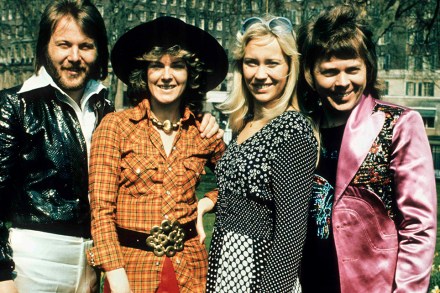
Abba’s genius was never to write a happy love song

From our UK edition

Memories. Good days. Bad days. In 1992, U2 mounted their Zoo TV tour. U2 being U2, the gigs were over-earnest affairs, their showbiz razzmatazz never emulsifying with their agitprop posturing. But disbelief was colloidally suspended the night the show hit Stockholm – and U2 were joined on stage by Benny Andersson and Björn Ulväeus for a cover of ‘Dancing Queen’. In truth, that evening’s take on one of Abba’s meisterwerke was a lumpen affair. Bono had to drop his voice an octave for what ought to be the song’s soaring refrain.

Aaron Lewis tells it like he sees it

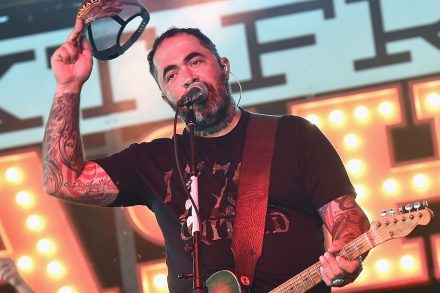
As all regular readers of Culture Shock know, we cover a lot of the goings on in country music. Not only am I personally a fan of the genre, but it is one of the few remaining subsections of art that isn’t outright hostile to conservative and traditional values. There are music executives in Nashville and the corporate media who would like to subvert the genre away from its roots in telling the stories of working-class people and reflecting on the hardships and joys of a simple American life.

aaron lewis

The Last Dinner Party’s Prelude to Ecstasy fizzes with wit and invention

I have lost hope in contemporary pop music. As someone who used to keep his finger on the pulse of new releases, and who went to gigs as often as I could, the absence of innovation has been one of the great disappointments of the past couple of decades. There really isn’t anything much out there, bar, of course, the sainted Taylor Swift. But ever since David Bowie’s death eight years ago (eight years...), the music industry seems to have been in a desperate downward spiral, where flair, originality and chutzpah are sorely missed. Surely it’s time that a new act could supply such things, complete with flute solos, songs sung in Albanian and an orchestral overture? No, I am not making it up.

last dinner party

Lil Nas X is getting boring

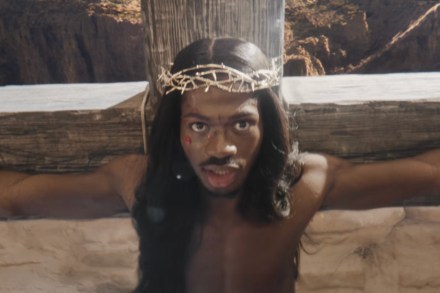
After a long break, Lil Nas X announced he would be releasing a new single. As usual, the song would get hyped, the publicity would be multifaceted and designed to cause controversy — and it would climax with a hit music video that would turn the song platinum. It worked before, with the devil lap dance video for "Call Me By Your Name," and for "Industry Baby" and its prison video (tied to Nike’s legal action against his collaborative Mschf shoes). Why shouldn’t it now? His new single is titled "J Christ" — and the music video has over a million views on YouTube in under twenty-four hours. And yet, it feels empty. The music video is exactly what you’d think it would be, showing Lil Nas X dressing up as various Christian figures, from Moses to Jesus.

lil nas x

Nothing satisfies Madonna for very long

From our UK edition

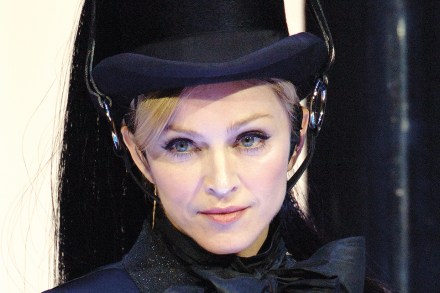
In 1994, Norman Mailer called Madonna ‘our greatest living female artist’. She was huge in those days. I remember teenagers like my daughters constantly asking ‘What would Madonna do?’ But my grandchildren haven’t even heard of her. She seems to have faded faster than most. Why? Perhaps it’s because, as often claimed, she’s the ‘queen of reinvention’. But people who reinvent themselves every few months, as Madonna always did, tend to leave other people behind. Her ‘rebel life’, as told here by Mary Gabriel, is a frenzied churn of friends, lovers, mentors and collaborators who were vital to her for a year or two and then discarded.

I took my daughter to see Taylor Swift: The Eras Tour

As I wrote a few weeks ago, there is a marvelous opportunity to bond with one’s children when you both conceive an interest, even an obsession, with the same musical act. Once upon a time, it might have been the Beatles, or Bowie or Madonna: now, it’s Taylor Swift, the all-conquering pop songstress who has not only taken over the world, but has made yet more untold millions with her concert film Taylor Swift: The Eras Tour. In practice, most of those seeing it will not have been able to get tickets to see her three-and-half-hour live show, so this slightly abbreviated version (a mere two and three quarter hours) will have to do. And my seven-year old daughter Rose is a Swiftie par excellence. We are going to have fun, I declare, and she rolls her eyes and says, “If you say so, Dad.

taylor swift eras