Pollution

What is the T-charge, and how might it affect you?

From our UK edition

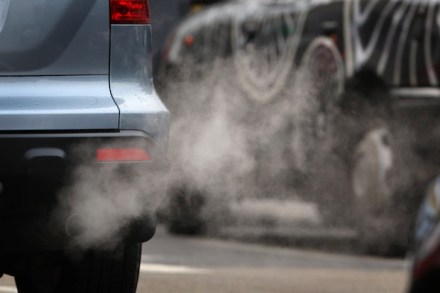
The T-charge – short for Toxicity Charge – comes into force in central London today. It’s part of the London mayor, Sadiq Khan’s, plan to improve air quality in the capital, and it mainly applies to vehicles registered before 2006. Rather than banning ‘high polluting vehicles’, he hopes that the charges will discourage people from driving into central London. The Green Party’s Jenny Jones today urged the London mayor Sadiq Khan to make sure that the revenues from the T-charge are used to improve public transport, and encourage people to opt for the bus or tube instead of their cars. But in reality, that’s not going to happen. Why? Khan confirmed today that far from making money, the scheme will cost the taxpayer £7 million per year.
The scandal of privatised water is going to blow

From our UK edition

Enough has been written about a Conservative government that knows its electoral success depends on Britain remaining a property-owning democracy, yet offers nothing beyond token gestures to stop the young being priced out of home ownership. Enough, too, has been said about graduates being overcharged, pensioners soaking up the largesse of the tax and benefit systems, the failure to upgrade infrastructure, the obesity crisis, and all the other problems that can’t be tackled because of half-thought-through Tory prejudices. Allow me instead to concentrate on the scandal of the privatised water industry. Journalists and academics have been banging on for what feels like an age about an ‘organised rip-off’, to use the words of the usually sedate Financial Times.

Creature comforts

From our UK edition

As naturalist, educator and writer, John Lister-Kaye was for many years a voice in the wilderness. In 1976, when nature conservation was still considered a benign eccentricity, he moved into a crumbling estate in the Scottish highlands. Taking as its credo a text from Gavin Maxwell —‘I am convinced that man has suffered in his separation from the soil and from the other living creatures of the world’ — he set up the Aigas Field Centre. Since then, tens of thousands of people have visited it. Schoolchildren and adults alike have been encouraged to share his wonder for the natural world.

Let there be dark

From our UK edition

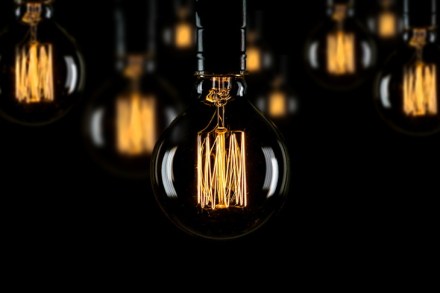
Who’s afraid of the dark? Who now fears shadows and bumps in the night? Where do you even find any dark to be afraid of when your phone is only a pocket away? One swipe and the screen lights up blue-white like the old explorer’s match in a cave. If I wake in the night I don’t bother with the bedside lamp. A bar of light comes under the blinds. Lights from the flats opposite. Fire-escape lights from the hotel next door. The jaundice glow of London light pollution. Even staying with my parents, on the edge of a village, there’s no real darkness. There are lights from the lane, lights from the next farm, lights from the main road on the hill. Intruder lights come on each time a muntjac makes for Mum’s vegetable garden in the small hours. Click. Click. Click.

The gull’s way

From our UK edition

In 1978, Adam Nicolson received three Hebridean islands as a 21st birthday present from his father, Nigel. The Shiants, each about a mile long, were uninhabited, with just one rat-infested bothy: not everyone’s idea of paradise. But, precisely because human beings had neglected them, wild life flourished — the islands were ‘thick with the swirl of existence’, thrumming with life and death, suffering and triumph, ferocity and conquest. Sea Room (2002) is Nicolson’s rousing love lilt to the Shiants, for him the most beautiful place on earth.

Killing spree of the fluffy green idiots

From our UK edition

Who do you think was responsible for Europe’s biggest environmental disaster of the past three decades; one that caused more widespread damage and killed more people than even the nuclear accident at Chernobyl? Was it a) greedy and selfish capitalists, probably linked to Big Oil, riding roughshod over the stringent health and safety regulations our wise, caring politicians have designed to protect us and our natural environment? Or b) an alliance of fluffy green activists, campaigning journalists and virtue-signalling politicians, united on a noble mission to save the planet from the greatest environmental threat it has ever known? If you guessed b) then you may appreciate why we climate sceptics are experiencing such schadenfreude right now.

Barometer | 2 February 2017

From our UK edition

Trump’s rivals More than 1.7m people signed a petition on Parliament’s website demanding that Donald Trump’s state visit be cancelled, and more than 200,000 one calling for it to go ahead. What are the most and least signed of the 2,500 or so other live petitions? Most signed Repeal new surveillance laws 209,000 Ban firework sales to public 150,000 Set £1,200 maximum price on car insurance for 18- to 25-year-olds 148,000 Least signed Offer discounted counselling to housing professionals 6 Plain bottles for alcoholic drinks 6 Scrap juries 6 Visiting rites Which countries have been awarded the most state visits to Britain?

Diary – 26 January 2017

From our UK edition

Did you know that if you use the f-word while talking to a BT representative, they hang up on you? Here’s how our conversation went when I finally got through after several abortive attempts and ‘holding’ for at least 15 minutes. Me: ‘I’m ringing because the engineer who was supposed to come between 8 a.m. and 1 p.m. has not turned up. I’ve been waiting for over five hours. My name is xxx, my reference number is xxx.’ BT man: ‘Could you give me your date of birth and the first line of your address?’ Me: ‘My date of birth is xxx, my address is xxx. This is the third time I’ve been asked.

Not so cold-blooded

From our UK edition

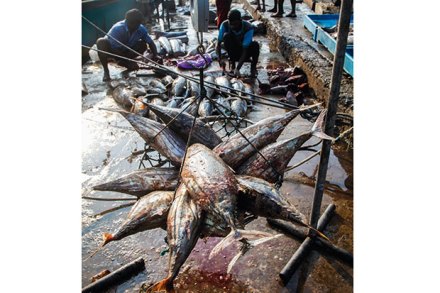
The recent furore over a freakshow ice rink in Japan, with hapless fishes embedded beneath the skaters’ feet, was inexplicable to some. The fish were dead already, weren’t they, bought from the market? What’s the difference between eating them and gliding over their artlessly strewn bodies, posed as if in a frozen shoal like the porpoises Virginia Woolf’s Orlando glimpses in an iced-up Thames? The difference is us. In a world sensitive to every nuance of use and consumption, fishes, like the sea in which most of them swim, are the new frontier.

Long life | 8 September 2016

From our UK edition

There is no cherished assumption that now goes unchallenged. The latest one is that country air is good for you. Ronald Reagan was much mocked when he said in 1981 that ‘trees cause more pollution than automobiles do’, but scientists later surprised everyone by saying that he was at least partially right. And now it is claimed that if you live near to a pig, cow or chicken farm, you might as well be living in Oxford Street. A study conducted by Utrecht University in Holland has found that more Europeans die from air pollution in the countryside than in cities, mainly from the fumes of manure storage and slurry spreading. Of course, this may not be true; for no such findings ever get unanimous acceptance.

Suffering a sea change

From our UK edition

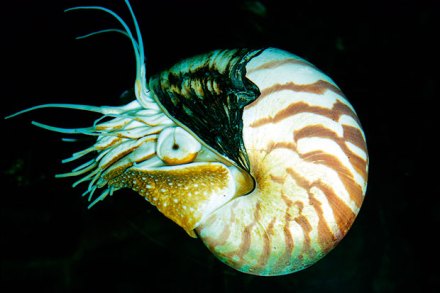
The oceans cover seven-tenths of our planet, and although it may not seem like it above the surface, they are very busy. Helen Scales and Christian Sardet are marine biologists: Sardet is apparently known as Uncle Plankton, and those multitudes of drifting organisms — ‘plankton’ comes from the Greek planktos, meaning to wander or drift — are his life’s work. Scales’s focus is the shell-making creatures that are molluscs, though focus seems an inappropriate word for such a vast body of life: a 1993 survey of just one island, New Caledonia, found 2,738 distinct species, and 80 per cent of them were new to science.

Lawlessness, corruption, poverty and pollution: the city where we’re all headed

From our UK edition

Rana Dasgupta, who was born and brought up in Britain, moved to Delhi at the end of 2000, principally to pursue a love affair and to write his first novel. He soon found himself mixing in bohemian circles, spending his evenings in ‘small, bare and, in those days, cheap’ apartments, talking with ‘artists and intellectuals’. These are not the people, nor is this the life or the city that he describes in Capital. The book’s title is in fact a pun, since its principal subject is money: how it is acquired, how it is spent and what it has done to Delhi and its citizens.

Barometer: Storm waves? It could be three times worse

From our UK edition

The test of a wave Waves measuring 27ft from peak to trough were seen off Land’s End as the stormy weather continued. How do these compare with the highest waves ever measured? — Waves of 67ft were measured by a buoy off the coast of Donegal in December 2011, the highest found around the British Isles. — The highest wave yet recorded during a storm was one of 91ft during Hurricane Ivan in August 2005. — A landslip in Lituya Bay, Alaska, on 9 July 1958 created a local tsunami which tore down trees 200ft above sea level. Water directly opposite the landslip site splashed to a height of 1,720ft, tearing down trees even at that height. Comparison shopping Retailers have begun to publish their sales figures for the pre-Christmas period.

Does Xi Jinping really want reform? If so, he would unravel China

From our UK edition

It is now 35 years since Deng Xiaoping gained mastery of China and launched a process that changed the world. The diminutive, chain-smoking ‘paramount leader’ adopted market economics to make his nation a great power once again and to cement the rule of the Communist party with no room for political liberalisation. The formula he adopted at a Party plenum after winning the power struggle at the end of 1979 that followed the death of Mao Zedong has been amazingly successful by its own lights, but is fast running out of steam.