Politics

Enjoyable and informative but where’s the drama? Political Currency reviewed

From our UK edition

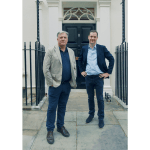
The first episode of George Osborne and Ed Balls’s new podcast, Political Currency, opened with an old clip of the pair arguing across the despatch box. Osborne had described his latest Budget as ‘steady as she goes’ and Balls was having none of it. ‘What kind of ship does he think he’s on, the Titanic?’ If producers hoped that the duo would bring something of this, er, biting dynamic to their podcast, they were in for a surprise. The opening number saw little in the way of sparring between the former opponents. Seated in a studio in east London, they spent most of the time doing what so many in their milieu are doing at the moment, chummily sharing their views and frustrations and trying to squeeze some entertainment out of it.

Matthew Parris, Dan Hitchens and Leah McLaren

From our UK edition

23 min listen

Matthew Parris, just back from Australia, shares his thoughts on the upcoming referendum on the Aboriginal and Torres Strait Islander Voice (01:08). Dan Hitchens looks at church congregations and wonders why some are on the up, while others are in a spiral of decline (08:32), and Leah McLaren describes the delights of audio and tells us why young children should be heard, but not seen (17:57).

Politicians can’t win on illegal migration

From our UK edition

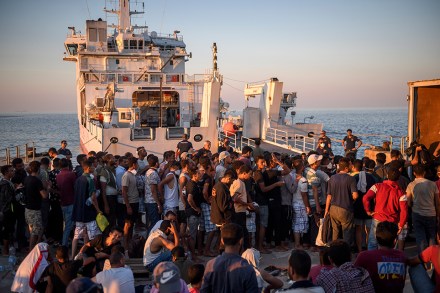
It is eight years now since The Spectator sent me to Lampedusa to see the boats coming in. That was at the start of the 2015 migrant crisis. The island, which is home to just 6,000 locals, had just buckled under the weight of another 1,300 arrivals. I followed them to Sicily and then on up and across the continent. If I may be self-referential for a moment, it was on Lampedusa that I realised the scale of the problem and got the opening lines of my resulting book, The Strange Death of Europe: ‘Europe is committing suicide. Or at least its leaders have decided to commit suicide. Whether the European people choose to go along with this is, naturally, another matter.

Portrait of the week: Met misconduct, Starmer in Paris and Spanish football in turmoil

From our UK edition

Home Rishi Sunak, the Prime Minister, proposed reaching net zero in 2050 ‘in a better, more proportionate way’ such as by delaying a ban on the sales of new petrol and diesel cars and delaying the phasing out of gas boilers. Ford the car makers told him it would undermine the three things it needed from the government: ‘ambition, commitment and consistency’. Inflation decreased from 6.8 per cent annually in July to 6.7 per cent in August despite a rise in oil prices. Michael Gove, the Secretary of State for Levelling Up, appointed commissioners to run Birmingham, which had run out of money. A man was killed by two dogs, said to be Bully XLs, in Staffordshire. Mr Sunak said he would ban the breed by the end of the year under the Dangerous Dogs Act 1991.

Australia’s disastrous indigenous voice referendum

From our UK edition

My partner and I have just returned from the most magical trip. As guests of Western Australia’s tourist board we’ve driven almost 1,500 miles across the top left-hand corner of the Australian continent. This is the north-west: a landscape like nowhere else on the planet. Three times the size of England, they call it the Kimberley. I had expected to find Aboriginal people living in these landscapes. They used to, for 60,000 years Starting from a town called Broome (easy to fly there) we made it overland to Darwin in the Northern Territory. We took about ten days in an all-singing, all-dancing Toyota camper van, sometimes sleeping under the stars, more often staying in comfortable chalets at a string of cattle stations turned campsites dotted along our route.

Letters: Boris Johnson’s doublespeak over Ukraine

From our UK edition

Whose victory? Sir: Politicians are often accused of engaging in doublespeak, and I fear in the case of Boris Johnson’s article (‘Bombshell’, 16 September) the accusation may be valid. According to our former prime minister we’re to believe two contradictory assertions; firstly that a Russian victory risks an immediate and existential threat not only to Russia’s neighbours but to the broader West. Then secondly, that the victory of the Ukrainian armed forces is as inevitable as night following day. Those two positions cannot both be true – either the outcome of the war is still in the balance, or Ukrainian victory is assured. I fear a degree of romanticism has crept into what I hoped would be a dispassionate analysis from a usually insightful mind.

Why we’re all populists now

Fifteen years ago, populist politicians and parties were seen as a reactionary blip which would soon fade. They are instead not only still present but rapidly gaining strength and power across the developed world. It’s well past time to wonder if populist sentiments will fade. It’s rather time to consider the heretofore unthinkable: perhaps populism will be to the twenty-first century what labor union-backed social democracy was to the twentieth. All of us grew up in the world that social democracy created, so it’s hard to grasp that it has not always been with us. But that’s not so. As late as the 1890s, social democratic parties were either weak or non-existent in most of the (admittedly small) democratic world. That changed quickly as industrialization gained steam.

populists

Broken Britain: what went wrong?

From our UK edition

Did Gillian Keegan need to apologise? The Education Secretary thought her ITV interview had ended and she could speak frankly. She insisted the schools’ concrete crisis was down to ‘everyone else’ who had ‘sat on their arse’. It was a fair point, inelegantly expressed. It’s been almost 25 years since the order first went out from Whitehall to inspect schools and hospitals for crumbling reinforced autoclaved aerated concrete (Raac). When a roof eventually collapsed at the Singlewell Primary school in Kent in 2018, the government sent out surveys to inquire about building material – but that was largely it. Like lazy homeowners, or dodgy landlords, successive administrations assumed the problem would be dealt with by somebody else at a later date.

Will the collapse of councils be the next great scandal?

From our UK edition

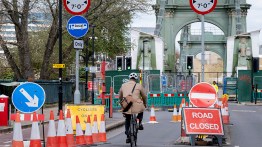
Last month India managed to land a spacecraft on the moon for a third of the price of refurbishing Hammersmith Bridge. This startling fact captures both New Delhi’s efficiency and the staggering incompetence of our local councils. It took two years and £9 million (in real terms) to build the bridge. It is set to cost almost £200 million to spruce it up and the work may not be complete until 2030. Hammersmith Bridge has become the perfect metaphor for what’s gone wrong with government: the carelessness, inertia and lack of concern for public money that is rife across the country. The bill for doing up Croydon council’s headquarters was greater per square metre than that for building the Shard, Britain’s tallest skyscraper.

Does the public want reheated Blairism?

From our UK edition

To understand the political journey of Sir Keir Starmer, look to Liz Kendall. This week the Blairite and one-time leadership contender was put in charge of Labour’s welfare reform policy. Her promotion has upset the party’s left-wingers, who already think Starmer is too right-wing on welfare. ‘She’ll be more hard-line than Jonathan Ashworth,’ says one shadow minister in reference to her predecessor. But her real influence started well before she was given a place at Starmer’s shadow cabinet table. Even those who were demoted or axed put on a brave face: ‘It shows Labour senses it is about to win’  Kendall’s role in the 2015 contest was to speak hard truths following the party’s defeat under Ed Miliband.

‘We need to start the road to rejoin’: Gina Miller on Brexit, farmers and her ambitious plans for Epsom

From our UK edition

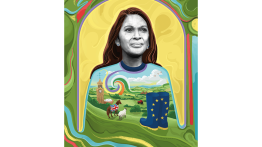
Gina Miller is trying to convince me that she understands why I voted Brexit. The woman who went to the High Court in 2016 to effectively try to cancel my vote by insisting the EU referendum result be referred back to a Remain-dominated parliament, plunging Brexit into years of legal and parliamentary wrangling, says she feels my pain and always has. How can this be? Well, maybe it’s just the magic of politics. ‘My case was not to do with Brexit. It was to do with parliament’ Ms Miller is attempting to turn her single-issue, referendum-wrecking fame into a broader platform, by standing in leafy Epsom and Ewell as one of nine general election candidates for her True and Fair party.

College-town blues

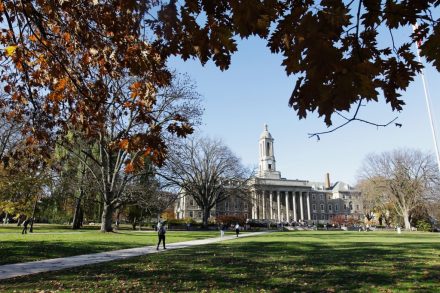
College towns are “decimating the GOP,” reported Politico in July, the reason being, in part, that “more college students and more faculty tend to be a recipe for more Democratic votes.” The college-town blues are a phenomenon with which I’m quite familiar. I live in Philipsburg, an old lumber and coal-mining town about twenty-five miles from State College, home to Pennsylvania State University. Though we’re in the same county, “the mountain” separates us physically, and as for politics... well, at last month’s Rush Township supervisors meeting, an old-timer floated the idea of seceding from Centre County (his main concern being that Centre County requires emissions testing on vehicles, and neighboring red counties don’t).

college

Should vintage comedy be judged by today’s standards?

From our UK edition

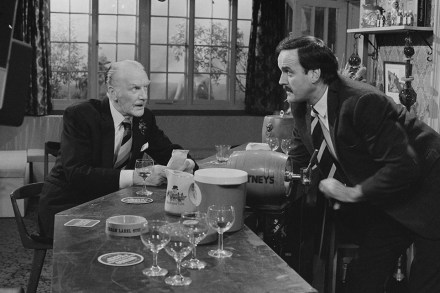
The British sense of humour is a source of power, soft and otherwise. The anthropologist Kate Fox observed that our national motto should be ‘Oh, come off it’, and a patriotic raised eyebrow has been cited as our chief defence against demagogues. We see ourselves through a comic lens, a nation of Delboys and Mainwarings, Brents and Leadbetters, Gavins and Staceys. But despite comedy being as central to British culture as music, books on it have few equivalents to Jon Savage’s England’s Dreaming (on punk), Rob Young’s Electric Eden (folk rock) or Simon Reynolds’s Energy Flash (rave). A nice fat volume about our national comic self-image by an astute music writer is exactly what the funny business needs.

Markwayne Mullin: the Senate’s stoic brawler

Stilwell, Oklahoma Out of the ancient belly of the earth and through the pitch-black night, the giant wigwam rises, gold-tinged and glorious, the glint of rare winnings and the sound of 2,000-plus slot machines rolling toward despair rollicking through the dark in east Oklahoma. Inside, the electric-fused honkytonk band blares Del Shannon’s “Runaway” — “And I wonder, I wa- wa- wa- wa- wonder” — from a starlight backlit stage above the sea of penny slots, the bald lead singer strumming a skull-festooned full bass as he sweats through his camo shirt. Outside, there is a distinct noise coming from beneath a neon-yellow Maserati where a timber rattlesnake has found a warm asphalt home.

mullin

The battle with the Blob

From our UK edition

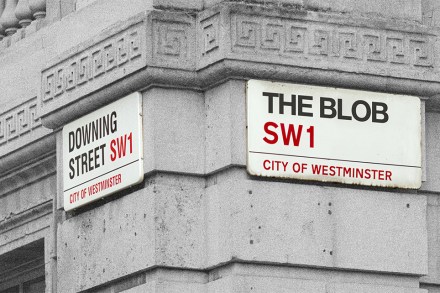
Most prime ministers fall out with the civil service at some point. David Cameron attacked the ‘enemies of enterprise’; Tony Blair spoke of ‘the scars on my back’ from battling the public sector. But the premiership of Boris Johnson brought relations to a new low, with prorogation and partygate fuelling paranoia on both sides. Under Rishi Sunak, tensions have been reignited by Dominic Raab’s resignation and the Cabinet Office’s attempt to hand over Johnson’s pandemic diaries to the Covid inquiry. For some Conservatives, the mandarins involved in these dramas are the embodiment of ‘the Blob’. The etymology of this term shows how Tory criticisms of the civil service have changed throughout their time in office.

Inside RFK Jr.’s kooky White House quest

After Linda Como, a sixty-four-year-old administrative assistant from Quincy, Massachusetts, was fired from her hospital job for refusing to be vaccinated against Covid, she discovered Robert F. Kennedy Jr.’s anti-vaccine activism, and it resonated with her. But that’s not the only reason Como came to the Boston Park Plaza hotel one morning in April to see Kennedy launch his long-shot 2024 presidential campaign. “I grew up in Boston, went to Boston public schools, so you know the Kennedy family,” Como told me. “They’re like the royal family. So I’ve always been a fan of the Kennedys.” Kennedy lore runs deep in Boston. This is where Robert Kennedy’s father Robert F. Kennedy and his uncles John F. Kennedy and Edward M.

RFK Jr
republic

Is America a republic in name only?

Is the United States a one-party state? Surely not. Just look at the ballots the next time you vote. There are nearly always Republican as well as Democratic candidates, and often there are candidates from other parties as well (Green, Working Families, Libertarian, etc.). But when you go beyond the labels, what do you find? Tucker Carlson, a recent victim of the uniparty monopoly, put it very well. “Suddenly, the United States looks very much like a one-party state,” he said in a post-Fox video. “That’s a depressing realization,” he added. “But it’s not permanent.” I think he is right about both things: the depressing reality that the United States looks more and more like a one-party state and the fact that the situation is not, at least not necessarily, permanent.

heritage

Can the Heritage Foundation unite the right?

Last September I was sitting in the crowd at the annual National Conservatism Conference, lamenting the fact that my hotel room had no hot water, when Dr. Kevin Roberts, the president of the Heritage Foundation, took the stage at Miami’s JW Marriott for his plenary address. Nationalists and populists at the conference were suspicious of Dr. Roberts’s presence. The “New Right” had spent the past few years accusing the right-wing establishment, including the cache of center-right DC-based think tanks like Heritage, of selling out ordinary Americans for profit and influence.

Why the UK does so badly at Eurovision

From our UK edition

Some 160 million will have watched Britain staging a successful Eurovision Song Contest in Liverpool: the world’s most-watched non-sporting TV event. But our own act, Mae Muller, finished second-last. Had it not been for a generous vote from Ukraine's jury, we'd have been last. It's a familiar trend. With the spectacular exception of Sam Ryder last year, our entries have tended to flop badly – leading to questions like 'Why did the BBC pick another dud act?' and 'Why does everyone hate Britain?' But we struggle at Eurovision for a number of systemic reasons, all of which come down to the way we lazily pick an act and give them none of the practise that other countries have. Every year, our singer is sent naked into battle.

White House braces for its biggest immigration test yet

Ever since Biden took office, immigration has been one of those things his administration would rather not talk about. It’s not hard to understand why. The polls show a consistent and heavy slant in favor of the Republican Party on the issue; internal Democratic Party divisions (between pro-immigration liberals and open-border absolutists) make for awkward conversations; and a president and party that opted for moral outrage on the issue in opposition struggled with the transition to power — which brings with it the difficult tradeoffs inherent to immigration policymaking.