Politics

The populism of Machiavelli and Jefferson

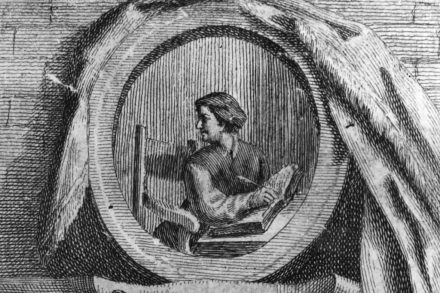
A few years ago a Marine turned novelist, G. Michael Hopf, captured a classic truth in a pithy formula. Inspired by cyclical theories of history — in particular the generational “turnings” of William Strauss and Neil Howe — Hopf wrote in his novel Those Who Remain, “Hard times create strong men, strong men create good times, good times create weak men, and weak men create hard times.” One need not put much stock in Strauss and Howe to appreciate the maxim. It could just as well be derived from Sallust or other classical sources. Or from Machiavelli: in his Discourses on the First Decade of Titus Livy, the Florentine philosopher considers where best to build a city.

Machiavelli

Taiwan can’t escape China’s shadow

From our UK edition

The Taiwanese rock band Mayday – ‘the Beatles of the Chinese-speaking world’ – are being investigated by the Chinese Communist party for the crime of lip syncing. Local authorities are combing through recordings of Mayday’s Shanghai concerts from November looking for evidence of ‘deceptive fake-singing’, as the CCP calls it, which has been illegal in China since 2009 (although the law is rarely enforced). Last month, an anonymous Taiwan-ese government source told Reuters that the investigation had been cooked up because the pop stars refused a request from Beijing to say something nice about China in the run-up to Taiwan’s election this Saturday. The band found itself at the centre of a row between the presidential hopefuls about Chinese interference.

Portrait of the week: Post Office scandal, Tube strikes off and dog meat banned

From our UK edition

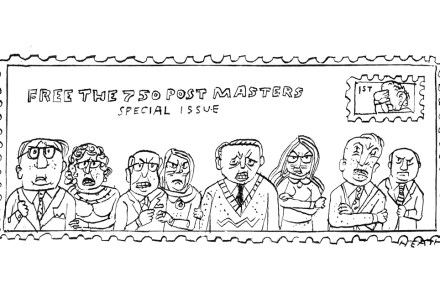
Home Although it had long been known that between 1999 and 2015 more than 700 sub-postmasters were convicted of false accounting, theft and fraud (based on the faulty Horizon computer accounting system software), the government suddenly proposed to do something about it because of a public outcry following an ITV drama, Mr Bates vs the Post Office. The Metropolitan Police was investigating the Post Office over fraud possibly arising from money being ‘recovered from sub-postmasters as a result of prosecutions or civil actions’. Paula Vennells, who held high office in the Post Office from 2007 to 2019, said she was handing back her CBE ‘with immediate effect’, although it is the King’s role to annul it; more than a million people had signed a petition calling for its revocation.

My election advice for Starmer? Offer a new Citizen’s Charter

From our UK edition

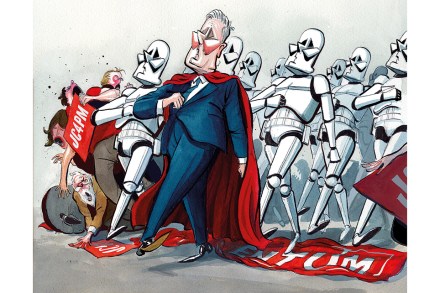
A giveaway Budget in March preceding a general election in May against an improving economic backdrop: that, we’re told, is Downing Street’s favoured scenario. But still the election is Keir Starmer’s to lose, so here’s my start-the-year advice to him. Don’t bang on about Rishi Sunak being too rich; don’t make immigration the issue, because you have no solutions; don’t pretend to admire Margaret Thatcher; but do channel John Major – to whom you bear much closer comparison – and offer a new Citizen’s Charter. What? Isn’t that 1991 exercise in footling managerialism, forever associated with the ‘cones hotline’, remembered as a laughable failure?

Must we live in perpetual fear of being named and shamed?

From our UK edition

You should feel thoroughly ashamed of reading this infamous rag. Or else you might decide to revel, shamelessly, in its critics’ prim disapproval. From political squalls to global wars, David Keen argues that a ‘spiral of shame’ and shamelessness now traps individuals and societies in arid cycles of pain, rage and revenge. Manipulative actors – ‘advertisers, warmongers, terrorists, tyrants and charlatans’ – sell us ‘magical solutions’ to the anguish of the shame they themselves stoke. But they merely pass the burden to other groups, leaving us with more suffering. Keen writes: ‘Such actors do with shame what the Mafia does with fear.’ The author teaches conflict studies at the LSE.

The 2024 regime referendum

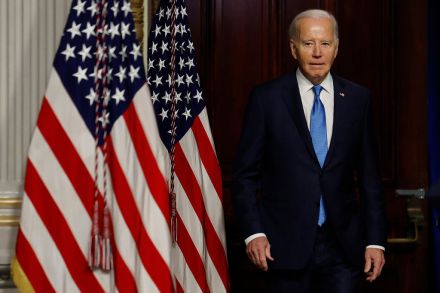
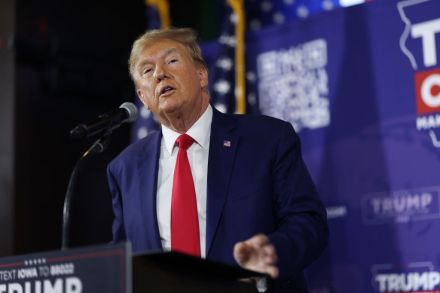
The 2024 election will be a referendum on Joe Biden, but it’s also a referendum on a regime. This is how both sides see it. Liberal democracy itself is at stake according to progressives. For Trump supporters, the question at issue is legitimacy of the Deep State. These are different names for the same thing: a leadership caste and its ideology of government. In practice, liberal democracy means a democracy in which liberals never lose power.

regime

Javier Milei’s radical reforms could start to heal Argentina’s economy

From our UK edition

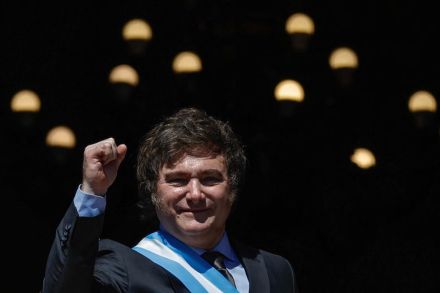
Argentina has spent most of its 200-year history in deficit; no other country currently owes the International Monetary Fund a greater sum of money. The new finance minister, who entered government with President Javier Milei earlier this month, has been stark in making the point: ‘Out of the last 123 years, Argentina ran a fiscal deficit in 113... we have come to solve the addiction to fiscal deficits.’  Milei’s government is wasting little time carrying out what it calls ‘shock therapy’. The official value of the peso, Argentina’s currency, has been halved against the US dollar. Why might a government want to weaken its own currency, pushing up the price of imported goods for consumers?

Good riddance to neoliberalism

From our UK edition

I listened to a fascinating debate on the BBC’s The World This Weekend about the ideological origins of that thing, populism. The agreeably thuggish Javier Milei had just taken the reins of Argentina and, perhaps a little late in the day, the TW2 (as it is known in BBC circles) production team had noticed that almost every election held anywhere these days – except perhaps Australia and here – tends to result in a win for a party which is either overtly populist, as in Argentina, or is called populist by its opponents and the BBC. What the hell is going on, they wondered, only ten years too late. Who did they choose to ‘debate’ the issue? Prince Harry and Wolf from Gladiators? The suave game-show presenter Ben Shephard and Herbie the Skateboarding Duck?

Portrait of the year: resignations, wars and kangaroo courts

From our UK edition

January The government stopped a Gender Recognition Bill passed by the Scottish parliament becoming law. Isla Bryson, now a transgender woman, was convicted of having raped two women; the 31-year-old was sent to a women’s prison, then transferred to one for men. A Met Police officer, David Carrick, aged 48, pleaded guilty to 24 charges of rape. Nadhim Zahawi was sacked as Conservative party chairman. Strikes by railway workers, Underground drivers, ambulance drivers, nurses and hospital doctors continued on and off all year. Ukraine struck a building in Donetsk housing Russian forces. A Russian missile destroyed a block of flats at Dnipro. Jacinda Ardern suddenly resigned as prime minister of New Zealand.

No one wants to talk about Ukraine any more

From our UK edition

Apologies for this seasonal downer. Had the website such a listing, this column would surely soar to number one in The Spectator’s ‘Least Popular’ roster. For just now, few topics are a bigger turn-off than Ukraine. Following Russia’s invasion, I got caught up in the same waves of emotion that washed over most western publics, and I say that with no regret. After relentlessly battling the prevailing cultural winds these past few years, I was relieved to feel a sense of solidarity for once. Most of us were revulsed by the gratuitous aggression, allied with an underdog whose bite proved surprisingly fierce, thrilled by a former comedian’s unexpected rise to his nation’s occasion and consumed by a weirdly addictive loathing for Vladimir Putin.

Portrait of the week: Elgin Marbles madness, Israel/Hamas ceasefire and Oscar Pistorius freed

From our UK edition

Home Net migration reached a record 745,000 last year, the Office for National Statistics said, 139,000 higher than the 606,000 it had previously given. Robert Jenrick, the minister for immigration, was reported to be ‘pressuring’ No. 10 with ideas for cutting immigration, such as by making a minimum salary of £35,000 a requirement for a work visa. Rishi Sunak, the Prime Minister, had agreed with Suella Braverman, when she was home secretary, to raise the salary requirement to £40,000, according to a copy of their agreement seen by the Telegraph. Eight small boats carried 364 migrants to England on 26 November. Caolan Gormley, 26, from Co.

Go ahead, fight a little on the holidays

While most Americans kick off the holiday season with warm cider and festive sweaters, denizens of the commentariat have a more insufferable tradition. Each year, in the days leading up to Thanksgiving, columnists everywhere bombard readers with condescending guides to fighting with “difficult” (read: Republican) relatives over the dinner table. Most of us simply roll our eyes or lampoon these unbearable screeds, while others call for civility. Writing for this publication earlier this month, Mary Katharine Ham made a refreshingly reasonable “case against the Thanksgiving dinner fight.” This is partially right.

thanksgiving fight

The Rishification of the Tory party

From our UK edition

When David Cameron arrived at the Foreign Office on Monday, he told staff he might be a bit rusty when it comes to modern politics. He joked that the only WhatsApp group he is in ‘is to do with my children’s school play’. Cameron may have been out of frontline politics for a while, but the rules stay the same. As Tory leader, he championed his favourites and promoted his supporters to the cabinet table, even at the expense of ignoring older colleagues’ claims. This week, his successor has done the same. A trio of thirtysomething former special advisers elected in 2019 now comprise the Prime Minister’s Praetorian Guard. Laura Trott, 38, the former pensions minister, is the chief secretary to the Treasury.

Why was an erroneous graph used to justify the second lockdown?

From our UK edition

Two stories are emerging from the Covid Inquiry: one that it wants to tell and one that it does not. The first is a tale of foul-mouthed incompetence, of which there’s no shortage of evidence dredged from the private messages of the main actors. The more important story can be found in the submitted statements – hundreds of pages of thoughts, documents and reflections. They raise an important question which Baroness Hallett’s inquiry shows little interest in answering: was lockdown based on a false premise, conjured up by poorly drafted models? Only later did No.

Rishi and Suella’s fates hinge on the Rwanda ruling

From our UK edition

The first King’s Speech for more than 70 years was a festival of the expected: the royal reading of a No. 10 press release. Some dividing lines were drawn between the Tories and Labour and some loose ends tied up – but there was no real change in political direction. ‘It’s a continuance of the direction and path we are on,’ explained a senior government figure. ‘The most inspiring thing Rishi has done is refusing to endorse Braverman’s comments’ But if current polls are any indicator, to continue in the same direction means a landslide Labour victory and a Tory defeat of historic proportions at the next election. ‘It won’t spark rebellion but it certainly won’t lead to much excitement,’ was one MP’s quickfire assessment of the speech.

The case against the Thanksgiving dinner fight

As we come upon the treacherous holiday season before a presidential election, there will be plenty of people in media who tell you it is your moral responsibility to ruin food and fellowship with political confrontations. Armed with the emotional IQ of one of those idiots tossing perfectly good soup on the Mona Lisa — an ineffectual waste of vittles and dignity — these columnists insist that you must not let Aunt Margie’s incorrect opinions stand, lest democracy die in the darkness of her benighted worldview. You must serve countervailing takes as hot as the mashed potatoes, no matter the cost to family comity. It doesn’t have to be this way. There was a time, not too long ago, when we didn’t have to turn every breaking of bread into a struggle session.

family

How the National party toppled Labour in New Zealand

From our UK edition

Just three years on from Jacinda Ardern’s phenomenal outright victory, New Zealand’s Labour government has collapsed, slumping to half its vote from 2020. It is on the verge of losing some of its safest seats and languishing behind in most of the Māori electorates. The centre-right National party has won, with Labour prime minister Chris Hipkins calling Christopher Luxon to concede defeat. The National party and its libertarian coalition party, ACT, are in a strong position to form a government, with Luxon, a relative newcomer to politics, becoming the country’s next prime minister. With more than three-quarters of the vote counted, Labour’s vote was a shade higher than 26 per cent – meaning half of the caucus will be out.

Portrait of the week: Starmer’s stall, high treason and the horrors of Hamas

From our UK edition

Home At the Labour party conference, cheerful in the hall but overshadowed by the war in Israel, Sir Keir Starmer, the Labour leader, said that in government he would build 1.5 million homes and a host of ‘Labour new towns’. He wanted to spend £1.1 billion a year on higher overtime payments within NHS England to reduce waiting lists. A protestor poured glitter over him. Angela Rayner, the deputy leader, and Rachel Reeves, the shadow chancellor, also said Labour would ‘rebuild Britain’. ‘Rachel Reeves is a serious economist,’ said Mark Carney, the former governor of the Bank of England. Labour took Rutherglen and Hamilton West in a by-election that the Scottish Labour leader, Anas Sarwar, called a ‘seismic night in Scotland’.

Should Ukraine hold a general election next year?

From our UK edition

In the months before Russia invaded Ukraine last year, Volodymyr Zelensky was fighting for his political life. The former comedian was elected in 2019 on a pledge to end the war in Donbas by an electorate exasperated with its political class. Zelensky initially set out to negotiate with Vladimir Putin – but achieved nothing. He appeared naive and out of his depth. However, Zelensky’s transformation into a wartime leader captured the world’s imagination and rallied his allies. Yet some of those allies are beginning to ask whether, if this war is really about the free world versus autocracy, as Zelensky claims, Ukraine should hold a general election next year.

Portrait of the week: Braverman on migration, Burnham on HS2 and police on AI

From our UK edition

Home Dozens of armed police in London laid down their guns after a Metropolitan Police officer was charged with the murder of Chris Kaba, 24, shot in Streatham Hill last year. The army stood by, but enough policemen returned to armed duties to make Military Aid to the Civil Authorities unnecessary. Rishi Sunak, the Prime Minister, backed some sort of review of armed policing guidelines ordered by Suella Braverman, the Home Secretary, which Downing Street said was expected to conclude by the end of the year.