Politics

Portrait of the year: Trump's tariffs, the definition of biological sex and the fall of Andrew Mountbatten-Windsor

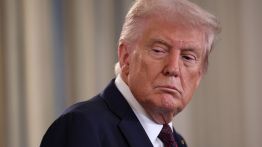
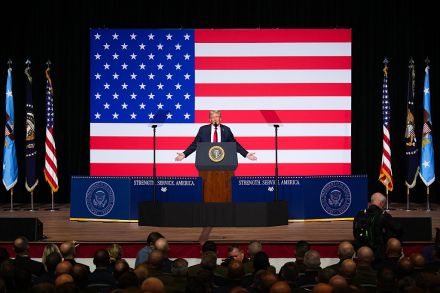
January Downing Street said Rachel Reeves would remain in her role as Chancellor of the Exchequer ‘for the whole of this parliament’. She made a speech standing behind a placard saying: ‘Kickstart economic growth.’ Axel Rudakubana, 18, was sentenced to at least 52 years in prison for the murder of three girls in a knife attack at Southport. Yvette Cooper, the Home Secretary, announced a ‘rapid audit’ of grooming gangs by Baroness Casey of Blackstock. Wildfires raged around Los Angeles. Luke Littler, 17, became world darts champion. The aftermath of the Palisades and Eaton fires in California (Mario Tama/Getty Images) February President Donald Trump of the United States and the

Rory Stewart’s romantic view of Cumbria is wide of the mark

It’s tricky for writers to gather up pieces of old work and collect them in significant literary form. It’s risky for former politicians to publish outdated commentaries, with no agenda other than to show politics on the ground and as a record of their efforts and prejudices. Most hazardous of all is titling a book in such a way that it eschews the established geographical and psychological identity of the region it describes. These are the challenges Rory Stewart sets for himself in Middleland. The book consists of the granary-floor sweepings of journalistic pieces published in the Cumberland and Westmorland Herald while Stewart served as MP for Penrith and the

Is bet365 punishing me for being a peer?

On my way to the QPR game against Hull last Saturday, I was astonished to discover that Ladbrokes had made QPR the favourites. Eh? Going into this game, the Rs were 18th in the table, whereas Hull were sixth. They’d won four of their last six, whereas we were winless in five. ‘It’s almost worth putting a bet on Hull,’ I joked to Charlie, my 17-year-old son. Then I thought: ‘Why not? At least that way, if QPR lose I’ll make some money.’ But if I was going to do it, I might as well get the most favourable odds, so I did a quick trawl of the online betting

It’s not Starmer’s fault that everyone loathes him

Finding someone who ‘likes’ Sir Keir Starmer is a terribly enervating quest, and I have given up on it without success. It is true that I have not contacted Sir Keir’s close family members, or indeed canvassed inside the walls of Broadmoor hospital, so it may be that some tiny reservoirs of affection remain. Less reservoirs than sumps, really. But the generality is that people seem to loathe him – the responses I get when I accost people in the street and say, ‘What do you think of Sir Keir Starmer?’ are largely unprintable, except in London, where for some reason the most common reply is to invoke the name

The persecution of our local politicians

Have a thought for Darren Grimes, the 32-year-old Reform councillor. Since becoming deputy leader of Durham County Council in May, he has been investigated more than two dozen times by his officials following complaints. Among other things, he has been accused of bringing the council into disrepute, failing to treat people with respect and not representing people with different views. Of those complaints, the vast majority have been dismissed, but a handful are still under investigation. Darren has condemned this ‘persecution’ and he’s amended the council’s code of conduct to include clauses protecting free speech. I should declare an interest since those amendments were based on a policy the Free

The lost art of the insult

Imagine I were to begin this column by remarking that a woman preaching is like a dog walking on its hind legs. It is not done well, but you’re surprised to find it done at all. Dear me, that would never do, even in as cheeky a magazine as The Spectator. Then try instead: ‘Dr Johnson was no admirer of the female sex. “A woman’s preaching,” he said, “is like a dog’s walking on his hinder legs. It is not done well; but you are surprised to find it done at all.”’ I could get away with that. An antiquated opinion, safely attributed to an 18th-century writer, enclosed behind quotation

The evolution of the political animal

Most of our politicians themselves are not obedient, kindly and loyal. Similarities between candidates and their faithful cat or dog are few – but as trolls now deter supportive spouses and photogenic children from saccharine election leaflet photos, pets are increasingly becoming familial proxies. When Nigel Farage does a TikTok about his dogs Pebble and Baxter, thousands comment approvingly. But finding a family photo of the Reform UK leader is nearly impossible. And that, says Farage and many like him, is entirely deliberate. Political animals are not new. Caligula threatened to make his horse, Incitatus, a consul. Cardinal Wolsey’s cat is immortalised in a bronze statue in Ipswich. In the 20th century, cats assuaged Winston Churchill’s

Was I the victim of a sex crime?

Dante’s Beach, Ravenna I went up to her and got straight to the point: ‘What are you using for bait?’ I say ‘her’ but you never know round here. We live a mile inland from one of the last unspoiled stretches of Adriatic coast, part of which was stolen several decades ago by highly trained nudists. The nudists, who seem to be mostly men, attract several fringe groups, such as trans women (men who identify as women). One of the best-known was christened Cesare but is now a peroxide blonde called Cesarea. ‘She’ is taller than anyone else in the village apart from me and has enormous hands. Besides, it

Weimar Britain: lessons from history in radical times

The Ancient Greeks believed the past was in front of us and the future behind. Man could look history in the face and learn from it, while the future was unknowable, hidden, the wind whistling at our back. It is in history, its patterns, and what it reveals about human nature, that we have the best guide to our times and how they might develop. The government may wish us to focus on innovation this week – new nuclear reactors, AI data centres, OpenAI’s Sam Altman and Nvidia’s Jensen Huang at the state banquet – but if we really want to understand the convulsions gripping our society it is to

Art and radicalism in 1930s Britain

What is art for? How can it, should it, relate to the political framework of its time? How far can it shade into ‘propaganda of the imagination’? These are some of the questions threading through Andy Friend’s compelling account of the first decade of the Artists International Association, or AIA, a vital but under-explored British movement welding art and politics against the growing threat of international fascism.  The story opens in 1933 in the candlelit rooms of Misha Black above Seven Dials, Covent Garden, where a dozen impecunious jobbing artists met to discuss a sensational report from the Soviet Union. This was that thousands of Russian artists were regularly employed

The risks of Reform

In 1979, XTC sang: ‘We’re only making plans for Nigel/ We only want what’s best for him.’ The song is from the perspective of two overbearing parents, confident that their son is ‘happy in his world’ and that his future ‘is as good as sealed’. Nigel Farage is making plans for his own future but it’s doubtful it’s as good as sealed. This week, he announced Reform UK’s proposal for mass deportations, ‘Operation Restoring Justice’. Some 600,000 illegal migrants will be removed, he promised, should his party win the next election. Britain will leave the European Convention on Human Rights (ECHR) so we can return people to countries such as

How Italy’s ‘new young’ party

Dante’s Beach, Ravenna The Feast of the Assumption began for me just after midnight with a WhatsApp message from my eldest son, Francesco Winston, 20, which said: ‘Papà don’t come, the police are everywhere.’ He and my eldest daughter, Caterina, 21, had invited me to a party on the beach organised by their group of friends to mark Ferragosto, the most important day of summer. There would be a bonfire and sausages, booze and guitars, and all the rest of it, until the blood-red sun emerged out of the sea at about 6 a.m. to bring it to an end. The huge, shimmering sun rose up out of the sea,

Dinner party talk won’t help Gaza

I’m one of the Silent People who sit on the sidelines of the great political events and debates of the present. We Silent People don’t sign on-line petitions or go on protests to show solidarity with this group or that one. We don’t tweet our outrage, or blog our bile. We prefer to keep what we think to ourselves. When a verbal punch-up erupts over Gaza or trans rights at a dinner party, I stay silent and wonder what’s for pudding. The thing we Silent People are most silent about is our silence. It’s easy to see why: the silent are suspect The thing we Silent People are most silent

Britain shouldn’t put up with Donald Trump

History is the march of folly and far too many of my countrymen are hearkening to a drumbeat which would lead us to disaster. On Tuesday several of our newspapers led with variations of the same headline: ‘Trump: cut tax to beat Farage.’ This is idiotic counsel, given the state of Britain’s public finances. I would have thought the way to beat populism was not by emulating its idiocies but by prudent, cautious, sensible management of a nation tired of liars. If Donald Trump teaches us anything, it is how to ruin a great nation. Far more useful than parroting the US President’s delusions would be telling the British people

The National have bungled their Rishi Sunak satire

The Estate begins with a typical NHS story. An elderly Sikh arrives in A&E after a six-hour wait for an ambulance and he’s asked to collect his own vomit in an NHS bucket. The doctors tell him he’s fine and sends him home where he promptly dies. His only son, Angad, inherits all his property, which irritates his two daughters, who receive nothing. The personality of the dead Sikh is left deliberately obscure. Newspapers in Britain and India publish glowing accounts of his achievements but his youngest daughter calls him ‘a slum landlord’ who owed his fortune to ‘a lifetime of tax-evasion’. The bad-tempered tussle over his will takes place

Could Japan soon be governed by chatbots?

Tokyo Could Japan be the world’s first -algocracy – government by algorithm? The concept has been flirted with elsewhere: in 2017 a chatbot called Alisa challenged Vladimir Putin for the Russian presidency. But there is reason to believe that if any major country is going to replace its politicians with AI, it will be Japan.  The citizens of Yokosuka in Kanagawa have had a remarkably lifelike AI avatar of their mayor, Katsuaki Uechi, at their service for over a year now. It (he?) speaks perfect English with a slight Japanese accent, with Uechi’s facial features manipulated to make it look as if he is pronouncing the words correctly. The avatar

‘Let Keir be Keir’: inside the cabinet’s away day

Labour ministers face a range of terrible political choices, but when the cabinet met for an away day at Chequers last Friday, the first dilemma was what to wear. ‘There was panic beforehand about what “smart-casual” meant,’ one ministerial aide says. Both Hilary Benn and John Healey turned up in dark suits and red ties. ‘To be fair to the Defence Secretary, he hadn’t seen that bit of the invite,’ a No. 10 official explains. ‘Whereas in Hilary’s case, that is what his smart-casual looks like.’ By contrast, Peter Kyle, the Science Secretary, turned up in what one observer describes as a ‘tech bro AI T-shirt’. Finding an economic policy

How governments gaslight

The posters now plastered around German public swimming pools are so hilarious that you may have seen them already. Keeping up my entertainment end of things, I’ve forwarded the pictures to multiple correspondents myself. See, news stories have been accumulating – and many similar stories doubtless remain unreported – about Muslim immigrants harassing and sexually assaulting native Germans trying to cool off. In response, some helpful bureaucrat has generated a series of images whose crudely drawn cartoon format makes light of the problem while wilfully, defiantly misrepresenting it. Below ‘Schubsen ist nicht lustig!’ (‘Shoving is not funny!’), a white boy and vaguely brownish boy push a terrified black girl towards

The vicious genius of Adam Curtis

In an interview back in 2021, Adam Curtis explained that most political journalists couldn’t understand his films because they aren’t interested in music. Having known a fair few political journalists, I can say with some certainty that he was right. Most politically motivated types are – not to be unkind, but it’s true – total losers. This cuts across left and right, all ideologies and tendencies, from Toryism to anarchism to Islamism and back: whatever you believe, if you believe it too strongly you were probably a weirdo at school. The other kids went out clubbing; you stayed at home, drawing pictures of Lenin or von Mises on your satchel.

Being stalked by a murderer was just one of life’s problems – Sarah Vine

Private Eye asked last week: Which of Michael Gove’s luckless staff at The Spectator will be assigned to review this grisly account of their editor’s marital woes? Reader, it’s me! I’m happy to do this, though, because I have an interest in how to be a political wife (I am married to Alex Burghart MP), and perhaps have something to learn here, though I’m struggling to understand, eek, ‘lesson seven’: Realise… that when you step over the salt circle into the five-pointed star coven of politics, you have ceased to become a person. You are now a c**t. There’s a feeling that the author still has a touch of PTSD.