Police

In praise of the speeding crackdown

From our UK edition

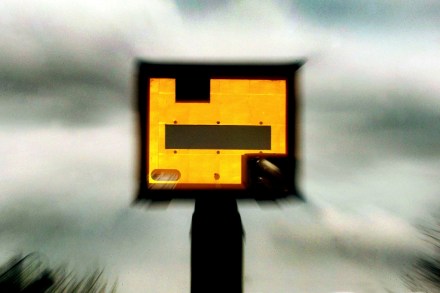
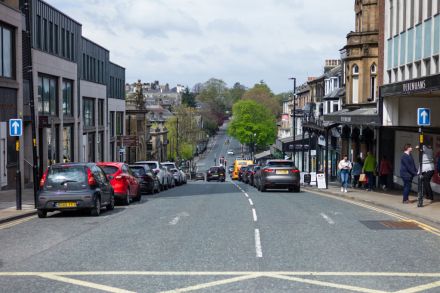
We all needed a laugh, what with the pound tanking and inflation running away, my old pal Kwasi delivering a Budget, probably for a bet, like Milton Friedman’s last cheese-dream, and the threat of nuclear annihilation starting to seem like a welcome turn up for the books. Said laugh has just been obligingly provided by the Metropolitan Police. They have just, without broadcasting the fact, decided to enforce the speed limit with the tiniest bit more rigour – and as a result, they’ve nicked more than two and a half times as many people for speeding in the first six months of this year than they did in the last six months of last year.

We need to talk about tasers

From our UK edition

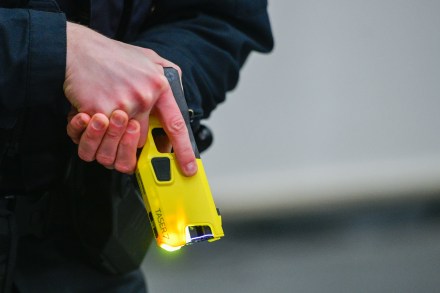
Donald Burgess is the latest Briton to die after being hit by a police taser. He won’t be the last, but the circumstances of his death underscore the need for a wider debate about conducted energy devices. Police were called to a care home in St Leonards-on-Sea on 21 June, where they found Burgess threatening staff with a knife. One officer sprayed him with PAVA, an incapacitant spray that the National Police Chiefs’ Council describes as ‘significantly more potent than CS’. The same officer then struck Burgess with a baton while another discharged a taser, sending an electric current coursing through the man’s neuromuscular system. He was then handcuffed and conveyed to hospital, where he died on 13 July.

Is Britain really ‘on the brink?’

There’s a macabre joke in Britain these days that my friends and family also play. We compete to see who has had to wait the longest for medical treatment. It starts relatively innocuously. People talk of the ordinary things: like having to wait days to get an appointment with a doctor. They call up in the morning at 8 a.m., only to be told that all of the slots are gone. Best of luck tomorrow. Then someone will say that they’re waiting for minor surgery. Perhaps a small corrective procedure. It was put off first for the pandemic, and now is lost amid a sea of backlogged work. They wonder if someone has lost their details in the slush. Normally I win, although not always. My old general practitioner retired before the pandemic, and his practice was transferred over to another doctor.

The authoritarianism of British Transport Police

From our UK edition

When our freedoms are being taken away we are like the proverbial frog boiled alive in water where the temperature is slowly brought to boiling point. Who batted an eyelid in June when it was reported that rail companies are drawing up plans to abolish paper rail tickets and have us all travel with e-tickets instead? Who picked up on today’s story that explains one of the reasons why the police are so keen to switch us to e-ticketing? Lucy D’Orsi, chief constable of the British Transport Police, says her force wants access to data from passengers’ mobile phones and bank cards so that it can track us around the network. At the moment, you can get on a train from Wolverhampton to London with a paper ticket and leave little trace.

The cost of decarceration

As grown up as I felt at nine, whenever my parents let me walk to school, the corner store or Prospect Park with friends, I’d have been lying through my teeth if I denied sometimes feeling afraid — even in the little slice of Brooklyn I called home. But it wasn’t the New York Police Department or endemic racism that made me anxious. In the 1990s, getting mugged or beaten up in my own neighborhood always felt like more than a remote possibility. That sense of wariness was dull and could easily be forgotten if I was distracted. But it was always there, just under the surface. That anxiety disappeared when we moved to a mostly white town in suburban Long Island. At school, no one looked like me.

criminal

Who are these pathologically liberal rozzers? Channel 4’s Night Coppers reviewed

From our UK edition

Grizzled police officers of the old school should probably avoid Channel 4’s Night Coppers for reasons of blood pressure. Like most documentary series with close access to the police, this one paints them in a light so favourable as to be almost comically sycophantic. The trouble for those grizzled types is that – the times being as they are – what’s now considered favourable is to make the rozzers who patrol Brighton after dark all seem like that pathologically liberal Dutch cop played by Paul Whitehouse in the late 1990s. https://twitter.com/C4Press/status/1546908729370632192?

Chicago is coming apart

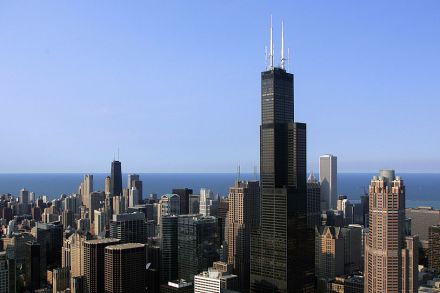
There are two ways to think about Chicago. The depressing one is to follow the news. These days it’s pretty bad. In mid-May, two people were killed and seven wounded when a gunman fired into a crowd outside a McDonald’s restaurant on the Near North Side. I know the McDonald’s well. I went to high school nearby, and my three children attended the elementary school across the street. Once scruffy, the area is now affluent. Overlooking the murder site is a seventy-five-story tower where condos sell for up to $6.1 million. The building’s developer described the shootings as “isolated to [that] location.” If only. In fact, it was the tenth mass shooting in the city this year, CBS News Chicago reported.

chicago

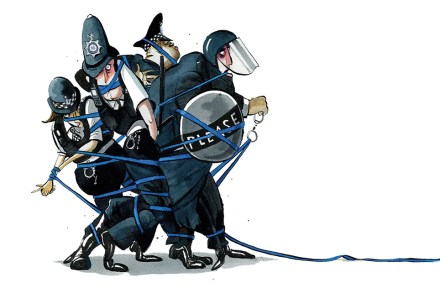
Why the Met Police keeps failing

From our UK edition

Much has been made of the decision to place the Metropolitan Police in what is often referred to as special measures, where it joins five other forces from England and Wales. The many ways in which the Met has fallen short have also been amply aired, from the murder of Sarah Everard by a serving officer to the botched investigation of serial killer Stephen Port, to the racist and sexist mindset laid bare at some London police stations. Many crime rates in the capital have been rising sharply, as – naturally – has public dissatisfaction. Nor should the blame game that has broken out between the Home Office and the Mayor of London, Sadiq Khan, come as much of a surprise.

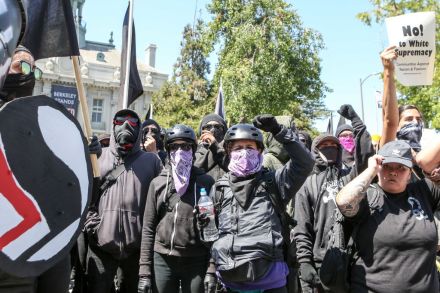
The police have bowed to the mob

From our UK edition

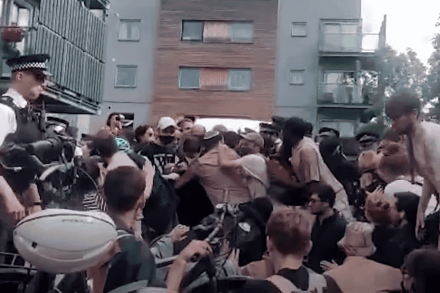
On Saturday immigration enforcement officers went to Peckham to pick up a man suspected of overstaying his visa. When they arrived, a crowd of protesters turned up to stop the ‘immigration raid’, blocking the van from departing. When the police turned up, they also found their way blocked. Eventually, they gave up. The arrested man was released on bail. The Home Office released a statement which said that ‘preventing immigration enforcement teams from doing their job is unacceptable.’ This was accompanied by the universally understood but officially unstated caveat: not that we’d prevent you from preventing officers doing their job. https://www.youtube.com/watch?

Will ‘more government’ help us prevent mass shootings?

The calls started almost immediately. The bodies of nineteen children and two teachers had barely cooled when politicians and activists took to social media demanding some sort of action on guns. Some called the National Rifle Association a terrorist organization, while others castigated Republicans for allegedly supporting gun rights over children. Senate Majority Leader Chuck Schumer was urged to bring a bill on background checks up for a vote so the “votes fall with the children who died.” Politics takes no break during tragedies. The crescendo of activist furor will likely peak this weekend during the NRA Convention in Houston. Demonstrations are already planned near the George R. Brown Convention Center with political actors of all kinds expected to attend.

shootings

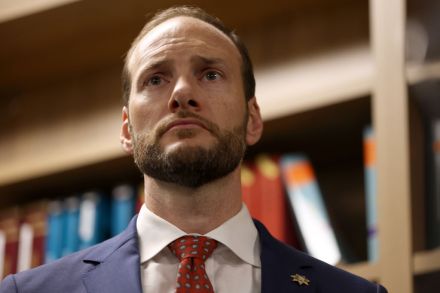
Chesa Boudin’s soft-on-crime policies will doom him

California’s ballots went out early this month, and the drawn-out mail-in primary election ends on June 7. Turnout looks to be low, as there are no competitive statewide races, and November elections are a lock for the Democratic incumbents. Governor Gavin Newsom has one eye on the camera and the other on the White House. Senator Alex Padilla — appointed last year by Newsom to fill Kamala Harris’s seat — is a reliable placeman for the ruling Democratic junta. The contest that politicos will be watching is an up-or-down recall vote for San Francisco’s district attorney Chesa Boudin. It would be a major upset if he kept his job. He might be deposed in a landslide, as was San Francisco’s zany school board, or lose more narrowly.

chesa boudin

Oregon’s nasty woman

Tina Kotek could be well on her way to being the thirty-ninth governor of Oregon. The Democrat, who previously served as speaker of the state’s House of Representatives, won her party’s primary this Tuesday. And with a Democratic supermajority in the legislature and a governor’s mansion that hasn’t housed a Republican since 1979, that’s likely a one-way ticket to victory in November. Kotek is, in many ways, a creature of the state Democratic establishment. Yet in Oregon — and in blue states like it — “establishment Democrat” means something very different than it once did.

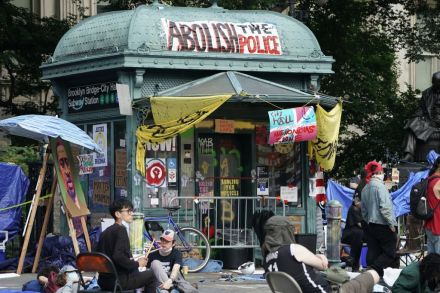
How ‘defund the police’ hurt the black community

Murders skyrocketed in the United States in both 2020 and 2021, increasing 5 percent over 2020 and 44 percent over 2019, according to an analysis of crime trends released earlier this year by the Council on Criminal Justice (CCJ). That increase was felt the most in major urban areas, and affected black Americans more than any other demographic. Just don’t tell that to the corporate media. They’re still obsessing over supposedly deadly and racist police. The Washington Post recently featured a front-page story on an African immigrant family whose son was killed by police in Michigan. The angle was obvious: yet another example of how police in America are disproportionately killing blacks. Nor is this piece an anomaly at the Post.

Criminalising ‘cyberflashing’ is a waste of time

From our UK edition

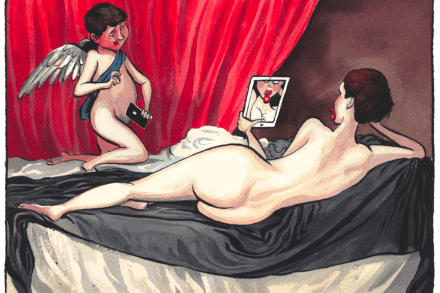
It’s a fact of life that at any given time, a woman’s social media messages will be filled with three things. Young Ponzi schemers asking if you want to earn £500-a-month from the comfort of your own sofa; an unknown jewellery brand with 15 followers begging you to be their new ‘brand ambassador’; and blurry photos of a man’s penis. The men who send these pictures are weirdos, obviously. But if the government gets its way, soon they’ll also be criminals. The Online Safety Bill, going through parliament today, makes so-called ‘cyberflashing’ a criminal offence.

The creeping authoritarianism of facial recognition

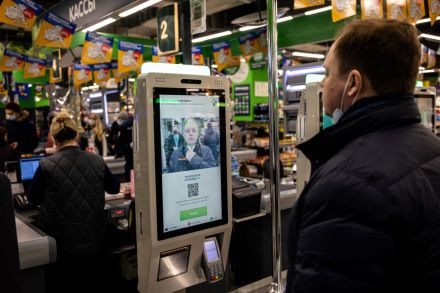
In an effort to lower crime rates, American law enforcement is pushing to combine facial recognition with expanded video surveillance. Politicians worried about their re-election chances due to a perceived crime wave see the expansion as necessary. It’s a sharp swing from 2019 and 2020, when cities like San Francisco and New Orleans were banning or at least enacting limits on facial recognition technology due to privacy concerns. Now, New Orleans plans to roll back its facial recognition prohibition. The Virginia State Senate gave law enforcement a late Valentine’s Day gift by passing a facial recognition expansion bill on February 15 — the Democrats who unanimously approved a ban on facial recognition last year suddenly changed their minds, as did five Republicans.

What’s behind the wave of French police suicides?

From our UK edition

Since Russia invaded Ukraine last week the western media has focused on little else. In Britain this concentration is understandable: the country has finally come out of Covid and there is a large gap to be filled on the airwaves and in the newspapers. Not so in France, still encumbered by Covid restrictions, where in just over five weeks voters go to the polls in the first round of the presidential election. As much as the French are troubled by events in Ukraine – a recent poll reported that 88 per cent of those canvassed were ‘shocked’ by the Russian invasion – they will vote on issues closer to home: the rising cost of living, immigration, the health service, and crime and violence.

Welcome to body-camera democracy

The introduction of body cameras as a staple of the police uniform has been a transformative piece of tech. After just eight years of their use, it’s hard to argue against the impact of body cams in stemming police misconduct. According to a recent study by the University of Chicago’s Crime Lab and the Council on Criminal Justice’s Task Force on Policing, civilian complaints about police misconduct are down 17 percent since the introduction of body cams. Physical encounters, whether fatal or non-fatal, are down 10 percent. It was a struggle to get here. Many cops said that complaint statistics did not justify the indignity of policing the police taping every interaction they have with the public. A vocal minority countered: “If everything is so cool, we will see it.

body cam

Letters: In defence of the police

From our UK edition

A health-care disaster Sir: Kate Andrews’s piece on who really controls the NHS (‘Waiting game’, 12 February) gives us a flavour of how things have come to this: an unaccountable health service with a government attached. We are about to enter a new phase, with additional taxation in the form of increased NI based on promises which are already looking hollow — waiting lists will continue to rise. There is no sign that the 100,000 key workers who are needed are going to be found any time soon.

Portrait of the week: Inflation hits 30-year high, Andrew settles out of court and Turkey changes its name

From our UK edition

Home Boris Johnson, the Prime Minister, made ready for a Russian invasion of Ukraine by cutting short a planned visit to northern England for a Cobra meeting. ‘We are on the edge of a precipice,’ he said. He said Britain was prepared to target Russian banks and companies, and stop them raising money on London’s financial markets. Sir Keir Starmer, the Labour leader, condemned an online rally called No War in Ukraine: Stop Nato Expansion, organised by the Stop the War coalition, of which Jeremy Corbyn is the deputy president. Petrol prices reached a new high of 148.02p a litre. Inflation rose to 5.5 per cent, its highest for 30 years. Unemployment fell to 4.1 per cent and job vacancies reached a record of 1.3 million; wages fell by 0.

Dick’s departure is Sadiq Khan’s victory

From our UK edition

Sadiq Khan forced Cressida Dick out of her job as Metropolitan Police chief. Both made that very clear this evening, with Dick saying 'the mayor no longer has sufficient confidence in my leadership to continue', while Khan said he was 'not satisfied with the Commissioner's response' to his ultimatum for changing the Met's culture of misogyny, racism, homophobia and bullying. The Met is clearly an institutional basket case The Mayor of London has played a political blinder on this. Unlike Home Secretary Priti Patel, who has the ultimate authority on the appointment — and exit — of the Commissioner, he has been quick to respond to last week's report which revealed appalling messages exchanged by some officers at the Charing Cross station.