Poland

The pleasure of reliving foreign travel through food

From our UK edition

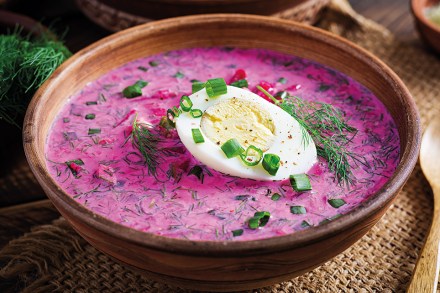
The idea of the kitchen as a space for transformation and transportation is not a new one. Many writers have explored the room’s ability to offer both domesticity and alchemy at the same time – how it allows cooks to travel vicariously through the food they make. This is the subject of Cold Kitchen, Caroline Eden’s memoir of her time spent in her kitchen in Scotland and of her travels to Eastern European and Central Asian cities – and somehow she makes it fresh and compelling. She is an author and critic who has written extensively about the food and culture of the countries of the former Soviet Union. Black Sea, in which she explored Odessa, Istanbul and Trabzon, received a clutch of prizes, and Red Sands, about Central Asia, won the prestigious André Simon food book award.

poland

The Polish miracle

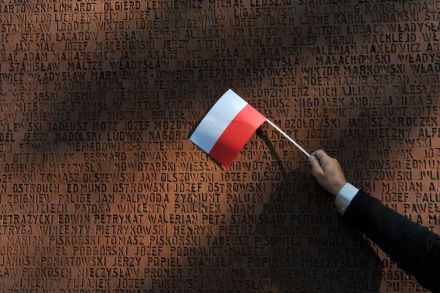
Poland’s Third Republic entered the world in 1989, after a dark period of occupation and oppression at the hands first of the Nazis and then the Soviets. As democracy was taking its first tentative steps in Warsaw, the USSR still had two years left to live and Germany was not yet unified. Yet somehow, over the next thirty-four years, Poland went from a poor post-communist state to a rapidly rising economic powerhouse and serious geopolitical force. Nothing about this rise was inevitable. Human agency, unforeseen events and providence play into every historical development — and Poland’s remarkable progress is no exception. It took leadership, will and luck. A central desire of the Polish people since long before 1989 has been to become a part of the West’s vision of Europe.

The airport dividing Poland’s politicians

From our UK edition

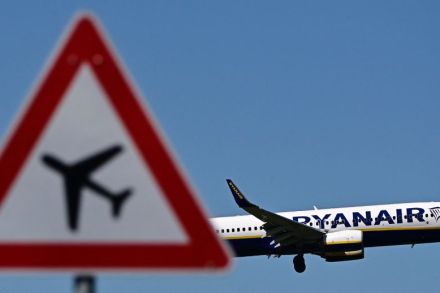
In 2017, the Polish government set out to build one of the largest airports in Europe on the outskirts of Warsaw. The project, known as the Central Communication Port, or CPK, was meant to combine a new international airport with a high speed railway network, connecting the Polish capital and the country’s peripheral regions. With the austerity of the communist era fading from memory, the CPK has come to symbolise the rapid development of Poland, a nation which has risen from political obscurity to become the EU’s sixth largest economy and one of Nato’s strongest military powers. Following last year’s parliamentary elections, and the subsequent change of government, conflicting visions for Poland’s future have brought the entire project to a standstill.

Agent Zo: the Polish blonde with nerves of steel

From our UK edition

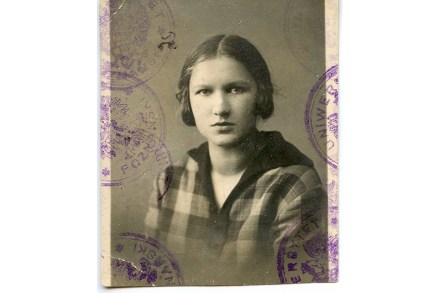
In recent years, far from diminishing, the number of books on the Nazis, Occupied Europe and the Holocaust – events that now lie three quarters of a century in the past – seem only to grow. New archives are opened and attics are raided for forgotten diaries and letters. One historian who has mined them with great skill is Clare Mulley, the author of books on spies and Hitler’s pilots. She has now unearthed a story about a bold and resolute Polish agent, Elzbieta Zawacka, who went by the name of Zo. Her adventures are extraordinary, and their background is no less fascinating.

Poland’s MBA scandal has exposed our credentialling culture

From our UK edition

In February 2024, Poland’s Anti-Corruption Bureau opened an investigation into the ‘Collegium Humanum Warsaw Management University’, a ‘Private Management School’ opened in 2018 by a man now (for legal reasons) referred to only as Paweł C. That same month, Paweł C was detained by the Public Prosecutor’s Office on suspicion of issuing diplomas in exchange for personal financial gain. Today, the desire for the appearance of wisdom is often greater than the desire for wisdom itself. Poland has an interesting relationship with academic credentials. The Collegium Humanum website boasts of offering ‘prestigious degrees’, including cut-price three-month MBA programmes marketing themselves with the words ‘save 6,200 zlotys and almost a year of studies’.

The Regime is bad eastern European pastiche

When you tire of trying to find the humor in The Regime, HBO’s new satire set in an unnamed “middle European” country, you can keep yourself occupied by trying to identify all of the historical references. The series was shot in Austria and the interiors have a dilapidated imperial feel, so perhaps we’re meant to think of one of the Visegrád countries — Czechia, Slovakia, Poland and Hungary — that inherited the heartlands of the Habsburg monarchy. The government, however, is led by a capricious and occasionally brutal authoritarian. Alexander Lukashenko of Belarus, often called Europe’s last dictator, immediately comes to mind. Chancellor Elena Vernham, played by Kate Winslet, is said to have studied medicine in Paris.

regime

A web of rivalries: The Extinction of Irena Rey, by Jennifer Croft, reviewed

From our UK edition

Jennifer Croft is a translator of uncommon energy. In 2018 she won the International Booker Prize for her rendering of Flights by Olga Tokarczuk. In 2021, she took on Tokarczuk’s The Books of Jacob, a great big historical epic. Now she’s written a satirical page-turner set over what one character calls ‘seven toxic, harrowing, oddly arousing, extremely fruitful weeks’. Like members of some ancient mystery cult, eight translators fetch up in a house near a primeval forest in Poland on the Belarus border. The year is 2017. ‘Bedraggled and ecstatic’, they’ve come to translate Szara eminencja (Grey Eminence), a novel about art and mass extinction, by the Stockholm-worthy woman of letters Irena Rey – their host, their author, their Athena.

Poland and Hungary learn different lessons from history

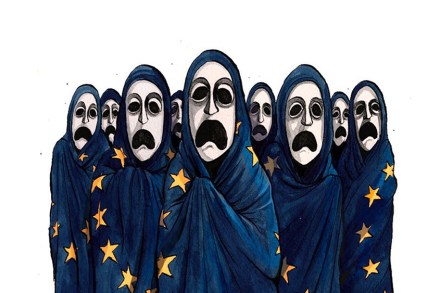
For decades, the European Union was dominated by a combination of French élan and German economic clout. By the late 2010s, a conservative Budapest-Warsaw alliance seemed poised to challenge this arrangement. The ideological firepower was supplied by Hungarian prime minister Viktor Orbán, who emerged as an unlikely spokesman for the international right, while Poland’s booming economy and large population lent the partnership some much needed heft. The Polish elections in mid-October not only marked the end of the Law and Justice party’s near-decade of conservative rule; they offered another blow to a Polish-Hungarian relationship already fraying over the war in Ukraine.

poland

‘The truth will make us free’: students on the march in post-war Europe

From our UK edition

One night in early autumn 1982, two young men roamed the streets of Lodz in Poland. It was a dark period in the country’s history – one of many. A mass movement led by the Solidarnosc trade union had recently attempted to challenge the communist regime which had kept the country under a heavy Soviet yoke, with little to offer but food shortages, economic decline and the erosion of national identity. The authorities had responded with force to the widespread strikes, declaring martial law in December 1981 and rolling tanks into cities. Protests were silenced with guns. Thousands were arrested and dozens killed. When Waldemar Fydrych and Piotr Adamcio wandered through Lodz months later, the streets were eerily quiet.

Poland’s battle with the EU over migrant quotas

From our UK edition

Another day, another spat between Warsaw and Brussels. This time, Poland has declined to participate in the European Union’s latest plan to relocate migrants and asylum seekers within the bloc, with countries who refuse being expected to pay €20,000 per refugee. Hungary has also voted against the pact, while Malta, Lithuania, Slovakia, Bulgaria have quietly abstained.  On 15 June, the Polish parliament (the Sejm) went further and passed a resolution opposing the plan, with the ruling conservative Law and Justice party (PiS) announcing a national referendum on the matter. The referendum will take place on the same day as the general election in either October or November this year.

Why the US shouldn’t underestimate Poland as an ally

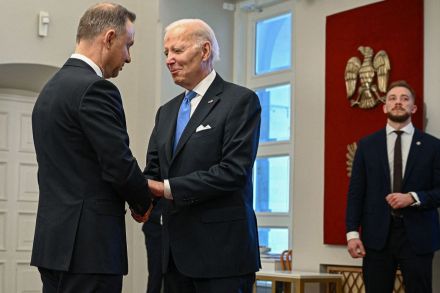
Polish Prime Minister Mateusz Morawiecki is finishing up his three-day trip to the United States on Thursday, almost two months after President Biden’s trip to Poland. The visit is a good opportunity to showcase the solidity of the US-Poland alliance, which, as Morawiecki said, is “an absolute foundation of our [Poland’s] security.” The Poles are truly enamored with the United States, with 91 percent of the populace viewing the US positively. Contrast that with the United Kingdom at 64 percent, and the scale of Poland’s affinity for America becomes clear. Warsaw also has one of the highest levels of confidence in American reliability as a partner at 86 percent, more than any other European country except for the Netherlands.

Poland, 1968: the last pogrom

From our UK edition

‘Are you Jewish?’ the officious-looking Dutch diplomat asked my dad. ‘Yes’, he said, realising at that very moment, everything had changed. He was no longer Polish; the culture he had been born in, the citizenship he held, the language he spoke, the country he loved – it all meant nothing. He was just Jewish. He couldn’t be both. The diplomat stamped my father’s papers and he left for a new life in western Europe. Up to 20,000 Jews, including my mother, were hounded from Poland at the end of the 1960s. They were accused of supporting Israel in a virulent anti-Semitic campaign led by the communist government. This anti-Jewish campaign was ostensibly sparked in 1967 by the Six-Day War between Israel and its Arab neighbours, supported by the Soviet bloc.

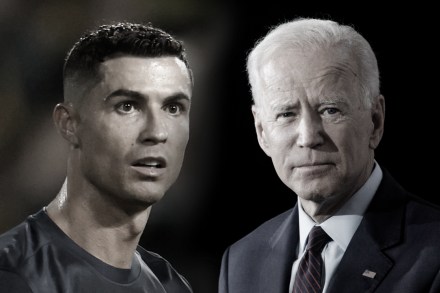
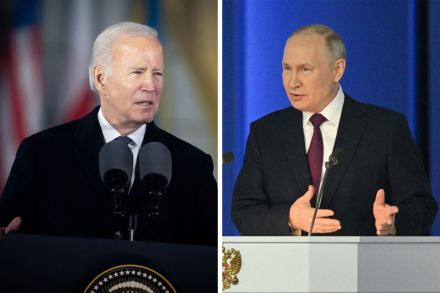
The contrast between Biden’s and Putin’s speeches

The contrast between the two presidents could hardly be starker. One is dwelling in his own dream palace, indulging fantasies about a return to superpower status while transforming his dismal fiefdom into a larger North Korea. The other is on a roll, creating a new grand alliance to prevent his foe from claiming suzerainty over Ukraine and engaging in further territorial predation. In his state of the nation address on Tuesday, Vladimir Putin served up his usual nauseating soup of anti-Western conspiracy theories, complete with references to Ukraine’s “neo-Nazi regime” and a Western “totalitarian” mission. If anyone knows anything about totalitarian impulses, it’s Putin himself.

leader loser

What the US can do about Germany’s hardball on Ukraine

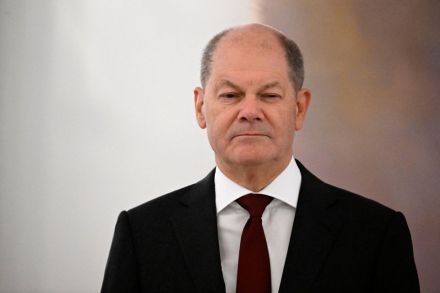
Once again, German Chancellor Olaf Scholz has crushed the hopes of NATO allies and, most of all, the millions of Ukrainians suffering under Russia’s assault. Originally, he refused to send tanks to Ukraine for fear that Russia would escalate the war. More recently, Scholz has said he'd only consider sending tanks if it was part of a coalition, not just Germany acting alone. Last week, the United Kingdom announced it would be sending Challenger 2 main battle tanks (MBT) to Ukraine, making it the first nation to supply modern, Western MBTs to Kyiv. Poland, Finland, and Denmark have also indicated that they would be willing to send their own Leopard 2 tanks. Those are German-origin weapons, so they first require a nod of approval from Berlin in order to export.

Poland is Europe’s next great military power

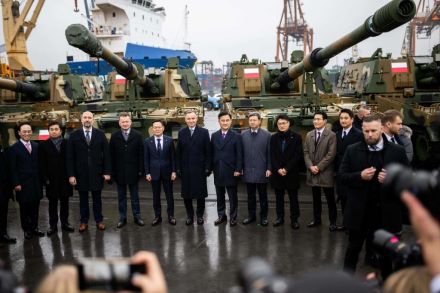
As Russia’s war in Ukraine rages into its eleventh month, there is one country that can truly be said to have learned its lesson: Poland. By the mid-2030s, when the majority of its equipment purchases have been delivered, Warsaw will command one of the most modern, well-equipped armies in Europe. It’s not cheap, but Poland is taking decisive action to be able to face the threats of tomorrow. Poland's $20.5 billion 2023 defense budget is a huge increase over the previous year, and is over 3 percent of gross domestic product (well above the NATO-suggested 2 percent). Aside from equipment, this money will be used to help expand the manpower that Poland can bring to bear, upping its active-duty forces from 140,000 to 300,000 troops.

The West should follow Eastern Europe’s lead on foreign policy

Few countries know Russia’s brutal imperialism better than Poland and the Baltic states. These nations are among a handful in the West to have responded to Putin’s invasion of Ukraine with the decisiveness and clarity of vision that the security environment demands. This is why the United States, as it faces a dual threat of China and Russia, should look to Eastern Europe for inspiration. Poland has undergone the most dramatic transformation of the bunch, increasing its defense budget and boosting the size of its military, in addition to supplying Ukraine with a vast array of materiel. Warsaw has pledged to raise defense spending to 3 percent of gross domestic product (GDP) within a year, up from 2.2 percent, which will be nearly on par with the United States.

NATO acquits itself well in the Poland missile crisis

Mid-afternoon Tuesday, a missile struck the town of Przewodow in eastern Poland close to the Ukrainian border, killing two. The incident immediately set off alarm bells around NATO and the world, as Poland, a member of the military alliance, could invoke Article 5 of the North Atlantic Treaty, bringing all 30 members to its defense. The Polish government is considering invoking Article 4 of the treaty, which allows any member state to call a meeting of all members to discern if "territorial integrity, political independence or security… is threatened." NATO was due to meet on Wednesday anyway, but the tragedy in Poland has superseded the gathering’s planned lineup.

The forgotten history of Poland and Ukraine

From our UK edition

Since the outbreak of war in February there has been an overwhelming focus on the historical links between Russia and Ukraine, partly to counter Putin’s grand assertions that Kyiv belongs to Moscow. But this spotlight on Russia has meant the important history of Poland and Ukraine has been fatally overlooked. Ukraine was part of the Polish state for longer than it was inside Russia – and this is key to understanding why Ukrainians are different from Russians. In other words, it is impossible to comprehend Ukraine’s history without examining the impact of both Poland and Russia. A thousand years ago the people who now call themselves ‘Ukrainian’ had not yet adopted this term.

The EU is trying to bring Hungary to heel

From our UK edition

If there was a word in Euro-speak for ‘Move on, nothing to see here,’ the EU would undoubtedly have used it in its announcement yesterday about Hungary. Brussels has formally notified Budapest that it is invoking the so-called ‘conditionality mechanism’ against it, meaning a supermajority within the EU can vote to withhold funds from a member state where there is a threat to the rule of law coupled with direct effects on the sound financial management of the EU budget or other EU financial interests. The notification itself has not been publicised; but everything, the EU says, is in order.

How many refugees can Eastern Europe take?

Hundreds of thousands of Ukrainian refugees have already streamed into Slovakia, Hungary and the Czech Republic. Head north to Poland, and the numbers go from the unprecedented to the jaw-dropping: two and a half million refugees have entered the country with a total population of 38 million since the war in Ukraine began. In the Czech Republic, where I live, official estimates put the current number of refugees at over 300,000, a figure expected to rise to between 500,000 and 600,000 in the coming months. In a country of less than eleven million, that’s five percent of the population. In Poland, a proportion closer to ten percent is possible. At the moment, most of the Czech Republic’s refugees are concentrated in Prague.