Podcasts

A podcast about the literary canon that actually deepens your knowledge (sort of)

From our UK edition

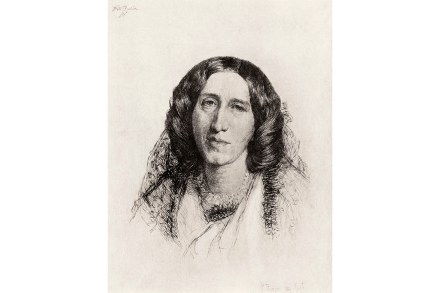
While most of life’s pleasures can be shared, reading is lonely. It’s more than possible for six friends to enjoy an exquisite meal, a bottle of wine and then settle down for a four- or five-hour orgy. Food, drink, sex: these things are better shared. But if, as dawn approached, someone cracked open Chaucer’s ‘Parliament of Fowls’ and intimated that it was time to really get down to brass tacks, it could only spoil the mood. Reading is lonely because so much of the reading that matters is hard. The books that change the world and shake the culture are rarely pure pleasure. The heaven sections of Paradise Lost. The war bits of War and Peace. The history bits embedded within the war bits of War and Peace.

Wholesome, intimate and suspiciously vague: The Michelle Obama Podcast reviewed

From our UK edition

Back in March, I made a long-odds bet that Michelle Obama would be the Democratic party’s vice-presidential nominee. I knew that in her memoir, Becoming, she had said that she wasn’t interested in high office. But political candidates always claim they aren’t running — until suddenly they are. Joe Biden, the presumptive Democratic nominee, had already said he’d take Michelle as his VP ‘in a heartbeat’, which struck me as funny since, if Biden’s heart stopped beating, his VP would become commander-in-chief. Since Biden had been Michelle husband’s running mate, the idea of a 2020 Biden-Obama ticket had a fairytale symmetry that would thrill the public.

Hats (and knickers) off to the hosts: The Naked Podcast reviewed

From our UK edition

I spent half an hour this week listening to a woman make a plaster cast of her vulva. Kat Harbourne, co-host of The Naked Podcast on BBC Sounds, opened a recent episode by buzzing her bikini trimmer over the microphone before squatting over a British Airways peanut dish. Jenny Eells, her partner in crime, stood close by offering to hold up her dress. ‘I feel a bit like a voyeur, almost,’ she said, as if surprised at herself. ‘Thanks for letting me be a part of it.’ Then the mould-maker, Phoebe, put a porridgy alginate in Kat’s dish, and Jenny thought it looked ‘tasty’. Jenny and Kat are used to seeing each other naked. Most weeks, they invite on a female guest, and encourage her to strip off with them so that they can have a chat in the nude.

Diamond & Silk launch new podcast today

Pro-Trump commentators Diamond & Silk are launching their first ever podcast on Thursday with special guest Donald Trump Jr, the duo confirmed to The Spectator in an interview Wednesday. The duo dropped a teaser for Diamond & Silk: The Podcast on Spotify and Apple Music on Monday, promising that it would deliver 'the real news, none of the fake media spin'. They told The Spectator that they hope sharing their story of leaving the Democratic party and supporting President Trump can inspire other voters to get off the fence.

silk

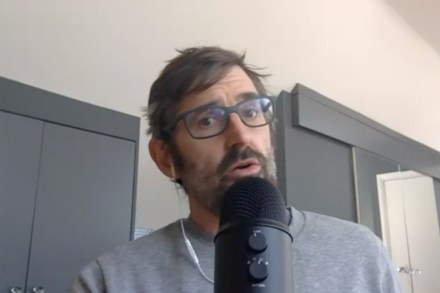
Louis Theroux’s podcast reveals a master at work

From our UK edition

I always want to know more about Louis Theroux, which is odd, since I’ve seen so much of him already. I’ve seen him hanging out with Nazis, auditioning for Broadway and undergoing liposuction. I’ve seen him chased by scientologists and given the runaround by Jimmy Savile. I’ve even seen him evading the insistent romantic advances of an American sex worker. Why am I still interested? Perhaps it’s that his personality veers close to seeming like an act. The otterish earnestness, the jerky, mannequin physicality. The spectacles that feel like a prop. There is something in me that wants to lift the lid on the real Louis Theroux, to sweep the curtain aside with a flourish and say: ‘This is how he gets them to say what he wants!

The best podcasts for all your corona-gardening needs

From our UK edition

The American diet was probably at its healthiest in the second world war. Fearing interruption to supply chains, Washington launched a national Victory Gardening programme within a fortnight of Pearl Harbor, and saw two thirds of the population heed the cry to fill their backyards, rooftops and window boxes with veg. The scheme was so successful that, by 1943, home-gardeners were producing 43 per cent of all fresh food consumed. ‘Dig for Victory’, the latest episode of Gastropod, a superbly researched food and science podcast, opens with the co-hosts Cynthia Graber and Nicola Twilley rustling bags of manure as they attempt to plant tomatoes, peppers and ‘urbs’ in a tiny patch of earth in New York.

Why haven’t podcasts cracked the recipe for audio drama?

From our UK edition

In Beeb-dominated Britain, the commercial triumph of podcasting — epitomised by Spotify’s recent £100 million deals with Joe Rogan and Kim Kardashian — is held up as proof of the complacency of the radio establishment. Freed from the constraints of box-ticking commissioners, wily podcasters have been able to steal a march on Broadcasting House by giving audiences what they actually want. Or so runs the theory. But I can’t help thinking there’s one large slice of legacy radio territory the podcasters haven’t taken yet. And that’s the good old-fashioned audio drama. Not the most fashionable genre right now admittedly, but an important one nonetheless.

From Hogarth to Mardi Gras: the best art podcasts

From our UK edition

If you study History of Art, people generally assume you’re a nice, conscientious, plummy-voiced girl. Sometimes, people are right. It is the only subject I can think of that requires a student to describe what is already printed on the exam sheet. ‘In the foreground of the picture is a tree — in full leaf! — and on the horizon, a tower.’ It feels a little basic. But with art history podcasts description is everything. And to do it well is a real art in itself. The presenters of the Art Newspaper’s The Week in Art podcast were superb last week in their exploration of a portrait by William Hogarth.

The power of cheap music: pop podcast round-up

From our UK edition

Noël Coward was so right that his words have become a cliché: it is indeed extraordinary how potent cheap music can be. Its potency, however, is not innate. Amanda Prynne, from Coward’s Private Lives, would not have been especially struck by ‘Some day I’ll Find You’ had it been playing on a wireless in a shop; its impact came from hearing it as she again encountered her ex-husband. For cheap music to be potent, context is everything. Without a wider meaning, a cheap little pop song is just notes and chords. With meaning, the most throwaway frippery can become an object of fascination. That’s often true of the best known of songs.

The problem with mystery podcasts like Wind of Change

From our UK edition

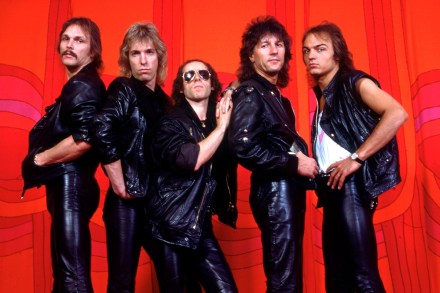
Did the US secretly write a power ballad in order to bring down the Soviet Union? That’s the question behind Wind of Change, a serial documentary that has topped the podcast charts. It’s the work of an investigative journalist called Patrick Radden Keefe who claims to have once received a tip-off, from an intelligence contact, that the song ‘Wind of Change’ — recorded by the hair metallers Scorpions — was actually a CIA campaign to encourage anti-Soviet uprisings. Now he wants to prove it. This week’s episode, the fourth of eight, takes Keefe to a collectors’ convention in Ohio in pursuit of an internet user called ‘Lance Sputnik’ who creates customised versions of GI Joe action figures.

The Literary Disco podcast made me want to throw my laptop at the wall

From our UK edition

One of the stranger things that happened in the period just before lockdown was the sudden disappearance of audiences from TV and radio shows. Late-night hosts told jokes to silent rooms in front of a white background, dutifully pausing for a laugh that never came; panel shows were broadcast without so much as the sound of tumbleweed. Punchlines flopped, charisma evaporated. It was as if Earth’s comedians had been banished to some purgatorial realm, where they would be forced to tell jokes to no one as a form of penance. Comedy needs an audience. It’s not clear that the same is true of short stories. In Selected Shorts, well-known actors read short stories to a room full of people.

What makes Joe Rogan so successful?

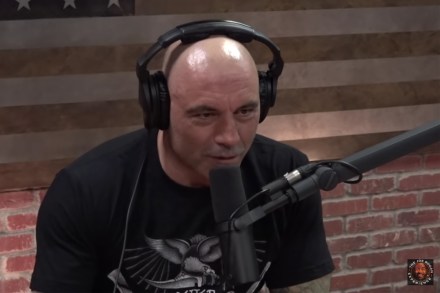
If you had watched the Joe Rogan Experience in the early 2010s, you would have had no idea that it would become the world’s largest, most influential podcast. Filmed in the living room of the Fear Factor host and Ultimate Fighting Championship commentator Joe Rogan, JRE featured Rogan and his hapless sidekick Brian Redban hunched over webcams in novelty t-shirts and beanies and talking to a strange assortment of comedians and conspiracy theorists. It was sponsored by Fleshlight, a company which produced masturbatory aids.Fast forward 10 years and JRE is moving to Spotify in a deal allegedly worth $100 million. It is watched and listened to millions of times a week. Guests have included Elon Musk, Mike Tyson, Bernie Sanders, Robert Downey Jr and Mel Gibson.

joe rogan

Daddy issues: how Barstool Sports’s top podcast backfired

All good things come to an end or, in this case, all trash must return to the trash heap. The raunchy, sex-obsessed podcast Call Her Daddy is likely ending for good after negotiations with Barstool Sports went south. Barstool, founded by Dave Portnoy aka El Presidente, currently owns the rights to the Call Her Daddy podcast, hosted by Alexandra Cooper, 27, and Sofia Franklyn, 26. The podcast mysteriously went dark for several weeks until Portnoy recorded his own episode titled ‘Daddy Speaks’ revealing that the women were shopping the show to other platforms despite being under a three-year exclusivity contract.

Call Her Daddy hosts Alexandra Cooper and Sofia Franklyn (Barstool Sports)

The author who made a living measuring the legs of lice

From our UK edition

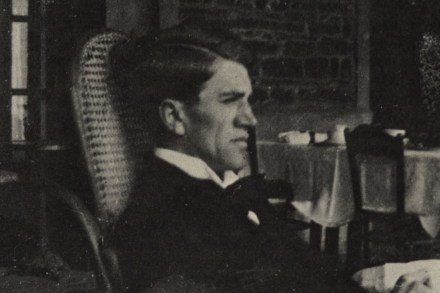
Wilhelm Nero Pilate Barbellion, real name Bruce Frederick Cummings, earned his living measuring the legs of lice in the Natural History Museum. ‘To the lay mind how fantastic this must seem!’ he exclaimed in his journal, before enumerating his enthusiasms for Burton’s Anatomy of Melancholy, names like ‘Mr. Hogsflesh’ and ‘Pickle Herring Street’, and Petticoat Lane on Sunday mornings. The young naturalist had a habit of landing himself in embarrassing situations. He once spotted a pretty woman at the theatre and composed a notice for the classifieds in a bid to find her. The editor sent his missive back supposing he was a white-slave trafficker.

Did Dave Rubin steal the only good idea in his book?

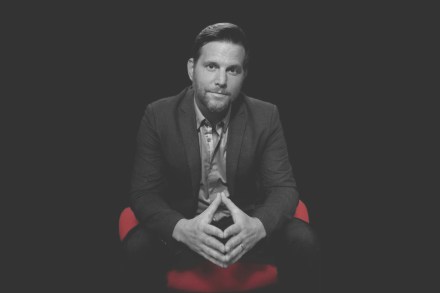
‘I want you to walk into a bar and order yourselves a full-bodied opinion,’ Dave Rubin writes in his new book. It seems the podcast host’s habit is more along the lines of glancing over to the next stool and saying ‘I’ll have what she’s having.’ Don't Burn This Book: Thinking for Yourself in the Age of Unreason is currently sitting in 12th place on the New York Times nonfiction bestseller list. Reviews, though, have not been particularly kind. 'Despite its provocative title, it's hard to imagine anyone being so angered by a book loaded with the same milquetoast arguments that he's been hammering for years,' wrote Anthony L. Fisher in Business Insider. 'Don’t Burn This Book is not a serious work.

dave rubin

Beware the dragon, Mr Bannon!

Everybody knows that the Communist party of China is sensitive to criticism. Internal critics have a tendency to disappear; external ones often find themselves silenced. Beijing pursues a policy of ‘elite capture’ — using powerful non-Chinese actors to pursue influence perceptions of China and advance its interests.Enter Steve Bannon, the former White House senior adviser, who likes the CCP even less than the elites. Bannon has been waging economic war on Beijing for years and is now using his new smash-hit radio show, War Room: Pandemic, to launch endless broadsides against the tyranny and malfeasance of China’s leadership. Bannon has been sharper than almost anyone in seizing the opportunities the pandemic has created to trash China’s global prestige.

steve bannon

The importance of sadism in writing a great screenplay

From our UK edition

How do you tell a great story? According to Craig Mazin, you have to be a sadist. ‘As a writer, you are not the New Testament God who turns water into wine,’ Mazin chuckles on his long-running podcast Scriptnotes. ‘You are the Old Testament God who tortures Job because, I don’t know, it seems like fun.’ Mazin wrote HBO’s horrifying, incandescent miniseries Chernobyl, and so knows of what he speaks. In the episode of this podcast titled ‘How to Write a Movie’, he describes how screenwriters build plot out of suffering. He outlines a scenario, making the stakes higher each time. Suppose our main character is a single father desperate to protect his child. Not good enough.

I’ve lost patience with podcasts and their presenters

From our UK edition

‘To be recognised and accepted by a peregrine,’ wrote J.A. Baker in 1967, ‘you must wear the same clothes, travel by the same way, perform actions in the same order. Like all birds, it fears the unpredictable.’ Sitting around in the same old clothes, performing chores in the same order, travelling by no way at all, I’ve found comfort in Baker’s assurance that I may at least prove attractive to birds in my slovenly purdah. Sir David Attenborough read The Peregrine beautifully on Radio 4 just before Christmas, but if you were too busy steaming puddings to listen, you may find this a good time for enjoying the series online.

The genius of Joe Rogan

From our UK edition

Last month, just before coronavirus conquered the airwaves entirely, millions of Americans gave up two hours to hear a professor of epidemiology discuss the emerging pandemic. Despite its huge reach, not to mention its quality, the interview wasn’t broadcast on any of the news networks. Rather it was the work of a former martial-arts pundit and hallucinogenic-drug enthusiast who also happens to be one of America’s most popular — and influential — podcasters. Although it racks up some 190 million downloads a month, The Joe Rogan Experience tends to fly somewhat under the cultural radar — particularly in Britain. Even worse, his brash style and predominantly male fan base means that Joe Rogan is sometimes unfairly labelled an arch-reactionary.

How to succeed in sculpture (without being a man)

From our UK edition

Whee-ooh-whee ya-ya-yang skrittle-skrittle skreeeek… Is it a space pod bearing aliens from Mars? No, it’s a podcast featuring aliens from Venus: women sculptors. If the intro music to Sculpting Lives: Women & Sculpture sounds like Dr Who, its two jolly presenters — Jo Baring, director of the Ingram Collection of Modern British & Contemporary Art, and Sarah Turner, deputy director for research at the Paul Mellon Centre for British Art — come across as younger, slimmer, artier versions of the Two Fat Ladies. ‘Jo can talk about Liz Frink’s work until the cows come home,’ Sarah informs us at one point before warning Jo: ‘You’re going to have to convince me a little bit.