Pets

How Fatima Bhutto’s dog saved her from a toxic relationship

Americans who are concerned with heightened levels of political violence should understand that we are fortunate compared with Pakistan, whose most visible political family, the Bhuttos, have a history that makes even that of the Kennedys look tame. One survivor, journalist Fatima Bhutto, born in 1982, encapsulates the family tragedies. Her grandfather, the charismatic prime minister Zulfiqar Ali Bhutto, was executed under trumped-up charges by the government serving the man who deposed him, army chief Zia-ul-Haq. Her uncle, Shahnawaz Bhutto, died in mysterious circumstances, possibly murdered, at the age of 26.

The lunacy of emotional support animals

From our UK edition

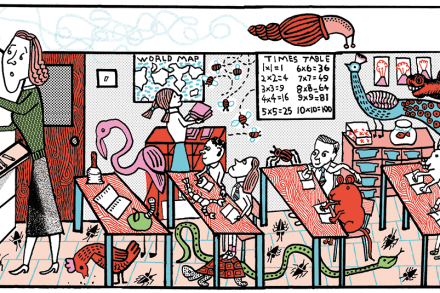
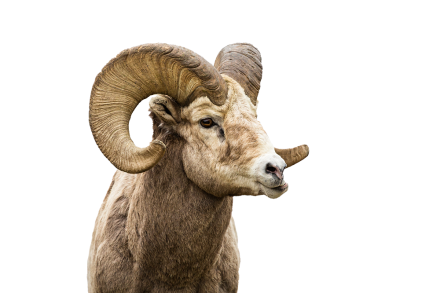
Naturally, the start of the new school year is often stressful for pupils. Perhaps those anxious children returning to their classrooms this week could follow the example of Milly, a young Lancashire student. When picking up her GCSE results from her school, Tarleton Academy, near Preston, she brought her ‘best friend’ Kevin – a four-year-old ram. Milly says Kevin is her ‘therapy sheep’. He accompanies her ‘pretty much everywhere’. He was her date to the school prom, wearing a halter to match her dress. Milly seems resilient enough: later this year she is going to compete in the Young Shepherd of the Year competition. Perhaps her unwillingness to be parted from Kevin displays her dedication to her work.

Am I cursed when it comes to my pets?

From our UK edition

You could say my unfortunate track record with pets began in the cradle. At the time of my birth my Hungarian parents had a dachshund named Herr Doktor (because of the serious expression he always wore), or Doki for short. He was very put out by my arrival, as I received much of the attention previously afforded to him, and because my fastidious mother wouldn’t allow him into the nursery. So he upped sticks and moved in with the family next door. But as Doki was unfamiliar with the terrain there, one day he darted on to their driveway at the wrong moment and was run over and killed. While I obviously wasn’t to blame for Doki’s sad demise, I did play a role in it. And in time the incident seemed to fit into a pattern in my life.

I’ve had it with neurotic dog owners

From our UK edition

‘She’s overweight! You should weigh her every week and if she puts on so much as 50g, immediately reduce her diet,’ one commenter said. Another castigated me for not using organic shampoo, and someone else told me off for my poor choice of outdoor coat. Under every post were furious debates, judgements and accusations. I adore Dixie. She is coming up for four years old and I want the best for her. But she is, after all, a standard short-haired dachshund, not a human toddler – and frankly it all seems a bit much. The number dogs being given fluoxetine, the same drug used in Prozac, has increased tenfold over the past decade. Perhaps that’s because more than half of dog owners are now members of some kind of Facebook groups related to pet health and wellbeing.

We need a cat lockdown now

From our UK edition

I have always marvelled at the attitude of cat owners who point to bloodied arms or dramatic scratches and explain – with docile, almost apologetic acceptance – that Jasper or Bella just got a bit annoyed. It was all the human’s fault for patting them in the first place. Violent animals are a form of domestic abuser and should be treated as such. Why would anyone allow something to attack them – or their children – rather than simply removing the animal from their home? Sure, they are unlikely to maul you to death, unlike the technically banned XL Bullys, but it’s a different story for wildlife. Domestic cats, the wily rotters, are thought to kill around 270 million birds, mammals and reptiles per year across the UK. They’re the nukes of the animal kingdom.

Of course my dog sleeps with me

From our UK edition

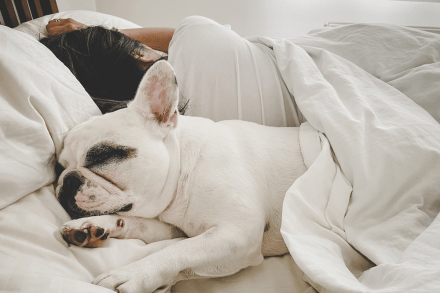
It's 4 a.m. and my German shorthaired pointer, Percy, is lying on top of me. This isn’t a giant infraction on his part. Percy and I have long shared a bed. We start the early evening as we always do – me reading and he beside me at my invitation, the light on his side of the bed is on too, in case he wants to read as well; something German perhaps, like Thomas Mann. Later, when I decide to go to sleep, I turn out both of our lights and we glide off – his paw often in my hand – into the great unconscious. At some point during the night, he leaves his designated strip and inches towards me, which is probably why my dreams always seem to orbit around being strangled with a velvet ribbon.

‘I had once been a cat’ – the feline fantasies of Caleb Carr

From our UK edition

One of my favourite cartoons is of the owl and the pussycat going to sea in their pea-green boat. The caption is the owl’s guilty admission: ‘I’m afraid there have been… other cats.’ Caleb Carr, in this memoir of his own love affair with a pussycat, is straightfaced: ‘I should own up to the fact that I’d had similar relationships with other cats – even (and in some cases especially) cats who were not mine.’ I have a high tolerance for cat books, but after this one I turned in relief to a ‘Simon’s Cat’ animation on YouTube. There’s one in which a hapless man opens the door for a kitten who has spent hours scrabbling hysterically at the glass like a prisoner longing for escape. The animal then decides that, on reflection, outdoors is overrated.

How big business pushed up vet bills

From our UK edition

I was on my way to a Pilates class when I spotted Paul waving at me urgently from across the road at the bus stop. ‘Can you help, Miss,’ he said. ‘It’s Gladys, she’s in a bad way.’ I looked down at his Staffordshire bull terrier and immediately saw what he meant. The 16-year-old dog was trembling, panting and appeared to be struggling to stand. She’d also lost a lot of weight. I’ve known Paul and Gladys for the past eight years, running into them on the street near my home in east London. Paul is not wealthy and has a couple of disabilities. He always calls me Miss. ‘She’s got bad in the past few days,’ he said. ‘She’s not eating, she just paces and can’t lie down. I took her to a vet yesterday. I think it’s time for her to go.

Don’t bribe your dog with treats

From our UK edition

‘Do NOT look Lulu in the eye. Keep your voice low and soft and ignore her barking. Do NOT make arm or hand gestures. You can give her a treat, letting her come to you or drop it for her. She has been doing well with strangers outside but her property is difficult for her.’ I was alarmed by this WhatsApp message from my cousin. I was due to visit. Would I be attacked by Lulu when I walked in? Surely I wouldn’t remember these instructions forwarded from her trainer by then? My cousin’s family, like my own, have  always had dogs. But I was dismayed that, like most modern owners, they had sunk so low as to bribe their pets with food. I was trying to resist the contemporary training-with-food obsession with my own new Jack Russell, Peggy.

Confessions of a catnapper

From our UK edition

As Christopher Snowdon recently pointed out, the past few governments have had a habit of passing laws that are either wildly ambitious or incredibly trivial, while neglecting the real problems Britain faces, such as the housing shortage, the productivity crisis and the eye-watering dysfunction of the NHS. An example of the former is the net-zero emissions law passed in 2019, as if the energy policy of a small island in the North Sea can affect the world’s climate. An example of the latter is a bill that will make it a criminal offence to get cats to follow you down the road. Believe it or not, this had its second reading in the House of Lords last week and will enter the statute books later this year.

A purring cat is not always contented

From our UK edition

Large cats cannot miaow. (Lions and tigers, I mean, not moggies who have overindulged on Whiskers Meaty Selection in Gravy.) The largest feline ever to have lived was a sabre-toothed cat in South America, which weighed nearly half a tonne. Female house cats can copulate up to 20 times a day when in the mood. Male cats have a bone in their penis. Cats are green-red colour blind. There are probably more than half a billion cats alive in the world at this moment. These are gleanings merely from the footnotes of Jonathan Losos’s The Age of Cats, which is portly with information. The book, surveying cats’ evolutionary history, behavioural habits and potential future, has a lovely cast list of felines wild and domestic, large and small.

The naming of cats

From our UK edition

All sorts of animals have been kept as pets over the centuries. We know of sparrows in Catullus and John Skelton. There is a badger with a collar in a fresco by Signorelli – probably not much more biddable than the lobster Gerard de Nerval supposedly took for walks in Paris. The word ‘puss’ seems not to have referred to cats before the late 19th century but to hares, either a pet one (William Cowper had three, of whom Puss was sweet-natured and Tiney ‘the surliest of his kind’), or one being hunted in Surtees. Dogs always occupied a special place, with names and a position in the household. Cats were more marginal, accepted for their useful function of mousing but only gradually being awarded a position of affection.

The Spectator’s letters page is hazardous 

From our UK edition

Question time Sir: Your leading article ‘Sense prevails’ (13 April) is a valuable précis of the Cass Review into NHS gender treatment. However, it also raises several questions. How are the actions of these individuals, groups and organisations different from those of others who have been found to have acted unprofessionally, causing harm to patients who were entitled to place trust for their health in them? Where was the ethical and executive management oversight within the NHS? What other unproven ‘treatments’ are being carried out under the ever-growing demands for more money to be allocated to the NHS? Finally, what sanctions are to be meted out – or will we be fobbed off with the perpetrators’ handbook: ‘Lessons have been learned’?

Why the story of the Holocaust still needs telling

From our UK edition

In Chekhov’s The Seagull Dr Dorn is asked which is his favourite foreign city. Genoa, he replies: in the evening the streets are full of strolling people and you became part of the crowd, body and soul. ‘You start to think there really might be a universal spirit,’ he says. I remembered Dr Dorn when I was discovering Genoa in October. Then it suddenly came to me that I had been to the city before. Genoa was where my family embarked for the Far East, when I was 18 months old, fleeing the Nazis. I don’t know about the universal spirit, though. I’m reading Enemies and Neighbours: Arabs and Jews in Palestine and Israel, 1917-2017 by Ian Black. I had reached 1953 when at midnight a text pinged in from an old friend: ‘Who will cross the street when we pass?

Just how much lower can the Conservatives sink?

From our UK edition

This is the year in which Michael Gambon died, so by definition a grim one for theatre. Of all the tributes, one of the most acute was by Tom Hollander, who recalled how expressive Gambon’s voice was after 30 years on stage. He could reach hundreds of people while seeming to address only one or two. That’s essential theatre acting. When Gambon turned to cinema, his voice had become supple and mellow. It set me to thinking of other great cinema voices. Simone Signoret came first to mind. Then Jeanne Moreau, James Mason, and above all, Henry Fonda. These actors have you at hello. I would have added Marlene Dietrich, but if you can be so easily parodied, can you be truly great? A Los Angeles record producer tells me that teenagers no longer consider actors as role models.

The insane craze for dog ice-cream

From our UK edition

During the few hot days we had in June, I came across my first tub of dog ice-cream nestled among the Häagen-Dazs in my local supermarket. Scoop’s vanilla: ‘Tubs that get tails wagging.’ My first thought was that it was a joke, or perhaps for people who identify as dogs. So I looked it up as I stood in the queue, and it was as if a door opened onto our national psychosis. Purina ‘Frosty paws’, Wiggles and Wags ‘Freeze-Fetti’, Frozzys dog ice-cream, Pooch Creamery Vanilla, Wagg’s Sunny Daze blueberry, Higgins dog ice-cream, Dogsters ice-cream-style treats, Jude’s, Smoofl, Ben and Jerry’s… the market for dog ice-cream is limitless and it crosses the socio-economic spectrum.

Pet portraitist Mimi Vang Olsen marches to the beat of her own drum

Mimi Vang Olsen operates in the West Village equivalent of a goldfish bowl. Every day, the eighty-five-year-old pet portraitist settles in a chair in her studio-cum-storefront on Hudson Street and gets to work, painting dogs, cats and the occasional guinea pig. Tourists stop to peer inside, cooing over a haphazard display of postcards and paintings. Locals tap on the glass to wave hello. During the pandemic, curiosity intensified: Vang Olsen’s shop became an Instagram sensation after she attached a blue mask onto a pug portrait hanging in the window for some much-needed levity. Vang Olsen, however, is nonchalant about the attention. She doesn’t have a cell phone or social media.

vang olsen

A magpie proves a troublesome pet

From our UK edition

With his swashbuckling gait, ominous associations and garrulous demeanour, the magpie is the dandified razor boy of our avifauna and provokes ambivalent feelings (the ‘pie’ part signifies many a mixture). His pilfering reputation has inspired work from Rossini to the prog-rock band Marillion, and in lab tests he’s one of the few creatures brainy enough to recognise his own image in a mirror – even some Marillion fans can’t do that. But it’s hard to see how this corvid could be truly lovable. The artist and poet Frieda Hughes, however, fell for a little foundling Pica pica back in May 2007 when she was refurbishing her ramshackle new home. He was an unloved, unfledged orphan, and adopting him changed her life. George is a diary-based record of the sprightly saga that ensued.

Could this kitty swing the midterms for the Demo-cats?

President Biden must not be feline optimistic about his paltry poll numbers, particularly after his landmark Build Back Better Act died on the Senate floor. But he’s finally delivered on one campaign promise: he’s got a cat. The First Family circulated pictures of Willow, a two-year-old gray and white short-haired tabby cat, on Friday morning. According to Politico, Willow first met Jill Biden “when she jumped on stage and interrupted her remarks during a 2020 campaign stop.” The New York Times reports that "Willow is named after the first lady’s hometown, Willow Grove, Pennsylvania." The cat hails from western Pennsylvania, which could prove useful for the Democrats as they try to claw back some credibility in the run-up to the midterms.

willow cat

Bad boy: Bidens dump dog week before Christmas

They say a dog is for life, not just for Christmas. Clearly that’s another old adage Joe Biden no longer remembers, as this week his White House announced the unsanctimonious jettisoning of Major, the president’s German shepherd, in favor of Commander, a younger, friendlier pup. “Welcome to the White House, Commander,” a tweet from the official POTUS account read. The president’s social media flacks then posted a video of the new First Dog playing with Biden. In the clip, Commander sits in order to earn a treat from the president: clearly an upgrade in the behavioral stakes. https://twitter.com/POTUS/status/1473057147017744390 Major, you may recall, was a rescue taken in by the Biden family in November 2018.

commander biden dog major cat