Peter thiel

The Palantir manifesto doesn’t go far enough

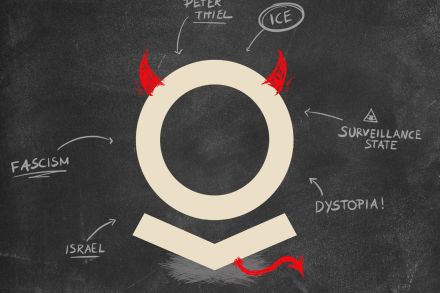
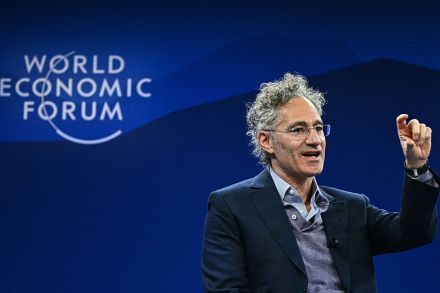
Tech companies like Palantir now find themselves in a bind. Wanting government contracts, they have a reason to stay politically neutral. At the same time, they rightly suspect that the greater part of the left has already marked them for destruction. The hostility has little to do with Silicon Valley’s enthusiasm for Austrian economics, or its occasional calls for a property-based franchise – an old National Liberal demand rather than a fascist one. Rather, the left is hostile to technology because it is America’s conservative party, suspicious of anything that threatens to undermine old solidarities.

alex karp palantir

Can Peter Thiel stop the Antichrist?

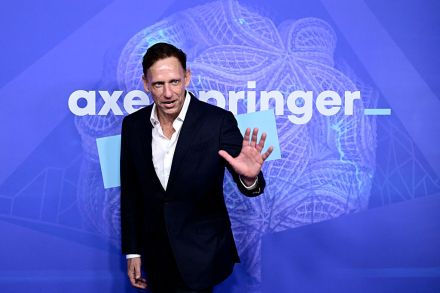
Last December, we flew to Los Angeles to interview Peter Thiel, the billionaire tech tycoon and co-founder of PayPal. We discussed globalization, artificial intelligence and the rise of New York Mayor Zohran Mamdani. But one subject seemed to particularly exercise Thiel: the Antichrist. He promised to expand on this when we next met – which is how we ended up in the back room of a Cambridge college, surrounded by theologians, venture capitalists and AI engineers, to hear Thiel describe the end of humanity. Standing in front of Gustave Doré’s illustration of Satan’s fall in Paradise Lost, Thiel, a can of Diet Coke in his hand, explained why the most important thing he can do with his money is to identify and then defeat the Antichrist.

thiel antichrist

Among the lords of tech

“What’s missing?” the tech titan Peter Thiel asks me, over lunch on the hummingbird-infested patio of his house in the Hollywood Hills. He gestures at Los Angeles, laid out in the haze below us. “Cranes!” he explains. Thiel has argued for years that America has done most of its innovation in digital “bits” instead of physical “atoms” because bureaucracy, regulation and environmentalism have got in the way of the latter. While software has exploded, transport and infrastructure have stagnated. But over the next few days in Austin, Texas, and around San Francisco Bay, I see evidence this is changing.

tech

Why tech leaders are obsessing over Heaven and Hell

Are these the End Times? It certainly feels that way. Algorithmic demons are rewiring our brains. A young father is shot and killed, and people cheer. A woman is stabbed on a train, and no one tries to help her. The horrifying videos of these incidents are then watched millions of times over, often by children. The God in whom America trusts seems nowhere to be found. Can’t you hear the Antichrist knocking? Peter Thiel can. Not so long ago, no public figure outside of the kookier Evangelical universe would have dared admit such a thing, but times have changed.

heaven and hell

Hulk Hogan, my hero

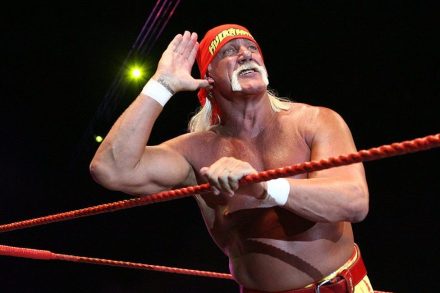
To many people mourning him this week, Hulk Hogan was a larger-than-life super being, an outsized professional wrestling character with a singularly American persona. “I watched him lift 350-pound men over his head and throw them out of the ring,” President Trump said on Friday.  I appreciate a good show as much as anyone, and have seen Rocky III many times. But I was never really a pro-wrestling guy. For me, Hulk Hogan is an important figure because he helped bring about the defeat of one of my life’s great villains: Gawker Media.  Since only a couple of dozen people remember my personal drama with Gawker, I’ll provide a brief summary.

hulk hogan gawker

The real threat of AI is spiritual

Peter Thiel is one of the world’s most powerful men. He was an early investor in companies such as Facebook, SpaceX, Airbnb and an early backer of Donald Trump, as a leading donor to his 2016 campaign. He is a friend and mentor to the man who would be president in 2028: J.D. Vance. Thiel, a multi-billionaire, is also one of the few individuals who clearly have a hand in shaping the future of humanity, so it was disturbing to learn recently that he’s unsure whether humans are worth preserving at all. In conversation with the journalist Ross Douthat, Thiel was asked whether he wanted the human race to endure. He seemed unsure. “I don’t know,” he said, after a long pause. “I would, I would… there’s so many questions implicit in this.

ai

J.D. Vance’s summer plans in the Cotswolds, the ‘Hamptons of England’

Where does a good America First hillbilly like to spend his summer? Cockburn would not have thought the answer was the Cotswolds — that glossy patch of the English countryside where limey aristos and media darlings drink overpriced rose with plutocratic American slebs. And yet your correspondent hears from almost impeccable sources that Vice President J.D. Vance and his wife Usha are looking for properties to rent in the area. Vance is supposedly making enquiries for a country pad, possibly ahead of Trump's state visit to the UK. One Oxfordshire property was unable to help because it is playing host to a literary festival at around the same time. But another filthy rich Anglo is said to be considering offering his own home to the Second Family.

cotswolds summer

Mountainhead gets nowhere near the polished vitriol of Succession

There are few American shows more acclaimed and successful in the past decade than Succession, Jesse Armstrong’s peerless study of the corrupting influence of money and power, as illustrated through a Murdoch-esque media dynasty led by Brian Cox’s bull-like Logan Roy. The series was magnificent because it blended hysterical, unexpected black humor (step forward the excellent Matthew Macfadyen as Tom Wambsgans, who is hilarious virtually every moment he’s onscreen) with the serious thespian pyrotechnics of a starry cast including Cox, Kieran Culkin and the great Jeremy Strong, who, rumor has it, did not believe that he was making a comedy but a serious study of moral decay.

mountainhead

Is Anduril Industries building the future of warfare?

Defense contractors tend, on the whole, to be a pretty faceless crew, indistinguishable in their dark suits and hence little known to the world outside the military-industrial complex. Palmer Luckey, founder of Anduril Industries, strives to be different, invariably sporting a uniform of Hawaiian shirts, shorts and flip-flops – projecting an iconoclastic image attractive to venture-capital investors, somewhat in the manner of former crypto mogul Sam Bankman-Fried. He beguiles journalists with exciting monologues about the great things his vision can accomplish for US defense, making him, according to a glowing profile in the Financial Times, “arguably the most crucial figure bringing Silicon Valley to the front lines of American national security.

anduril palmer luckey

Bryan Johnson and the meme-ing of life

In fifth grade my class read Tuck Everlasting, by Natalie Babbitt, the story of a ten- year-old girl who stumbles on a family of immortals, the Tucks, who impress upon her that eternal life is unnatural and actually a curse. The novel had a profound effect on me. I became obsessed with the book and with the relationship of life to death. One passage in particular has haunted me for decades. “You can’t have living without dying. So you can’t call it living, what we got,” the patriarch, Angus Tuck, says. “We just are, we just be, like rocks beside the road.” I’ve been thinking about this book a lot since I became aware of the tech entrepreneur Bryan Johnson.

The battle of the oligarchs

Money and power have rarely been strangers; often nations are made to shudder when the ruling elites battle each other. Britain’s late empire was divided between liberal manufacturers and aristocratic interests, whose conflicts hastened the rise of the Labour Party and the end of empire. In the United States, opposition to powerful trusts defined progressive politics for decades, ultimately laying the basis for the New Deal and a greater scope for government. In the West today we are witnessing a similar divide among the uber-rich class — epitomized by Elon Musk’s embrace of Donald Trump — that is already reshaping politics. Until 2016 the US establishment, both Republican and Democratic, embraced similar views on national security, global trade and multilateral institutions.

oligarchs

How Silicon Valley fell for Trump

Just weeks after Joe Biden’s disastrous debate performance, the July 13 assassination attempt on Donald Trump radically shifted the election calculus yet again. Amid the intense, fast-moving news cycle, one event that would ordinarily have garnered wall-to-wall coverage went nearly unnoticed. “I fully endorse President Trump and hope for his rapid recovery,” Elon Musk posted to X on the day of the assassination attempt. In recent weeks, a legion of tech giants from the deep-blue stronghold of Silicon Valley have broken ranks and openly pledged support for the MAGA leader. With each new backer comes a slew of mega-donations to his campaign.

trump

J.D. Vance a ‘GREAT GOP candidate,’ says Ron Klain

The final days of the veepstakes are upon us — and Senator J.D. Vance may have an unusual ally in his corner: his longtime business partner, who just so happens to be President Joe Biden’s former chief of staff. Ron Klain called Vance a “GREAT GOP candidate” a few years ago. While President Donald Trump’s veep pick is still unknown, it’s rumored to be down to Senators Vance and Marco Rubio, along with North Dakota’s governor, Doug Burgum. Ironically, old tweets from Klain, and not Trump, are flying around the GOP ecosystem, drudging up Vance’s awkward ties to one of Biden’s closest aides. In 2017, Vance joined Revolution, a DC-based investment firm where Klain worked as a vice president. It was run by Steve Case, the liberal billionaire founder of AOL.

vance

Which presidency does Joe Manchin want more?

Elves and Epstein with Peter Thiel “Peter Thiel has lost interest in democracy,” a lengthy profile from Barton Gellman at the Atlantic announces. The piece reveals that Thiel, the techno-libertarian billionaire behind the Senate runs of Blake Masters and J.D. Vance, has no intention of donating to politicians in the 2024 election cycle.What does Thiel consider to be a better use of his money? Triumphing over death. “He has spent enormous sums trying to evade his own end but feels that, if anything, he should devote even more time and money to solving the problem of human mortality,” Gellman writes. Thiel draws a lot of his vision from The Lord of the Rings:“How are the elves different from the humans in Tolkien?

An election and debate overtaken by events

Welcome to Thunderdome, where you might think that today would be focused on the off-year election (many lessons on that below) or the debate last night (a few takeaways to be sure), but the breaking news has overtaken all of this: Joe Manchin, the West Virginia senator and former governor, has announced that he will retire rather than run for re-election. Manchin has been at the focal point of one fight after another in the Senate during his tenure, wavering back and forth between working with Democrats and Republicans depending on the issue. His announcement means Republicans are assured of picking up his seat. But there is also a strong indication to it that he does not consider himself done with politics yet.

Biden 2024’s shaky foundations

The shaky foundations of Biden 2024 Joe Biden promised to “finish the job” in a video announcing his 2024 run released Monday. A year and a half out, the president’s reelection pitch has serious flaws and yet, with Ron DeSantis failing to make any headway against an indicted Donald Trump, you can understand why Biden and his team might be feeling confident about their chances. Before we unpack that paradox, a quick reminder of the weaknesses of Biden as a candidate next year. There’s his age, of course, and all the embarrassments it brings and stage-managing it demands. (Note that he will not have the cover of a pandemic this time around.) There’s the unimpressive economic record. (His launch video was notably light on claims about the health of the US economy.

Will Republicans learn from the midterms?

The 2022 midterm elections consumed more than 16.5 billion real American dollars. They featured thousands of candidates and the most expensive Senate race in history, resulting in the election of Democrat John Fetterman from Pennsylvania. Millions of viewers across the country tuned in to watch election-night returns in anticipation of a promised red wave that never came. The 2022 midterms were the political equivalent of the Red Queen’s race — a massive effort, all to end up pretty much back where you started. Post-election recriminations were complicated by how well Republicans actually did. They massively increased their turnout and won the House of Representatives. They saw wide margins of victory by incumbent governors in Florida, Georgia, Ohio and Texas.

republicans

It’s the parallel economy, stupid!

There’s a lot of rumbling about American polarization these days. Sometimes it takes the form of people advocating for a national divorce or dire warnings of a forthcoming civil war. A national divorce seems impractical and America is too fat for a civil war. Better evidence that the country is already fracturing is the talk of the “parallel economy.” We’ve come a long way from the 2016 moment of self-awareness about needing to get out of our echo chambers. By 2020 it seemed everyone wanted their own. Now we’re redecorating the walls of the echo chambers. Adding some throw pillows.

parallel

Let’s ban the metaverse and colonize space

The way I see it, there are two options for the future: a transplanetary society or a transhuman one. What got me thinking about this was right-wing billionaire Peter Thiel’s recent interview with Mary Harrington, which she wrote up in UnHerd. As Harrington puts it, Thiel’s diagnosis of modern social ills is not that “progress is inevitably self-destructive,” but that we’ve been making the wrong kind of progress. "We’ve had continued progress in the world of computers, bits, internet, mobile internet, but it’s a narrow zone of progress. And it’s been more interior, atomizing and inward-focused,” Thiel said. Meanwhile, “there’s been limited progress in the world of atoms.” So far, so good. But then the interview took a strange turn.

Why ESG is sinister

In contemporary finance, a bank’s “head of responsible investing” is meant to be an apostle of woke capitalism: a very modern kind of money man who tours the world touting all the good their employer is doing. So you might have expected a speech on climate change and finance by Stuart Kirk, the man with that job title at HSBC Asset Management, to be a bromide-filled snoozefest about the win-win nature of the transition to the green economy. But Mr. Kirk’s address at a recent conference on “Moral Money” was nothing of the sort. Instead, he delivered a broadside against the fashionable idea that climate change is a risk that no financial institution can afford to ignore.

esg