Peter thiel

Bryan Johnson and the meme-ing of life

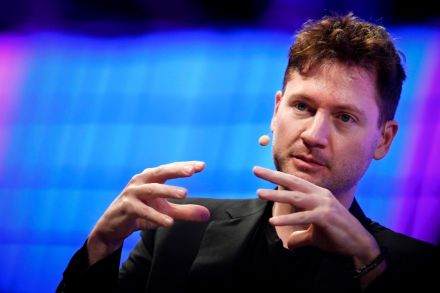
In fifth grade my class read Tuck Everlasting, by Natalie Babbitt, the story of a ten- year-old girl who stumbles on a family of immortals, the Tucks, who impress upon her that eternal life is unnatural and actually a curse. The novel had a profound effect on me. I became obsessed with the book and with the relationship of life to death. One passage in particular has haunted me for decades. “You can’t have living without dying. So you can’t call it living, what we got,” the patriarch, Angus Tuck, says. “We just are, we just be, like rocks beside the road.” I’ve been thinking about this book a lot since I became aware of the tech entrepreneur Bryan Johnson.
The battle of the oligarchs

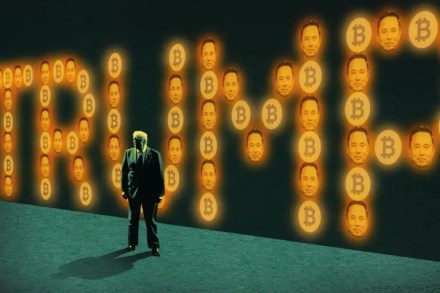
Money and power have rarely been strangers; often nations are made to shudder when the ruling elites battle each other. Britain’s late empire was divided between liberal manufacturers and aristocratic interests, whose conflicts hastened the rise of the Labour Party and the end of empire. In the United States, opposition to powerful trusts defined progressive politics for decades, ultimately laying the basis for the New Deal and a greater scope for government. In the West today we are witnessing a similar divide among the uber-rich class — epitomized by Elon Musk’s embrace of Donald Trump — that is already reshaping politics. Until 2016 the US establishment, both Republican and Democratic, embraced similar views on national security, global trade and multilateral institutions.

oligarchs

How Silicon Valley fell for Trump

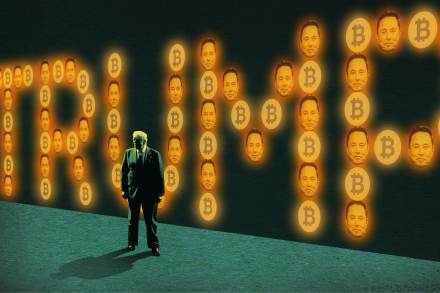
Just weeks after Joe Biden’s disastrous debate performance, the July 13 assassination attempt on Donald Trump radically shifted the election calculus yet again. Amid the intense, fast-moving news cycle, one event that would ordinarily have garnered wall-to-wall coverage went nearly unnoticed. “I fully endorse President Trump and hope for his rapid recovery,” Elon Musk posted to X on the day of the assassination attempt. In recent weeks, a legion of tech giants from the deep-blue stronghold of Silicon Valley have broken ranks and openly pledged support for the MAGA leader. With each new backer comes a slew of mega-donations to his campaign.

trump

J.D. Vance a ‘GREAT GOP candidate,’ says Ron Klain

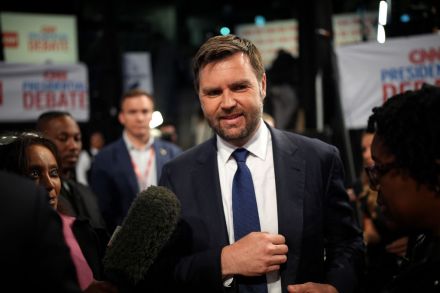
The final days of the veepstakes are upon us — and Senator J.D. Vance may have an unusual ally in his corner: his longtime business partner, who just so happens to be President Joe Biden’s former chief of staff. Ron Klain called Vance a “GREAT GOP candidate” a few years ago. While President Donald Trump’s veep pick is still unknown, it’s rumored to be down to Senators Vance and Marco Rubio, along with North Dakota’s governor, Doug Burgum. Ironically, old tweets from Klain, and not Trump, are flying around the GOP ecosystem, drudging up Vance’s awkward ties to one of Biden’s closest aides. In 2017, Vance joined Revolution, a DC-based investment firm where Klain worked as a vice president. It was run by Steve Case, the liberal billionaire founder of AOL.

vance

Which presidency does Joe Manchin want more?

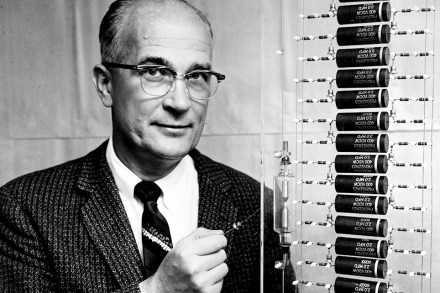
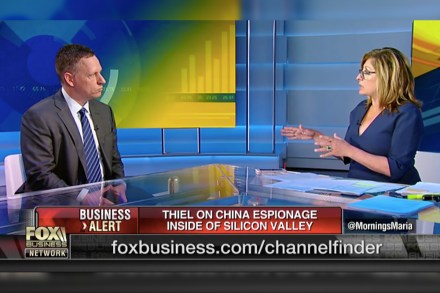
Elves and Epstein with Peter Thiel “Peter Thiel has lost interest in democracy,” a lengthy profile from Barton Gellman at the Atlantic announces. The piece reveals that Thiel, the techno-libertarian billionaire behind the Senate runs of Blake Masters and J.D. Vance, has no intention of donating to politicians in the 2024 election cycle.What does Thiel consider to be a better use of his money? Triumphing over death. “He has spent enormous sums trying to evade his own end but feels that, if anything, he should devote even more time and money to solving the problem of human mortality,” Gellman writes. Thiel draws a lot of his vision from The Lord of the Rings:“How are the elves different from the humans in Tolkien?

An election and debate overtaken by events

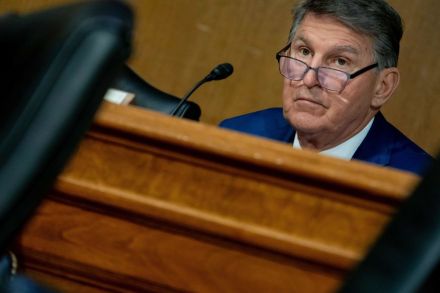
Welcome to Thunderdome, where you might think that today would be focused on the off-year election (many lessons on that below) or the debate last night (a few takeaways to be sure), but the breaking news has overtaken all of this: Joe Manchin, the West Virginia senator and former governor, has announced that he will retire rather than run for re-election. Manchin has been at the focal point of one fight after another in the Senate during his tenure, wavering back and forth between working with Democrats and Republicans depending on the issue. His announcement means Republicans are assured of picking up his seat. But there is also a strong indication to it that he does not consider himself done with politics yet.

The villains of Silicon Valley

From our UK edition

Historians joke that some parts of the world – Crete and the Balkans, for instance– produce more history than they can consume locally. The California town of Palo Alto produces more economics than it can consume, and therefore more politics, and therefore more culture. But this comes at a price. Malcolm Harris, a thirtysomething Marxist writer who grew up there, begins his book by citing the alarming rate at which his high-school classmates committed suicide, and argues that Palo Alto is haunted by the historical crimes on which it is built. He then itemises them across two centuries of history, tracing their influence from Stanford University and Silicon Valley out across the world.

Biden 2024’s shaky foundations

The shaky foundations of Biden 2024 Joe Biden promised to “finish the job” in a video announcing his 2024 run released Monday. A year and a half out, the president’s reelection pitch has serious flaws and yet, with Ron DeSantis failing to make any headway against an indicted Donald Trump, you can understand why Biden and his team might be feeling confident about their chances. Before we unpack that paradox, a quick reminder of the weaknesses of Biden as a candidate next year. There’s his age, of course, and all the embarrassments it brings and stage-managing it demands. (Note that he will not have the cover of a pandemic this time around.) There’s the unimpressive economic record. (His launch video was notably light on claims about the health of the US economy.

Will Republicans learn from the midterms?

The 2022 midterm elections consumed more than 16.5 billion real American dollars. They featured thousands of candidates and the most expensive Senate race in history, resulting in the election of Democrat John Fetterman from Pennsylvania. Millions of viewers across the country tuned in to watch election-night returns in anticipation of a promised red wave that never came. The 2022 midterms were the political equivalent of the Red Queen’s race — a massive effort, all to end up pretty much back where you started. Post-election recriminations were complicated by how well Republicans actually did. They massively increased their turnout and won the House of Representatives. They saw wide margins of victory by incumbent governors in Florida, Georgia, Ohio and Texas.

republicans

It’s the parallel economy, stupid!

There’s a lot of rumbling about American polarization these days. Sometimes it takes the form of people advocating for a national divorce or dire warnings of a forthcoming civil war. A national divorce seems impractical and America is too fat for a civil war. Better evidence that the country is already fracturing is the talk of the “parallel economy.” We’ve come a long way from the 2016 moment of self-awareness about needing to get out of our echo chambers. By 2020 it seemed everyone wanted their own. Now we’re redecorating the walls of the echo chambers. Adding some throw pillows.

parallel

Let’s ban the metaverse and colonize space

The way I see it, there are two options for the future: a transplanetary society or a transhuman one. What got me thinking about this was right-wing billionaire Peter Thiel’s recent interview with Mary Harrington, which she wrote up in UnHerd. As Harrington puts it, Thiel’s diagnosis of modern social ills is not that “progress is inevitably self-destructive,” but that we’ve been making the wrong kind of progress. "We’ve had continued progress in the world of computers, bits, internet, mobile internet, but it’s a narrow zone of progress. And it’s been more interior, atomizing and inward-focused,” Thiel said. Meanwhile, “there’s been limited progress in the world of atoms.” So far, so good. But then the interview took a strange turn.

Why ESG is sinister

In contemporary finance, a bank’s “head of responsible investing” is meant to be an apostle of woke capitalism: a very modern kind of money man who tours the world touting all the good their employer is doing. So you might have expected a speech on climate change and finance by Stuart Kirk, the man with that job title at HSBC Asset Management, to be a bromide-filled snoozefest about the win-win nature of the transition to the green economy. But Mr. Kirk’s address at a recent conference on “Moral Money” was nothing of the sort. Instead, he delivered a broadside against the fashionable idea that climate change is a risk that no financial institution can afford to ignore.

esg

Is Klaus Schwab the greatest threat of our time?

From our UK edition

New York Alexandra rang me from London to enquire about a man by the name of Klaus Schwab: ‘He sounds like the greatest threat of our time. Should I be worried?’ ‘Nah,’ I answered. ‘He’s just another typical smooth-talking, smarmy Davos Man. ‘That’s what scares me,’ said the wife. For the very few of you who have not heard of Klausie baby, he is the founder and executive chairman of the World Economic Forum, or WEF, a grandiose title and well deserved to be sure, although it once created a social media video that contained the slogan: ‘You will own nothing, And you’ll be happy.’ The WEF is where technocratic dreams make contact with business and political biggies high up in the Swiss Alps.

How is the new Gawker so dull?

Gawker returned in 2021 with the air of a drunk stumbling back into a party he had never been invited to. Leah Finnegan, the new editor, admitted that the brand was “toxic” but appealed to the reader to keep “an open mind and an open heart.” (What is this? Gawker or an e-celeb issuing an apology video over a sexual harassment scandal?) Me, I was biased. I hated Gawker. The original site was a hive of mean-spirited moralists. The average Gawker employee was the sort of person who would post revenge porn while lambasting people who mildly transgressed against speech codes. Their writing pioneered the sort of effortful indifference that still leads Brooklynites to claim that people are “having a normal one” and things are “like, er, yikes”.

gawker

The poor are too busy to care about the rich

From our UK edition

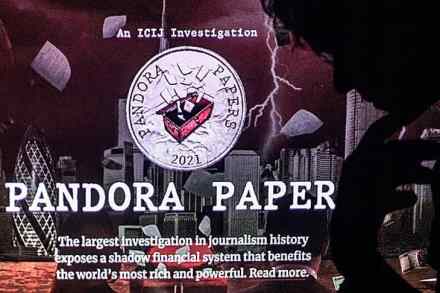
New York   ‘The City of London is hiding the world’s stolen money’, screams a Bagel Times headline, as bogus a message as that caricature of a newspaper’s other examples of anti-white, anti-cop, anti-male and anti-Conservative platforms. (‘Bid the binary goodbye’ is another pearl.) Not that anyone any longer takes the Bagel Times seriously since it decided that whites are very bad people. Still, I found it amusing that London is responsible for the shame of the Pandora Papers, when most of the miscreants involved are Third World dictators and eastern oligarchs. Never mind.

Blake Masters: ‘Experience holding elected office forever is overrated’

Another right-wing populist funded by Peter Thiel is trying to reach the halls of Congress by 2022. Blake Masters, the COO of Thiel’s investment firm, announced his candidacy for the US Senate in Arizona last week. Masters wants to take action against ‘Big Tech’ and corporations that ‘think they’re too big for America’. Masters's populist agenda is similar to that of another Senate candidate, Hillbilly Elegy author J.D. Vance, who reportedly received $10 million from Thiel. In an interview with The Spectator, Masters explained how he intends to reform US manufacturing policy, prioritize onshoring, restrict legal and illegal immigration and engage in a trade war with China, if necessary.

blake masters

Dispatches from the Nerd-Hack war

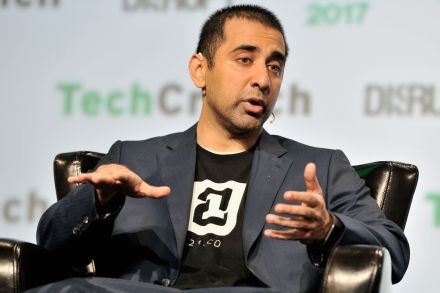
The Western COVID-19 crisis started with another skirmish in the Nerd-Hack war and the conflict has continued. Back in February, Vox published a rather snide piece about how Silicon Valley weirdos were not shaking hands for fear of picking up and passing on coronavirus. Balaji Srinivasan, a noted angel investor and entrepreneur, hit back with a detailed critique of the piece. The reader can decide for themselves who was more prescient, though I will pose one question — when did you last shake someone's hand?Nerd-Hack conflict has boiled up again this week. Marc Andreessen, the co-author of Mosaic, the granddaddy of web browsers, published a rousing call to build. ‘Our nation and our civilization,’ Andreessen writes:‘...were built on production, on building.

nerd-hack

Trump’s massive shadow cabinet

If President Trump secures re-election next fall — a prospect growing less likely by the day — it won’t be because of his scintillating ability to staff his own government. On that score, he doesn’t seem to care. Personnel is the Achilles’ heel of this presidency. Trump sometimes describes the goings-on in the administration as if he were still a bystander in the American power game. His retweet of a Jeffrey Epstein conspiracy theory this weekend is funny, but frustrating: to whom does the Department of Justice report, again? The personnel issue is partly by design. The president prefers a lean, freewheeling staff, like he had at his personal business, a former senior administration official said.

shadow cabinet

The new nationalism is here

Peter Thiel. Tucker Carlson. John Bolton. What’s most striking about the trio headlining the National Conservatism Conference is that none of the three has ever been elected to anything.Bolton may be national security adviser, but judging by his recent exile to Outer Mongolia and his stymied efforts to force regime change in Iran, his influence is ebbing. He may be rejoining the civilian corps soon enough.So why is a major new conference so honoring these folks? The question could be inverted. Why aren’t we hearing from over 200 Republican members of Congress? Sen. Josh Hawley, a freshman, will close Tuesday night at the NCC, but his address seems to have been a late addition.

tucker carlson peter thiel

The sideways thinking of Silicon Valley

It was the tweet posted by the New York Times that caught my eye: ‘Silicon Valley is backing a novel idea: instead of charging students tuition, students go to school for free and are required to pay back a percentage of their income after graduation, but only if they get a job with a good salary.’ It is all happening at the Lambda School, a new online learning start-up that this week won millions of dollars in backing from a glittering line up of venture capitalists – including Google Ventures, Ashton Kutcher, the actor turned Shark Tanker, and Geoff Lewis, an acolyte of Peter Thiel, the co-founder of PayPal.

lambda school silicon valley