Peter mandelson

Wine and good times flow at Spectator party

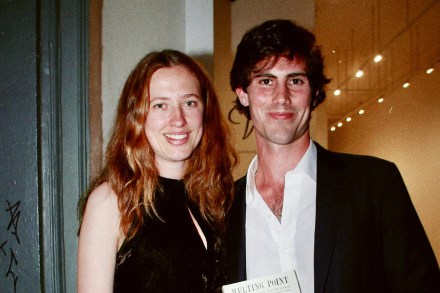
New York At one point the Promised Land was Texas. That was the gist of the conversation I had with Rachel Cockerell at The Spectator’s first live event in NYC, at NoHo’s Palo Gallery. I interviewed Rachel about her book Melting Point, which explores the Galveston Plan, when 10,000 beleaguered Russian Jews set sail for Galveston, Texas. After the talk, wine flowed as friends mingled with Speccie subscribers and spilled out into a balmy summer’s eve on Bond Street. Everyone seemed to enjoy the party except for those who weren’t there. I read the online comments the next morning: “Thanks for the compilation of pictures of the people I’d most want to avoid,” wrote one keyboard warrior. “Just rooms full of snobby people believing it's chic to dress homeless!

Author Rachel Cockerell and The Spectator’s Orson Fry (Lily Burgess/The Spectator) new york

Bezos dines with Trump after dicing up Opinion page

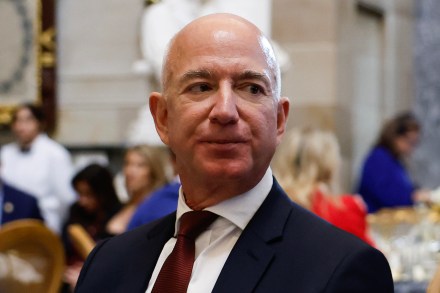
“We are going to be writing every day in support and defense of two pillars: personal liberties and free markets,” wrote billionaire Jeff Bezos in a Wednesday note to the staff of his newspaper, the Washington Post. “We’ll cover other topics too of course, but viewpoints opposing those pillars will be left to be published by others.” The missive from on high sent shockwaves around the capital. David Shipley, the Post’s Opinion editor, stepped away from his role over the new directive. Libertarian magazine Reason had a field day: “If this sounds like something you might want to read, may I suggest @reason where we’ve been doing this since 1968?” wrote editor-in-chief Katherine Mangu-Ward.

jeff bezos

The ancient art of making friends in high places

From our UK edition

‘I get along with him well. I like him a lot,’ Donald Trump has said of Sir Keir Starmer. ‘He’s liberal, which is a bit different from me, but I think he’s a very good person and I think he’s done a very good job thus far. I may not agree with his philosophy, but I have a very good relationship with him.’ Sir Keir must be thrilled – how wonderful to be praised by the most powerful man in the world, joining Nigel Farage as teacher’s pet! There were many Romans too who prided themselves as being amici principis, ‘friends of the emperor’. These were an inner ring of advisers, many of them immediate family, agreed to be influential; but in what way was never quite clear.

Peter Mandelson’s rocky path to Trumpworld

From our UK edition

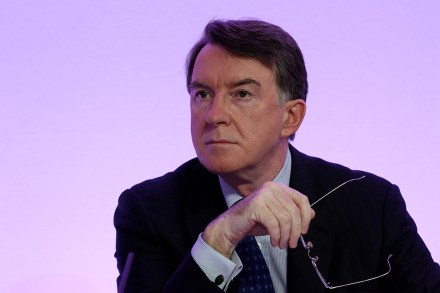
The muddle about who’s to be the next British ambassador in Washington has been only a small part of the grandiose confusion which surrounds Donald Trump’s assumption of power. Sir Keir Starmer announced that Lord Peter Mandelson would bring ‘unrivalled experience to the role and take [the Anglo-American] partnership from strength to strength’, apparently without checking first that President Trump would be willing to accept him. The US President’s campaign manager, Chris LaCivita, said Mandelson was ‘an absolute moron’ who should ‘stay home’. He did nothing to improve his prospects when he described Trump as ‘reckless and a danger to the world’ How ambassadors get appointed is a mystery to most people. Why do we waste the money on them anyway?

Is Mandelson the right pick for US Ambassador?

From our UK edition

14 min listen

Last night we got the news that Peter Mandelson is expected to be named the next UK ambassador to Washington. Despite months of speculation, Labour held firm on making a decision until the results of the US election, and with Trump entering the White House in the new year they have gone with an experienced diplomat and a political appointment. A government source is quoted as telling the BBC: ‘The fact the Prime Minister has chosen to make a political appointment and sent Lord Mandelson to Washington shows just how importantly we see our relationship with the Trump administration.’ They cited the former Business Secretary’s ‘unrivalled political and policy experience’ and claimed he was ‘the ideal candidate to represent the UK’s economic and security interests.

Inside the race for the Chancellor of Oxford

From our UK edition

What do we mean these days when we talk about the British ‘establishment’? When Henry Fairlie coined the term in 1955 – in The Spectator, of course – he defined it as ‘the whole matrix of official and social relations within which power is exercised’. A lot has changed in the past 70 years. The influence of the monarchy has diminished, the class system no longer holds sway, party politics is almost unrecognisable. Yet the idea of the establishment retains its powerful allure and, in the election of the next chancellor of Oxford University, we see how much it still matters to Britain’s 21st-century elite.

Lord Mandelson’s City outreach

From our UK edition

‘We are intensely relaxed about people getting filthy rich’, once drawled Peter Mandelson, ‘as long as they pay their taxes.’ And it seems the socialist Svengali is practising what he preached, with his latest appointment at a new British bank. William Hague famously mocked the New Labour spin doctor for his many honorifics during the dying days of Gordon Brown’s government – ‘it would be no surprise to wake up in the morning and find that he had become an Archbishop’ – and now Mandelson has a new title to add to his collection.

Both sides are to blame for killing soft Brexit

From our UK edition

Peter Mandelson's remainer credentials are impeccable. He is a former European Commissioner who helped run Britain Stronger In and then the People’s Vote (PV) campaign. He is as committed and eloquent a champion of EU membership as you’ll find. Which makes his Brexit intervention in the Guardian so important: All the new benefits from every global trade deal we could ever aspire to will not begin to equal the size of our present European trade. This is the price we will pay for the triumph of hardline Tory Brexiters over those with a stronger sense of national interest in their party.

How we killed comedy theatre: Nigel Planer interviewed

From our UK edition

Nigel Planer is on a mission to bring farce back to the West End. ‘There’s a lot of snobbery in comedy,’ he tells me when we meet at a hotel bar near the Old Vic. ‘People say, “Oh that’s comedy. It can’t have any meaning”.’ The actor and writer is still best known for playing Neil the hippie in the 1980s sitcom The Young Ones and he can recall a time when farce was a staple of London theatre. ‘I remember going along and really enjoying myself, you know, a nice big cast, actors falling over, characters treating someone differently because they think it’s someone else. All that stuff simply delights. But it’s become unfashionable.

In Hartlepool, I’m aiming for a noble defeat

From our UK edition

By the time you read this you may know if the Tories triumphed in the Hartlepool by-election — or if, in the end, the party was too badly wounded by all that business about who paid for whose wallpaper. Boris Johnson visited the town more times than he visited Scotland in the campaign, so he certainly sensed victory. But who can predict elections nowadays? One thing, alas, is all but certain: I will have lost. I decided to stand as an independent candidate at the last minute, motivated by how much I loathe the apparatchiks at both main parties’ London HQs — disconnected, mediocre and disdainful. Just look at their candidates. Labour chose slick Paul Williams, booted out by his constituents in Stockton South for flouting their wishes in the Brexit referendum.

Mandelson’s return is a sign of Labour’s problems

From our UK edition

It is instructive that, faced with his first wobbles as leader of the opposition, the person Keir Starmer has reached for is Peter Mandelson. From the sounds of things, Mandelson is working with Starmer’s team on communications and strategy. I certainly don’t think this is a bad idea by Starmer, at least as far as recent Labour party appointees go, but I can’t help but feel that Mandelson’s return to the top says a lot about Labour’s problems, how they got into their current mess and where those issues might lead the party from here. Part of the problem is that the Labour party has been hollowed out talent-wise.

Mandelson’s story could have been so very different

From our UK edition

Matt Forde, the stand-up comedian and presenter of his regular Political Party Podcast, has hit on an overlooked technique for getting the most out of big-name interviewees. He pretends to know nothing. Wide-eyed and star-struck (actually he is neither), Forde puts them at their ease in conversation with an apparent fanboy ingénue. ‘Do keep up, Matt,’ said Peter Mandelson, affectionately, as in his Christmas holiday interview Forde claimed to be unaware of some half-forgotten political turbulence that Lord Mandelson, his star interviewee, once encountered. It worked a treat. Lord Mandelson is normally a wary interviewee, but with Forde I have never heard him so unguarded: more confessional even than in his own autobiography. I listened partly out of curiosity.

We’ll never know whether Huawei is still listening

From our UK edition

This column has been banging on about the peculiar nature of Huawei, the Chinese telecoms giant, ever since its expanded presence in the UK won what I described as ‘grateful applause from David Cameron’ back in 2012. I have deployed everything from serious intelligence sources to laborious knock-knock jokes (‘Huawei who?’ ‘Who are we kidding, prime minister? We don’t need to knock on your front door when we’ve already got a backdoor device in the Downing Street switchboard’) to make my point that the proliferation of Huawei kit in UK telecoms networks represented an obvious but unquantifiable security risk.