Penguin random house

For most people on Earth, learning is just another form of entertainment

From our US edition

When the anthropologist Bronislaw Malinowski traveled to Papua New Guinea in the 1920s, he discovered a group of remote and mostly naked tribes, none of whom had encountered literacy before. And without writing, he found, they organized knowledge in a different way from the rest of the world. Rather than label and categorize everything that exists into linear encyclopedic facts, for instance, they only bothered to record and give names to local flora and fauna if they were useful in their own lives. Animals that were neither food nor dangerous, for example, were treated as unimportant. That is just a bush, they would say, or, merely a flying animal. After centuries of mass literacy, we’ve forgotten that our brains still work like this, too.
The publishing mega-merger that wasn’t

From our US edition

If you sit down and talk to an author for any length of time, you will hear gripes. (Writers will never be confused with the sunniest of people on this planet.) About the visibility of their books; about the size of their advances; about their sales, relative to their other titles and to their peers; about publicity campaigns; about cover designs. There will be a lot of gripes, and if you are cornered by an author in a bar, or at a party, you might be advised to make your excuses and flee. But if you have some sympathy for this much-maligned breed, it may occur to you that the basis of their complaints ultimately comes down to a simple lack of appreciation by their publishers: those all-powerful entities that have the power to make or break careers at the touch of a button.

publishing

Publishing staff demand axing of Amy Coney Barrett book

From our US edition

Cockburn would like to issue a preemptive apology to those who thought being extraordinarily accomplished was enough to justify a lucrative book deal. Apparently an author's manuscript should be sent to the shredder if he or she holds an unorthodox opinion on hot-button political issues. That's the case made by the coffee-fetchers and typo-catchers in the publishing industry who signed an open letter denouncing Supreme Court Justice Amy Barrett's upcoming book with Penguin Random House. The group of "concerned publishing professionals" claim that paying Coney Barrett a $2 million advance to outline her judicial philosophy constitutes an international human rights violation. No, seriously.

amy coney barrett

The rise of the ‘sensitivity reader’

You probably won’t have heard about sensitivity readers, but across the pond they are already an essential part of fiction. Sensitivity readers are freelance copy editors who publishers pay to cancel-proof their new books. They read books that feature identities or experiences that are outside of the lived experience of the author. They then critique the writing through the prism of what they claim to be their own authoritative life experience to guide the author toward more authentic representation. For example, the white author Jodi Picoult used a sensitivity reader for her novel about a black nurse who cares for the children of white supremacists.

The pathetic attempt to cancel Jordan Peterson

There was a time when publishers had to battle with external forces for their right to publish controversial authors. It was censorious politicians and moralistic campaigners who marshalled state power and boycotts to try to ensure that allegedly subversive or risqué material never saw the light of day. No longer. Today, it seems, it is often those within the publishing industry itself who seem intent on making sure that this or that ‘filth’ be banned. We’ve gone from the blue-rinse brigade to the blue-hair brigade, but the effect is still the same deadening intolerance.

Five books Penguin will have to ban along with Jordan Peterson

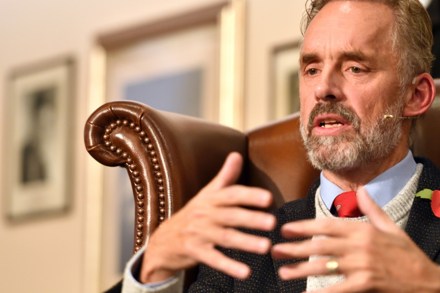
This year Jordan Peterson, the cult Canadian psychologist, meat-eater and lifestyle guru, will tentatively edge back into the public spotlight, after spending time reportedly recovering from drug addiction in Russia. Readers may be familiar with Peterson’s self-help guide 12 Rules for Life, which sold over three million copies worldwide and topped the bestseller lists. So you would imagine that with the sequel out in March, most publishers would be clamouring to be the ones to sell it. But it appears that Penguin Random House, which managed to snag the rights, is now having the opposite problem. According to Vice News, its Canadian employees are in uproar about the company carrying the book.