Paywall

A Digby Dent Christmas

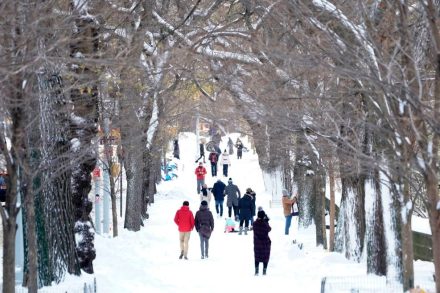
New York Hello friends, and a merry Christmas to you all. I suspect we are all eager to see the back of this year. But the season brings on my sentimentality, and I wonder what waits on the other side of this particular solar circumnavigation. We will welcome spring and, hopefully, with it, the lifting of lockdown. Walking around the dreary streets of the city, I worry what we’ll leave behind us in this annus horribilis. Crowds are thin, sidewalks spare. Eyes are downcast. Has the virus won the War on Christmas? I pray not. When I was a boy, Christmas in the Dent household was a New York affair. The city was near its nadir, yet the Yuletide charm brought out its best, and ours.

new york christmas digby dent
charles brown

Charles Brown’s Christmas

When a young singer and pianist named Charles Brown was hired in 1944 to play at Ivie’s Chicken Shack, the legendary jazz singer Ivie Anderson’s nightclub in Los Angeles, he was instructed to play ‘nothing degrading like the blues’. It wasn’t an admonition that he heeded very long. The blues didn’t degrade him. He elevated them. After Brown died in 1999, Bonnie Raitt, who toured with him starting in 1987, deemed him ‘the most extraordinary piano player I’ve ever heard’, noting that he ‘led the West Coast blues explosion’. Indeed he did.

wagner

Nietzsche and Wagner

Before he was a celebrated travel writer, Patrick Leigh Fermor (who died in 2011 at 96) was a celebrated special operations soldier. In February 1944 he commanded a raid to kidnap General Heinrich Kreipe, the newly installed German commander of Crete, and take him to Egypt. Leigh Fermor, his fellow officer William Stanley Moss and three members of the Cretan resistance commandeered the general in his car and made a daring trek across the island pursued by the German occupiers. They spent one chilly night on the slopes of Mount Ida.

mrs badgery

Mrs Badgery

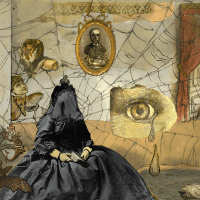
Wilkie Collins’s ‘Mrs Badgery’, rarely seen since its first publication in Dickens’s Household Words magazine in September 1857, is an enchanting little chip off the block. Like a lot of British short stories, it is absurd, very funny, and in uproarious bad taste. British writers have often enjoyed stories of making a home, and also the theatrical trappings of grief. (George Bernard Shaw commented on the national enthusiasm for requiems.) Here they collide, with richly enjoyable results. The narrator is clearly stuck with Mrs Badgery forever. In time, he might even regard her as a picturesque addition to his home, like an indoor and rather saline water feature.

twelve courses

The twelve courses of Christmas

A Partridge in a Pear TreePartridge pear terrine with lingonberries and cognac, served on Scandinavian bark bread.Two Turtle DovesA miniature coeur à la crème on a large white plate, surrounded by two doves sketched in raspberry coulis.Three French HensHot chicken consommé.Four Calling BirdsThe best-known calling bird (or songbird) is the lark, traditionally roasted and devoured bones and all. But many today prefer their larks ascending, so instead this course features Japanese quail, originally domesticated for its vocal talents and only subsequently introduced into cuisine. Sliced poached quail breast is served on a bed of arugula and endive with pomegranate, walnuts and orange vinaigrette.

christmas past

It’s good for your elf

Ever since I found out Santa Claus wasn’t real a year ago, the idea of him began to give me the creeps. Who is this immortal jolly elf, and what does his business of breaking and entering once a year even have to do with Jesus’s birthday, or even St Nicholas? Christmas is a season of traditions, both personal and religious. Each year, its celebrants decorate their gingerbread houses, wrap their presents, decorate their fir trees, drink their eggnog and see Santa Claus at the mall. Some people even go to church.

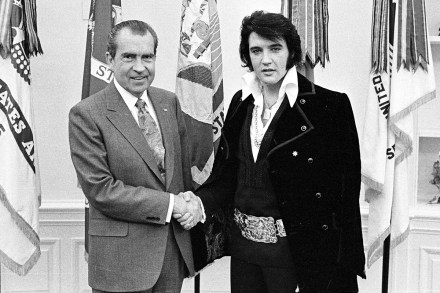
Elvis and Nixon, the odd couple

If you were called upon to invent the human antithesis of rock and roll, you couldn’t do better than our nation’s 37th president, Richard Nixon. Habitually clad in a funereally dark suit and dress shoes, even when strolling on the beach, Nixon’s tastes in music ran to the semi-classical strains of Mantovani and the Boston Pops, and a penchant for sitting alone at night brooding to Wagner. I once asked the legendary White House fixer Gordon Liddy what his chief thought, if anything, about pop music. ‘Crap,’ Liddy replied succinctly. In late 1970, the 57-year-old Nixon was at something of a low point. A combination of the continuing war in Vietnam and domestic economic woes proved disastrous for the GOP in that November’s midterm elections.

nixon

The great lost Beatles album

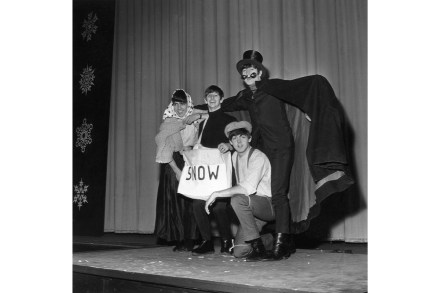
The Beatles never had a proper Christmas number one, only seasonal number ones with unseasonal bangers: ‘I Want To Hold Your Hand’, ‘I Feel Fine’, ‘We Can Work It Out’/‘Day Tripper’ (1963-65) and ‘Hello Goodbye’ (1967). Though they never made a traditional Christmas record, the Fabs loved Yule — and you know you should be glad. Between 1963 and 1969, they recorded an album-worth of charming Christmas nonsense. Welcome to the semi-secret hinterland between the legal and bootleg worlds: the Beatles’ Fan Club Christmas flexi discs. The flexis have only had one official release since their private circulation to the ravenous Brit-Beatle fan club.

beatles

The fight for liberalism

The world has many island nations, and sometimes the United States counts itself among them. We have water on either side of us, and though we share our big island with Canada and Mexico, neither poses any threat. America is immune to invasion, a castle surrounded by the safest of moats. This wasn’t always so, and it isn’t really true today, unless we forget about Hawaii and our Pacific and Caribbean territories, most of which would be easy prey for other states if they weren’t under our sovereignty. In the earliest days of the republic, we shared the North American continent with outposts of Europe’s leading powers: France, Russia, Spain and Britain.

liberalism
classics

Dead letters

In a plea for vocational education, Sen. Marco Rubio famously remarked that we could use ‘more welders and less philosophers’. Doesn’t everyone know that ‘skills pay the bills’? If things weren’t bad enough, the rise of deconstruction and critical theory has created a generation of humanities scholars who themselves see little value in the works they study, insisting that famous art and literature emerged from racist and sexist power structures. What sensible young person would borrow $100,000 to be educated in these pointless disciplines? Eric Adler, a classicist at the University of Maryland, has the answer: anyone who wants to understand his own humanity. Adler’s invaluable survey not only defends the humanities: it even lays out how their allies have fallen short.

Hate in a damp climate

When Ross Clark was writing this excellent novel about climate change, he couldn’t have known that by the time we read it the world would be paralyzed by a pandemic. Now that’s happened, it adds a whole new layer to The Denial’s themes of hysteria, self-righteousness and dodgy statistics. Bryan Geavis is a retired meteorologist living in the south of England in ‘the near future’. He used to work for a large oil company, though has to keep this quiet as there are prison terms for anyone who worked in the industry. A storm blows up in the North Sea which causes flooding in London.

denial
persimmon

Persimmon on permission

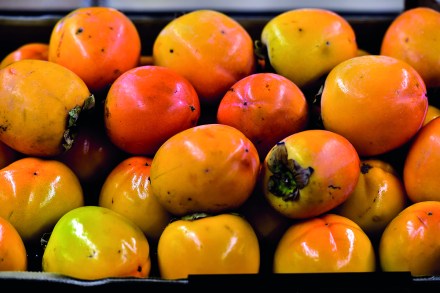
‘They must be fruit as they’re next to the pomegranates,’ thought I. Then I read the sign: persimmons. Perplexed by persimmons, I asked a Persian friend here in Montecito, California if she knew about them. ‘My grandmother had trees full of them in the fall,’ she told me, waxing lyrical about their sweet, juicy meat covered by a waxy but edible skin. ‘I used to pick them up from the ground and eat them like apples. They always seemed to be smiling at me.’ Her grandmother made jam from them. She told me I’d bought the fuju variety (the hachiya being astringent and less available in Central California).

Christmas at the manor

Virginia  Christmas will be different this year. Our refrigerator’s death was like Socrates’s: it began at the bottom and moved gradually upward, eventually yielding up its Freon eide to the empyrean, or at least the ozone hole. Such a death in early November raises big questions about holiday-making, or would most years, with Thanksgiving upon us and Christmas not far behind. But with COVID rampant, we’re admonished to stay home, and will, which dovetails conveniently with the fact that because of the virus, supply chains are banjaxed and we won’t get our new fridge till Boxing Day. (And refrigerator boxes are the best boxes, so there’s the grandchildren’s Christmas taken care of.

christmas manor

The wonder of Wagner

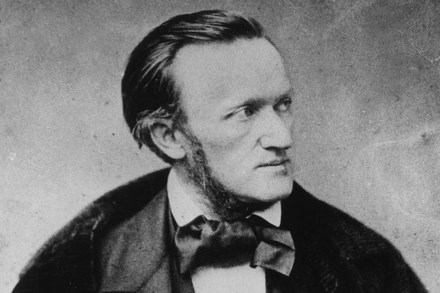
Laramie, Wyoming Nearly all the famous artistic controversies in the aesthetic history of the western world — the Battle of the Ancients and the Moderns in France and the contest between the rococo and neoclassical schools across Europe in the middle of the 18th century; the subsequent rivalry between the Classicists and the Romantics and the contretemps in the late-19th century between the Realists and the Impressionists — are as dead, irrelevant and forgotten today as the wars between the Guelphs and the Ghibellines.

wagner

The women who argued against their right to vote

Batavia, New York To think I almost let 2020 slip by without recognizing the centenary of the ratification of the 19th Amendment to the Constitution, which guaranteed women the right to vote in all (then) 48 states of the union. Shame on me! This is a matter of Upstate New York regional pride — and confusion — on several counts. The 1848 ‘Declaration of Rights and Sentiments’, a rewrite of the Declaration of Independence along feminist lines, was drafted in Seneca Falls (the village generally thought to be the model for Bedford Falls in Frank Capra’s It’s a Wonderful Life). The suffragist avatar Susan B. Anthony spent her adulthood in Rochester.

vote 19th amendment

Biden’s speech impediment

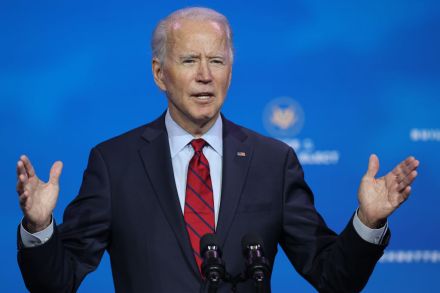
Does Joe Biden write his own speeches? Surely not. Yet his campaign says Biden was his own speechwriter for the address he made to the nation a week after the election, when he stressed his campaign theme: ‘We must restore the soul of America.’ The Soul of America is the title of a book by the historian Jon Meacham and the New York Times figured out that Meacham had helped with the speech. The campaign’s national press secretary, TJ Ducklo, was forced to concede that, yes, Biden had ‘consulted a number of important, and diverse, voices as part of his writing process, as he often does’.

joe biden speech

Republican resurrection

When Donald Trump took his famous escalator ride, the Republican party was too attached to abstract principles at the expense of the material interests of its own voters. It wasn’t even doing a particularly good job of adhering to its preferred ideological abstractions. Whatever the Democratic party’s ideological failings, its leadership understands the importance of delivering tangible benefits to the electoral coalition that puts them in power (although their newfound suburban voters could be in for a rude awakening if the Democrats ever get too much power). Trump presented an opportunity to change this.

populism republican

Brace yourselves for President Harris

Although the electors for the presidential election of 2020 do not cast their votes until December 14, and their votes are not certified — and hence the election is not officially ratified — until December 23, it is eminently possible that by the time you read this the world will know whether the election was won by Donald Trump or Joe Biden. That is emphatically not the case now, in mid-November. The media narrative would have you believe otherwise. According to the received script, Biden won on November 3, or at least in the wee hours of November 4, when mail-in ballots, tens of thousands of them, began appearing like manna from heaven.

president harris administration

The Spectator’s Books of the Year 2020

Our turkeys were stuffed and now we are too. Reclining helplessly in the recovery position, our thoughts turn to feasts future. What better way to show your friends and family that you love them, and also that you have impeccable taste, than sending them a book? In The Spectator’s stocking-stuffing December issue our staff, writers and friends make their seasonal suggestions for Books of the Year: stack upon stack of the most riotous reads, bibliographical beauties and pandemical page-turners. P.J. O’Rourke The Decline and Fall of the Roman Empire, Volume I, by Gibbon, because in this year of scourge and collapsing polity it seemed apposite. And only Volume I, due to reader fatigue after 582 pages and the shift in Volume II to the history of Byzantium.

books of the year 2020