Paul Auster

Mourning becomes Siri Hustvedt

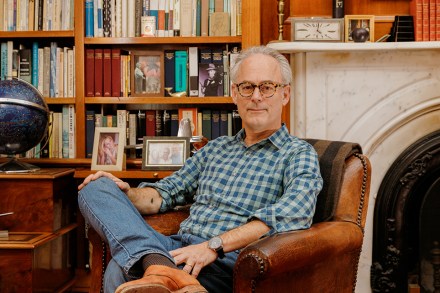
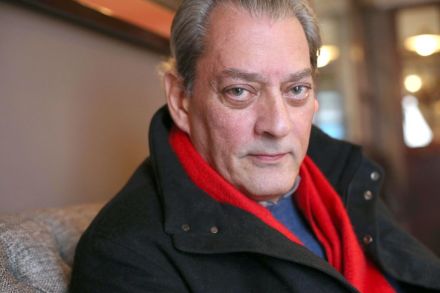
At 6.58 p.m. on 30 April 2024, Siri Hustvedt’s husband of 43 years, the novelist Paul Auster, died of cancer in the library of their Brooklyn home. He was surrounded by family, including his adored daughter Sophie, who three months earlier had given birth to his first grandson, Miles. Hustvedt and Auster met at a poetry reading in 1981 and married later that year. It was she who proposed to him. Auster, aged 34, was not yet famous and Hustvedt, aged 26, was still a graduate student. By the 1990s, when she too became a novelist, they were New York literary royalty. In the 1970s, Auster had been married to the translator and short story writer Lydia Davis, with whom he had a son called Daniel. If Sophie was a summer’s day, Daniel was darkness.

An insight into the American Dream: Table for Two, by Amor Towles, reviewed

Amor Towles was a Wall Street banker before he published his first novel, Rules of Civility, in 2011, at the age of 46. Since then, his books have sold six million copies, and the second, A Gentleman in Moscow (2016), has been made into a Paramount + series starring Ewan McGregor. Towles’s success in banking and publishing has perhaps given him a particular insight into the American Dream. The six stories and one novella that make up his stylish and confident new collection, Table for Two, all feature characters in pursuit of an ambition that puts them in varying degrees of peril – protagonists tasked with missions of differing seriousness.

To Salman Rushdie, a dream before his attempted murder ‘felt like a premonition’

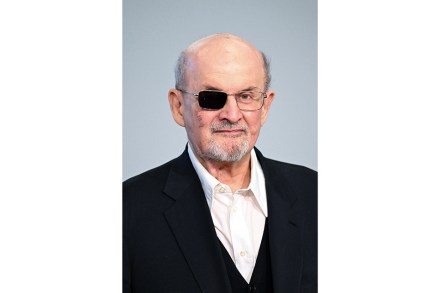
Salman Rushdie has long hated and struggled against the idea that the 1989 fatwa pronounced on him after the publication of The Satanic Verses should define his career or his life. It was, as he frequently pointed out, a book he published only a quarter of the way through his career. He wanted the life of a writer, and for his books – even ‘that book’ – to be read as books rather than as footnotes to an episode in his biography or tokens in some pre-digital culture wars. Two nights before the reading, Rushdie dreamt he was attacked by a man with a spear in a Roman amphitheatre He thought he had managed that. The only people who ever asked him about the fatwa, he told me when we met in 2020, were journalists: ‘to be dragged back into the late 1980s is boring.