Patriotism

Why is Sunny Hostin scared of the American flag?

The View’s Sunny Hostin said Monday that when she walks into communities with American flags, she “suddenly feels unsafe.” After receiving a smattering of applause, Hostin hypothesized that some people have changed the flag’s meaning. “There's a section of this country that has co-opted the American flag and they equate being an American or an American flag with white supremacy,” she said. “And that should never be the symbol of white supremacy. But they have weaponized [the flag].” Hostin’s answer came during a segment in which the hosts discussed a viral image of white nationalists riding the DC Metro while a black woman sat in between them.

sunny hostin

An unheroic hero: Ginster, by Siegfried Kracauer, reviewed

From our UK edition

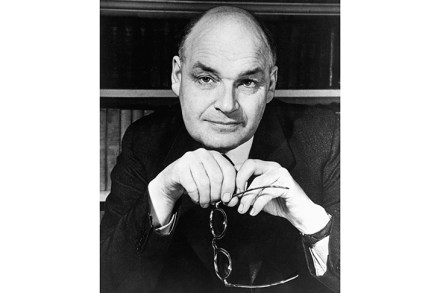
Siegfried Kracauer (1889-1966) made his name as a film theorist. His critical writings have long been available in English, and now his fiction is finally getting its due. The first of his two novels – published in Germany in 1928, five years before Kracauer fled the rise of Nazism – uses as its title his journalistic pseudonym. The protagonist inherits other autobiographical details, too, starting from the opening sentence: ‘When the war broke out, Ginster, a young man of 25, found himself in the provincial capital of M.’ Germany’s descent into the Great War is sketched in vividly cubist images. One character ‘consisted of three spheres stacked on top of one another to form the outline of a bowling pin’; another’s ‘figure possessed the amiability of a rectangle’.

How to raise a patriot

From our UK edition

‘Good news for patriots,’ said one of our most celebrated national newspapers this week: ‘Your numbers are likely to swell.’ This was on the editorial page, where the opinions of the paper are laid out, and it referred to a poll conducted by ‘More in Common’ which had found, to everyone’s surprise, that British teenagers are pretty patriotic. About half of all 16- and 17-year-olds feel proud of their country, it found, which is more than their parents. It was an interesting poll for anyone considering the rise of Reform and how that might interact with the incoming slew of teenage voters. Interesting too for those of us in liberal London, trying to keep the flickering pilot light of patriotism alive in our children’s tiny, K-pop-infested minds. (What’s K-pop?

Exclusive poll: are you proud to be an American?

With the 250th anniversary of America's founding approaching next year, the majority of Americans are happy to applaud their country – with 63 percent saying that yes, the birthday of the United States is a moment to celebrate, a new poll from Cygnal released exclusively to The Spectator reveals. But unfortunately for those who would like such an event to be bipartisan and unifying, that majority is overwhelmingly driven by Republicans, 89 percent of whom say America's anniversary is a moment of triumph. On the other side of the aisle, only 37 percent of Democrats say there's something to celebrate at 250 years, with 58 percent of Democrats saying "no, there's not much to celebrate" or "no, there's nothing" to celebrate.

Proud to be American

Bristling with meaning: the language of hair in 19th-century America

From our UK edition

In Whiskerology, Sarah Gold McBride combs through a bristling, tangled mess of data, facts and theories about gender, race, national identity and their relationship to – yep, you guessed – hair. Do not buy this book if you are looking for a fun read about vintage updos, goatees and ponytails; Ye Olde Horrible Haircuts it is not. It’s a book about hair as a kind of cultural text; readable, manipulable, highly permable and ideologically curled. One does not, it turns out, simply go and get a haircut: one enters a vast semiotic salon, more Saussure than Sassoon, where you’re lucky to get out without a scalping. McBride is a 21st-century American scholar writing about 19th-century American hair, but the manner is classic mid-20th-century French plait.

St George’s Day: who is the most patriotic leader?

From our UK edition

15 min listen

Happy St George’s Day! To celebrate, we thought we would discuss who is the most patriotic political leader — and why some struggle to communicate their love of country. Keir Starmer declared in an interview with the Mirror this morning that Labour is ‘the patriotic party’. This follows a more concerted effort from those within the party to become more comfortable with the flag. But is Keir Starmer actually a patriot? How will the ‘battle of the Union Jack’ play out at the local elections? And does Reform have a point to prove when it comes to patriotism? Oscar Edmondson speaks to James Heale and Claire Ainsley, former executive director of policy for the Labour party, now at the Progressive Policy Institute. Produced by Oscar Edmondson.

Can Starmer do patriotism?

From our UK edition

13 min listen

It was St George's Day this week, and Labour leader Sir Keir Starmer said he has 'no time' for those who 'flinch' at the St George's flag. But how authentic is his patriotism? Katy Balls speaks to Tom Baldwin, former Labour Party adviser and author of new book England: Seven Myths That Changed a Country – and How to Set Them Straight.Produced by Megan McElroy.

How many black or Asian Britons feel a strong sense of European identity?

From our UK edition

Though wokeness is a vile thing, it has contributed to our culture in one fortunate way – by inspiring brilliant books which refute it. The woeful lack of anything passing for analysis (probably a colonial tool of oppression, like brunch) on the SJW side has thrown into gloriously sharp relief the difference in the intellectual firepower between those who believe in free speech and those who resemble Veruca Salt after joining the Stasi.

flag

A flag under foot

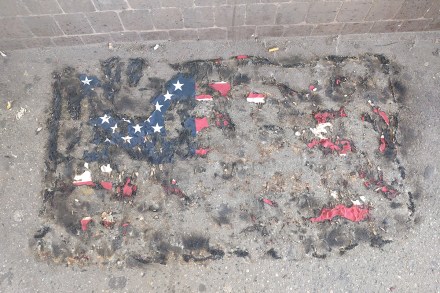
On my way to work in Midtown Manhattan each day, I pass down 50th Street. Near the corner of Broadway, not long ago someone glued an American flag to the sidewalk and set fire to it. The scorched remnants cry out in resistance to the attempted insult and erasure. I have no idea what protest prompted this indignity, or whether the person who sealed the flag to where pedestrians would trample it was the same who decided to set it on fire. I haven’t noticed any passersby taking special note of Old Glory reduced to such an inglorious state, surrounded by cigarette butts and other debris. This isn’t New York City’s fault. We are amid more pressing crises. The subway entrance nearby — one of the main points of access to Midtown — reeks of urine and sometimes worse.

If Americans don’t believe in God, country or hard work, what do they believe in?

Do you want the good news or the bad news first? It’s all pretty bad, but let’s get it over with: the share of Americans who say patriotism and religion are “very important” to them has fallen sharply, as has the number of Americans who value involvement in their community, hard work and having children. These revelations come courtesy of a new Wall Street Journal-NORC poll, complete with a graph depicting our nation’s nosedive. Some nitty-gritty: in 1998, 70 percent of respondents deemed patriotism to be very important; now, that number is 38 percent. Twenty-five years ago, 62 percent said religion was very important; now only 39 percent do.   If Americans don’t believe in God or country, what do they believe in? Money, for one thing.

american values

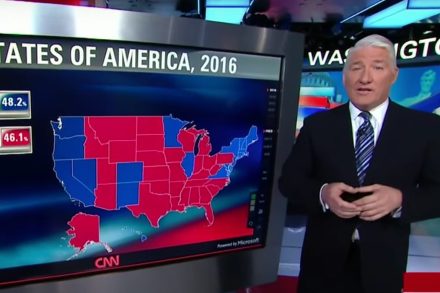
The patriotism of CNN’s ‘magic wall’

It’s becoming spooky season, by which I mean not Halloween but elections — at least in Virginia and New Jersey, which have gubernatorial races. They are, incidentally, two of the three states I’ve lived in (I’m in Virginia now; the other one was Maryland). National elections have ceased to be fun for some time now, and I’m not sure my own state’s gubernatorial race is going to be much better. I’m supposed to choose between a washed-up former governor and a businessman-turned-political-neophyte who enthusiastically hawks his endorsement by the businessman-turned-political-neophyte who last occupied the White House.

magic wall

Old Glory, new anger

America is no longer just angry. We have become a nation of wrath. It is a risky emotional condition, recognizable by our desire to obliterate our opponents. Wrath doesn’t seek reconciliation. It wants revenge. Nor does wrath want to accommodate what it can’t control. It wants to rub the slate clean. There is a wrathfulness of the political left, stemming from visceral hatred of Trump and his supporters. But as the left is ascendant in the seats of power, it can pursue its effort to extinguish its opposition via the instruments of state. The wrathfulness on the political right is another story. Wrath reaches its zenith when people feel not just abused but hopeless in the pursuit of any redress.

anger

My country, right or left

A funny thing happened to me this Fourth of July and, at the risk of having every jaded member of the blue-check Twitterati respond, ‘I’ll take things that didn’t happen for $200, Alex,’ I’m going to tell the story. My aunt and uncle invited me and my husband to join them in their annual excursion to the Fourth of July celebration at the Hollywood Bowl. This has become a ritual for us and as it was the first event at the Bowl since the pandemic, everyone was in a festive mood. For the occasion, I wore American flag leggings and a headband that spelled out U-S-A. On springs. As we settled into our box, we chatted with the women drinking wine and eating tapas next to us. Standard small talk. How excited we were to be back at the Bowl. What a gorgeous night it was.

patriotism

Arthur Bryant: monstrous chronicler of Merrie England

From our UK edition

If you want to judge how much society has changed, you might do worse than visit a few secondhand bookshops. Obsolete volumes rest undisturbed on their shelves. The more popular they once were, the more unwanted copies accumulate. An almost inevitable presence nowadays is Sir Arthur Bryant, in his time a bestselling writer on historical subjects but now slumbering among the Great Unread. To browse in one of his books is a nostalgic experience. Their very titles — English Saga, for example, or Set in a Silver Sea — are evocative.

What’s wrong with saying ‘Rule, Britannia’?

From our UK edition

In the age of Zoom lectures and distance learning, it is almost comforting to know that students’ unions are still up to their mad censorious antics. The new normal cannot dent their zealotry, as a recent story from the University of Aberdeen attests. The Telegraph reports today that Elizabeth Heverin, a 19-year-old history and politics student, has been banned from all students’ union buildings, debates and services for two weeks for supposedly saying ‘Rule, Britannia’ during an online discussion in December.

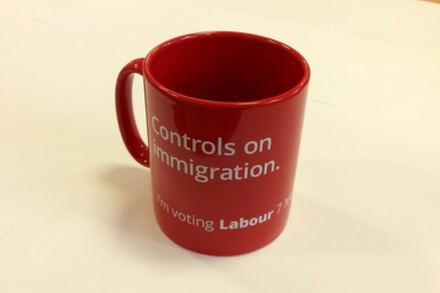
What Starmer can learn from Miliband’s mug

From our UK edition

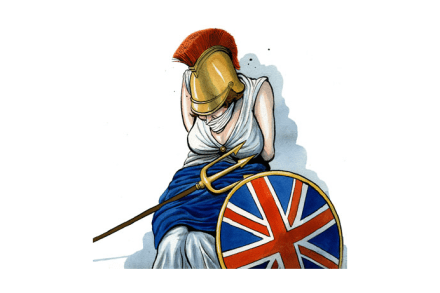
Since becoming Labour leader, Keir Starmer has single-mindedly been trying to persuade red wall voters that Labour is ‘patriotic’, just like them. He thereby hopes to clear away those cultural barriers that have arisen between Labour in the north and midlands where voting for the party used to be almost instinctive. As he said in his first leader’s speech back in September, Starmer wants red wall voters to ‘take another look’ at Labour now it is under his leadership: he wants to show them that it is no longer the party of Jeremy Corbyn and his supporters.

Starmer’s patriotic rebrand doesn’t fool anyone

From our UK edition

Since Harold Wilson stood down as Prime Minister 45 years ago, there have been 11 general elections contested by seven different Labour leaders. Of those, only Tony Blair has managed to win, which he did three times in a row. The roll call of the defeated reads Callaghan, Foot, Kinnock (twice), Brown, Miliband and Corbyn (twice). As Alastair Campbell noted in a recent column for the New European, Labour’s record over the time span is lost, lost, lost, lost, Blair, Blair, Blair, lost, lost, lost, lost. Yet still we political commentators invite you to suspend your disbelief and suppose Labour is in the running. And still it is the Labour party’s activist membership that does this most readily.

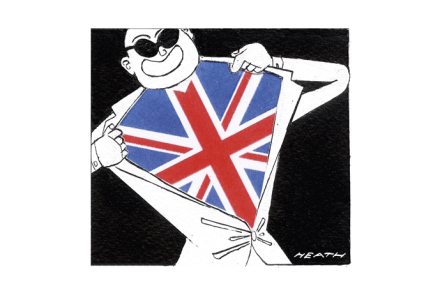
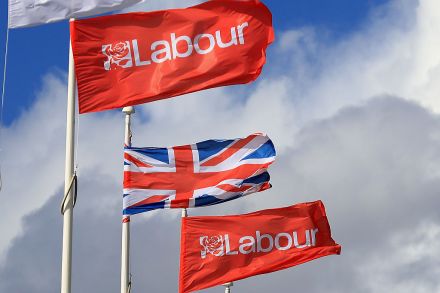
Why are some Labour supporters embarrassed by the Union Jack?

From our UK edition

How does Labour plan to win back the Red Wall? A leaked internal Labour strategy document gives one answer: it says the party must make 'use of the flag'. This sounds like a sensible way to woo those voters put off by Jeremy Corbyn. But the deranged backlash from some Labour activists suggests that not everyone agrees. It also shows why the party is doomed to fail in its bit to change its image for the better. Labour activists took to social media yesterday to decry Keir Starmer on the strategy, asking why the Labour leader is risking alienating so many of his party’s core support.