Parliament

Rengotiating the loan with Ireland

From our UK edition

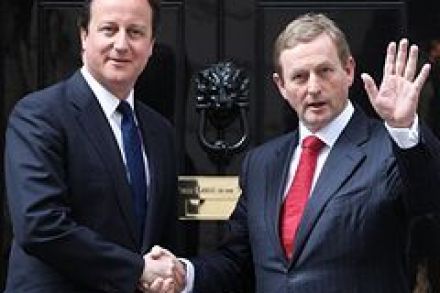
All eyes were on Greece at last week’s crisis summit in Brussels, but other indebted countries took advantage of Angela Merkel’s generous mood. In line with concessions made to Greece, the Irish secured a substantial cut in interest repayments on its bailout loan: the rate has fallen from 6 per cent to somewhere between 3.5 per cent and 4 per cent, and the loan period has been extended from seven to 15 years. This was a long-term goal of Enda Kenny’s government and the renegotiations are being heralded as a major victory. But the matter does not end there.
More questions for Murdoch?

From our UK edition

Much though most readers probably want it to, the phone hacking saga just won’t do the decent thing and die. Today brings fresh revelations. Colin Myler and Tom Crone, respectively former editor and head of legal affairs at the News of the World, have said that they sent an email to James Murdoch that supposedly undermines Murdoch’s testimony to the Culture, Media and Sport Committee. The Guardian reports that the email, “known as ‘for Neville’, because of its link to the paper's former chief reporter Neville Thurlbeck, is thought to have been critical in News International's decision to pay out around £700,000 to Taylor in an out-of-court settlement after he threatened to sue the paper.

Save Gobby

From our UK edition

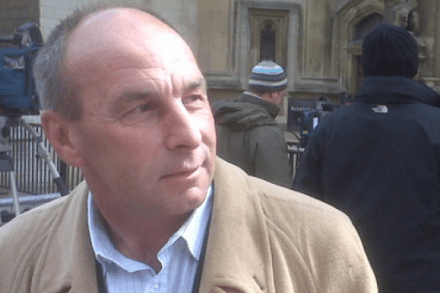
Yesterday's appalling breach of House of Commons security has made the authorities furious – at the person who helped to bring the pictures to the world. He is Paul 'Gobby' Lambert, the BBC fixer who owns the voice you normally hear shouting questions at politicians as they prowl about Westminster. Gobby is known and loved by the best MPs, but is seen as an irritant by those who would prefer more deferential treatment. He is the kind of cameraman who sees a story and goes for it: the recent pictures of the Chief of the Defence Staff on targeting Gaddafi was a Gobby special, as were Cherie Blair's comments on Brown, as was the pie-man yesterday.

A real crisis?

From our UK edition

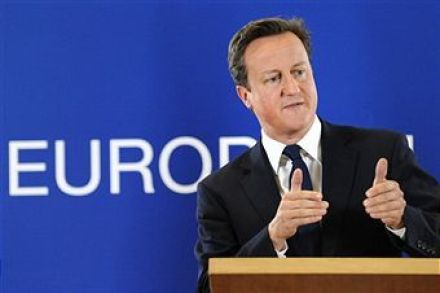
David Cameron is under pressure now that the phone hacking scandal has slithered its way closer to his door. The news that Neil Wallis informally advised Andy Coulson in the run up to last year’s election will spark questions about Cameron’s judgement and the competence of his leadership, as will the revelations about his chief of staff, Ed Llewellyn. Criticism is likely to come from both sides of the House: Tories I’ve spoken to are none too pleased about yesterday’s events. Cameron rebuffed his critics at last week’s PMQs by rising above politics to strike a calm and prime ministerial tone, for the most part. He will have to do so again.

Crouching Tiger, Slapping Wendi

From our UK edition

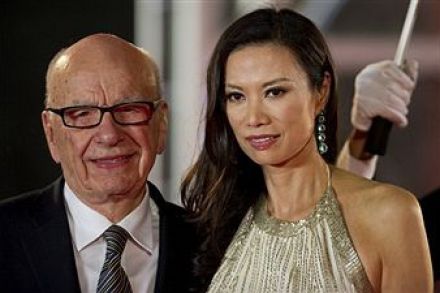
All hail, Wendi Deng. It took her a split second to attack the guy hurling a pie at Rupert Murdoch, slapping so hard that the sound was picked up by the cameras. According to the BBC's Nick Robinson she then started shouting "I got him, I got him." First tiger mums, now tiger wives. "Mr Murdoch, your wife has a good left hook," said Tom Watson afterwards. Better than his, at any rate. For all the hype, it was a strikingly uninformative session. About ten minutes into this Trial of Rupert Murdoch, it was pretty clear the committee was not going to get a "you can't handle the truth!" moment out the Dirty Digger.

Quizzical eyes turn on Yates

From our UK edition

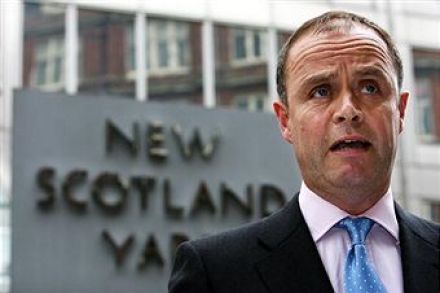
The phone hacking saga is now moving at such pace it threatens to engulf the political establishment (whether it is a sufficiently serious story to do so is another matter). After Sir Paul Stephenson’s theatrical resignation, timed to upset newspaper deadlines and plotted to embarrass the Prime Minister, attention has now turned to John Yates. Boris Johnson has said that Yates has ‘questions to answer’; and Brian Paddick argues that Yates should fall on his sword too. The Metropolitan Police Standards Committee meets this morning, and, as Laura Kuenssberg notes, it may discuss John Yates’ conduct.

Rebekah Brooks arrested

From our UK edition

There is a growing controversy about the timing of the arrest of Rebekah Brooks. Having now been arrested, Brooks may well not appear before the select committee on Tuesday. This will enrage parliamentarians who feel that parliament has been misled several times during this scandal and want answers. (The Murdochs, though, are still scheduled to appear). The next source of controversy is that the arrest occurs at a time when the police were beginning to take centre stage in the scandal. There will be those who suspect that this is not just a coincidence. Then, there is the fact she has been arrested just two days after resigning from News International. Although Brooks’ representatives are stressing that she did not know she was going to be arrested when she quit the company.

Brooks resigns

From our UK edition

Rebekah Brooks has finally resigned this morning. Her departure was actually expected yesterday, in the morning indications were given that she would quit that afternoon. My understanding is that the thinking at News International was that if she was still in her job when she attended the select committee hearing on Tuesday, she would just be monstered. But this strategy was thrown into confusion when the Murdochs themselves were compelled to attend. But this morning, the decision has clearly been taken that she has to step down before facing parliament. Her departure was in many ways inevitable. But it does remove the last fire break between this scandal and the actual Murdoch family.

Murdoch prepares to fillet Brown

From our UK edition

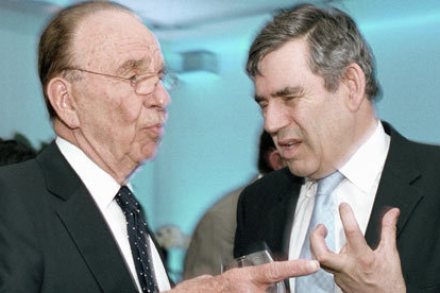
“He got it entirely wrong.” That is Rupert Murdoch's response to Gordon Brown’s singular account of his relationship with the Murdoch press. "The Browns were always friends of ours,” Murdoch added in an interview with the Wall Street Journal, in which he promised to set the record straight on the “lies uttered in parliament” when he appears before a select committee next Tuesday. It is going to be a moment of the most gripping political theatre. Murdoch also uses the interview to defend News Corp’s handling of the phone hacking crisis. He concedes that ‘minor mistakes’ have been made, but, fundamentally, all is well with the Kingdom.

Another self-inflicted wound by Murdoch

From our UK edition

The Murdochs have done a reverse-ferret and now will attend the Culture select committee on Tuesday. The harm done to their reputation by their initial refusal is yet another self-inflicted wound. It was clear, given how previous select committee inquiries on these matters had not received proper answers from various representatives of News International, that parliament would do everything it could to compel their attendance. Indeed, both the Prime Minister and Deputy Prime Minister had gone on the record to say they should attend before the Murdoch’s curt letters saying they wouldn’t were dispatched. Their appearance on Tuesday will, I suspect, now become the focus of this story in the UK. The weekend papers will be full of previews of it.

Parliament versus Murdoch, part two

From our UK edition

The Culture, Media and Sport Select Committee has responded to Rupert and James Murdoch rejecting their request to give evidence to them, by issuing a summons. My understanding is that parliament cannot compel them to attend because they are not British subjects. But others think that as long as they are in the country they can be forced to come to parliament. That a select committee chaired by Margaret Thatcher’s former political secretary is prepared to issue this summons shows how much the standing of the Murdochs has changed in the past ten days. MPs are pretty much united in their fury that News International figures failed to give proper answers to previous select committee hearings on this matter.

PMQs live | 13 July 2011

From our UK edition

A change from the Coffee House norm for this last PMQs before the summer recess. Instead of the usual live-blog, we'll be live-tweeting the session, and our tweets will appear in the special window below (you may be familiar with it from Guido's PMQs coverage). Tweets from other political types may also appear. And you can add your own remarks to the live-stream not in the comments section, but in the space below the window. Anyway, it should all be fairly self-explanatory. It might work, it might not. In either case, do let us know what you think.

Parliament prepares to take on Murdoch

From our UK edition

Politicians are swarming all over the phone hacking scandal today, in even greater number than during the past week. If it isn't the main topic at PMQs at noon, then it certainly will be immediately afterwards; when David Cameron delivers his statement on an inquiry into the whole mess. And then there's Labour's Opposition Day motion, urging Rupert Murdoch to withdraw his bid for BSkyB. By the end of the day, our parliamentarians will surely have delivered an official reprimand to the News Corp boss and his ambitions. The news that the government will vote in favour of Ed Miliband's motion has sucked some of the vicious factionalism out of today's proceedings. But, never fear, there will still be plenty of political one-upmanship to go around.

This scandal will inflict huge reputational damage on the police

From our UK edition

There’s only one thing that anyone in Westminster is talking about and that’s phone hacking. But one thing worth noting is that in every conversation I have had on the subject, MPs and Ministers have stressed that the police must not be let off the hook. For some on the Labour side—as John McTernan blogs with feeling—this is personal. But for the majority of parliamentarians, there’s just a feeling that certain policemen have been too easily corrupted, for too long. If newspapers were paying police, then the newspapers have obviously behaved badly. But those who accepted bribes are guilty of a far larger breach of the public trust.

PMQs live blog | 6 July 2011

From our UK edition

VERDICT: A crescendo of a PMQs, which started in sombre fashion but soon swelled into a vicious confrontation between the two leaders. It is strangely difficult to say who won, not least because both men had their moments. Ed Miliband's persistent anger — including over Rupert Murdoch's takeover of BSkyB — will have chimed with public sentiment. But Cameron went further than expected by backing a public inquiry into the phone hacking affair, and without much equivocation either. In the end, though, I'd say Miliband probably came out on top, for seeming less on the side of News International. 1242: No surprises from Cameron's statement on Afghanistan.

Parliament and Mob Rule

From our UK edition

You'd need a closed heart not to feel great sympathy for the family of poor Milly Dowler. Her killer Levi Bellfield is a vile, appalling creature and one can understand why the Dowler family would wish him executed. Many will share their sentiments. Among them is Guido who writes: The political class complains that the public is disengaged, could that be in part because there are a number of issues where the political class refuses to carry out the wishes of the people. All polls since 1965 when hanging was abolished show that there is majority support for capital punishment, yet there is no majority for it in parliament. It is not even an issue for parliamentarians even though the incidence of homicide is higher now than it was before the abolition of hanging.

Hoban wobbles in the House

From our UK edition

Mark Hoban has just turned in a remarkably unconvincing performance at the despatch box. Summoned to the Commons to answer an urgent question from Gisela Stuart, one of the best backbenchers in the House, on what contingency planning the government was doing for a Greek default, Hoban attempted to stonewall.   But Hoban’s stonewalling could only carry him so far. Strikingly, he declined several opportunities to confirm that the British government thinks that the euro will survive in its current form with all its current members.   By contrast, Jack Straw was quite happy to make predictions. He told the House that ‘the euro in its current form is going to collapse.

Don’t dismiss Davies out of hand

From our UK edition

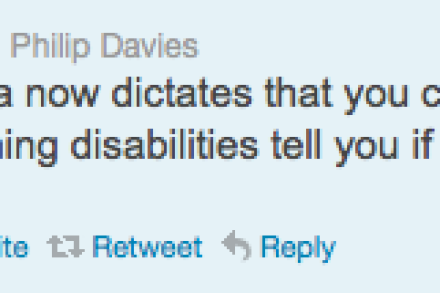
Touchpaper, meet match. That's the explosive situation engendered by Tory MP Philip Davies and his comments about disabled people this afternoon. His suggestion, made in the Commons, was that disabled people could work for less than the national minimum wage. And his justification? That the minimum wage "prevents those people from being given the opportunity to get to the first rung on the employment ladder." Charities such as Mind have since lambasted Davies for even broaching such a thing. The phrase "nasty party" is gushing around Twitter with tidal abandon. But before we pile on, it's worth noting that Davies has identified an issue that is more shades of grey than black-and-white.

PMQs live blog | 15 June 2011

From our UK edition

VERDICT: The specifics of today's exchange between David Cameron and Ed Miliband may have everyone rushing for this Macmillan press release, but the rhetorical positions were clear enough. There was the Labour leader, angrier and more indignant than usual, painting the government's welfare reforms as cruel and insufficiently thought-through. And there was the PM, painting his opponent as yet another roadblock to reform. Neither really triumphed, although their battle will most likely set a template for in future. The coalition has extensive public backing for its changes to the welfare system. So, Miliband's challenge is to attack certain aspects of them, without making Labour appear to be — as he put it on Monday — "the party of those ripping off our society".

The problems of PR

From our UK edition

Two centuries ago, Edmund Burke famously mocked the intellectuals of revolutionary France for trying to devise a perfectly rational constitution for their country. The Abbé Sieyès, he wrote, had whole nests of pigeon-holes full of constitutions, ready made, ticketed, sorted and numbered, suited to every season and every fancy . . . so that no constitution-fancier may go unsuited from his shop. The Abbé Sieyès has had his imitators in England lately. The last government devoted much intellectual energy and parliamentary time to producing a theoretical separation of the judiciary from the legislature and the executive, when a practical separation had existed for years.